
 admin
admin
The global financial landscape is experiencing a profound and irreversible transformation, driven by the migration of assets, payments, and market infrastructure onto blockchain technology, commonly referred to as "onchain." This monumental shift is projected to see tokenized assets burgeon to an estimated $30 trillion over the next decade, with major financial institutions and market infrastructures, including industry behemoths like Swift, actively embracing this technology. Swift, for instance, has publicly announced the development of a "blockchain-based ledger," signaling a clear pivot towards decentralized solutions.
At the heart of this revolution lies tokenization, a process that converts rights to an asset into a digital token on a blockchain. This innovation promises unprecedented benefits, including faster settlement times, the creation of programmable assets capable of executing predefined rules automatically, and the emergence of entirely new financial products previously unattainable in traditional systems. However, the true potential of tokenized finance cannot be realized through isolated point solutions or disparate blockchains. For institutional adoption to scale globally, a robust framework that enables seamless operation across multiple chains, integration with existing legacy systems, adherence to diverse regulatory regimes, and access to trusted data sources simultaneously is paramount. This necessitates end-to-end interoperability, unified by a single, comprehensive standard that encompasses cross-chain connectivity, integration with current financial infrastructure, reliable data feeds, compliance mechanisms, privacy protocols, and sophisticated orchestration capabilities. Chainlink positions itself as the singular platform equipped to address this full spectrum of interoperability challenges, thereby establishing itself as the foundational standard for institutional tokenization on a global scale.
Understanding the Onchain Revolution: Why Institutions are Embracing Tokenization
The move towards onchain finance is not merely a technological fad but a strategic imperative for institutions seeking to unlock efficiencies, reduce costs, mitigate risks, and tap into new market opportunities. Tokenization, in essence, digitizes real-world assets—ranging from real estate and commodities to equities and bonds—into blockchain-based tokens. This process brings a host of advantages: fractionalization, allowing assets to be owned by multiple parties; enhanced liquidity, as assets can be traded 24/7 on global markets; and increased transparency through immutable ledger records.
The urgency for a universal standard stems from the current multi-chain environment. Hundreds of public and private blockchains operate in parallel, each with its unique technical specifications, governance models, finality assumptions, and compliance rules. This fragmentation creates "walled gardens" of liquidity, disconnected applications, and the proliferation of duplicate asset versions, rendering secure and efficient large-scale operations exceedingly difficult. Without a common standard, institutions face a daunting task of building and maintaining a growing array of bespoke bridging solutions, each introducing distinct trust assumptions and security vulnerabilities that demand significant time and resources to understand and integrate. This scenario echoes the early days of the internet before the adoption of TCP/IP, where disparate networks struggled to communicate, requiring customized connections for every interaction. A shared, open interoperability standard, built on a secure and reliable foundation, is crucial to enable data and value to flow freely across the onchain economy, thereby synchronizing assets and applications across networks securely and efficiently in real-time.
The Interoperability Imperative: A Multi-faceted Challenge
The journey towards a globally integrated tokenized financial system is fraught with several complex interoperability challenges. Chainlink identifies four critical areas that must be addressed comprehensively:
1. Cross-Chain Fragmentation and the Need for a Unified Fabric
The proliferation of diverse blockchain networks creates a siloed environment, hindering the seamless transfer of assets and information. Institutions require a mechanism to move tokens and messages across these disparate chains without compromising security or efficiency. The absence of such a standard leads to isolated liquidity pools and complex operational overhead.
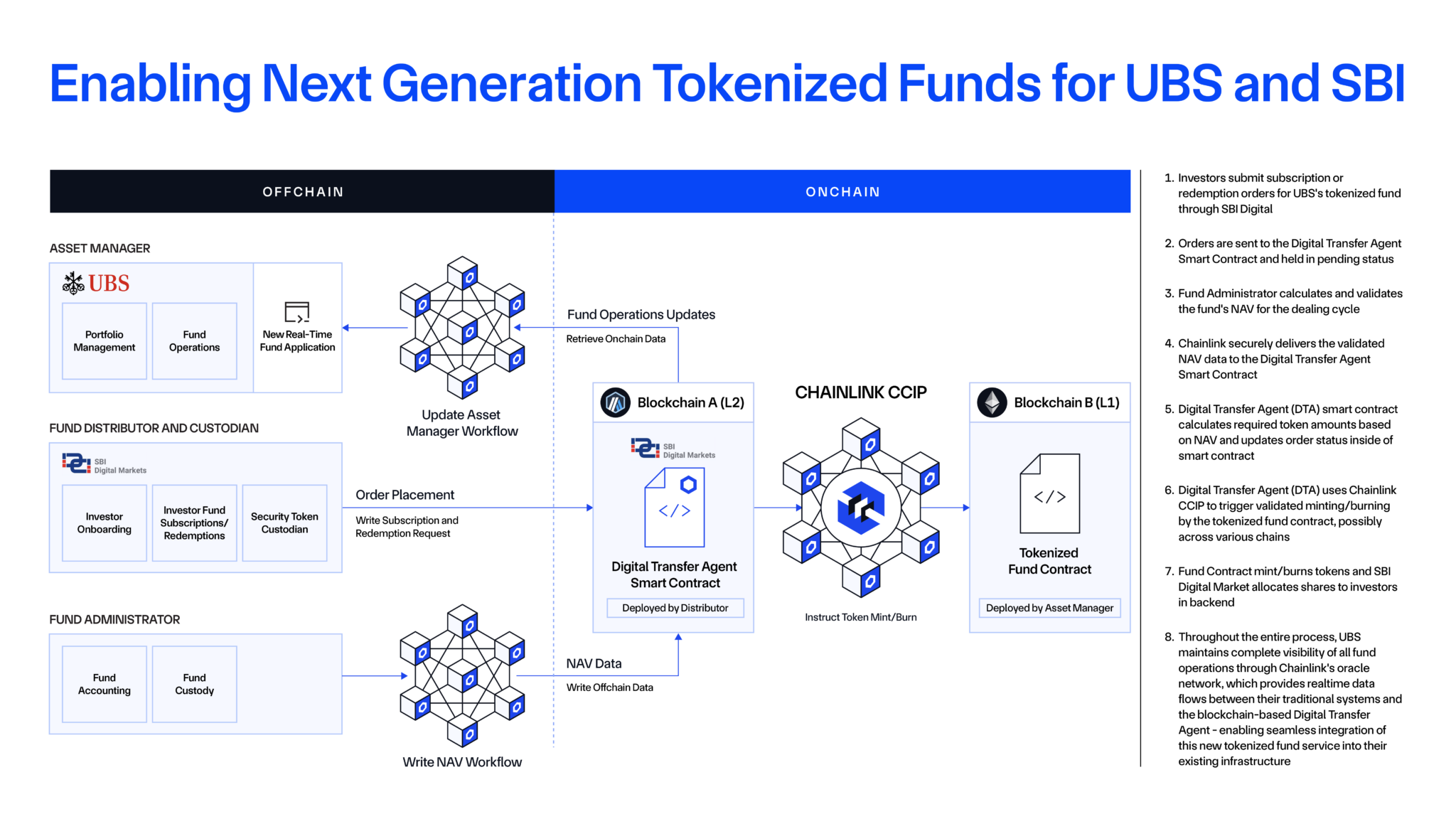
An illustrative example of addressing this challenge is the collaboration between SBI Digital Markets, UBS Asset Management, and Chainlink under the Monetary Authority of Singapore’s (MAS) Project Guardian. This initiative successfully demonstrated the automated administration and transfer agency processes for tokenized funds. By leveraging Chainlink infrastructure and the Digital Transfer Agent (DTA) technical standard, tokenized funds could maintain their share registers on one blockchain while utilizing Chainlink’s Cross-Chain Interoperability Protocol (CCIP) to process lifecycle activities, such as subscriptions and redemptions, on an entirely different blockchain. Winston Quek, CEO at SBI Digital Markets, underscored the significance, stating, "This architecture creates a foundation for our own onchain financial products and services to meet immediate user demand for tokenization and tokenized funds in particular. This new way of launching fund structures and administering them via smart contracts empowers both fund managers and their service providers to deliver new onchain financial products and lower operational costs to investors, both things they are actively looking for."
2. Bridging the Old and New: Integrating Legacy Systems
The global financial system is underpinned by robust, time-tested infrastructure that secures trillions in value daily, refined over decades of rigorous testing, regulation, and operational excellence. This existing infrastructure, vital to custodians, transfer agents, fund administrators, payment systems, and Central Securities Depositories (CSDs), is not to be replaced but rather integrated securely and systematically with blockchain networks. The core difficulty arises because these traditional systems were not designed for native blockchain connectivity, forcing institutions to rely on costly, resource-intensive, and error-prone custom integrations.
A universal interoperability standard must extend beyond merely connecting blockchains to define how offchain systems—including banking infrastructure, data providers, enterprise platforms, and web APIs—can directly and securely interact with onchain environments. This would establish a common framework for the vast majority of tokenized asset transactions, which will likely operate as hybrid models combining onchain and offchain components.
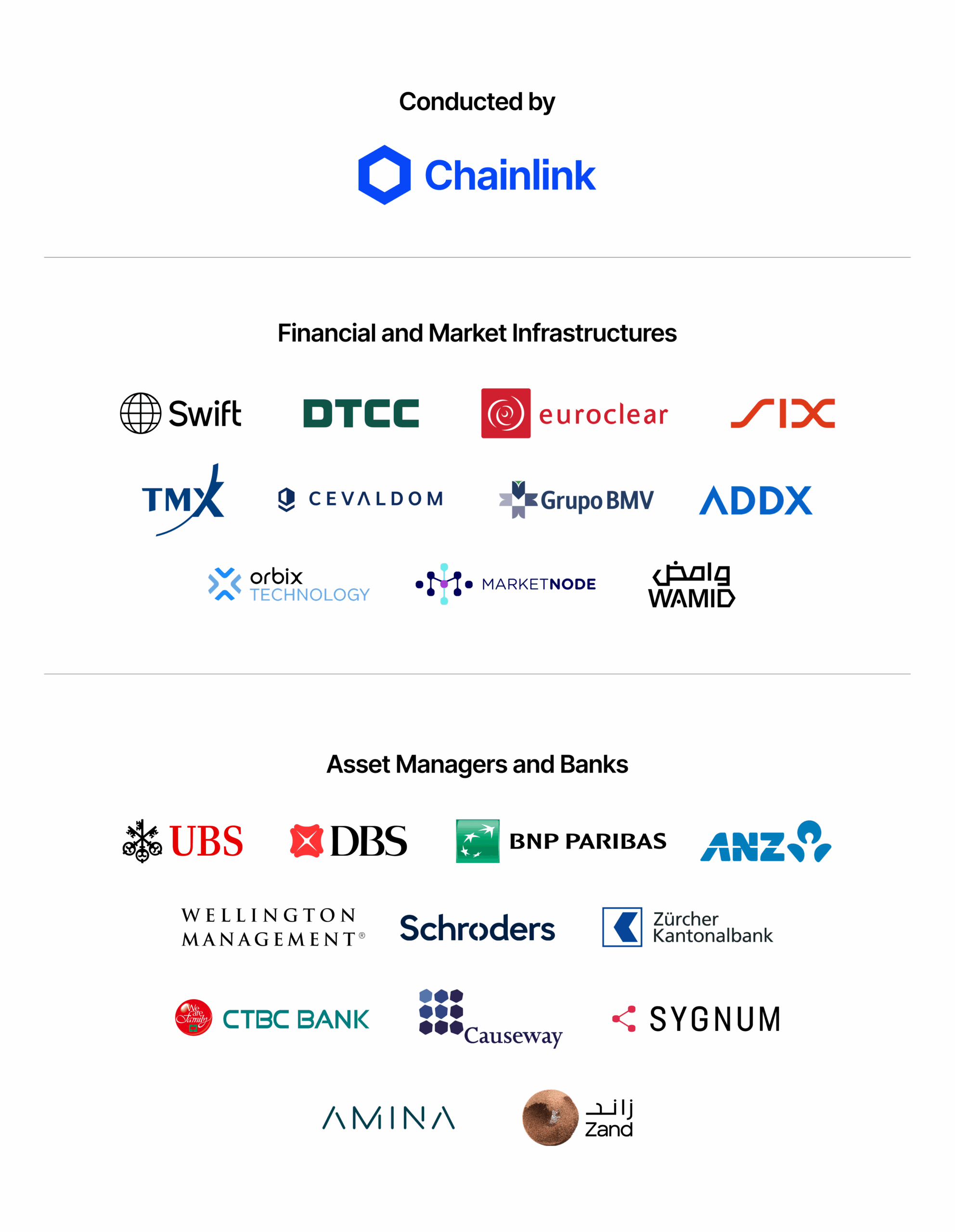
A significant stride in this direction was an initiative announced at Sibos 2025, involving Chainlink and 24 of the world’s largest financial institutions and market infrastructures, including Swift, DTCC, Euroclear, SIX, UBS, and Wellington Management. This collaboration aimed to create a unified infrastructure for streamlined corporate actions processing. The Chainlink Runtime Environment (CRE) played a pivotal role, orchestrating and validating outputs from multiple AI models regarding new corporate actions events. It then transformed these confirmed outputs into ISO 20022 messages for delivery to financial institutions via the Swift network. Concurrently, Chainlink’s CCIP distributed these confirmed records in real-time to DTCC’s blockchain ecosystem and other public and private blockchains. Stéphanie Lheureux, Director, Digital Assets Competence Center, Euroclear, highlighted the impact: "Delivering scalable digital market infrastructure means aligning new solutions with the systems institutions already trust, and the Chainlink Runtime Environment makes this alignment seamless by enabling new technologies to integrate within existing workflows. Our corporate actions industry initiative with Chainlink and major financial institutions shows that industry-wide coordination around standards and interoperability are key to reaching global scale."
3. Beyond Connectivity: Embedding Data, Compliance, and Privacy
True interoperability transcends mere connectivity; it must also embed the essential building blocks for powering sophisticated tokenized asset transactions. Nearly all onchain financial transactions require external data, such as Net Asset Value (NAV), Assets Under Management (AUM), and Know Your Customer/Anti-Money Laundering (KYC/AML) information. Furthermore, transactions must adhere to embedded compliance policies and conditions—ranging from identity and investor accreditation requirements to internal business rules concerning transaction limits and operating hours. Many transactions also necessitate robust privacy measures to meet consumer and regulatory demands. An interoperability standard can only achieve widespread adoption if it supports these critical components required by advanced transactions beyond simple payments.
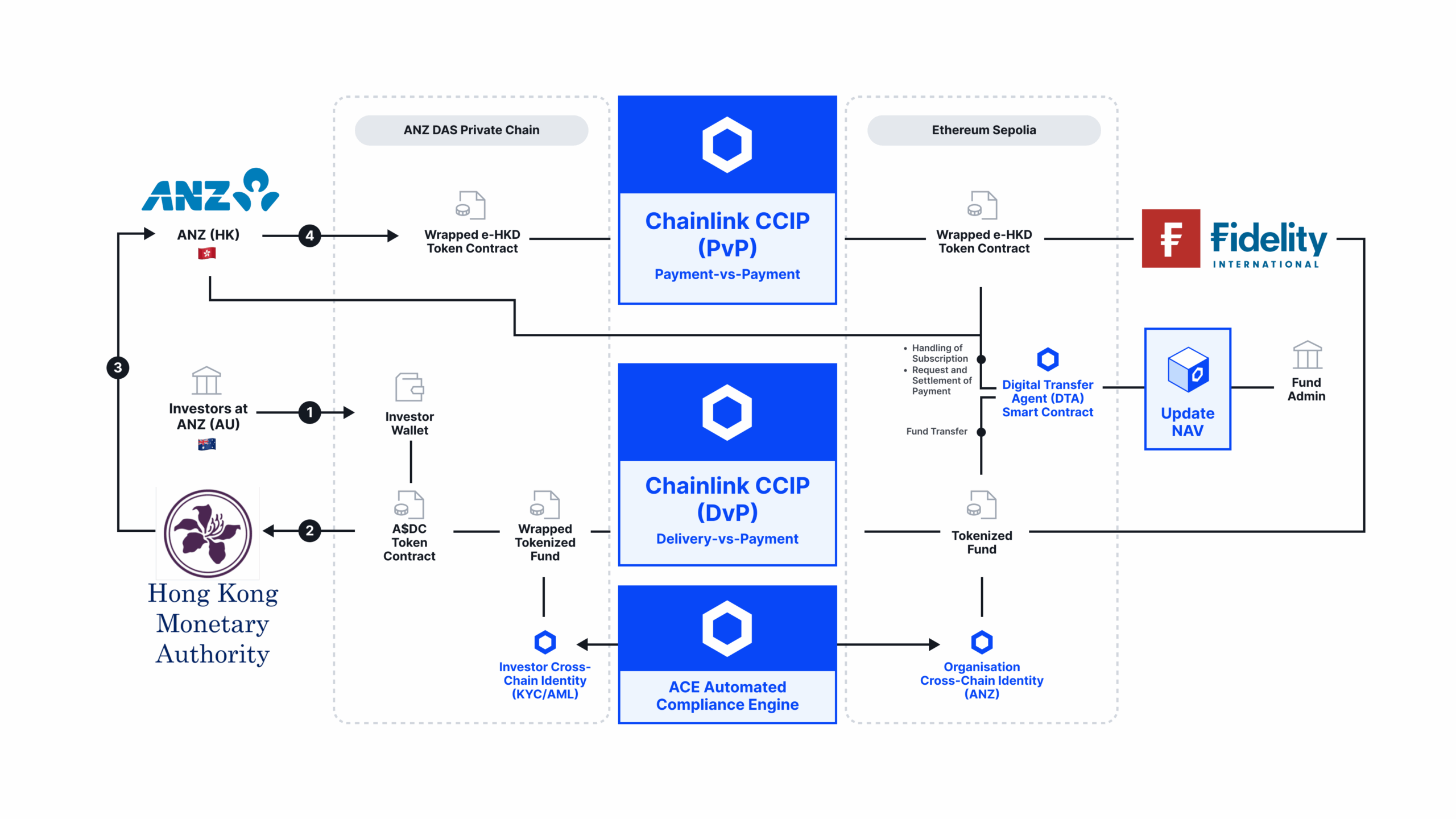
The Hong Kong Monetary Authority (HKMA) underscored this challenge in its report on Phase 2 of its e-HKD program. The report highlighted a key cross-chain settlement solution powered by Chainlink, in collaboration with ANZ, China AMC, and Fidelity International. This solution leveraged Chainlink CCIP and Automated Compliance Enforcement (ACE) to satisfy institutional cross-chain interoperability and compliance requirements for the secure settlement of tokenized assets. It unified trusted data, cross-chain connectivity, and automated compliance into a single workflow, providing secure, high-quality data for asset pricing and transfer agent operations, enabling seamless value and data movement across blockchains, and enforcing compliance by verifying onchain identity proofs against jurisdiction-specific regulatory policies via Chainlink’s ACE.
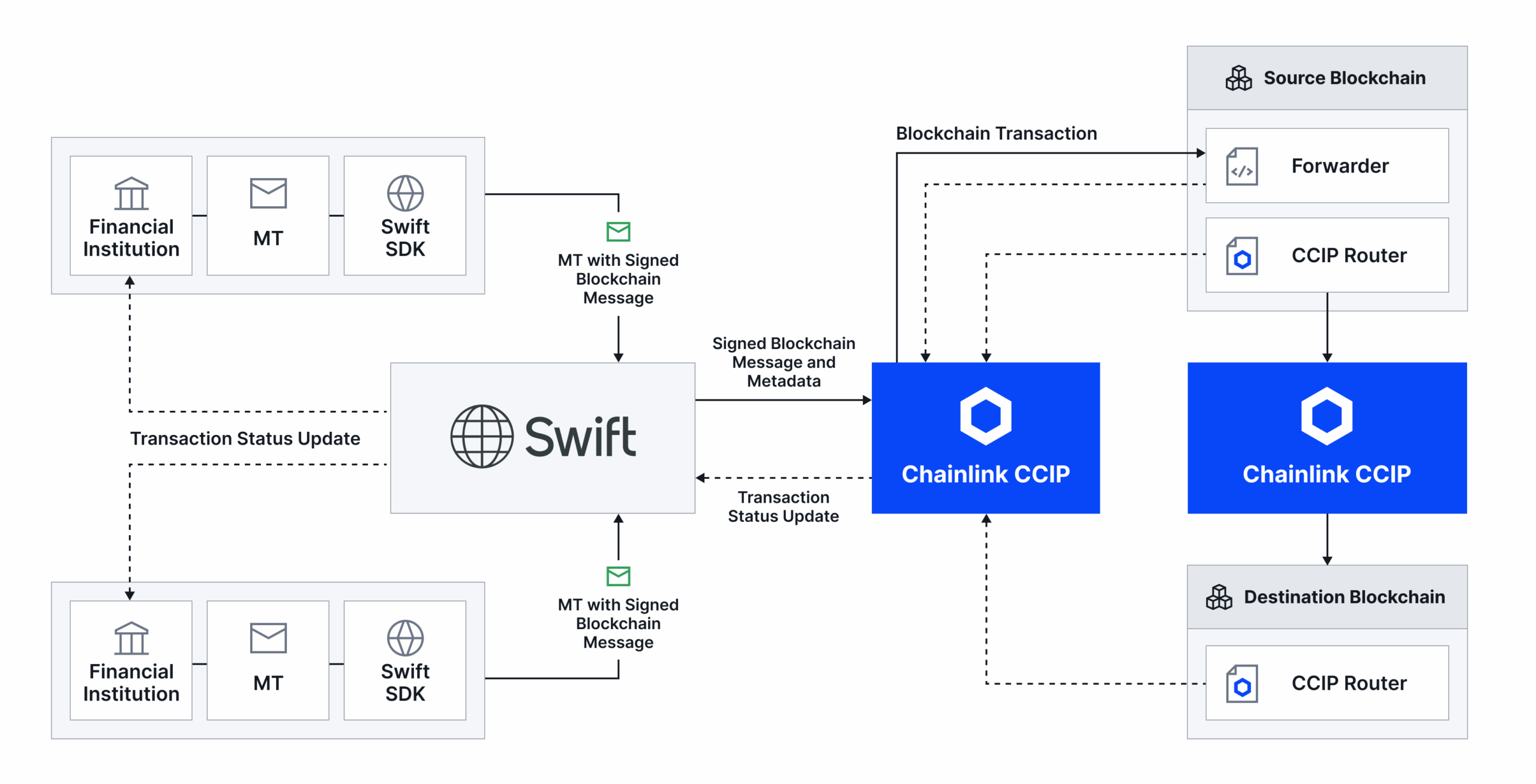
Further demonstrating this capability, Chainlink connected the Central Bank of Brazil (BCB) with the HKMA during Phase 2 of the BCB’s Drex project, which focused on cross-border trade. This initiative, involving Banco Inter, Standard Chartered, the Global Shipping Business Network (GSBN), and 7COMm, orchestrated seamless and compliant cross-jurisdictional trade settlement. The Chainlink platform facilitated communication across the Drex platform, the Hong Kong Ensemble Network, and GSBN’s trade finance system. The CRE translated messages, triggered electronic Bill of Lading transfers, and connected offchain systems like GSBN’s API, while CCIP ensured secure cross-chain messaging for critical events like contract execution and credit release. Additional examples include Chainlink’s work with Apex Group and the Bermuda Monetary Authority (BMA) on institutional-grade stablecoin infrastructure and with the Global Legal Entity Identifier Foundation (GLEIF) to deliver an institutional-grade identity solution for the blockchain industry.
4. Orchestrating Complexity: The Command Center for Digital Assets
The final frontier of interoperability is orchestration—the ability to securely coordinate complex financial processes that span multiple blockchains, external systems, regulatory logic, and institutional workflows through a single, intelligent piece of code. Traditional smart contracts typically execute isolated functions on a single chain. However, institutional asset lifecycles are far more intricate, requiring data from pricing and compliance systems, multi-chain execution, identity verification, compliance functions, integration with existing systems, and conditional business logic that must run securely and reliably in parallel. Without a robust orchestration layer that unifies these diverse components and processes, institutions would be forced to construct and maintain a complex web of bespoke integrations and custom logic, inevitably slowing adoption, escalating operational risks, and fragmenting liquidity across disparate systems.
A universal interoperability standard must therefore encompass not just connectivity across chains, systems, and data sources, but also an orchestration layer that seamlessly integrates these capabilities into composite workflows capable of powering real-world financial operations at scale.
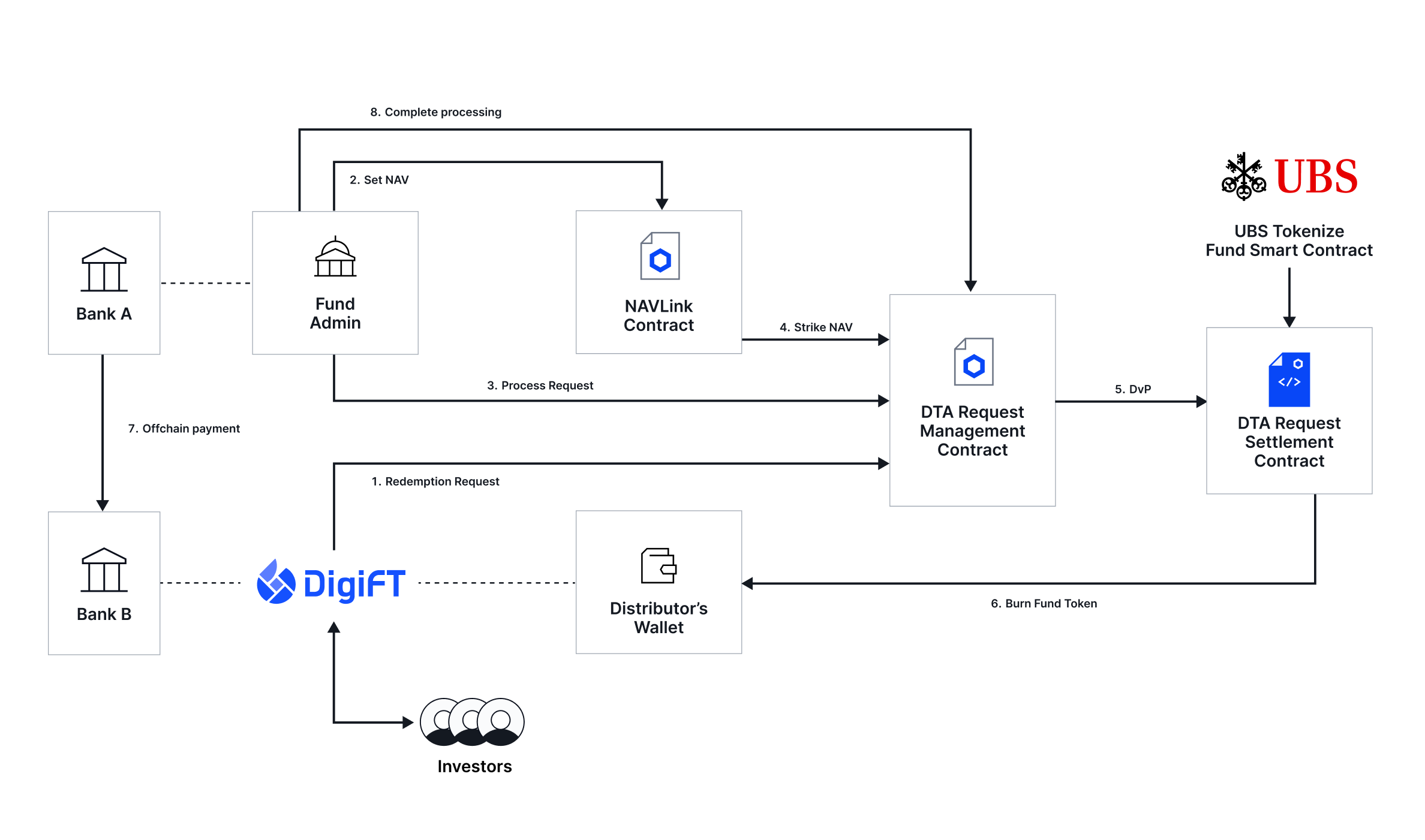
UBS’s successful completion of the world’s first in-production, end-to-end tokenized fund workflow exemplifies this solution. Leveraging the Chainlink Digital Transfer Agent (DTA) technical standard, this initiative showcased how the DTA standard integrates key Chainlink platform capabilities, including CCIP for cross-chain communication, Data Feeds for reliable offchain data, and Chainlink Functions for custom computations and offchain system interactions. This comprehensive workflow can cover every stage of a fund’s lifecycle, from order taking and execution to settlement and data synchronization across all onchain and offchain systems.
Chainlink’s Comprehensive Solution: A Universal Standard Emerges
Chainlink addresses the full spectrum of institutional interoperability challenges through a unified, modular platform. This platform connects disparate blockchain networks and existing financial systems while simultaneously providing the crucial data, cross-chain connectivity, compliance, privacy, and orchestration capabilities required for advanced onchain transactions. Its modular design allows institutions to adopt only the components they need, from simple cross-chain transfers to a complete end-to-end workflow stack.
Powered by the Chainlink platform, institutions gain the ability to build and execute workflows that:
- Securely transfer tokens and messages across any public or private blockchain.
- Integrate seamlessly with existing banking infrastructure, enterprise systems, and web APIs.
- Access trusted data and offchain computations for onchain processes.
- Enforce institutional-grade compliance and privacy requirements automatically.
- Orchestrate complex, multi-step financial workflows spanning onchain and offchain environments.
With an unparalleled track record, Chainlink has enabled over $27 trillion in onchain transaction value and is the only oracle platform to achieve ISO 27001 & SOC 2 compliance, underscoring its commitment to security and reliability. This robust foundation has led many of the world’s largest financial services institutions, including Swift, Mastercard, and Euroclear, to adopt Chainlink’s standards and infrastructure.
At its core, the Chainlink platform is built upon the Chainlink Runtime Environment (CRE), an advanced orchestration layer specifically designed to enable institutional-grade smart contracts—complex financial workflows that operate across both blockchains and offchain systems. This directly addresses the critical pain point of integrating existing systems with blockchain technology. Built upon CRE are open standards, each addressing a key dimension of end-to-end interoperability:
- Cross-Chain Interoperability Protocol (CCIP): The industry-standard protocol for secure cross-chain token and message transfers, enabling seamless value and data flow across fragmented blockchain ecosystems.
- Chainlink Data Feeds: Providing the highest quality, most reliable, and tamper-proof real-world data to smart contracts, essential for accurate pricing, risk management, and operational integrity.
- Chainlink Functions: A serverless platform that allows smart contracts to securely connect to any web API and perform arbitrary computations, bridging the gap between onchain logic and offchain data and systems.
- Chainlink Automated Compliance Enforcement (ACE): Enabling the creation and enforcement of dynamic, jurisdiction-specific compliance policies directly onchain, ensuring regulatory adherence for tokenized assets.
- Chainlink Digital Transfer Agent (DTA): A technical standard that automates fund management operations and transfer agency processes, streamlining the lifecycle of tokenized funds.
The CRE unifies these standards on a single platform, making them composable into sophisticated workflows that interact seamlessly across onchain and offchain systems. The result is a cohesive interoperability standard capable of powering the end-to-end lifecycle of tokenized asset transactions while meeting the stringent institutional-grade requirements for security, compliance, and reliability.
Powering the Future of Global Finance With Chainlink
As the global financial system continues its inevitable transition towards onchain market infrastructure, the ability to seamlessly connect diverse blockchains, integrate with existing legacy systems, and unify various standards through a singular, robust interoperability framework will define the next generation of financial markets. This paradigm shift promises to unlock unprecedented levels of efficiency, liquidity, and innovation, fundamentally reshaping how financial products are created, managed, and traded.
Chainlink stands as the pivotal technology platform providing this essential foundation. By uniting data, compliance, privacy, cross-chain connectivity, and sophisticated orchestration into one comprehensive stack, Chainlink empowers institutions to operate fluidly and securely across the burgeoning landscape of blockchains and their indispensable existing systems. Through its commitment to open standards, unparalleled security, and proven reliability, Chainlink is not merely participating in the evolution of finance; it is actively providing the universal interoperability standard that is powering the future of onchain finance at a truly global scale. This integration of cutting-edge blockchain technologies with the traditional systems that already secure trillions in value today represents a crucial step towards a more interconnected, efficient, and resilient global financial ecosystem.