admin
admin
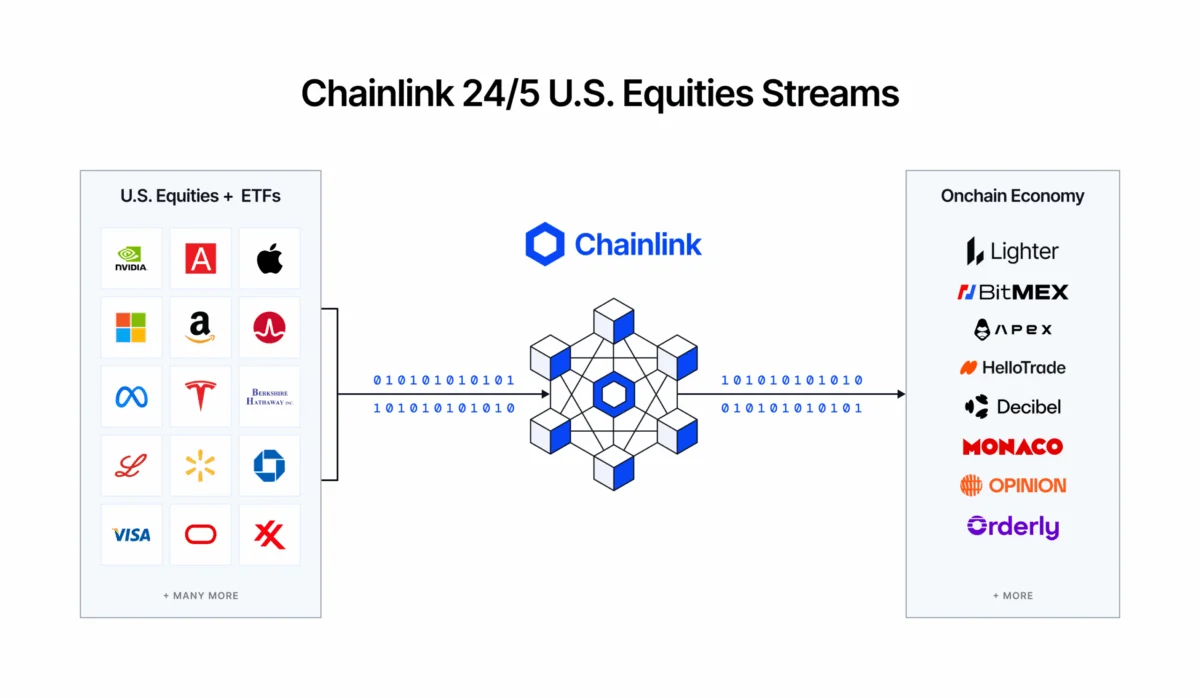
The integration of traditional finance (TradFi) with decentralized finance (DeFi) represents a pivotal shift in the global financial landscape, promising enhanced efficiency, transparency, and accessibility. At the forefront of this transformative movement is Chainlink, a decentralized oracle network that serves as critical middleware, securely connecting smart contracts on various blockchains with real-world data and off-chain computation. This convergence is not merely theoretical; it is actively being implemented through a comprehensive suite of Chainlink services designed to meet the stringent demands of financial institutions, encompassing everything from secure data feeds and robust compliance solutions to seamless cross-chain interoperability.
For decades, traditional financial systems have operated within a centralized, often siloed, framework characterized by intermediaries, slow settlement times, and opaque processes. The advent of blockchain technology, with its promise of disintermediation, immutability, and programmatic execution via smart contracts, presented an enticing alternative but also significant challenges. Key among these challenges was the inherent inability of blockchains to natively access external data or communicate with other networks, creating a "data gap" and "interoperability barrier." Chainlink emerged to bridge these gaps, establishing itself as the industry standard for verifiable off-chain computation and data delivery, thereby enabling smart contracts to interact with the real world securely and reliably.
The Evolving Landscape of TradFi-DeFi Integration
The financial sector’s interest in blockchain technology has steadily matured from cautious observation to active exploration and implementation. Institutions are recognizing the potential of tokenized assets, instant settlements, and automated compliance, but require solutions that uphold security, privacy, and regulatory adherence. Chainlink’s suite of services directly addresses these requirements, fostering a secure and scalable pathway for TradFi to leverage blockchain’s benefits. The market for tokenized real-world assets (RWAs) is projected to reach trillions of dollars in the coming years, underscoring the urgency for robust infrastructure that can support this growth. Furthermore, the global remittances market, valued at over $800 billion annually, stands to benefit immensely from the reduced costs and increased speed that blockchain-powered solutions, enhanced by Chainlink, can offer.
Chainlink’s role extends beyond simply providing data. It acts as a foundational layer, facilitating the creation of hybrid smart contracts that combine the security and transparency of on-chain logic with the rich functionality and data from off-chain systems. This hybrid approach is crucial for complex financial applications that require access to diverse data types, sophisticated computation, and interaction with various legacy systems and blockchain networks. The demand for such integrated solutions has spurred Chainlink to continuously innovate and expand its offerings, making it an indispensable partner for financial institutions looking to navigate and capitalize on the digital asset revolution.
Core Chainlink Services Empowering Financial Innovation
Chainlink offers a robust and expanding array of services tailored to the specific needs of financial institutions and decentralized applications. Each component plays a vital role in ensuring the integrity, security, and functionality of blockchain-powered financial systems.
-
Chainlink Data Feeds for Secure Data Transfer: At the heart of many financial applications lies the need for accurate, real-time data. Chainlink Data Feeds provide highly reliable and tamper-proof price data for a vast array of assets, including cryptocurrencies, foreign exchange (FX) rates, commodities, and interest rates. These feeds are aggregated from numerous high-quality data sources and secured by a decentralized network of oracle nodes, ensuring data accuracy and resistance to manipulation. For financial institutions, this means they can confidently build applications that rely on external market data for pricing tokenized assets, executing derivatives, and managing portfolios, knowing the data is consistently precise and robust. The ability to access real-time FX rates, for example, is crucial for cross-border payments and international trade finance, enabling accurate conversions and reducing settlement risks.
-
Chainlink Proof of Reserve for Enhanced Transparency: Transparency and audibility are paramount in finance, especially for collateralized digital assets like stablecoins and tokenized real-world assets. Chainlink Proof of Reserve provides automated, on-chain verification of off-chain reserves. By continuously monitoring reserve balances held in traditional bank accounts or other off-chain custodians, Proof of Reserve allows smart contracts to confirm that sufficient collateral backs a tokenized asset. This dramatically enhances trust and reduces counterparty risk, offering financial institutions a verifiable mechanism to issue and manage tokenized assets with confidence. For instance, a bank issuing a tokenized fiat currency could use Proof of Reserve to automatically demonstrate that every token is backed 1:1 by reserves in its vault, providing unparalleled transparency to its users and regulators.
-
Chainlink CCIP (Cross-Chain Interoperability Protocol) for Seamless Value and Data Flow: The blockchain ecosystem is fragmented, with numerous independent networks. This fragmentation creates significant challenges for financial institutions seeking to move assets and data seamlessly across different chains or between blockchains and traditional systems. Chainlink CCIP addresses this by providing a universal, highly secure interoperability protocol that enables reliable cross-chain token transfers and arbitrary messaging. It acts as a "router" for the blockchain world, allowing financial institutions to build applications that can interact across multiple blockchains, unlocking liquidity and enabling new use cases like cross-chain collateralization and multi-chain investment strategies. CCIP’s robust security model, incorporating independent risk management networks, is designed to meet institutional security standards, making it suitable for critical financial infrastructure.
-
Chainlink SmartData for Real-World Asset Integration: The tokenization of real-world assets (RWAs) is a major trend in finance, bringing illiquid assets onto blockchain rails. Chainlink SmartData facilitates this by connecting rich, authenticated off-chain RWA data to smart contracts. This includes data on property titles, company financials, carbon credits, or physical commodities. By providing verifiable data inputs for RWAs, SmartData enables the creation of more sophisticated and trusted tokenized assets, unlocking new forms of lending, borrowing, and trading. Financial institutions can use SmartData to create tokenized bonds backed by verifiable company revenue streams or fractionalized real estate assets with transparent ownership records, expanding investment opportunities and improving market liquidity.
-
Chainlink Automated Compliance Engine (ACE) for Regulatory Adherence: Regulatory compliance, including Know Your Customer (KYC) and Anti-Money Laundering (AML) checks, is a non-negotiable requirement for financial institutions. Chainlink ACE provides a framework for automating these complex compliance processes on-chain. It allows for the verifiable execution of regulatory checks and policy enforcement by connecting smart contracts to accredited off-chain identity and compliance data providers. This means that financial institutions can programmatically ensure that only authorized entities can interact with specific tokenized assets or participate in certain financial protocols, drastically reducing manual compliance burdens and increasing efficiency. For example, a global bank could use ACE to automatically screen transactions against sanctions lists and ensure that participants in a tokenized bond issuance meet specific jurisdictional KYC requirements, all while maintaining user privacy through confidential compute techniques.
-
Chainlink Confidential Compute for Enhanced Privacy: While transparency is a core tenet of blockchain, privacy is equally critical for many financial applications, especially those involving sensitive proprietary data or personal information. Chainlink Confidential Compute enables smart contracts to perform computations on encrypted data, keeping inputs and intermediate states private. This is achieved through secure enclaves that protect data during processing, ensuring that sensitive information remains confidential even while being used in on-chain logic. This capability is vital for financial institutions that need to conduct complex calculations, such as risk assessments or credit scoring, using confidential data without exposing it to the public blockchain, thus balancing the need for transparency with essential privacy requirements.
-
Chainlink Runtime Environment (CRE) for Secure Off-Chain Computation: Many complex financial operations require computations that are too intensive or privacy-sensitive to be performed directly on-chain. The Chainlink Runtime Environment (CRE) provides a secure and verifiable framework for executing complex off-chain logic and computations. CRE allows for the creation of sophisticated hybrid smart contracts that combine on-chain transparency with off-chain computational power, enabling advanced financial models, conditional payments, and intricate derivatives. For instance, a financial institution could use CRE to run complex quantitative models off-chain to determine the payout of a structured product, with the results verifiably delivered back to a smart contract on-chain, offering both efficiency and trust.
Broader Impact and Implications
The comprehensive integration of Chainlink’s services into the financial ecosystem heralds a new era of possibilities. By enabling secure and reliable connections between blockchains and the real world, Chainlink is laying the groundwork for a more efficient, transparent, and inclusive global financial system. Financial institutions can leverage these tools to:
- Reduce Operational Costs: Automating processes like compliance, settlements, and data verification can significantly cut down on manual labor and overheads.
- Increase Transaction Speed: Instantaneous settlement of tokenized assets and cross-chain transfers can dramatically accelerate financial operations compared to traditional multi-day cycles.
- Enhance Transparency and Auditability: On-chain verification and immutable records improve trust among participants and simplify regulatory reporting.
- Unlock New Products and Markets: Tokenization of illiquid assets and seamless cross-chain access can create novel financial products and open up new investment opportunities for a broader audience.
- Improve Risk Management: Automated data feeds and verifiable collateral proofs provide more robust risk assessment capabilities.
Blockchain experts and financial industry leaders generally agree that middleware solutions like Chainlink are indispensable for the widespread adoption of blockchain in finance. A recent report by a prominent consulting firm indicated that the total value locked in DeFi and the market capitalization of tokenized assets could exceed $10 trillion by 2030, with interoperability and data verification being key enablers. Chainlink’s commitment to enterprise-grade security, decentralization, and robust infrastructure positions it as a critical player in realizing this future.
The journey towards a fully integrated financial ecosystem where traditional and decentralized systems coexist and complement each other is complex. However, with platforms like Chainlink providing the necessary infrastructure for data, computation, and interoperability, the pathway to a more resilient, accessible, and innovative global financial landscape becomes increasingly clear. The ongoing developments demonstrate a strong momentum towards a future where hybrid smart contracts, powered by Chainlink, are not just a niche application but a fundamental component of global financial architecture.