Dwi Wanna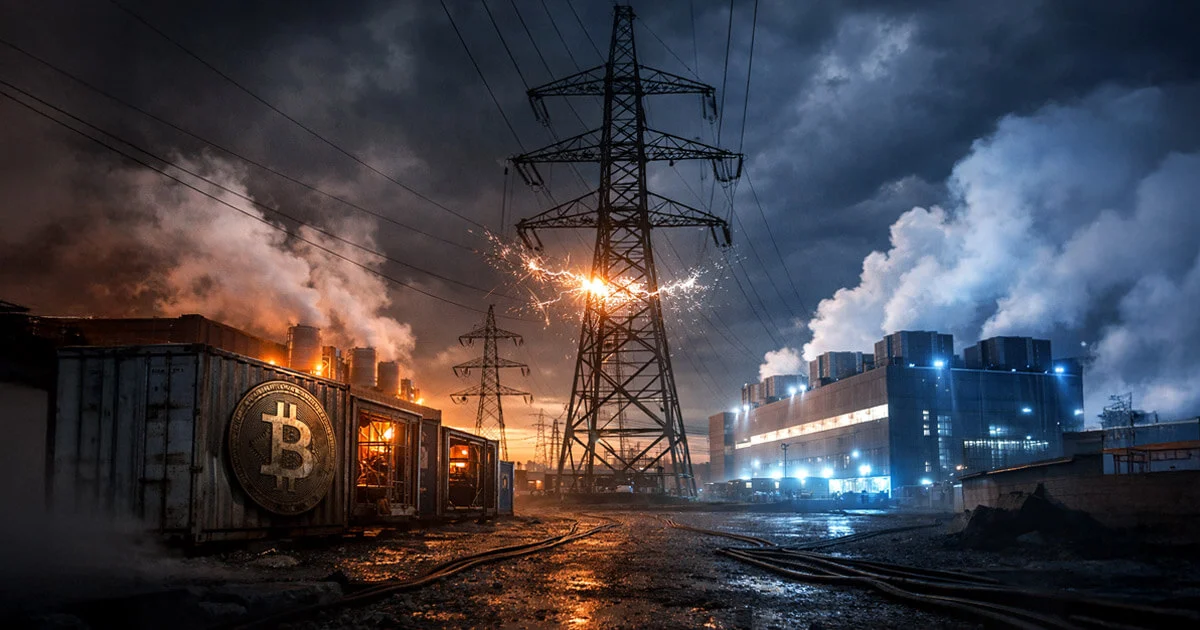
According to the BlackRock report, the rapid expansion of AI-driven compute capacity is pushing against tangible physical constraints that investors have systematically underpriced. The most provocative forecast in the outlook suggests that AI-driven data centers could consume as much as 24% of the total electricity generated in the United States by 2030. This level of consumption would represent a seismic shift in the nation’s industrial landscape, reordering priorities for utility capital expenditures, industrial siting, and regulatory frameworks. For the cryptocurrency sector, this transition marks the beginning of an "energy war," where the high-uptime requirements of AI clash with the flexible, price-sensitive model of Bitcoin mining.
The Infrastructure Pivot: From Silicon to Power
The transition from a race for chips to a race for megawatts is already underway. BlackRock identifies a massive capital expenditure trend, citing a range of $5 trillion to $8 trillion in total planned spending for the AI buildout through the end of the decade. While initial investments were concentrated on securing advanced semiconductors from manufacturers like NVIDIA, the bottleneck has shifted toward the physical facilities required to house these chips and the energy required to run them.
Historically, data center load growth in the U.S. has been relatively manageable. However, a Department of Energy report, referencing data from the Lawrence Berkeley National Laboratory, indicates that data center electricity demand has tripled over the last ten years. Projections now suggest this demand could double or even triple again by 2028. Other research bodies offer varying but equally concerning forecasts. The Electric Power Research Institute (EPRI) estimated in 2024 that data centers could account for 4.6% to 9.1% of U.S. generation by 2030. The World Resources Institute (WRI) placed that figure between 6.7% and 12%. BlackRock’s projection of up to 24% sits at the most aggressive end of the analytical spectrum, designed to highlight the macro-level risk of a power-constrained economy.
A Conflict of Consumption Models
The emerging competition for energy is defined by the fundamental differences in how AI data centers and Bitcoin miners consume power. Bitcoin mining is a "brutally simple" process at the physics layer: specialized hardware performs hashing calculations to secure a decentralized network. The primary input is electricity, and the industry’s business model is built on flexibility. When electricity prices spike or the grid is under stress, miners can shut down instantly, acting as a "flexible load" that supports grid reliability.

In Texas, the Electric Reliability Council of Texas (ERCOT) has formalized this relationship through programs that incentivize large flexible customers to curtail usage during peak demand. This model was famously illustrated in August 2023, when Riot Platforms received approximately $31.7 million in energy credits for powering down during a severe heat wave. This flexibility has been the industry’s primary defense against accusations of energy waste, positioning miners as partners to grid operators and enablers of renewable energy integration.
AI data centers operate on an entirely different set of requirements. Training large language models (LLMs) and providing real-time inference services require constant, uninterrupted power. AI "hyperscalers"—the massive cloud providers like Amazon, Google, and Microsoft—seek "baseload" power with nearly 100% uptime guarantees. Unlike Bitcoin miners, AI facilities cannot simply switch off when prices rise; they require certainty and stability. As these two industries compete for the same grid connections, the "certainty" of AI demand is increasingly viewed by utilities as more valuable than the "flexibility" of crypto demand.
Grid Constraints and the Interconnection Crisis
The "energy war" is not just about the volume of electricity available, but the ability to deliver it. The U.S. power grid is currently facing a crisis of interconnection. Across the country, thousands of projects are stuck in "interconnection queues," waiting for approval to plug into the grid. The North American Electric Reliability Corporation (NERC) has warned that rapid load growth from AI, data centers, and the broader electrification of the economy is colliding with the retirement of traditional power plants and a slow buildout of transmission infrastructure.
For Bitcoin miners, their historical advantage has been speed. Mining operations can be deployed in modular containers and energized much faster than traditional industrial plants. However, as the gating factor shifts to substation capacity and high-voltage transmission lines, that speed advantage is neutralized by regulatory and physical bottlenecks. If a utility has limited capacity to add new load, it is increasingly likely to prioritize a multi-billion dollar AI campus over a Bitcoin mining facility, given the perceived long-term economic and strategic value of AI.
The Shifting Political Landscape
The competition for megawatts is also being fought in the halls of government. Bitcoin mining has long faced political scrutiny regarding its environmental impact and its contribution to local electricity rate increases. While the industry argues it supports the grid, critics often frame it as a speculative activity that provides limited broader social utility.

In contrast, AI is increasingly framed as a matter of national security and global competitiveness. Lawmakers and economic development agencies view AI data centers as the essential infrastructure of the 21st century—the "backbone" of advancements in medicine, defense, and productivity. This asymmetry in political support creates a significant risk for the crypto industry. When power markets tighten, regulators may find it politically easier to impose reporting requirements, higher tariffs, or curtailment mandates on "optional" loads like crypto mining while protecting the "productive" loads associated with AI.
The Great Pivot: From Hashing to Hosting
Recognizing the shifting tides, several major players in the Bitcoin mining space have already begun to pivot their business models. Rather than focusing solely on hashing for Bitcoin, these firms are leveraging their most valuable asset: their energized land and power contracts. By retrofitting their facilities to host AI workloads, they are attempting to capture the higher, more stable margins offered by the AI sector.
Core Scientific and other major miners have signed multi-billion dollar deals to provide infrastructure for AI cloud providers. This "hashing to hosting" transition involves transforming mining sites into sophisticated data centers capable of supporting GPU-intensive AI tasks. However, this pivot is not without challenges. AI workloads require significantly more complex cooling systems, redundant power supplies, and high-speed fiber connectivity—infrastructure that many legacy mining sites lack. The capital required for such retrofits is enormous, and miners must compete with specialized data center operators who have deeper pockets and longer-standing relationships with the tech giants.
Analysis of Broader Implications
The BlackRock 2026 Global Outlook suggests that the "easy era" of digital infrastructure expansion is coming to an end. The implications of this energy war extend beyond the crypto and AI sectors, affecting the entire macro-economic environment.
- Utility Capex and Rate Hikes: As utilities scramble to build the generation and transmission infrastructure needed for AI, the resulting capital expenditures are likely to be passed on to consumers. This could lead to higher electricity rates for residential and industrial users, potentially sparking a public backlash against large-scale data center developments.
- The "Barbell" Industry Structure: The Bitcoin mining industry is likely to split into two distinct segments. One side will consist of "grid-integrated" miners who operate as sophisticated energy arbitrageurs, deeply embedded in utility demand-response programs. The other side will consist of "infrastructure pivots" that have successfully transitioned into AI hosting, essentially becoming specialized real estate investment trusts (REITs) for the compute era.
- Geographic Migration: As the U.S. grid reaches its limits, both AI and crypto operations may look toward international markets with surplus energy. Regions with abundant, stranded renewable energy or nuclear capacity—such as parts of Scandinavia, the Middle East, or South America—could become the new front lines in the global competition for digital infrastructure.
- Technological Innovation in Energy: The pressure on the grid may accelerate the adoption of "behind-the-meter" power solutions. We may see more data center operators and miners investing directly in small modular reactors (SMRs), large-scale battery storage, and dedicated solar or wind farms to bypass the constraints of the public grid.
Conclusion
BlackRock’s warning serves as a reminder that the digital economy is ultimately tethered to the physical world. The "love affair" between crypto and AI—born from shared interests in high-performance computing and decentralized systems—is now being tested by the cold reality of energy scarcity. As AI data centers move toward consuming a quarter of the nation’s power, the cryptocurrency mining industry must evolve or find itself squeezed out of the market. The next decade of digital growth will not be defined by who has the best code, but by who has the most reliable access to the wires, permits, and turbines that power the modern world.