Dwi Wanna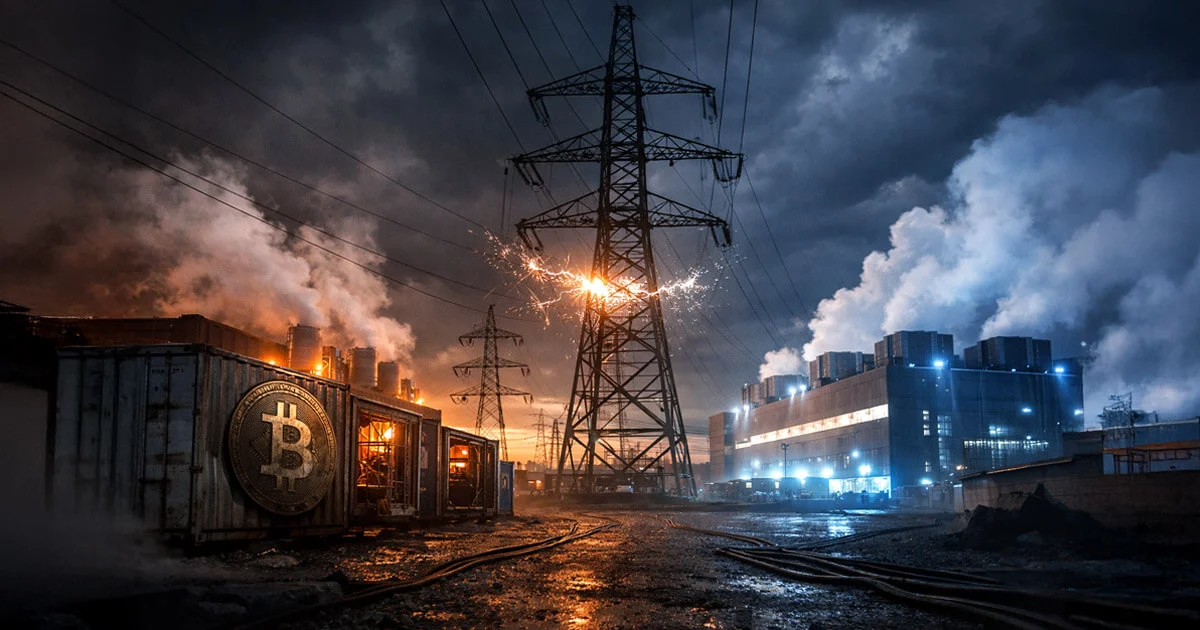
The centerpiece of BlackRock’s warning is a provocative forecast: AI-driven data centers could consume as much as 24% of total United States electricity by 2030. This projection represents a seismic shift from current levels and suggests a future where grid access becomes the ultimate arbiter of corporate success. For the Bitcoin mining industry, which has spent a decade perfecting a business model based on harvesting cheap, stranded, and interruptible power, this surge in AI demand represents an existential challenge to its primary competitive advantage.
The Shift from Silicon to Megawatts
The initial phase of the AI boom was defined by a desperate scramble for specialized hardware, specifically NVIDIA’s H100 and Blackwell chips. However, BlackRock argues that the bottleneck has shifted. The firm estimates that total capital spending intentions for the AI buildout will reach between $5 trillion and $8 trillion by 2030. This capital is increasingly being diverted away from chip procurement and toward the "physical layer" of the technology stack: land, substations, transformers, and long-term power purchase agreements (PPAs).
This "megawatt race" places AI developers in direct competition with Bitcoin miners. While the 2024-2025 narrative suggested a symbiotic relationship—where AI agents would use blockchain networks for autonomous payments—the reality on the ground is becoming one of resource displacement. BlackRock’s analysis suggests that the sheer scale of AI’s energy appetite will inevitably tighten power markets, raising the floor price of electricity and forcing a re-evaluation of which industries "deserve" to be plugged into the grid.
A Chronology of the Energy Conflict
The tension between digital assets and the power grid has evolved through several distinct phases, leading to the current friction highlighted by BlackRock:
- 2018–2021: The Era of Stranded Energy. Bitcoin miners specialized in locating "behind-the-meter" power, such as flared natural gas in North Dakota or overbuilt hydroelectric capacity in China and later Ethiopia. During this period, miners were often the only buyers for surplus energy.
- 2022–2023: The "Grid Stabilizer" Narrative. As miners moved into Texas and other deregulated markets, they rebranded as "flexible loads." They signed demand-response contracts, agreeing to shut down during peak heatwaves or freezes to maintain grid stability. This earned them political capital and significant energy credits.
- 2024: The AI Inflection Point. Following the release of GPT-4 and the subsequent rush for enterprise AI, hyperscalers (Amazon, Google, Microsoft) began seeking massive, 24/7 "baseload" power. The narrative began to shift from "absorbing surplus" to "competing for capacity."
- 2025–2026: The Resource War. BlackRock’s 2026 Outlook marks the formal recognition of this conflict. The firm notes that the "interruptible" nature of mining is becoming less valuable to utilities than the high-margin, constant-demand contracts offered by AI data centers.
Data Analysis: The Looming Power Deficit
The projections for data center energy consumption vary, but even the most conservative estimates point toward a historic strain on infrastructure. BlackRock’s high-end estimate of 24% of US electricity by 2030 sits at the aggressive edge of industry modeling, yet it aligns with a broader trend of upward revisions.
The Lawrence Berkeley National Laboratory and the Department of Energy have noted that data center load growth in the US has tripled over the last decade and is on track to double or triple again by 2028. Modeling from the Electric Power Research Institute (EPRI) suggests that even with significant gains in hardware efficiency, data centers could account for 9% of US generation by 2030. When combined with the electrification of transportation (EVs) and the reshoring of heavy manufacturing, the North American Electric Reliability Corporation (NERC) has warned that the "reserve margins"—the extra capacity available during emergencies—are shrinking to dangerous levels in nearly every major power hub.

For Bitcoin miners, these numbers are daunting. The US Energy Information Administration (EIA) estimated that crypto mining accounted for roughly 0.6% to 2.3% of US electricity in 2024. While miners have historically been able to thrive on the margins, the AI industry’s demand is so vast that it is consuming those margins entirely, leaving no "cheap" power left for speculative hashing.
Operational Friction: Flexibility vs. Certainty
The fundamental conflict between AI and Bitcoin mining lies in their respective consumption profiles. Bitcoin mining is "brutally simple" at the physics layer: it can be turned off with a flick of a switch. This flexibility was the industry’s greatest asset in places like Texas, where the Electric Reliability Council of Texas (ERCOT) paid miners like Riot Platforms millions of dollars in credits to stay offline during peak demand. In August 2023 alone, Riot received $31.7 million in energy credits for curtailing usage by 95% during a heatwave.
AI data centers, however, operate on a different logic. Training a Large Language Model (LLM) or providing real-time inference for millions of users requires "five-nines" (99.999%) uptime. These facilities cannot simply shut down when the wind stops blowing or the temperature rises. They require constant, reliable baseload power.
As BlackRock points out, utilities and grid operators are increasingly favoring the AI model. While miners provide flexibility, AI provides massive, predictable revenue and is perceived as a "productive" industrial use of electricity. This creates a regulatory and economic environment where the "flexible load" narrative of Bitcoin mining may no longer be enough to secure a seat at the table.
The Political and Strategic Dimension
The energy war is not just an economic one; it is deeply political. In Washington and state capitals, AI is increasingly framed as a matter of national security and global competitiveness. The race for "AI supremacy" against geopolitical rivals has given data center developers a level of political cover that Bitcoin miners have never enjoyed.
Lawmakers are more likely to view AI as the backbone of future medicine, defense, and economic productivity. In contrast, Bitcoin mining remains a frequent target for environmental criticism and is often characterized as a "speculative luxury." BlackRock’s report suggests that as power markets tighten, the political pressure to prioritize "productive" loads will intensify. This could result in higher tariffs for miners, more stringent reporting requirements, or even "zoning" laws that reserve substation capacity exclusively for AI and high-performance computing (HPC).
The Pivot: From Hashing to Hosting
Recognizing this shift, many of the world’s largest Bitcoin mining firms have already begun a strategic pivot. Companies like Core Scientific, TeraWulf, and Iris Energy are increasingly rebranding themselves as "AI infrastructure providers." The logic is simple: they already own the most valuable assets in the modern economy—land with energized substations and interconnection approvals.

By retrofitting their sites to host AI GPUs rather than Bitcoin ASICs, these firms can transition from the volatile income of mining to the stable, long-term contracted cash flows of AI hosting. However, this transition is technically and financially demanding. AI data centers require advanced liquid cooling systems, high-speed fiber connectivity, and redundant power supplies—infrastructure that a standard "mining shed" lacks. BlackRock’s outlook suggests that only the most well-capitalized miners will successfully make this jump, while the rest may be priced out of the energy market entirely.
Implications for the Global Energy Landscape
The "energy war" described by BlackRock has implications that extend far beyond the crypto and tech sectors. It signals the end of the era of "cheap abundance" for electricity in developed economies. As AI data centers swell to consume a quarter of the US grid, the cost of electricity for residential and traditional industrial consumers is likely to rise.
This will accelerate the need for a massive overhaul of the electrical grid. The "interconnection queue"—the list of energy projects waiting to be connected to the grid—currently stands at over 2,000 gigawatts in the US, most of which is renewable energy. The speed at which this queue is cleared will determine the winner of the AI-Bitcoin conflict.
In the long term, BlackRock’s forecast suggests a "barbell" outcome for Bitcoin mining. On one side, we will see highly integrated, grid-aware miners who operate as essential components of utility planning. On the other side, mining will continue to migrate to the world’s "energy frontiers"—countries like Ethiopia, Paraguay, or the UAE—where surplus energy remains abundant and competition from AI is not yet a factor.
Ultimately, the BlackRock 2026 Global Outlook serves as a reminder that the digital economy is not virtual. It is a physical entity tethered to the reality of wires, turbines, and heat. As the AI revolution accelerates, the "love affair" between crypto and AI is being tested by the harsh math of the power grid, forcing both industries to decide what a megawatt is truly worth.