Dwi Wanna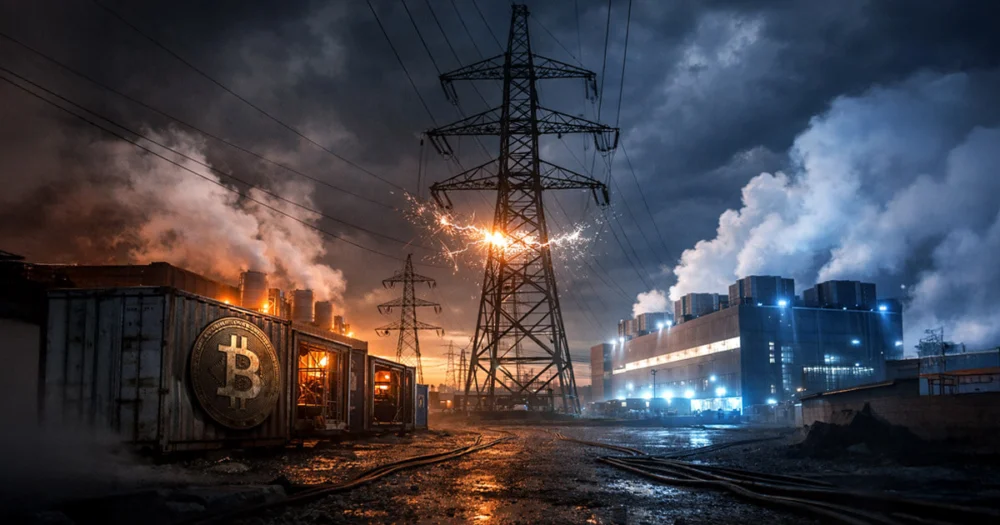
The report identifies electricity as the single most underpriced constraint in the current market. While the initial years of the AI boom were defined by a race for high-performance chips, specifically those produced by Nvidia, the next phase of the revolution will be defined by a race for megawatts. BlackRock’s analysts project that AI-driven data centers could consume as much as 24% of total U.S. electricity by 2030. This forecast, which sits at the aggressive end of industry estimates, suggests a fundamental reordering of utility capital expenditures, industrial siting, and regional economic priorities.
The Convergence and Conflict of Crypto and AI
Throughout 2024 and early 2025, a popular narrative in the digital asset space focused on the synergy between blockchain technology and artificial intelligence. The theory posited that AI agents would naturally prefer decentralized, borderless cryptocurrencies for autonomous payments, and that decentralized compute protocols could democratize access to GPUs. However, BlackRock’s analysis suggests that the physical reality of the power grid may tarnish this relationship.
For over a decade, Bitcoin miners have optimized their business models around "cheap and interruptible" power. By seeking out stranded energy—such as flared natural gas, excess hydroelectric power, or surplus wind energy at night—miners positioned themselves as a flexible load that could balance the grid. In contrast, AI data centers require "baseload" power—a constant, unwavering supply of electricity with 99.9% uptime. Unlike a Bitcoin miner, an AI model during training or an inference engine serving millions of users cannot simply "power down" when electricity prices spike or when the grid is stressed.
This difference in consumption profiles is at the heart of the emerging energy war. As hyperscalers like Microsoft, Google, and Amazon scramble to secure power for their massive data center campuses, they are increasingly competing for the same interconnection points and substation capacities that Bitcoin miners have traditionally occupied.
A Massive Capital Infusion into Energy Infrastructure
The scale of the AI buildout is unprecedented in the technology sector. BlackRock estimates that total capital spending intentions for AI infrastructure will range between $5 trillion and $8 trillion through 2030. This investment is not merely for servers and chips but for the heavy industrial equipment required to sustain them: cooling systems, high-voltage transformers, and dedicated power generation.
Supporting data from the U.S. Department of Energy (DOE) and the Lawrence Berkeley National Laboratory confirms the rapid acceleration of demand. Data center load growth in the United States has tripled over the past decade and is projected to double or triple again by 2028. Other research bodies offer varying but consistently significant projections:
- EPRI (Electric Power Research Institute): Estimates that data centers will account for 4.6% to 9.1% of U.S. electricity generation by 2030.
- World Resources Institute: Projects a range of 6.7% to 12% of total U.S. consumption by the end of the decade.
- BlackRock: Positions its "up to 24%" figure as a warning of the upper limits of potential demand if efficiency gains do not keep pace with adoption.
This surge in demand arrives at a precarious time for the U.S. energy landscape. The North American Electric Reliability Corporation (NERC) has repeatedly warned that the combination of rapid load growth from data centers and electric vehicles, coupled with the retirement of traditional fossil fuel plants and the slow pace of new transmission construction, poses a significant threat to grid reliability.
The Case Study of Texas and ERCOT
Texas has long been the global epicenter for Bitcoin mining due to its deregulated energy market and the Electric Reliability Council of Texas (ERCOT) programs that incentivize flexible demand. The state’s "Large Flexible Customer" program was specifically designed to accommodate miners, allowing them to earn revenue by shutting down during peak demand periods.
In August 2023, during a period of extreme heat, Riot Platforms reported that it curtailed its power usage by more than 95% to support grid reliability. In exchange, the company received $31.7 million in energy credits—a sum that exceeded its mining profits for that period. While this model has been hailed by some as a breakthrough in grid management, it is coming under increased scrutiny as AI firms enter the market.
Utilities and grid operators in hotspots like Texas and Northern Virginia are already beginning to adjust their rate structures. Reuters reports that some operators are moving to prioritize "firm" contracts over "interruptible" ones. For an AI developer, the "interruptible" model used by miners is a non-starter. This shift places miners in a vulnerable position where they may be outbid for grid access by firms willing to pay a premium for guaranteed, constant power.
Shifting Political and Economic Optics
The "energy war" is as much about politics as it is about physics. Bitcoin mining has faced persistent criticism over its environmental impact and its perceived lack of "productive" utility. In the eyes of many lawmakers, cryptocurrency is a speculative luxury.
AI, conversely, is being framed as a matter of national security and economic competitiveness. The race for AI supremacy between the United States and China has led to a political environment where data center development is viewed as essential infrastructure, akin to highways or power plants. This creates a significant asymmetrical advantage for AI firms. It is politically easier for a state legislature to impose new taxes or reporting requirements on a Bitcoin mine than on a multi-billion dollar AI campus that promises high-paying jobs in research and development.
A Duke University report suggests that the U.S. grid could theoretically handle the new load if it were flexible. However, since AI workloads—particularly consumer-facing inference—cannot be easily curtailed, the burden of flexibility will likely fall even more heavily on miners. If miners are forced to shut down more frequently to accommodate AI’s constant demand, the economics of hashing could become unsustainable for all but the most efficient operators.
The Great Pivot: From Hashing to Hosting
Recognizing the shift in the value of their underlying assets, many prominent Bitcoin mining firms have begun a strategic pivot. The realization is simple: a mining site is essentially a "plug-and-play" energy portal. Firms that already own land, have secured power rights, and possess functional substations are sitting on the most valuable commodity in the AI era.
In late 2024, Core Scientific, one of the largest miners in North America, signed a landmark 12-year deal with the AI startup CoreWeave. Under the agreement, Core Scientific will provide 200 megawatts of infrastructure to host CoreWeave’s GPUs. This deal signals a broader trend where the industry’s prime asset is shifting from "machines" (ASIC miners) to "megawatts" (grid access).
However, transitioning from a Bitcoin mine to a Tier 3 or Tier 4 data center capable of hosting AI workloads is a complex and capital-intensive endeavor. Bitcoin mining can operate in relatively rugged environments with air cooling and minimal redundancy. AI servers require:
- Advanced Cooling: Liquid cooling is becoming the standard for high-density AI chips.
- Redundant Power: Uninterruptible Power Supply (UPS) systems and backup generators are mandatory.
- High-Speed Connectivity: Proximity to fiber optic backbones is essential for low-latency AI training.
- Security and Uptime: Contractual obligations for uptime are far more stringent than those in the mining sector.
The cost of retrofitting a mining site can reach millions of dollars per megawatt, and miners must compete with specialized data center operators like Equinix or Digital Realty, who have deeper pockets and longer-standing relationships with the hyperscalers.
Chronology of the Energy Conflict
- 2021: China bans Bitcoin mining, leading to a "Great Migration" of hash power to the United States, specifically to regions with surplus energy like Texas, New York, and Washington state.
- Late 2022: The launch of ChatGPT triggers a global AI arms race, leading to an immediate shortage of H100 GPUs and a subsequent scramble for data center space.
- 2023: Major utilities in the U.S. Southeast and Midwest begin reporting massive increases in load growth projections, often citing data centers as the primary driver.
- 2024: BlackRock and other major asset managers begin sounding the alarm on grid constraints. The "synergy" narrative between crypto and AI begins to be replaced by a narrative of resource competition.
- 2025-2026: The implementation of BlackRock’s "Global Outlook" suggests a period of intense volatility for energy prices and a regulatory "sorting" of who is allowed to connect to the grid.
Implications for the Future of Digital Infrastructure
The BlackRock report concludes that the "easy era" of digital infrastructure is ending. For years, both the tech and crypto industries operated under the assumption that electricity was an abundant, commodity input. That assumption is no longer valid.
The likely outcome for the Bitcoin mining industry is a "barbell" distribution. On one end, there will be "Grid-Integrated Miners" who successfully integrate into utility planning as a critical tool for load balancing, likely using renewable energy that would otherwise be wasted. On the other end, there will be "Infrastructure Arbitrageurs" who abandon mining entirely to become landlords for the AI revolution.
For the AI industry, the challenge will be to find ways to increase efficiency or to fund the massive expansion of the power grid itself. Some firms, like Microsoft, have already begun exploring unconventional power sources, including the restart of nuclear reactors like Three Mile Island, to bypass the traditional grid bottlenecks.
Ultimately, the "energy war" described by BlackRock serves as a reminder that the digital world is inextricably linked to the physical one. The growth of the next generation of technology will not be limited by the speed of code or the ingenuity of algorithms, but by the capacity of wires, the speed of permitting, and the availability of the humble watt. For Bitcoin miners, the message is clear: the value of their electricity contract may soon be worth more than the Bitcoin they mine.