
 Dwi Wanna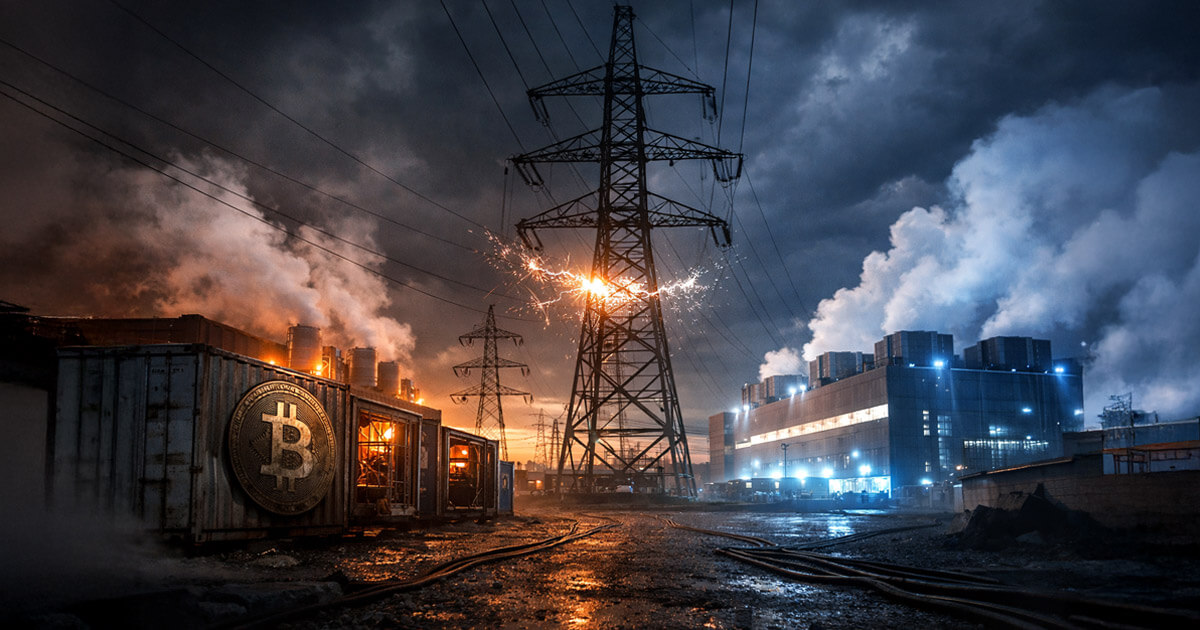
The Shift from Software to Physical Constraints
The central thesis of BlackRock’s report is that the rapid buildout of AI infrastructure is pushing against tangible, physical boundaries. While the initial phase of the AI boom focused on the scarcity of high-end semiconductors, the bottleneck has shifted toward electricity. BlackRock’s analysts highlight that investors are currently underpricing the constraint of power availability. The report provides a provocative forecast, suggesting that AI-driven data centers could consume as much as 24% of total U.S. electricity by 2030. This projection sits at the aggressive end of the analytical spectrum, yet it underscores a looming reality: the digital revolution is no longer just a matter of code, but of megawatts and transmission lines.
This forecast represents a significant escalation from previous estimates. For comparison, modeling from the Electric Power Research Institute (EPRI) in 2024 suggested that data centers could account for 4.6% to 9.1% of U.S. generation by the end of the decade. Similarly, the World Resources Institute, citing studies from the Lawrence Berkeley National Laboratory, projected a range of 6.7% to 12%. By forecasting a potential 24% share, BlackRock is signaling to the market that the infrastructure requirements for generative AI are more capital-intensive and energy-hungry than many currently realize.
A Chronology of the Energy Collision
The tension between artificial intelligence and Bitcoin mining did not emerge in a vacuum. To understand the current "energy war," it is necessary to trace the timeline of industrial-scale digital power consumption:
- 2010–2018: The Rise of Flexible Mining. Bitcoin mining transitioned from a hobbyist activity to an industrial-scale operation. Miners sought out "stranded" energy—excess hydropower in China or flared gas in the U.S.—establishing a reputation as a mobile, price-sensitive load that could utilize power that would otherwise go to waste.
- 2019–2022: Institutionalization and Grid Integration. Large-scale miners began entering into sophisticated demand-response agreements with grid operators, most notably in Texas with the Electric Reliability Council of Texas (ERCOT). Miners became "virtual batteries," shutting down during peak demand to ensure grid stability.
- 2023: The Generative AI Explosion. The launch of ChatGPT and subsequent large language models (LLMs) triggered a massive surge in demand for high-performance computing (HPC) data centers. Unlike Bitcoin miners, these facilities require constant, uninterrupted power.
- 2024–2025: The Megawatt Scramble. Hyperscalers such as Microsoft, Google, and Amazon began securing long-term power purchase agreements (PPAs), often outbidding other industrial users and placing immense pressure on interconnection queues.
- 2026 and Beyond: The Great Squeeze. As predicted by BlackRock, the competition for grid access reaches a breaking point, forcing a re-evaluation of the synergy between crypto and AI.
Divergent Consumption Profiles: Flexibility vs. Certainty
The burgeoning conflict stems from the fundamentally different ways these two industries interact with the electrical grid. Bitcoin mining is "brutally simple" at the physical layer. It utilizes Application-Specific Integrated Circuits (ASICs) to secure the network, with electricity serving as the primary input cost. The industry’s greatest survival mechanism has been its operational flexibility. Miners can power down within seconds when electricity prices spike or when the grid is under stress.
In Texas, this flexibility has been codified into law. ERCOT has designed programs specifically for "large flexible customers," encouraging Bitcoin miners to curtail usage during heatwaves or winter storms. For example, in August 2023, Riot Platforms reported curtailing its power usage by more than 95% during peak demand periods. This action earned the company $31.7 million in energy credits—a sum that occasionally exceeds the revenue generated from mining Bitcoin itself.
Conversely, AI data centers operate on a model of absolute certainty. Training a large language model is a continuous process that can take months; an unexpected power interruption can result in significant data loss and massive financial setbacks. Furthermore, "inference"—the process of an AI providing answers to users—requires low-latency, 24/7 availability. AI developers do not want to be "flexible"; they want "baseload" power. They are seeking the same high-priority status as hospitals and emergency services, often backed by the political argument that AI is essential for national security and economic competitiveness.
Supporting Data: The Scale of the Buildout
The financial scale of the AI transition is unprecedented. BlackRock cites a range of $5 trillion to $8 trillion in total capital spending intentions for the AI buildout through 2030. This spending is not merely for chips, but for the "hard" infrastructure of the modern age: data center shells, advanced cooling systems, and dedicated energy generation.
According to the U.S. Department of Energy (DOE), data center load growth in the United States has already tripled over the past decade. The Lawrence Berkeley National Laboratory projects that this demand could double or triple again by 2028. This rapid growth is colliding with a grid that is already under strain. The North American Electric Reliability Corporation (NERC) has warned that the combination of rapid load growth from AI and electric vehicles, coupled with the retirement of traditional fossil fuel generators, creates significant reliability risks.
In this environment, "cheap power" is no longer a matter of finding a low-cost tariff. It is a matter of "interconnection." Grid operators and utilities are facing massive backlogs in interconnection queues—the list of projects waiting to be plugged into the grid. In some regions, the wait time to connect a new large-scale facility can exceed five years. For Bitcoin miners, whose competitive advantage has always been their ability to deploy quickly in "plug-and-play" containers, this regulatory and infrastructure bottleneck represents a fundamental threat to their business model.
Political Optics and Regulatory Pressure
The "energy war" is also being fought in the halls of government. Bitcoin mining has long been a target for critics who view it as an unproductive use of energy. While the industry argues it supports grid stability and renewable energy integration, it often lacks the broad political coalition enjoyed by Big Tech.
AI, by contrast, is being framed as a matter of national priority. Lawmakers are increasingly viewing the race for AI supremacy as a modern-day Space Race. Consequently, when power becomes scarce, the political pressure to prioritize "productive" AI workloads over "speculative" Bitcoin mining is likely to intensify. This may manifest as higher electricity rates for miners, stricter environmental reporting requirements, or even outright moratoriums on new mining permits in regions where the grid is nearing capacity.
Reuters has already reported that utilities in hotspots like Northern Virginia and Texas are adjusting rate structures to manage the surge in demand from hyperscalers. As these utilities prioritize the high-margin, long-term contracts offered by Big Tech firms, Bitcoin miners may find themselves pushed to the fringes of the energy market.
The Strategic Pivot: From Hashing to Hosting
Faced with these pressures, many Bitcoin mining firms are choosing to join their rivals rather than fight them. A significant trend is emerging where mining companies are pivoting their business models to become AI infrastructure providers. The logic is compelling: if a company already owns a substation, land, and a high-voltage interconnection, it possesses the most valuable assets in the AI economy.
Firms are increasingly retrofitting their sites to host GPU-based AI clusters. However, this transition is technically and financially demanding. Bitcoin mining can be done in relatively rugged, air-cooled containers. AI clusters require sophisticated liquid cooling, high-speed fiber-optic networking, and much higher levels of physical security and redundancy.
While the "math" of the pivot looks attractive—moving from the volatile revenue of Bitcoin to the steady, contracted cash flows of AI hosting—the capital requirements are immense. This transition is creating a "barbell" effect in the industry. On one side are the "utility-integrated" miners who will survive by becoming essential, flexible components of the power grid. On the other side are the "infrastructure-pivoters" who will evolve into diversified compute utilities. Those stuck in the middle, relying solely on traditional mining with no energy edge, face a difficult future.
Broader Impact and Market Implications
The BlackRock 2026 Global Outlook serves as a definitive warning that the "easy era" of digital infrastructure is ending. The primary constraint on the growth of the digital economy is no longer the speed of the processor, but the capacity of the transformer and the turbine.
For the cryptocurrency sector, this shift means that the "energy flexibility" narrative will be tested as never before. If miners can prove they are the only load capable of balancing a grid dominated by inflexible AI demand and intermittent renewable energy, they may secure a permanent place in the energy ecosystem. If they fail to make that case, they risk being regulated out of existence in favor of the "national interest" of artificial intelligence.
Ultimately, the "energy war" described by BlackRock reflects a broader macro shift. As the world moves toward greater electrification, the competition for power will redefine industrial policy. The next decade of technological progress will not be decided by who has the best code, but by who has the most reliable access to the grid. In the battle between the "shock absorbers" of Bitcoin and the "shock creators" of AI, the physical world of wires and permits has become the ultimate arbiter of value.