
 admin
admin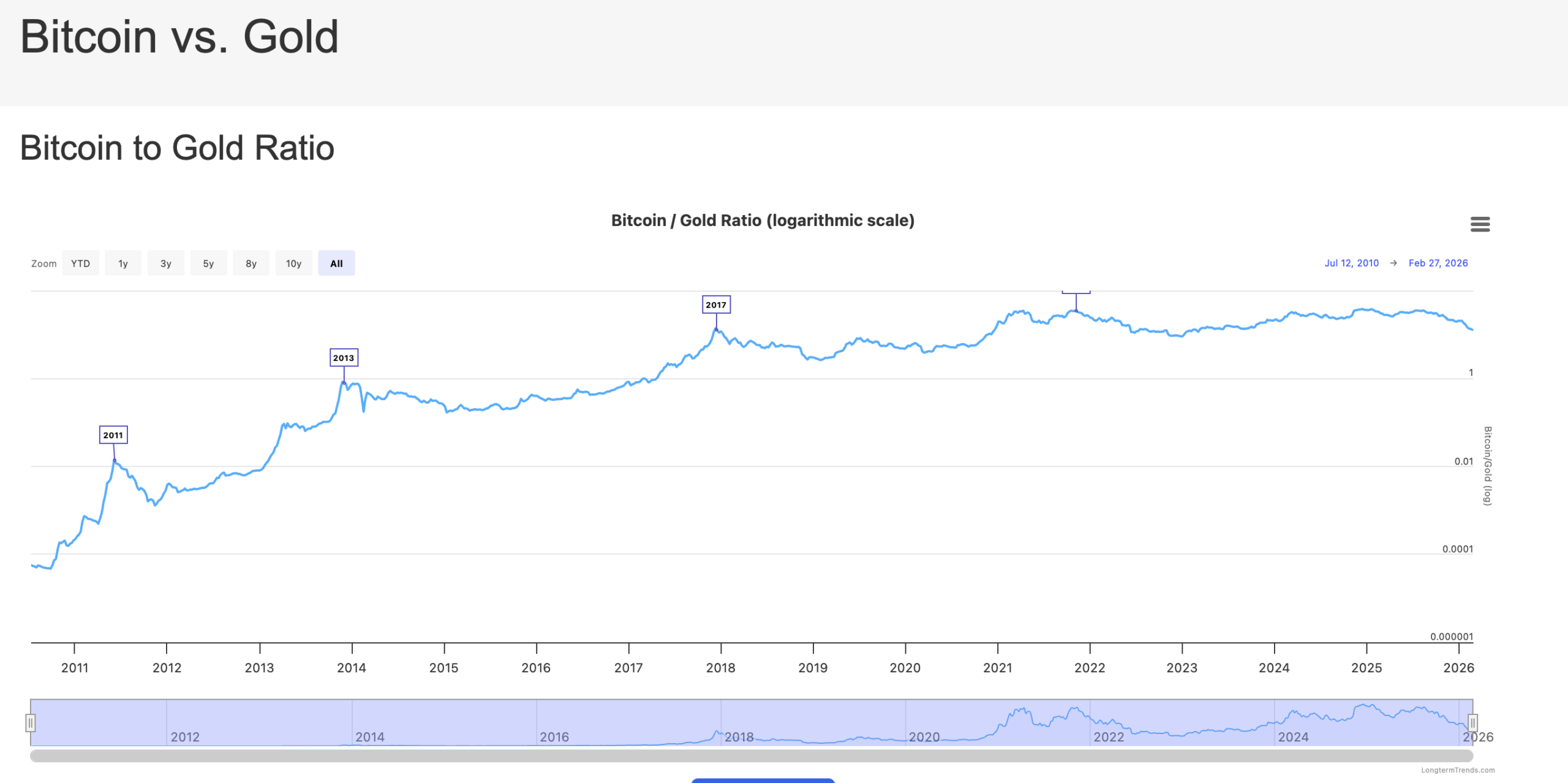
The digital asset market is experiencing a significant resurgence, marked by Bitcoin (BTC) decisively breaking through a formidable resistance level to reclaim the pivotal $70,000 valuation. This landmark achievement not only galvanizes bullish sentiment across the entire Web3 ecosystem but also intensifies a burgeoning debate among economists and investors regarding a potential quiet reallocation of capital from traditional safe-haven assets, specifically gold, into Bitcoin. This development signals a critical juncture for the macroeconomic landscape, compelling a deeper examination of Bitcoin’s evolving role in global finance.
The Path to $70,000: A Chronology of Resilience
Bitcoin’s journey back to the $70,000 threshold has been characterized by a period of intense market dynamics, reflecting both robust underlying demand and periods of speculative volatility. Following its historic peak earlier in the year, Bitcoin entered a phase of consolidation, often termed a "cooling-off" period. This phase saw the cryptocurrency testing various lower support zones, notably around the $60,000 to $65,000 range, which proved resilient against significant downward pressure. Analysts pointed to several factors contributing to this consolidation, including profit-taking by short-term traders, macroeconomic uncertainties such as fluctuating inflation data, and a temporary slowdown in the previously relentless inflows into newly launched Spot Bitcoin Exchange-Traded Funds (ETFs).
Throughout this period, technical indicators suggested a build-up of bullish pressure. On-chain data revealed consistent accumulation by long-term holders, signaling strong conviction in Bitcoin’s future prospects. Whales, or large institutional investors, were observed increasing their positions during price dips, reinforcing the underlying support structure. Multiple attempts to breach the $70,000 resistance were met with selling pressure, creating a psychological barrier that tested investor resolve. However, the sustained buying interest, particularly from institutional channels, ultimately provided the momentum needed for the decisive breakout. The final push above $70,000 was swift, occurring over a 24-hour period that saw significant trading volume, confirming the strength of the bullish move and clearing previous resistance levels with conviction. This chronological progression underscores not just a price recovery, but a re-establishment of market confidence after a necessary period of re-calibration.
Psychological Significance and Market-Wide Ripple Effects
In the volatile realm of cryptocurrency, round numbers like $70,000 transcend mere price points; they function as powerful psychological milestones that dictate market sentiment. Surpassing this level does more than just validate the strength of buying pressure; it unleashes a cascade of positive sentiment that reverberates throughout the broader digital asset landscape. From the decentralized finance (DeFi) protocols and non-fungible tokens (NFTs) to the more speculative memecoin markets, a renewed sense of optimism and risk-on appetite typically takes hold.

This psychological uplift is critical for several reasons. Firstly, it often triggers FOMO (Fear Of Missing Out) among retail investors who may have been waiting on the sidelines during the consolidation phase, leading to increased buying activity. Secondly, it strengthens the conviction of existing holders, reducing selling pressure and potentially encouraging further accumulation. Thirdly, for institutional players, breaching such a significant resistance level can signal renewed upward momentum, making Bitcoin a more attractive asset for capital allocation and potentially triggering further strategic investments. The perception of a sustained rally can attract new capital into the ecosystem, benefiting not just Bitcoin but also a wide array of altcoins that often follow BTC’s price trajectory. This interconnectedness means Bitcoin’s performance is a bellwether for the entire Web3 space, its milestones acting as catalysts for broader market expansion and innovation.
The Unyielding Influence of Spot Bitcoin ETFs
The narrative of Bitcoin’s current strength cannot be fully understood without acknowledging the transformative impact of Spot Bitcoin ETFs in the United States. Approved earlier this year, these investment vehicles have fundamentally altered the accessibility and institutional perception of Bitcoin. After weeks of fluctuating performance and testing lower support zones, the market’s return to the $70,000 territory unequivocally signals that institutional investors remain active accumulators, effectively preventing the market from sliding into a prolonged "crypto winter."
Since their inception, Spot Bitcoin ETFs have recorded unprecedented inflows. Data from leading financial analytics firms indicate that these ETFs collectively garnered over $15 billion in net inflows within their first few months of trading. Funds like BlackRock’s IBIT and Fidelity’s FBTC have consistently ranked among the most successful ETF launches in history, attracting capital from a diverse range of institutional clients, including hedge funds, wealth managers, and even some pension funds. This continuous influx of institutional capital provides a robust demand floor for Bitcoin, offsetting potential selling pressure from other market segments. The daily transparency of ETF flows offers a clear indicator of institutional appetite, and the sustained accumulation through these channels suggests a long-term strategic commitment to Bitcoin as a legitimate asset class. This institutional embrace is a paradigm shift, moving Bitcoin from the fringes of finance into mainstream investment portfolios and providing a stable, regulated conduit for large-scale capital deployment.
Bitcoin vs. Gold: Correlation, Divergence, and a Shifting Paradigm
Bitcoin has long carried the moniker of "Digital Gold," a designation stemming from its inherent characteristics: absolute scarcity, capped at 21 million coins, and its perceived role as a decentralized, inflation-hedging store of value. However, the intricate relationship between these two assets is far from simplistic, exhibiting periods of both correlation and significant divergence.
Historical Correlation Periods: During times of heightened global economic uncertainty, such as surging inflation (e.g., post-pandemic monetary expansion) or geopolitical instability (e.g., regional conflicts, banking crises), both gold and Bitcoin have historically attracted safe-haven capital. In such scenarios, their price charts have often exhibited parallel movements, suggesting that investors, particularly those seeking alternatives to fiat currencies, do view BTC as a modern iteration of gold. For instance, during the initial phases of the COVID-19 pandemic, when central banks embarked on aggressive quantitative easing, both assets saw significant appreciation as investors sought hedges against currency debasement. Similarly, during specific periods of banking sector stress, both assets displayed resilience, indicating a flight to perceived safety.

Moments of Decoupling: Nevertheless, market history is replete with instances where Bitcoin’s price trajectory aggressively decoupled from gold. These notable divergences often occur when traditional markets trade sideways or experience a slight downturn, yet Bitcoin embarks on explosive rallies driven by its unique catalysts. Key examples include its quadrennial "Halving" events, which reduce the supply of new Bitcoin and historically precede significant price appreciation. The boom cycles of the NFT and DeFi markets have also provided unique speculative impetus for Bitcoin, drawing in capital specifically interested in the broader Web3 innovation. Crucially, massive capital inflows from new avenues like Spot Bitcoin ETFs represent a novel catalyst, introducing a demand mechanism entirely distinct from gold’s traditional drivers. Bitcoin’s comparatively smaller market cap and its inherent agility as a technology-driven asset mean it can react much more violently to technological developments, regulatory clarity, and shifts in global net liquidity. Unlike gold, which is a legacy asset primarily influenced by mining supply, central bank holdings, and industrial demand, Bitcoin is also profoundly affected by network adoption, developer activity, and evolving digital infrastructure, making its market dynamics inherently more complex and often more volatile.
Is Capital Rotating From Gold? Evidence and Analysis
Bitcoin’s latest surge to $70,000, occurring concurrently with signs of cooling demand for gold, has undeniably intensified the "capital rotation" hypothesis. This theory posits a significant, perhaps generational, shift in investment preference from the venerable yellow metal to its digital counterpart.
Since the landmark approval of Spot Bitcoin ETFs in the U.S., a discernible reallocation of wealth appears to be underway. Financial analysts and market observers have meticulously tracked the data, noting a striking contrast: inflows into Spot Bitcoin ETFs have not only been soaring at historic rates but have also coincided with recorded outflows from Gold ETFs in several key regions. For example, some reports indicate that global gold ETFs have experienced net outflows totaling hundreds of millions of dollars, and in some instances, outflows equivalent to tens of tons of physical gold, over the same periods that Bitcoin ETFs have seen multi-billion dollar inflows. This inverse correlation in fund flows provides compelling, albeit circumstantial, evidence for the rotation thesis.
The motivations behind this potential shift are multi-faceted. A new generation of investors, inherently more digitally native, is increasingly viewing Bitcoin as a superior store of value. Its ease of transfer, divisibility, and transparency, coupled with its fixed supply, resonate strongly with modern investment principles. Furthermore, even traditional fund managers, while still maintaining gold exposure, are beginning to acknowledge Bitcoin’s potential as a more efficient capital allocation tool. Bitcoin offers the prospect of superior returns, especially during periods of high innovation and technological adoption, compared to the aging stability of gold, which has historically offered more moderate, albeit consistent, appreciation. The operational efficiency of digital assets – lower storage costs, instant settlement, and global accessibility – also presents a compelling case for institutions accustomed to the cumbersome logistics of physical gold. This emerging preference suggests a fundamental re-evaluation of what constitutes a "safe haven" and a "store of value" in the 21st century financial landscape.
Expert Perspectives and Market Sentiment
The renewed surge in Bitcoin’s price has elicited a range of reactions and analyses from financial experts across the spectrum. Leading economists are carefully monitoring the Gold-Bitcoin dynamic, with some suggesting that while a complete decoupling is unlikely in the short term, the trend of capital flowing into Bitcoin is structurally significant. "We are witnessing a maturation of Bitcoin as an asset class," stated Dr. Eleanor Vance, a senior economist at a prominent global investment bank. "The institutional embrace via ETFs provides a stamp of legitimacy that simply didn’t exist a few years ago. It’s no longer just a speculative play; it’s a legitimate component of diversified portfolios."

Crypto strategists, meanwhile, are largely optimistic about the sustainability of the current rally. Michael Chen, a veteran crypto analyst, noted, "The $70,000 reclaim is not just a technical victory; it’s a psychological reset. The market has absorbed significant selling pressure and emerged stronger. The consistent ETF inflows are the bedrock of this stability, differentiating this bull run from previous, more retail-driven cycles." Traditional fund managers, while cautiously optimistic, emphasize the need for continued due diligence. "While we acknowledge Bitcoin’s appeal, especially for younger demographics, gold still plays a critical role in hedging against systemic risks," commented Sarah Jenkins, a portfolio manager at a large asset management firm. "However, the data on ETF flows is undeniable, and we are certainly re-evaluating our long-term asset allocation strategies to include digital assets more prominently." The prevailing market sentiment is one of cautious optimism, underpinned by institutional validation but tempered by an awareness of inherent market volatility and evolving regulatory landscapes.
Is $70K a Sustainable Breakout? Factors for Confirmation
The most pressing question for both short-term traders and long-term investors is whether this $70,000 level can be sustained. For this breakout to truly signal a lasting upward trend, several key factors must align:
- Continued Institutional Inflows: The consistent demand from Spot Bitcoin ETFs is paramount. A significant deceleration or reversal of these inflows could indicate a weakening of institutional conviction, potentially leading to price corrections. Daily reports on ETF flows will be critical indicators.
- Macroeconomic Stability and Favorable Monetary Policy: A stable global economic environment, coupled with anticipated interest rate cuts by central banks, would generally be bullish for risk-on assets like Bitcoin. Conversely, unexpected inflation spikes or aggressive monetary tightening could introduce headwinds.
- Positive Regulatory Developments: Further clarity and favorable regulations in major jurisdictions would significantly de-risk Bitcoin for a broader base of institutional and corporate investors, encouraging more capital allocation.
- Strong Technical Support: Sustained trading activity above $70,000, ideally consolidating in the $70,000-$72,000 range, would transform the previous resistance into a strong support level. A retest of $70,000 from above, followed by a bounce, would further confirm its sustainability.
- Bitcoin Halving Event Impact: The recent or upcoming Halving event, which reduces the supply of new Bitcoin, is historically a powerful bullish catalyst. Its full impact often unfolds in the months following the event, contributing to sustained price appreciation.
Broader Impact on the Web3 Ecosystem and Macroeconomic Landscape
Bitcoin’s reassertion of its dominance at $70,000 sends a profoundly bullish signal not just for its own trajectory but for the entire digital asset market. Its performance often dictates the sentiment for altcoins, DeFi projects, and the NFT space. A robust Bitcoin typically leads to increased liquidity and investor confidence across the board, potentially fueling innovation and adoption in these nascent sectors. Developers might find renewed funding, and users might be more inclined to experiment with new decentralized applications.
From a macroeconomic perspective, Bitcoin’s increasingly dominant position in global investment portfolios is a development of immense significance. If the capital rotation hypothesis proves accurate over the long term, it could fundamentally alter traditional asset allocation models, forcing a re-evaluation of gold’s role as the primary inflation hedge and safe-haven asset. Central banks and sovereign wealth funds, traditionally heavy holders of gold, might eventually consider diversifying into digital assets. This shift could impact global financial stability, influence monetary policy discussions, and redefine the very concept of value in an increasingly digital world. The agility and transparency of Bitcoin, contrasted with the physical constraints and opacity of gold markets, present a compelling case for its long-term integration into the fabric of global finance.
Bitcoin reclaiming its throne at $70,000 is far more than a mere price movement; it is a powerful reaffirmation of its growing influence and resilience. While definitive conclusions about a complete "drain" from gold to Bitcoin remain speculative, the undeniable reality is that "Digital Gold" is increasingly cementing its dominant position within global investment portfolios. The convergence of institutional adoption, unique technological catalysts, and shifting investor preferences suggests that Bitcoin’s journey is only just beginning. Investors and observers alike should buckle up, as the next phase of the crypto journey promises to be nothing short of transformative and potentially explosive.