Dwi Wanna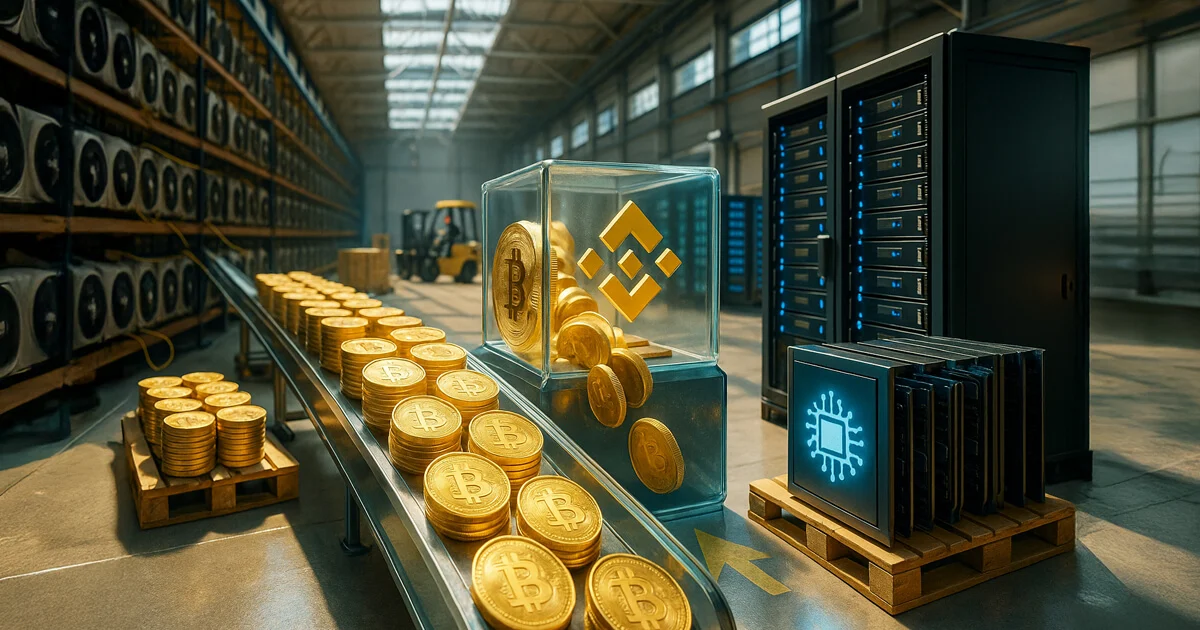
Bitcoin mining operations are currently navigating one of the most precarious financial environments in the history of the decentralized network, as a combination of diminishing block rewards and intensifying competition forces a radical restructuring of the industry. Recent on-chain data indicates a massive exodus of capital from miner-controlled wallets to centralized exchanges, signaling a potential liquidation event that could reshape the market’s short-term price action. Between October 9 and October 15, 2024, mining entities transferred approximately 51,000 BTC—valued at more than $5.6 billion—to the Binance exchange, marking one of the most significant periods of miner-led sell pressure in years.
This capital flight coincides with a broader $19 billion market rout, suggesting that the industry’s "backbone" is no longer in a position to hold onto its reserves. The shift from a long-term accumulation phase to an active liquidation phase highlights a growing desperation among operators who are struggling to maintain solvency in a post-halving world. As the profitability of traditional Bitcoin mining reaches historic lows, the industry is increasingly looking toward Artificial Intelligence (AI) and High-Performance Computing (HPC) as a necessary "escape plan" to ensure long-term corporate survival.
Chronology of the $5.6 Billion Liquidation Event
The movement of Bitcoin from mining pools and individual operator wallets began to accelerate in early October, following a period of relative stability. According to data provided by the blockchain analytics firm CryptoQuant, the most aggressive phase of this transfer occurred over a seven-day window.

On October 9, exchange inflows from miner addresses began to tick upward, but the peak of the activity was recorded on October 11. On that day alone, more than 14,000 BTC were moved to Binance. This single-day transfer represented the largest miner deposit to an exchange since July 2024. By October 15, the total volume had crossed the 51,000 BTC threshold.
Analysts note that these movements are rarely random. Historically, large-scale transfers to exchanges serve as a precursor to one of three outcomes: direct market selling to cover operational expenses (OPEX), the use of Bitcoin as collateral for margin-based financing, or a strategic reallocation of assets for regulatory compliance. Given the current "hashprice" environment—a metric measuring miner revenue per unit of computing power—the consensus among market observers is that these transfers are primarily driven by a need for immediate liquidity.
The Financial Squeeze: Post-Halving Realities
The primary catalyst for this shift in miner behavior is the fundamental change in Bitcoin’s issuance schedule. The April 2024 halving event reduced the block subsidy from 6.25 BTC to 3.125 BTC. While this reduction is a programmed feature designed to ensure Bitcoin’s scarcity, it effectively doubled the production cost for every coin mined, assuming all other variables remained constant.
However, other variables did not remain constant. Network difficulty, a self-adjusting mechanism that ensures blocks are found approximately every ten minutes, reached an all-time high of 150 trillion in September 2024. This increase means that miners must expend more electricity and utilize more sophisticated hardware just to maintain their existing share of the network rewards.

Data from Cloverpool confirms that while the most recent difficulty epoch (ending at block 919,296) saw a slight downward adjustment of 2.73%, the relief has been insufficient to offset the broader trend of declining margins. The "hashprice" has plummeted to approximately $45 per petahash per day, a level not seen since the market lows of April. When revenue falls to these levels, operators running older-generation hardware, such as the Antminer S19 series, often find themselves "underwater," where the cost of electricity exceeds the value of the Bitcoin produced.
Furthermore, the secondary revenue stream for miners—transaction fees—has failed to provide the necessary cushion. In previous cycles, periods of high network activity (such as the rise of Ordinals or Runes) provided a significant boost to miner income. In 2025, however, the average fee per block has hovered around 0.036 BTC, the lowest level observed in over a decade.
Analysis of the Pivot to Artificial Intelligence
Faced with a zero-sum game in the mining sector, several of the world’s largest publicly traded mining firms are pivoting their business models toward the booming AI sector. This transition is not merely a trend but a structural realignment of digital infrastructure.
Mining facilities possess three assets that are currently in high demand for AI development: massive power interconnection agreements, advanced industrial cooling systems, and high-speed fiber-optic connectivity. Companies like Core Scientific, TeraWulf, and Iris Energy have already begun retooling their data centers to host GPU clusters instead of Bitcoin ASICs (Application-Specific Integrated Circuits).

The economic incentive for this shift is stark. According to research from Hashlabs and Digital Mining Solutions, the revenue potential of a 1-megawatt (MW) data center is significantly higher when dedicated to AI workloads compared to Bitcoin mining.
- Bitcoin Mining Revenue: A 1-MW site operating high-efficiency rigs (20 J/TH) generates approximately $896,000 in annual revenue, assuming a Bitcoin price of $100,000.
- AI/HPC Hosting Revenue: The same 1-MW site, when leased to AI clients for high-performance computing, can yield up to $1.46 million in annual revenue.
Crucially, AI revenue is typically derived from long-term, stable contracts, providing a "floor" for corporate earnings that Bitcoin mining—subject to the extreme volatility of the crypto markets—cannot offer. Nico Smid, founder of Digital Mining Solutions, noted that the rise of AI is transforming the global compute landscape, forcing Bitcoin miners to compete for the same critical resources: power, infrastructure, and human capital.
Expert Reactions and Industry Sentiment
The sudden shift in miner behavior has drawn sharp commentary from industry analysts who warn that the "golden age" of pure-play Bitcoin mining may be coming to an end. Jaran Mellerud, a prominent Bitcoin mining analyst, expressed concern over the industry’s historical disregard for transaction fees.
"It is a paradox that so many bitcoin miners completely disregard transaction fees," Mellerud stated. "In just a decade, these fees will be almost your sole source of income as the block subsidy continues to halve toward zero. Those who do not adapt their infrastructure to maximize efficiency or diversify their revenue streams will not survive the next cycle."

Blockchain researcher ArabChain provided a more nuanced view of the $5.6 billion transfer, suggesting that while the signal is bearish, it may also reflect a more sophisticated approach to treasury management. "Sometimes, miners deposit coins to use as collateral for derivatives contracts or for financing purposes," the researcher explained. "However, when we see such massive volumes hitting an exchange like Binance simultaneously, it usually points to a need for cash to fund the very expensive transition to AI-compatible infrastructure."
Broader Implications for the Bitcoin Network
The exodus of miners or their diversification into AI has profound implications for the Bitcoin network’s security model. Bitcoin’s security is derived from its "hashrate"—the total computational power dedicated to securing the blockchain. If a significant portion of this power is diverted to AI or if miners shut down due to insolvency, the hashrate could stagnate or decline.
In the short term, the $5.6 billion in potential sell pressure acts as a heavy "overhead" for Bitcoin’s price. As long as miners are forced to liquidate their reserves to stay afloat or to fund their AI pivots, it becomes difficult for the market to sustain a bullish breakout.
In the long term, the emergence of "hybrid" data centers—facilities that mine Bitcoin when it is most profitable and run AI workloads when it is not—may become the new industry standard. This would create a more resilient class of miners who are less dependent on the four-year halving cycle. However, it also means that the decentralized nature of mining could face new challenges as the industry becomes more capital-intensive and aligned with traditional tech infrastructure requirements.

As the industry moves into the final quarter of 2024, the focus remains on whether the current $45 hashprice represents a definitive "bottom" or if further capitulation is required to flush out inefficient operators. For now, the $5.6 billion move to Binance serves as a stark reminder that even the most bullish participants in the ecosystem are not immune to the harsh realities of economic gravity. The "AI escape plan" is no longer a theoretical strategy; it is a live operational shift that is currently being funded by the liquidation of the world’s largest Bitcoin reserves.