
 admin
admin
The cryptocurrency market demonstrated a modest uptick on Friday, February 20th, with Bitcoin holding steady near the $67,700 mark, as investors continued to digest a complex tapestry of macroeconomic developments. This cautious optimism emerged in the wake of a significant U.S. Supreme Court ruling that invalidated President Donald Trump’s recently announced emergency tariffs, while simultaneously, the former president signaled intentions for a broader 10% global tariff plan. This dual announcement injected a layer of uncertainty into global trade dynamics, prompting a careful assessment by market participants across both traditional and digital asset classes.
Bitcoin (BTC), the flagship cryptocurrency, was trading at approximately $67,728, reflecting a 1.2% increase over the preceding 24-hour period. Ethereum (ETH), the second-largest digital asset, saw a similar upward trend, trading at $1,970, up 1.5%. The broader altcoin market also largely followed suit, with major players like XRP rising 1.5% to $1.43, Binance Coin (BNB) climbing a more robust 3.2% to $625, and Solana (SOL) registering a 4% gain to $85. This collective movement suggested a general sentiment of stability, if not outright bullishness, within the crypto sphere despite the swirling geopolitical and economic news.
The total cryptocurrency market capitalization hovered close to $2.4 trillion, a 1.3% increase on the day, according to data compiled by CoinGecko. Daily trading volumes were substantial, approximating $114.5 billion, indicating continued active participation by traders and investors. Among the top performers on Friday, Morpho (MORPHO) surged by an impressive 11%, followed by Ethereum Classic (ETC) with a 5.3% rise, and Official Trump (TRUMP), a token that has seen increased attention in the context of political events, adding approximately 5%. Conversely, some assets experienced declines, with Aave (AAVE) falling around 4.6%, Pi Network (PI) dropping about 3%, and Rain (RAIN) slipping approximately 2%. These divergent performances highlighted the nuanced reactions within the diverse digital asset ecosystem.
Liquidations and ETF Dynamics Amidst Market Flux
The past 24 hours also witnessed significant activity in leveraged crypto positions, with approximately $180 million in positions being liquidated, as reported by CoinGlass. This figure comprised both long and short positions, with short liquidations accounting for a larger portion, around $108 million, compared to long liquidations totaling approximately $71.9 million. Bitcoin bore the brunt of these liquidations, with $67.9 million in BTC positions unwound, followed by Ethereum at around $38.3 million. The scale of liquidations indicated a period of heightened volatility and deleveraging within certain market segments, impacting over 78,600 traders.
In the realm of regulated investment products, the spot Bitcoin Exchange Traded Funds (ETFs) experienced net outflows totaling $165.76 million. Similarly, spot Ethereum ETFs saw outflows of $130 million. This outflow trend, while notable, was partially offset by inflows into other, albeit smaller, ETF products. XRP spot ETFs recorded approximately $4 million in inflows, and Solana spot ETFs posted $5.94 million in inflows, according to data from SoSoValue. These contrasting flows suggested a shifting investor sentiment or a rotation of capital within the digital asset ETF landscape, potentially driven by specific asset performance or perceived market opportunities.
The Supreme Court Ruling and the Specter of New Tariffs
The broader market uptick on Friday was interpreted by many analysts as a reaction to the Supreme Court’s decision to strike down President Trump’s emergency tariffs. This ruling provided a degree of immediate relief from a sudden, potentially disruptive trade policy. However, the market’s focus quickly shifted to the subsequent announcement by the former president regarding his intention to implement a new, broad 10% global tariff plan. This development resurrected concerns about potential trade friction and its implications for the global economy.
The intricacies of the proposed tariff plan, as reported by CNN, indicated that any new tariffs implemented by President Trump could have a limited duration of up to 150 days unless explicitly approved by Congress for an extension. This stipulation introduces an element of political negotiation and potential legislative hurdles, adding another layer of complexity to the economic outlook. The market’s response, therefore, was a cautious one, acknowledging the immediate reprieve but remaining watchful of future policy decisions and their potential long-term ramifications.
Geopolitical Tensions and Safe-Haven Asset Performance
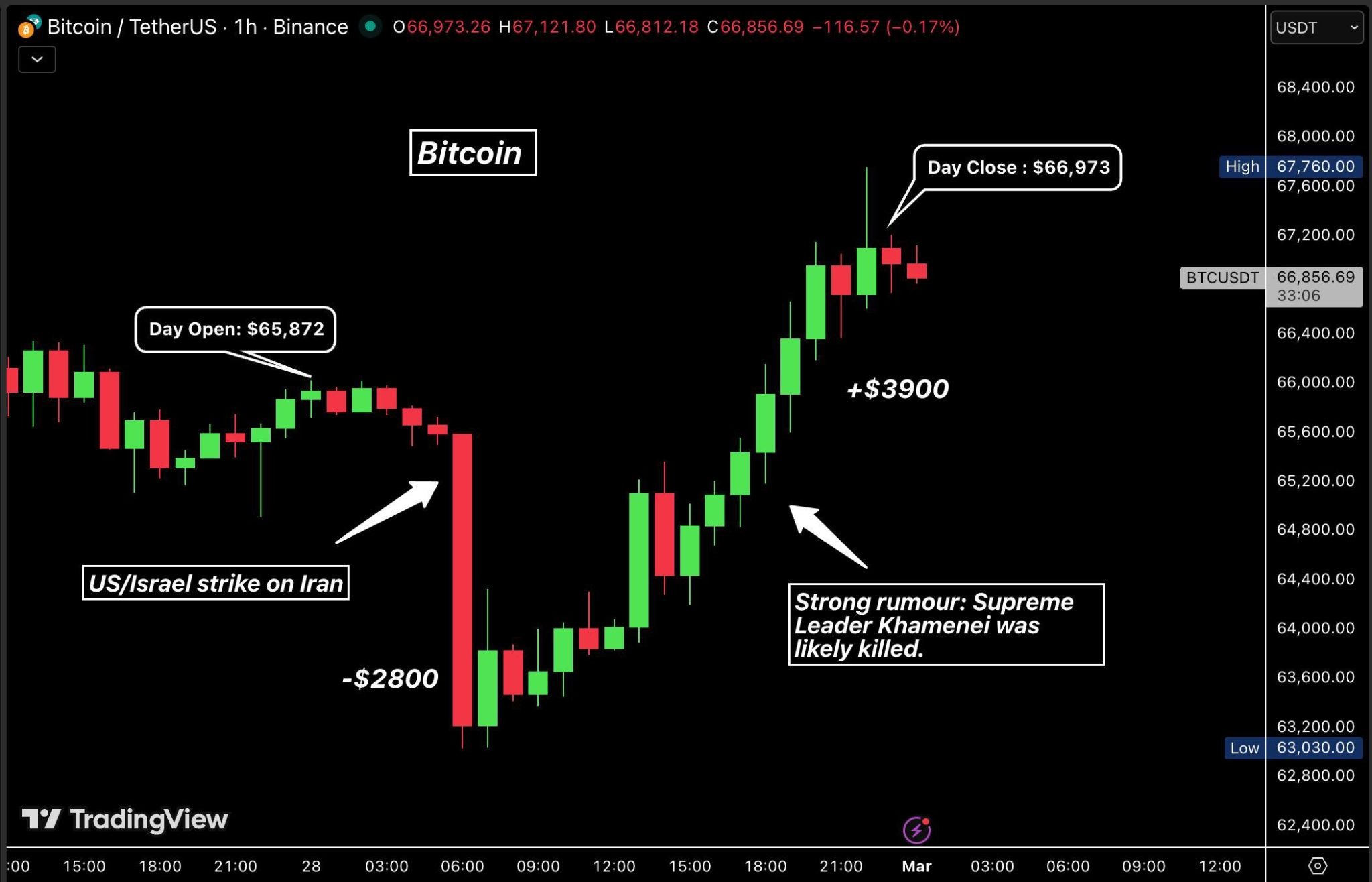
Beyond the trade policy pronouncements, investors also responded to escalating geopolitical tensions. President Trump’s stated consideration of a limited military strike on Iran, contingent on the progress of nuclear negotiations, further amplified concerns about global stability. Such geopolitical uncertainties often lead investors to seek out traditional safe-haven assets.
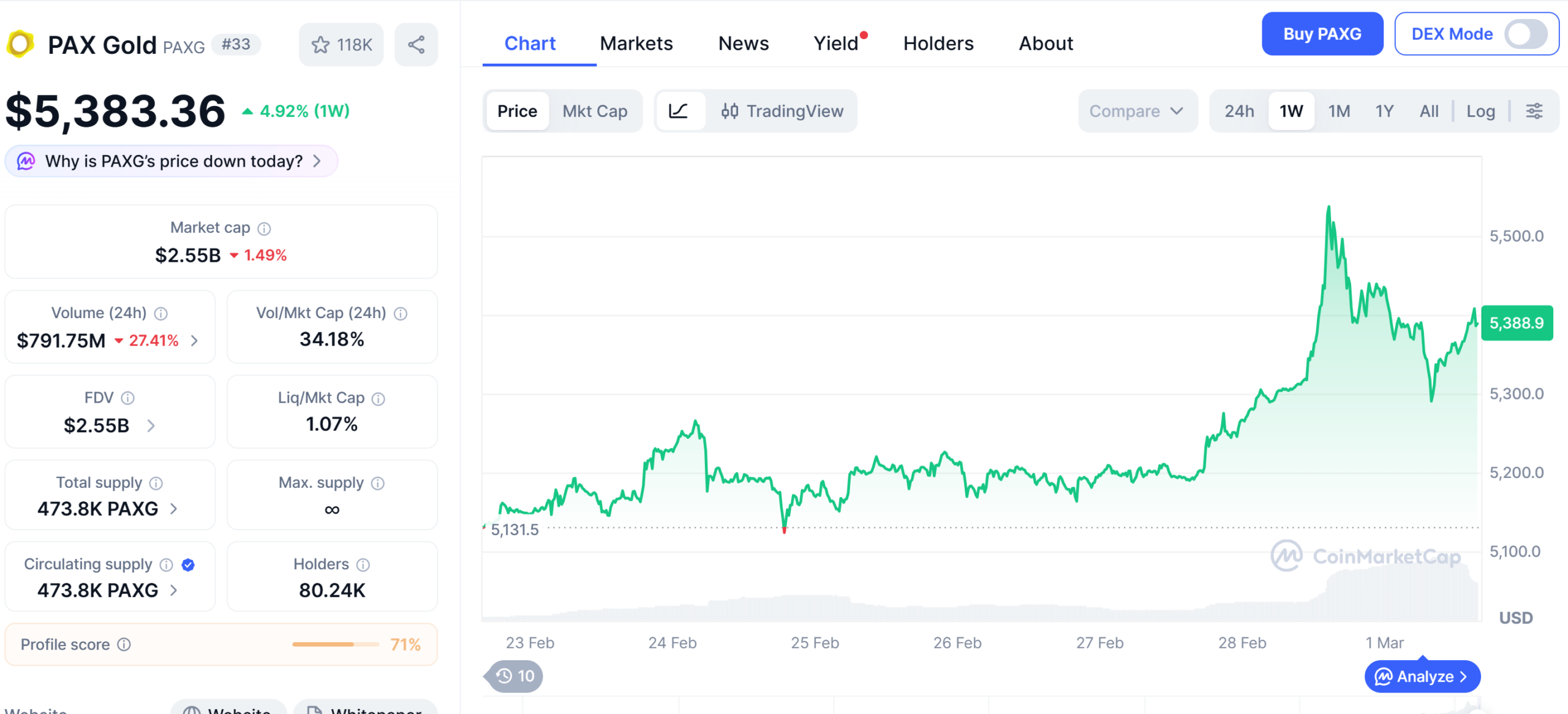
In traditional markets, gold continued to exhibit its characteristic resilience, trading at $5,092 with a 1.46% increase. Silver also saw a significant surge, climbing 6% to $84. The concurrent strength in these traditional safe havens underscored the prevailing risk-off sentiment among some segments of the investment community, even as riskier assets like cryptocurrencies showed modest gains. This dichotomy suggests that different market participants were reacting to various facets of the evolving global landscape.
Expert Analysis: A Confluence of Factors Driving Volatility
Paul Howard, Senior Director at Wincent, provided commentary on the market’s recent price action, suggesting that a "mix of developments" had impacted trading independently of overarching macro trends. He highlighted several key events contributing to the current market dynamics. These included ongoing speculation surrounding the proposed U.S. stablecoin bill, which could significantly influence the regulatory framework for stablecoins. Additionally, the launch of a SUI ETF on Nasdaq represented a new avenue for institutional investment in a specific digital asset. Furthermore, Howard noted that several Decentralized Autonomous Organizations (DAOs) or "DATs" (likely a typo and intended to refer to financial institutions or entities) were reportedly marking down their books, which could signal adjustments in asset valuations or risk exposure.
Howard further elaborated on the current market environment, stating, "Given the noticeable thinning of liquidity over the past month, volatility risk is currently elevated relative to levels observed over the past 12 months." This observation is critical, as reduced market liquidity can exacerbate price swings, making assets more susceptible to sharp movements in response to news or events. The combination of regulatory uncertainty, new investment product launches, and potential adjustments in institutional holdings, all occurring against a backdrop of geopolitical and trade policy shifts, creates a complex and potentially volatile trading environment.
Chronology of Key Events and Market Reactions
To better understand the current market sentiment, it is useful to establish a timeline of recent significant events:
- Early February: Speculation surrounding potential U.S. tariff policies begins to circulate, alongside ongoing discussions about stablecoin regulation.
- Mid-February: President Trump formally announces plans to impose a 10% global tariff. This announcement is met with immediate concern regarding its potential impact on international trade and global economic growth.
- February 19th-20th: The U.S. Supreme Court issues a ruling that strikes down President Trump’s emergency tariffs. This decision provides an immediate, albeit temporary, reprieve from a sudden imposition of trade barriers.
- February 20th (Friday): In the wake of the Supreme Court ruling and amid ongoing geopolitical tensions, crypto markets experience a modest upward movement. Bitcoin holds near $67,700. Investors also react to news of President Trump considering a limited military strike on Iran.
- Throughout the week: Data on Bitcoin and Ethereum spot ETF flows reveal net outflows, while some smaller altcoin ETFs see inflows. Significant liquidations in leveraged crypto positions are recorded.
This chronological progression illustrates how market participants are continuously processing a stream of information, reacting to both immediate developments and the potential long-term implications of policy decisions and geopolitical events. The interplay between these factors creates a dynamic and often unpredictable market environment for digital assets.
Broader Implications and Future Outlook
The current market juncture presents several key implications for investors and the broader cryptocurrency ecosystem:
- Regulatory Uncertainty: The ongoing discussions and potential implementation of new trade policies, coupled with domestic regulatory developments like the stablecoin bill, underscore the persistent regulatory uncertainty that can impact digital asset markets. This uncertainty can deter institutional adoption or lead to cautious investment strategies.
- Macroeconomic Sensitivity: The performance of Bitcoin and other cryptocurrencies continues to be influenced by broader macroeconomic factors, including inflation, interest rates, and global trade dynamics. The proposed tariffs, if implemented broadly, could contribute to inflationary pressures and potentially impact global growth, thereby influencing investor risk appetite.
- Geopolitical Risk Premium: Escalating geopolitical tensions can lead to increased demand for safe-haven assets, potentially diverting capital away from riskier investments like cryptocurrencies. However, some proponents argue that Bitcoin, in the long term, could also serve as a hedge against geopolitical instability and currency devaluation, though its volatility currently limits its effectiveness as a consistent safe haven.
- ETF Market Maturation: The contrasting flows in spot Bitcoin and Ethereum ETFs versus those for XRP and Solana ETFs suggest a maturing market where investors are becoming more discerning, allocating capital based on perceived opportunities and risks associated with individual digital assets. The continued performance of these ETFs will be a crucial indicator of institutional interest in the crypto space.
- Liquidity and Volatility: As noted by market analysts, thinning liquidity can amplify volatility. Investors need to be prepared for potentially sharp price movements, especially in the near term, as markets continue to digest complex and often conflicting economic and geopolitical signals.
In conclusion, Bitcoin’s current stability near $67,700 reflects a market in a state of cautious observation. Investors are navigating a landscape shaped by shifting trade policies, geopolitical uncertainties, and the evolving regulatory environment for digital assets. While the Supreme Court’s ruling provided a brief respite, the prospect of new tariffs and heightened global tensions ensures that macroeconomic factors will continue to play a significant role in shaping the trajectory of cryptocurrencies in the foreseeable future. The ability of the market to absorb these diverse influences, coupled with ongoing developments in the ETF space and the underlying technological advancements within the crypto sector, will ultimately determine its path forward.