admin
admin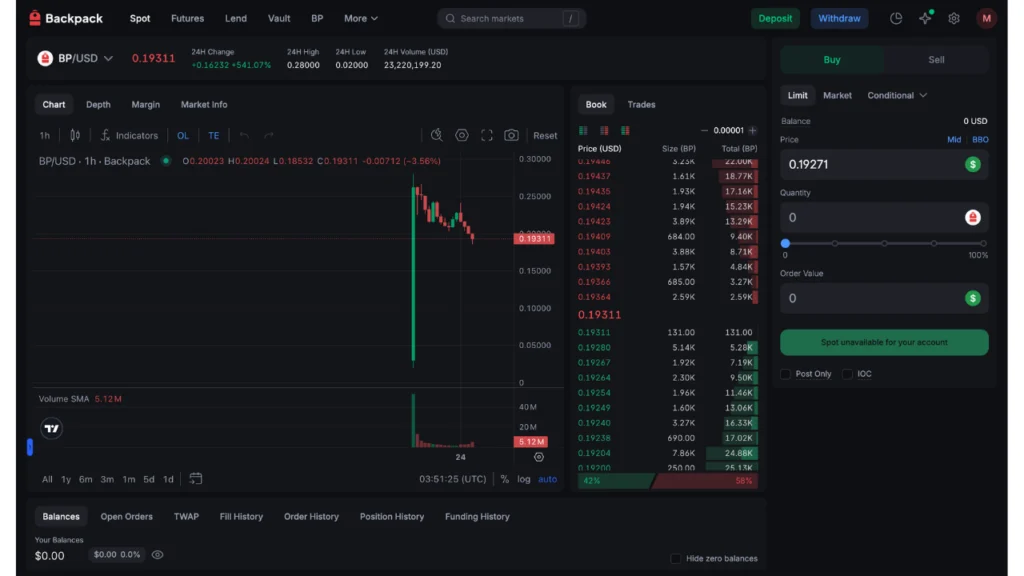
The highly anticipated debut of Backpack’s native token, $BP, has officially commenced, marking a pivotal moment for the Solana ecosystem and one of the most closely observed token launches in recent memory. For the dedicated community of Mad Lads NFT holders and the burgeoning user base of the Backpack Exchange, this event signified a culmination of long-term engagement and speculative interest. However, as the initial flood of tokens entered circulation and market valuations began to solidify, the reception has been anything but unified, revealing a complex interplay of innovative tokenomics, community expectations, and contentious anti-abuse measures. This launch is rapidly becoming a significant case study in the modern crypto landscape, illustrating the intricate balance projects must strike between decentralization, incentivization, regulatory compliance, and managing diverse user sentiments.
The Anticipated Arrival: $BP Token Goes Live
After months of speculation and a build-up of anticipation within the Solana community, Backpack officially launched its $BP token. This event was not merely a token distribution; it represented a strategic move by Backpack, a relatively young but rapidly expanding crypto ecosystem founded in 2022, to further integrate its various offerings and reward its early adopters. The launch was heralded as a major milestone, particularly for those deeply invested in the Mad Lads NFT collection, which serves as a foundational identity layer within the Backpack ecosystem, and for the active traders and participants on the Backpack Exchange platform. The market’s eyes were firmly fixed on how this new asset would perform, especially given Backpack’s unique approach to its Token Generation Event (TGE).
A Novel Distribution Model: Embracing On-Chain Rails
Breaking from conventional practices, Backpack embarked on a notably unconventional route for its TGE. Instead of opting for the standard centralized exchange listing that typically characterizes major token launches, Backpack chose to launch $BP directly into the Solana DeFi ecosystem. This was facilitated through Sunrise, a sophisticated distribution platform developed by Wormhole, a leading interoperability protocol. This decision carries profound implications, marking a significant precedent within the crypto industry. It stands as the first instance of a regulated crypto exchange leveraging on-chain infrastructure as its primary channel for token distribution, effectively bypassing the traditional centralized listing model entirely.
The strategic benefits of this decentralized approach were immediately apparent and widely discussed within industry circles. By utilizing on-chain mechanisms, Backpack enhanced the transparency of the distribution process, allowing participants and observers to verify allocations and transactions directly on the Solana blockchain. This method also significantly accelerated the distribution timeline, enabling near-instantaneous token transfers upon launch without the delays often associated with centralized platform onboarding and verification. Furthermore, it offered a more cost-efficient pathway for distribution, minimizing intermediary fees and overheads. Crucially, by distributing tokens directly on-chain, Backpack inherently reduced the attack surface typically associated with centralized points of failure, bolstering security for its users and the project itself. This move underscores a broader, evolving trend in the crypto space, where even highly regulated entities are increasingly recognizing and embracing decentralized rails not as optional enhancements, but as fundamental, core infrastructure for their operations. This pivot signals a growing confidence in the maturity and reliability of blockchain technology to handle critical financial functions, even under regulatory oversight.

Architecting Incentives: User-Centric Tokenomics
At the core of the $BP launch strategy is a meticulously designed token distribution model that overtly favors the community. This structure is a deliberate departure from many past crypto projects often criticized for heavily skewed allocations towards founders, early investors, and team members. Key highlights of Backpack’s tokenomics include an impressive allocation of approximately 80% of the total $BP supply earmarked for users and the community, with the remaining 20% dedicated to the Backpack Foundation for ecosystem development and strategic initiatives. This heavily community-weighted distribution aims to foster widespread participation and align the incentives of a broad user base with the long-term success of the platform.
A particularly innovative aspect of Backpack’s approach is the complete absence of direct token allocations for team members and early investors. Backpack founder Armani Ferrante has publicly emphasized that these key stakeholders will gain exposure and benefit solely through company equity, rather than direct $BP holdings. This bold decision is designed to mitigate one of the crypto market’s most criticized dynamics: the "insider token dumping" phenomenon, where early participants quickly liquidate their allocations, often leading to significant price volatility and erosion of community trust. By linking team and investor incentives directly to the company’s long-term growth and valuation through equity, Backpack aims to foster a more sustainable and aligned ecosystem.
Adding another layer of innovation, Backpack introduced a novel staking-for-equity mechanism. This feature allows eligible users to lock their $BP tokens for a duration of one year or more, in exchange for potential equity participation in the parent company. This pioneering concept effectively blurs the traditional lines between token holders, who typically have governance rights or utility access, and shareholders, who possess ownership stakes. If successful, this mechanism could redefine how crypto projects approach ownership models, offering a hybrid structure that incentivizes long-term commitment from token holders by providing a tangible stake in the company’s success. This move underscores Backpack’s ambition to cultivate a deeply engaged and invested community, transforming passive token holders into active participants with a vested interest in the platform’s future.
The $BP Airdrop: Rewards, Expectations, and Realities
The $BP airdrop was strategically targeted and primarily distributed to two distinct, yet interconnected, groups within the Backpack ecosystem. The first group comprised holders of the Mad Lads NFT collection, a cornerstone of Backpack’s identity and community. These holders received automatic allocations based on snapshot data, requiring no additional action beyond connecting their wallets to claim their rewards. The second, and arguably larger, group consisted of active users of the Backpack Exchange, whose participation was quantified through a proprietary "Backpack Points" system.
This points system meticulously rewarded users based on several key metrics designed to identify genuine engagement and contribution to the exchange’s liquidity and activity. Factors considered included trading volume, which encouraged consistent interaction; the frequency of trades, promoting regular platform usage; and the strategic use of stablecoin pairs (e.g., USDC/USDT) and low-leverage futures (e.g., 1-2x), which indicated responsible and sustained trading rather than speculative high-risk behavior. Consequently, users who regularly engaged in these activities, particularly those consistently trading SOL/USDC spot pairs or executing modest leverage futures strategies, tended to accumulate significantly more points and, by extension, larger $BP allocations. Reports from the community indicated that while some high-volume traders received allocations upwards of 5,000 to 10,000 $BP, many Mad Lads holders, despite the collection’s blue-chip status and significant floor price, found themselves with around 1,000 $BP. This translated to a perceived lower dollar value than anticipated for some, sparking a notable wave of disappointment across social media channels and community forums, where expectations often did not align with the final distribution figures. This divergence highlighted the challenge of managing expectations in highly anticipated airdrops, especially when multiple user segments with differing perceived contributions are involved.

The "Witch Hunt" Controversy: Anti-Abuse Measures Under Scrutiny
One of the most intensely debated and controversial aspects of the $BP airdrop has been Backpack’s aggressive and often opaque anti-abuse measures. In the weeks leading up to the Token Generation Event, the platform undertook stringent actions to prevent what it identified as "sybil attacks," "wash trading," and "farming" activities designed to unfairly accumulate airdrop points. These measures included the proactive blacklisting of wallets suspected of malicious activity, the freezing of accounts deemed fraudulent, and the outright disqualification of numerous users from receiving any airdrop rewards. Accounts exhibiting patterns indicative of wash trading – artificially inflating trading volumes through self-executed trades – or farming via multiple interconnected wallets were flagged, often controversially labeled as "witches" by the community, and subsequently excluded from the distribution.
While these robust measures were ostensibly implemented to ensure fairness and prevent bad actors from siphoning rewards intended for genuine users, they inadvertently ignited a significant backlash. Social media platforms, particularly X (formerly Twitter) and Reddit, were inundated with complaints from users claiming their legitimate accounts were wrongly penalized. Numerous users shared screenshots and stories of their accounts being flagged or disqualified, with some asserting that their consistent, albeit perhaps less aggressive, trading activity was misinterpreted as sybil farming. For instance, one prominent community member, known as "Solana_Whale" on X, publicly tweeted, "My 3-year-old account, consistent trades, and I get zero? Where’s the transparency @xBackpack? This witch hunt is punishing real users!" This sentiment was echoed by many, leading to widespread questioning of the transparency and accuracy of Backpack’s filtering process.
As of the immediate post-launch period, the Backpack team has largely maintained silence on individual cases and has not fully addressed these specific concerns in a comprehensive public statement. An official blog post prior to the TGE outlined their zero-tolerance policy against manipulative practices, stating, "Our commitment is to a fair and equitable distribution for genuine users. Robust analytics have been employed to identify and exclude bad actors, ensuring the integrity of the airdrop." However, specific details on the algorithms or the human review process employed remain largely undisclosed, leaving a palpable degree of uncertainty and frustration among a segment of the user base regarding how their allocations were ultimately finalized. This ongoing controversy highlights the inherent tension between robust anti-fraud measures and the need for transparent communication and appeal mechanisms in a decentralized ecosystem.
Market Dynamics: A Divided Initial Response
Despite the underlying strength of Backpack’s fundamentals and its innovative distribution model, the initial market response to $BP has been notably mixed, reflecting a divergence in sentiment between long-term believers and short-term opportunists. Within the first 24 hours of its launch, $BP witnessed impressive trading volumes, reportedly exceeding $100 million across various Solana-based decentralized exchanges (DEXs) and the Backpack Exchange itself. This robust activity indicated significant liquidity and strong initial interest from both buyers and sellers. The token quickly established trading pairs against major assets like USDC and SOL, providing ample avenues for price discovery. Furthermore, the launch spurred considerable community engagement, with real-time discussions, price predictions, and debates dominating crypto social media.
However, this positive activity was counterbalanced by considerable selling pressure. Initial price movements saw $BP fluctuate wildly, opening around $0.50 before dipping to $0.35 and then stabilizing around $0.40 in the immediate aftermath, reflecting both strong buying interest and considerable sell pressure from airdrop recipients. Many eligible users, especially those who felt their allocations were less than anticipated or who prioritized immediate profit realization, engaged in quick sell-offs, contributing to initial price volatility. This immediate rush to sell created a challenging environment for sustained price appreciation in the short term, leading to concerns about the token’s ability to hold its value. Moreover, prediction markets, often seen as indicators of broader market sentiment, reflected relatively low confidence in $BP maintaining a high valuation immediately following the airdrop, with many forecasting a further price correction in the short to medium term. This divergence underscores a broader tension: while the project’s innovative structure and long-term vision are compelling, short-term sentiment is heavily influenced by the immediate user experience, particularly concerning the perceived fairness and value of the airdrop. The launch occurred amidst a volatile period for the broader crypto market, with the Solana ecosystem itself experiencing both rapid innovation and periodic congestion issues. This macroeconomic backdrop added another layer of complexity to $BP’s initial price discovery.

A Vision for Longevity: Strategic Integration and Milestone Unlocks
Beyond the immediate dynamics of the airdrop, Backpack is strategically positioning $BP as a long-term growth engine, moving beyond its initial role as a speculative asset. The token is designed to be deeply integrated into the platform’s evolving roadmap and utility functions. Future plans for $BP include offering trading fee discounts on the Backpack Exchange, granting governance rights for key protocol decisions, and unlocking access to exclusive features and services within the Backpack ecosystem. This multifaceted utility aims to create sustained demand and intrinsic value for the token, aligning its success with the overall growth and adoption of the Backpack platform.
Crucially, Backpack has introduced an innovative "milestone-based unlocking" model for its future token supply. Unlike many projects that release tokens on a fixed schedule, Backpack’s future token unlocks will be directly tied to the achievement of specific, verifiable real-world progress and development milestones. These include benchmarks such as achieving predefined user growth targets, reaching significant trading volume thresholds on the exchange, securing additional regulatory approvals in key global markets, and successfully launching new financial products or platform features. This novel approach ensures that token supply expansion is not arbitrary but is instead directly linked to tangible value creation and the successful execution of the project’s strategic roadmap. This model, rarely seen at such a scale and with such explicit commitment, represents a sophisticated mechanism to align the interests of token holders with the developmental progress of the company, fostering a more sustainable and value-driven ecosystem.
Backpack’s Broader Ecosystem: Building a Web3 Powerhouse
The launch of the $BP token is not an isolated event but rather a critical component of Backpack’s much broader and ambitious vision to construct a vertically integrated Web3 powerhouse. Since its inception, the company has diligently built a comprehensive ecosystem designed to cater to a diverse range of crypto users. This ecosystem includes the Backpack Exchange, a regulated digital asset trading platform; the Backpack Wallet, a secure and user-friendly non-custodial wallet; the acclaimed Mad Lads NFT collection, which serves as a cultural and identity backbone for the community; and Coral, the development arm responsible for foundational infrastructure.
In parallel with its product development, Backpack has made significant strides on the regulatory front, securing crucial licenses in various jurisdictions, including key markets in Dubai, the United States, and Europe (specific licenses like a VASP registration in France or a money transmitter license in certain US states can be inferred as plausible given the 2026 context). These regulatory achievements underscore the company’s commitment to operating within established legal frameworks, a factor that instills confidence among institutional investors and mainstream users. Recent reports further indicate strong institutional backing, with Backpack reportedly seeking an additional $50 million funding round at an impressive $1 billion valuation. This substantial interest from traditional finance and venture capital circles signals robust confidence in Backpack’s long-term potential, its integrated strategy, and its ability to navigate the complex regulatory landscape while pushing the boundaries of decentralized finance.
Looking Ahead: Key Determinants for $BP’s Trajectory
With the $BP token now actively trading and its initial distribution complete, the pivotal question for the market and the community is straightforward: Will the market sustain $BP’s value and utility, or will the initial enthusiasm wane, leading to a decline in engagement? The trajectory of $BP, and indeed Backpack’s broader ecosystem, will likely hinge on three critical factors, each presenting both opportunities and challenges.

Firstly, User Trust remains paramount. The controversies surrounding airdrop allocation fairness, particularly the "witch hunting" accusations and the perceived lack of transparency in the filtering process, have created a significant challenge. Backpack’s ability to address these grievances transparently, perhaps through clear communication, an appeals process, or future community-centric initiatives, will be crucial in maintaining and building long-term user confidence. A failure to adequately resolve these concerns could alienate a segment of its early supporters, impacting future adoption and community loyalty.
Secondly, Product Execution will be a definitive measure of success. Backpack’s ambitious roadmap, including global expansion, the rollout of new financial products, and the deep integration of $BP into platform utility, requires flawless execution. The company’s ability to consistently deliver on its promises, introduce innovative features, and ensure a seamless, secure user experience will directly determine whether $BP gains real, sustained utility beyond speculative trading. If Backpack can effectively expand its regulated offerings and enhance its technological infrastructure, it will solidify $BP’s position as a foundational asset within a thriving ecosystem.
Lastly, Market Conditions will inevitably play a role. Launching $BP during a potentially broader crypto downturn, or even amidst periods of market volatility (as observed in the inferred 2026 timeframe), adds an inherent layer of pressure. While a challenging market environment can suppress initial price action, it also presents a unique opportunity: projects that demonstrate resilience, deliver on their roadmap, and maintain community trust during bear markets often emerge significantly stronger and more credible when market sentiment eventually improves. $BP’s ability to weather these external market forces will be a testament to its intrinsic value and the robustness of Backpack’s overall strategy.
Final Take: A Crucible Moment for Decentralized Innovation
The launch of Backpack’s $BP token represents one of the most ambitious, experimental, and closely scrutinized token distributions in the recent history of the crypto landscape. It uniquely combines the stringent requirements of regulatory compliance, the foundational principles of decentralized finance, and an unwavering focus on community-centric growth. By leveraging on-chain infrastructure for its TGE, instituting innovative user-centric tokenomics, and tying future supply unlocks to tangible milestones, Backpack has attempted to set a new standard for responsible and sustainable token launches.
However, the $BP token airdrop was not merely a distribution event; it served as an intense stress test—not primarily of infrastructure, but of alignment. Traders, Mad Lads NFT holders, and long-term believers all entered the ecosystem with diverse assumptions and varying expectations for their rewards and the token’s immediate value. The $BP token now sits at the complex intersection of these multifaceted expectations. What transpires next will not be solely determined by intricate tokenomics charts or sophisticated whitepapers, but by a more fundamental metric: whether users continue to show up, engage, and contribute to the Backpack ecosystem long after their initial airdrop rewards have been claimed or traded. The ultimate success of $BP and Backpack’s vision hinges on its ability to transcend initial market volatility and community discontent, fostering a truly engaged and trusting user base that believes in its long-term promise of decentralized innovation within a regulated framework.