admin
admin
The search for the true identity of Satoshi Nakamoto, the pseudonymous creator of Bitcoin, has entered a sophisticated new phase following a high-profile investigation published by the New York Times on April 8, 2026. The report, authored by Pulitzer Prize-winning journalist John Carreyrou, suggests that Adam Back, a prominent British cryptographer and the current CEO of Blockstream, may be the individual behind the world’s first decentralized cryptocurrency. While the investigation utilizes advanced artificial intelligence to analyze decades of digital correspondence, Back has issued a firm denial, maintaining that his similarities to the elusive Nakamoto are a byproduct of shared intellectual history rather than a shared identity.
The mystery of Satoshi Nakamoto is not merely a matter of historical curiosity; it is a question with multi-billion-dollar implications. Nakamoto is estimated to hold approximately 1.1 million Bitcoin, a fortune that, at current market valuations, makes the creator one of the wealthiest individuals on the planet. For nearly two decades, journalists, hobbyists, and forensic analysts have attempted to unmask the creator, with candidates ranging from Japanese-American physicist Dorian Nakamoto to the late software engineer Hal Finney and Australian computer scientist Craig Wright. None of these claims have been definitively proven, and the 2026 investigation by Carreyrou represents the most significant attempt to use generative AI and stylometry to solve the puzzle.
The Methodology of the Carreyrou Investigation
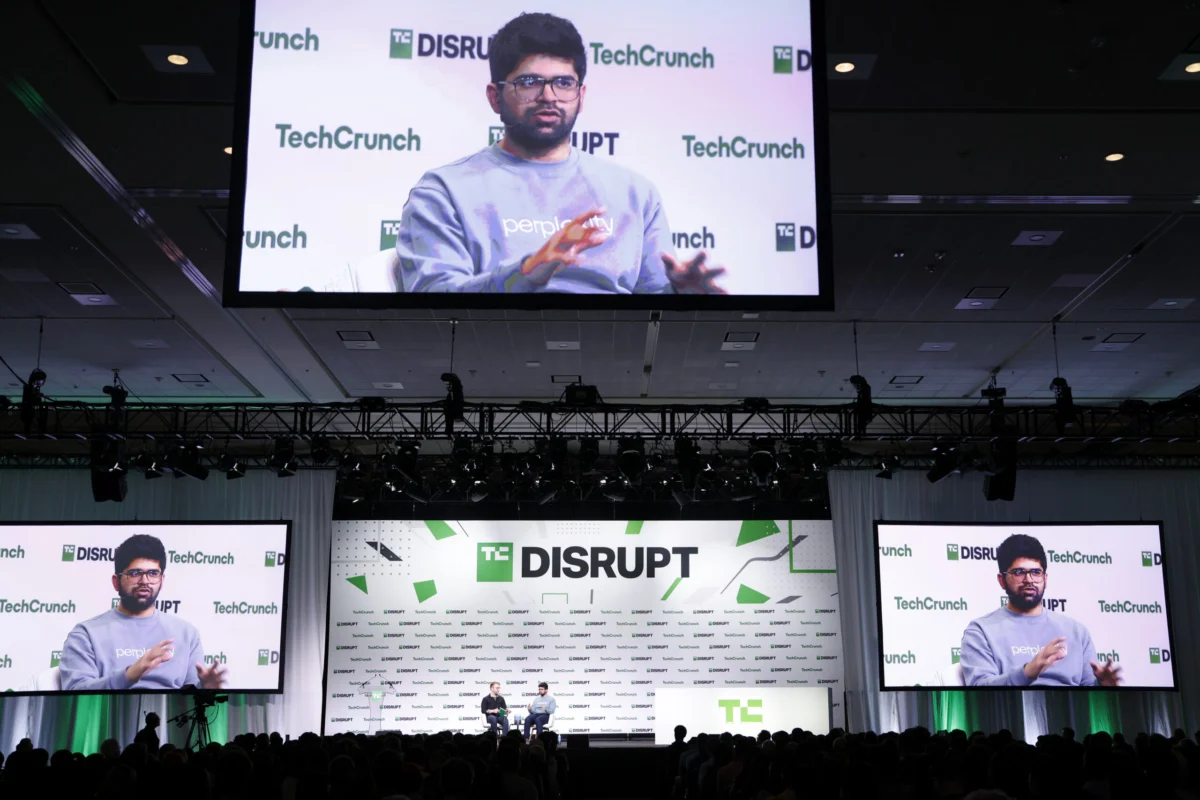
John Carreyrou, widely recognized for his work in exposing the Theranos scandal, approached the Nakamoto mystery through the lens of forensic linguistics. The core of the investigation involved the collection of extensive archives from three major cryptography listservs active between 1992 and 2008. These forums were the primary breeding ground for the "Cypherpunk" movement, a group of activists and programmers advocating for the widespread use of strong cryptography and privacy-enhancing technologies as a route to social and political change.
The investigation utilized a custom-trained AI model designed to identify unique "linguistic fingerprints." Unlike previous manual attempts at stylometry, the AI was tasked with identifying subtle, subconscious patterns in syntax, punctuation, and grammatical errors. According to the report, the AI identified several specific commonalities between the writings of Satoshi Nakamoto and Adam Back:
- Grammatical Nuances: The analysis noted that both Nakamoto and Back frequently omitted hyphens in specific compound nouns where they are traditionally expected.
- Punctuation Patterns: The model identified a specific frequency of double-spacing after periods—a habit common among those who learned to type on manual typewriters, which aligns with the age demographic of the early Cypherpunks.
- Orthographic Errors: The investigation highlighted consistent confusion between the possessive "its" and the contraction "it’s," a mistake that appeared in both the Bitcoin whitepaper and Back’s early listserv posts.
- Regional Dialect: While Nakamoto used a Japanese pseudonym, the AI concluded that the creator’s use of British English spellings (such as "favour" and "analyse") combined with specific colloquialisms pointed strongly toward a British origin.
When the AI processed thousands of messages from dozens of candidates, Adam Back emerged as the most statistically significant match. Carreyrou argues that the alignment of technical expertise, ideological motivation, and linguistic patterns creates a compelling circumstantial case.
The Profile of Adam Back: A Cypherpunk Pioneer
To understand why Adam Back is a perennial suspect in the search for Satoshi, one must look at his contributions to the pre-history of Bitcoin. Back, a computer scientist with a Ph.D. from the University of Exeter, was a central figure in the 1990s cryptography scene.
In 1997, Back proposed "Hashcash," a proof-of-work system originally designed to limit email spam and denial-of-service attacks. Hashcash required a computer to perform a small amount of computational work before sending an email, making it too expensive for spammers to send millions of messages but negligible for ordinary users. This mechanism became the fundamental building block for Bitcoin’s mining process. In fact, Adam Back is the first person cited in the bibliography of the original Bitcoin whitepaper, titled "Bitcoin: A Peer-to-Peer Electronic Cash System," published in October 2008.
Furthermore, Back’s professional trajectory aligns with the development of the blockchain industry. As the co-founder and CEO of Blockstream, he oversees a company that develops "Sidechains" and other infrastructure designed to expand the utility of the Bitcoin network. His deep technical knowledge of the protocol and his proximity to its inception have long placed him at the top of many "Satoshi candidate" lists.
Chronology of the Satoshi Nakamoto Mystery
The investigation arrives at a time when the history of Bitcoin is being scrutinized with renewed intensity. The following timeline outlines the key milestones in the search for Nakamoto:

- October 31, 2008: Satoshi Nakamoto publishes the Bitcoin whitepaper to the Cryptography Mailing List.
- January 3, 2009: The Bitcoin network goes live with the mining of the "Genesis Block."
- January 12, 2009: The first Bitcoin transaction occurs between Satoshi Nakamoto and Hal Finney.
- December 2010: Nakamoto stops posting on public forums, handing over control of the source code repository to Gavin Andresen.
- April 2011: Nakamoto sends a final private email to developers stating he has "moved on to other things."
- March 2014: Newsweek identifies Dorian Nakamoto as the creator; he later denies involvement.
- May 2016: Craig Wright publicly claims to be Satoshi but fails to provide definitive cryptographic proof (signing a message with the Genesis Block’s private key).
- April 2026: The New York Times publishes Carreyrou’s AI-driven investigation pointing to Adam Back.
Official Responses and Denials
Following the publication of the New York Times investigation, Adam Back took to social media to refute the claims. In a series of posts on X (formerly Twitter), Back reiterated his long-standing position that he is not Satoshi Nakamoto. He characterized the AI-generated evidence as a "combination of coincidence and similar phrases from people with similar experience and interests."
"I’m not Satoshi," Back wrote. "But I was early in laser focus on the positive societal implications of cryptography, online privacy and electronic cash, hence my ~1992 onwards active interest in applied research on ecash… which led to hashcash and other ideas."
Back argued that the "Cypherpunk" community was a relatively small, insular group of individuals who read the same papers, debated the same theories, and influenced each other’s writing styles. He suggested that any AI trained on this specific corpus of data would inevitably find false positives because the participants were essentially speaking a "shared technical dialect."
Technical experts in the field have also weighed in, noting that while stylometry is a powerful tool, it does not constitute "cryptographic proof." In the world of Bitcoin, the only way to definitively prove one’s identity as Satoshi Nakamoto is to move Bitcoin from one of the early known Satoshi addresses or to sign a digital message using the private keys associated with the Genesis Block. To date, no candidate—including those identified by journalists—has performed this action.
Broader Impact and Market Implications
The potential unmasking of Satoshi Nakamoto carries significant risks for the Bitcoin ecosystem. The project’s value is partially derived from its "immaculate conception"—the idea that it was launched by an anonymous figure who did not seek personal fame or immediate profit, and then stepped away to let the network become truly decentralized.
If Satoshi were revealed to be a specific, living individual, it could lead to several complications:
- Regulatory Scrutiny: Governments might attempt to hold the creator personally liable for the ways the network has been used, or classify Bitcoin differently under securities laws.
- Market Volatility: The 1.1 million BTC held by Nakamoto represents a massive "overhang" on the market. If the creator were identified, investors would closely watch those wallets for any sign of liquidation, which could trigger a massive price collapse.
- Centralization Concerns: The "cult of personality" surrounding a known creator could influence protocol development, potentially undermining the decentralized governance that Bitcoin advocates prize.
Conversely, some analysts argue that the mystery serves as a distraction. "Whether it’s Adam Back, Nick Szabo, or a group of people, the code is open source," says digital asset analyst Marcus Thorne. "The network has outgrown its creator. Identifying Satoshi in 2026 is like identifying the person who invented the wheel; it’s historically interesting, but it doesn’t change how the wheel turns."
Conclusion: The Case Remains Open
The New York Times investigation has successfully utilized modern technology to narrow the field of suspects, but it has stopped short of providing a "smoking gun." The use of AI in investigative journalism marks a shift in how historical mysteries are approached in the digital age, yet the fundamental requirement for cryptographic evidence remains the gold standard in the blockchain community.
For now, Adam Back remains a central figure in the industry, his legacy tied to the foundational work of Hashcash and his current leadership at Blockstream. Whether he is the man who authored the Bitcoin whitepaper or simply a brilliant peer who shared a linguistic and ideological profile with the creator, the enigma of Satoshi Nakamoto continues to be the most enduring mystery of the digital era. As the Bitcoin network approaches its second decade of operation, the creator’s silence remains as profound as the technology itself.