admin

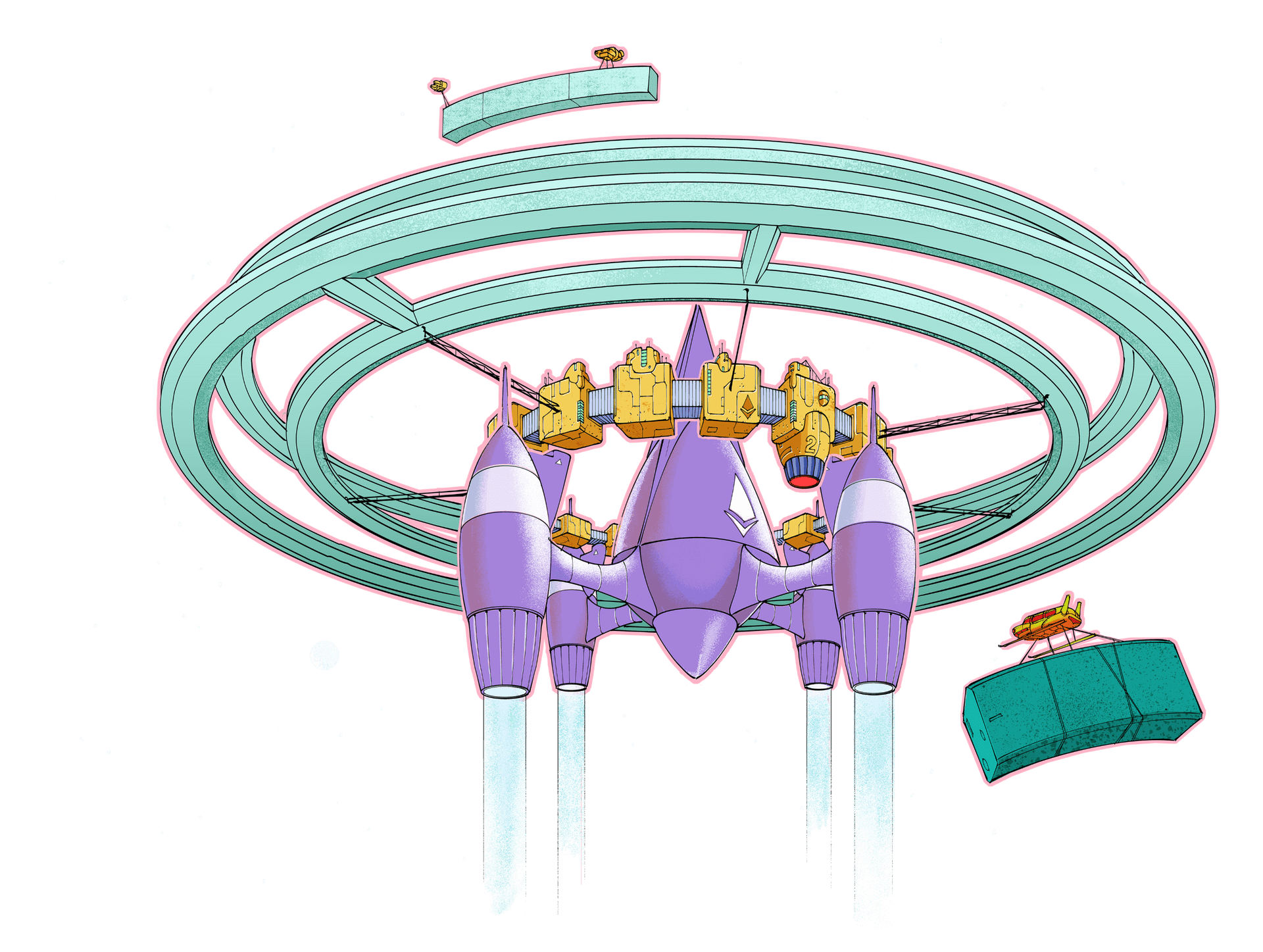
Ethereum, the world’s second-largest blockchain by market capitalization, is currently preparing for one of the most significant technical transformations in the history of decentralized finance. With hundreds of billions of dollars in assets secured by its protocol, the network is slated to transition from its current Proof-of-Work (PoW) consensus mechanism to a more energy-efficient Proof-of-Stake (PoS) system. This monumental event, widely known as "The Merge," has been compared by industry experts and core developers to changing the engine of a commercial jet while it remains in mid-flight. Given the sheer volume of capital and the vast ecosystem of decentralized applications (dApps) relying on its stability, Ethereum cannot afford any downtime or failures in block production during this transition.
Unlike the Bitcoin network, which prioritizes a singular, conservative software implementation to maintain consensus, the Ethereum community—led by the Ethereum Foundation (EF)—has championed the development of multiple client software versions. These clients are independent implementations of the Ethereum protocol, written in various programming languages and managed by distinct development teams. While this multi-client approach is designed to enhance the network’s resilience, it has inadvertently led to a critical challenge: a lack of client diversity that could potentially jeopardize the entire network if a bug were to emerge in a dominant software implementation.

The Architecture of The Merge: Execution and Consensus
The transition to Proof-of-Stake is not a simple software update but a fundamental re-architecting of how Ethereum validates transactions. The Merge represents the integration of the existing Ethereum mainnet (the execution layer) with the Beacon Chain (the consensus layer), which has been running in parallel since December 2020.
In the post-merge environment, the responsibilities of a node will be split into two distinct logical layers. The first is the Execution Client, which manages the Ethereum Virtual Machine (EVM). This layer is responsible for processing transactions, executing smart contract code, and maintaining the state of the blockchain. The second is the Consensus Client, which handles the Proof-of-Stake logic, including the validation of blocks and the management of the validator set.
Currently, nodes perform both tasks simultaneously. After The Merge, a full Ethereum node will require both an execution client and a consensus client to function. This separation of duties is intended to create a more robust system where different layers can be upgraded or maintained independently. However, the current distribution of these clients across the network suggests a dangerous level of centralization within specific software codebases.
A Chronology of Ethereum’s Consensus Evolution
The path to The Merge has been years in the making, marked by several key milestones that have shaped the current technical landscape:
- July 2015: Ethereum launches as a Proof-of-Work blockchain, utilizing the Ethash algorithm.
- 2018-2019: Research shifts toward a "Beacon Chain" model to introduce Proof-of-Stake without disrupting the existing mainnet.
- December 2020: The Beacon Chain officially launches, allowing users to stake 32 ETH to become validators, though these funds remain locked and the chain does not yet process mainnet transactions.
- 2021: The successful implementation of the Altair upgrade on the Beacon Chain and the London Hard Fork on the mainnet, the latter of which introduced the EIP-1559 fee-burning mechanism.
- Early 2022: Kiln, the final public testnet for The Merge, successfully transitions to Proof-of-Stake, providing a dress rehearsal for the mainnet event.
As the community nears the final transition, the focus has shifted from "if" the technology works to "how" it is distributed across the global network of validators.
The Mathematical Risks of Client Dominance
The primary motivation for having multiple client implementations is to prevent a single point of failure. If a bug is discovered in one client, the rest of the network should ideally continue to function using alternative clients. However, the efficacy of this safeguard depends entirely on the distribution of stakers across these different software versions.
The Ethereum consensus mechanism relies on specific mathematical thresholds to maintain finality—the point at which a block is considered permanently part of the blockchain history:
- The 33% Threshold: If a client used by more than 33% of the network’s staking power experiences a bug and goes offline, the network loses the ability to "finalize" blocks. While the chain continues to grow, it enters a state of emergency until the issue is resolved.
- The 50% Threshold: If a bug affects a client with more than 50% of the staking power, the network could experience significant disturbances, and automated mechanisms would be required to mend the state, potentially leading to slashed rewards for those validators.
- The 66% Supermajority (The "Game Over" Scenario): This is the most critical risk. If a client with more than two-thirds (66%) of the staking power has a bug that leads to an incorrect consensus, that buggy chain will be finalized. In this scenario, the network cannot automatically recover. The community would be forced to choose between a permanent chain split—resulting in two different versions of Ethereum—or manually intervening to adopt the buggy chain, undermining the principle of "code is law."
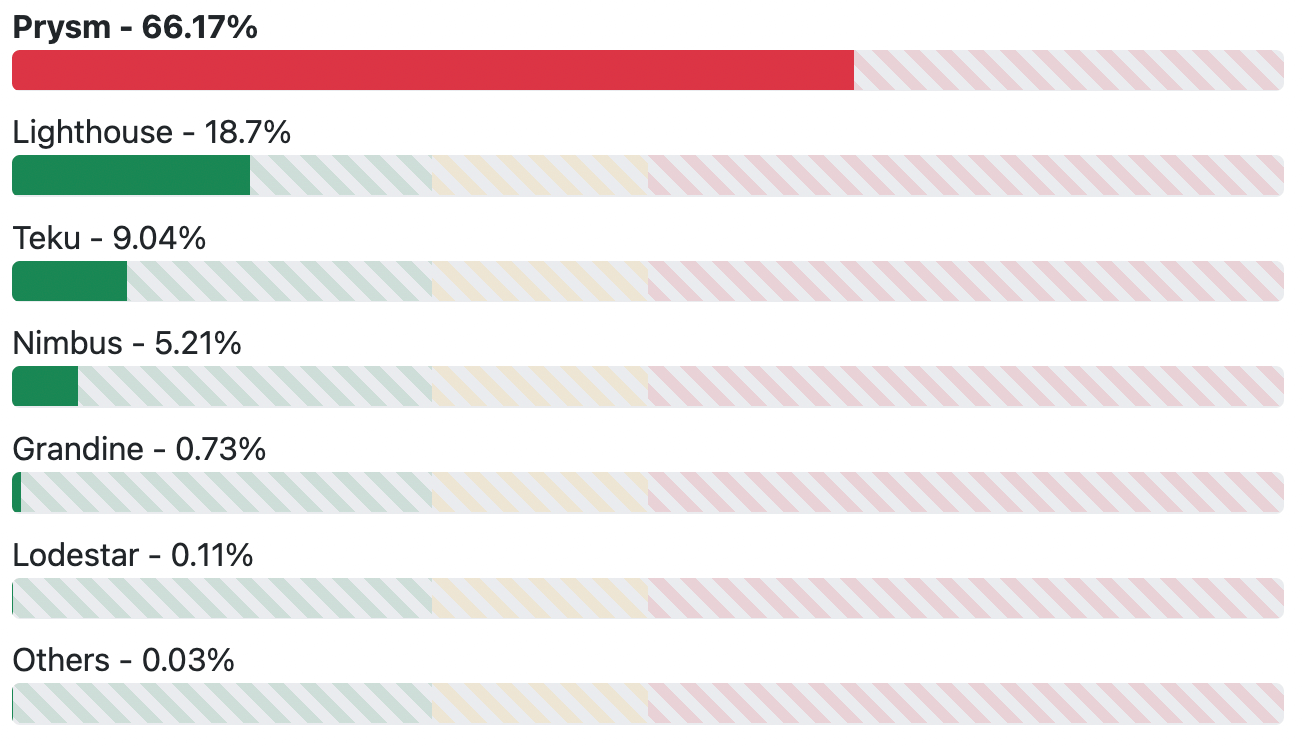
As of early 2022, the Prysm client, developed by Prysmatic Labs, commands a market share near or above this 66% threshold. This supermajority status means that any critical vulnerability in Prysm’s Go-based code could effectively compromise the entire Ethereum network.
Analyzing the Dominance of Prysm and Geth
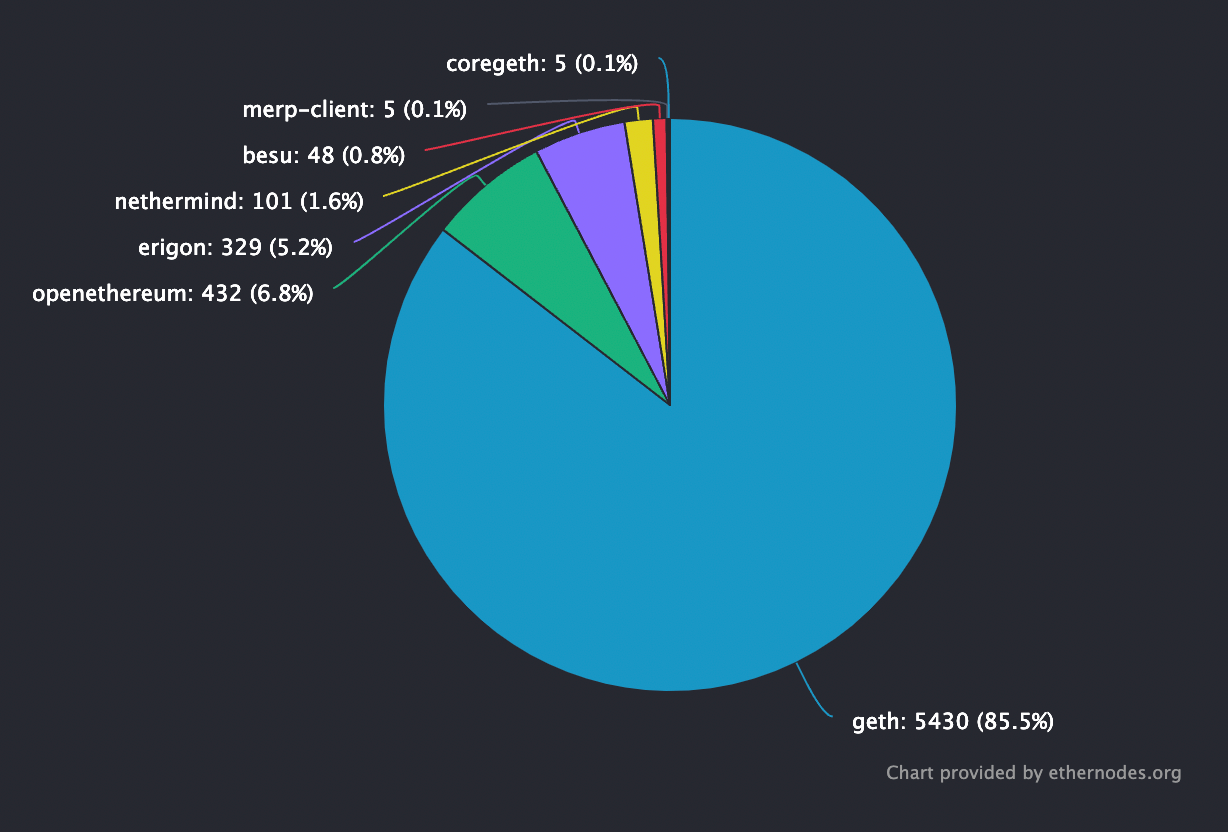
The current lack of diversity is not limited to the consensus layer. On the execution layer, Geth (Go-ethereum) currently maintains an 85% market share. While the risks are slightly different for execution clients, the overarching theme is a reliance on Go-language implementations.
Marius van der Wijden, an Ethereum core developer working on Geth, suggests that Prysm’s dominance is largely due to its "first-mover advantage." Prysm was the first client to provide a stable prototype, comprehensive documentation, and user-friendly features like a Web UI. Furthermore, because both Geth and Prysm are written in Golang, developers familiar with one could easily audit and manage the other, creating a feedback loop that reinforced their market positions.
The other consensus clients—Lighthouse (Rust), Teku (Java), Nimbus (Nim), Grandine, and Lodestar (TypeScript)—offer alternatives, but they have struggled to capture significant market share from the established leader.
The Role of Major Staking Services
The client diversity issue is exacerbated by the concentration of ETH in the hands of a few large-scale staking providers. Centralized exchanges and liquid staking protocols control a massive portion of the validator set. Data indicates that a handful of entities are responsible for the majority of Prysm’s dominance:
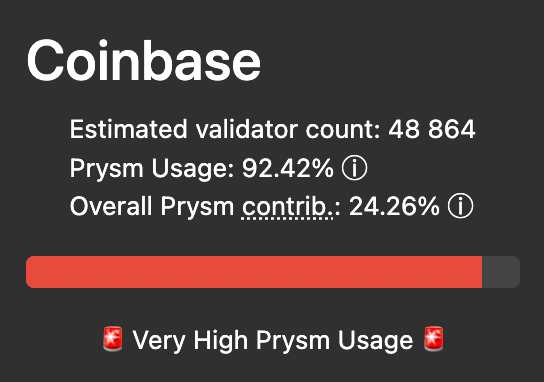
- Coinbase: With nearly 18% of the total validators on the Beacon Chain, Coinbase reportedly runs Prysm on over 92% of its infrastructure.
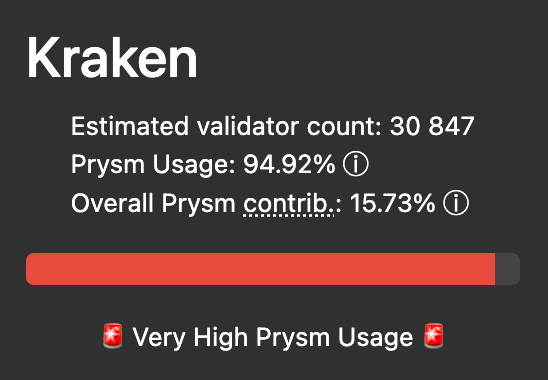
- Kraken: Holding approximately 11% of the validator count, Kraken’s reliance on Prysm is estimated at nearly 95%.
- Binance: Representing roughly 8.7% of the network, Binance utilizes Prysm for 76% of its operations.
- Lido: As the largest liquid staking provider, Lido holds an 18% share of validators. While more diversified than its exchange counterparts, approximately 43% of its node operators still utilize Prysm.
In response to inquiries regarding these figures, Coinbase Cloud stated that their initial choice of Prysm was driven by security requirements. Specifically, Prysm was the first client to support "remote signers," which allow validator keys to be stored in isolated, secure environments rather than on the validator node itself. Coinbase has since indicated it is working to integrate Lighthouse to improve its internal diversity.
Similarly, Kraken’s Senior Product Manager Brian Hoffman noted that the company is collaborating with the Ethereum Foundation to migrate a portion of its validators to Teku to increase resilience.
Implications for Decentralization and Network Security
The concentration of staking power in centralized entities running identical software creates a systemic risk that contradicts the decentralized ethos of the blockchain. If a consensus failure were to occur, the Ethereum community has made it clear that "social consensus" will not necessarily bail out those running the majority client.
Core developers have warned that if a supermajority client causes a fork, validators using that client could face "slashing"—a penalty where their staked ETH is permanently removed from the network. This serves as a financial incentive for large stakers to diversify their software stack, as the risk of remaining on a supermajority client could result in catastrophic financial loss for their users.
Conversely, decentralized protocols like Rocket Pool have demonstrated a more balanced approach. Rocket Pool accounts for less than 1% of the network but shows only a 10.6% reliance on Prysm, with its node operators utilizing a much broader array of clients. This suggests that smaller, independent stakers are more agile in adopting diverse software than large corporate entities.
Future Outlook: Is The Merge Safe?
Despite the alarming statistics regarding client distribution, the Ethereum core development team remains confident in the safety of The Merge. The network utilizes extensive "fuzzing" and testing infrastructure designed to identify discrepancies between different client implementations in real-time.
Marius van der Wijden maintains that while the situation is not ideal, it is not a reason to delay the transition. He argues that the chances of a catastrophic consensus failure are statistically small and that the network’s ability to push out emergency patches has been proven in past upgrades.
However, the long-term health of Ethereum will depend on the "Post-Merge" roadmap, which includes phases like the Surge, Verge, Purge, and Splurge. These future updates aim to address scalability and further decentralize the network. For now, the primary objective remains a successful transition to Proof-of-Stake, a move that will reduce Ethereum’s energy consumption by 99.9% and fundamentally alter the economics of the world’s most active blockchain.
The transition is more than a technical hurdle; it is a test of the community’s ability to coordinate and self-regulate. As large staking providers begin the slow process of migrating to alternative clients like Teku and Lighthouse, the industry is watching to see if Ethereum can truly achieve the robustness required to serve as the foundational layer of the future internet.