admin
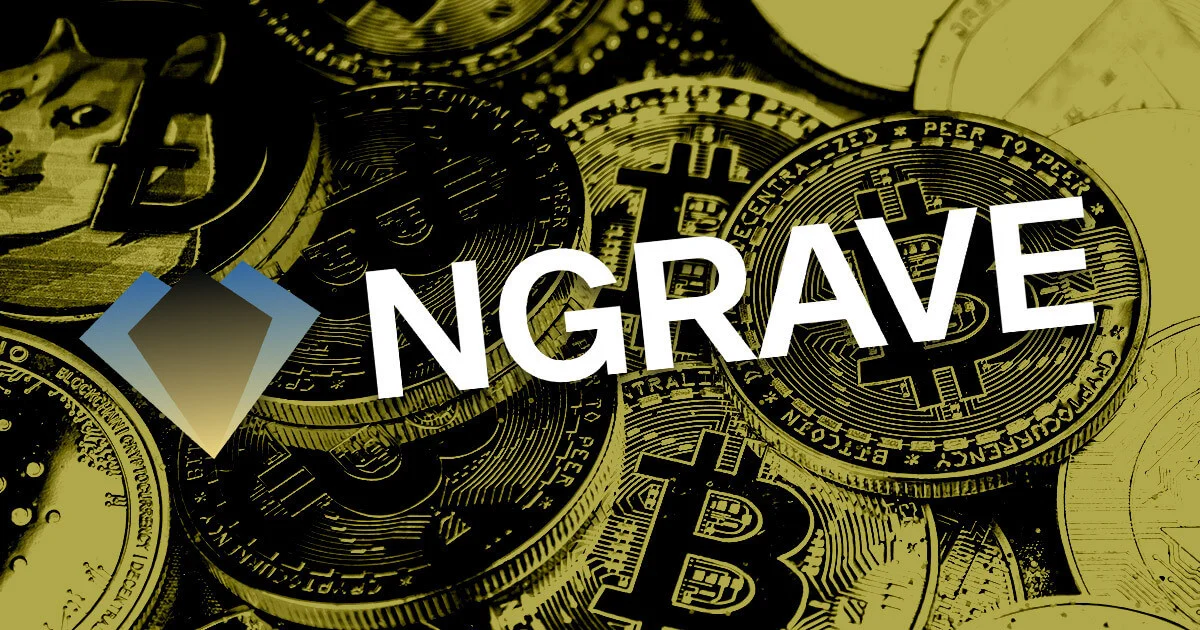
Hardware wallet manufacturer NGRAVE has officially launched its third annual Security Self-Audit, an initiative designed to empower cryptocurrency holders to evaluate the robustness of their asset protection strategies. As the digital asset ecosystem continues to navigate a volatile landscape characterized by both technological innovation and sophisticated cyber threats, the Belgian security firm seeks to bridge the gap between complex cryptographic protocols and everyday user practices. The launch of this self-audit comes at a critical juncture for the industry, following a year of unprecedented security breaches that have underscored the vulnerabilities inherent in both centralized and decentralized financial systems.
Despite the prevailing "crypto winter" that saw suppressed market valuations throughout 2022 and early 2023, the frequency and scale of malicious activities have not abated. According to data from blockchain analytics firm Chainalysis, hackers and malicious actors successfully misappropriated approximately $3.8 billion worth of digital assets in 2022. This figure represents a record high for the industry, surpassing the previous record of $3.3 billion set in 2021. The surge in theft highlights a fundamental paradox: as blockchain technology matures, the attack vectors utilized by cybercriminals are becoming increasingly diverse, ranging from complex smart contract exploits to traditional social engineering and phishing campaigns.
The Landscape of Digital Asset Vulnerability
The necessity of NGRAVE’s self-audit is rooted in the alarming statistics surrounding decentralized finance (DeFi) and bridge vulnerabilities. In 2022, DeFi protocols accounted for 82.1% of all cryptocurrency stolen by hackers, a significant increase from 73.3% in 2021. Of the funds stolen from DeFi protocols, 64% originated from cross-chain bridge exploits. These bridges, which allow users to port assets across different blockchain networks, have become prime targets due to the large volumes of liquidity they hold and the complexities of their underlying code.
However, the risk is not confined to high-level protocol exploits. A substantial portion of asset loss is attributed to individual user errors, including the mismanagement of private keys, the use of insecure "hot" wallets (wallets connected to the internet), and a lack of awareness regarding "seed phrase" security. NGRAVE’s initiative aims to address these human-centric vulnerabilities by providing a structured framework for users to assess their personal security hygiene. By offering a free, anonymous four-minute survey, the company provides participants with immediate, actionable feedback tailored to their specific security profiles.
A Chronology of the NGRAVE Security Initiative
NGRAVE launched its first Security Self-Audit in 2021, recognizing that technical security products are only as effective as the individuals operating them. The inaugural audit revealed significant gaps in how retail investors managed their portfolios, with a high percentage of users relying on centralized exchanges or mobile-based wallets for long-term storage—practices that expose funds to exchange insolvency risks and SIM-swapping attacks.
The second annual audit, conducted in early 2022, showed a slight improvement in awareness but coincided with the rise of sophisticated phishing attacks targeting hardware wallet users. The 2023 iteration, currently underway, reflects the lessons learned from the catastrophic collapses of major centralized entities like FTX and Celsius. These events triggered a massive migration of assets from exchanges to self-custody solutions, often referred to in the community by the mantra "Not your keys, not your coins."
NGRAVE’s timing for the third audit is strategic, capitalizing on the renewed interest in self-custody. The survey is designed to be accessible to both novices and seasoned "HODLers," covering topics such as the physical storage of backup keys, the use of multi-factor authentication (MFA), and the frequency of security reviews.
Incentivizing Best Practices through Strategic Partnerships
To encourage participation and foster a culture of proactive security, NGRAVE has partnered with other security-focused firms to offer a suite of prizes. The total prize pool is intended to provide winners with a comprehensive security ecosystem.
The prizes include the NGRAVE Combo set, which features the flagship "ZERO" hardware wallet and the "GRAPHENE" stainless steel backup solution. Unlike many other hardware wallets, the NGRAVE ZERO is characterized by its "Cold" status, meaning it is completely air-gapped. It lacks any form of wireless connectivity, such as Bluetooth, Wi-Fi, or NFC, and relies solely on one-way encrypted QR code communication. This architecture eliminates the possibility of remote hacking, a feature that has earned the device the EAL7 security certification—the highest level of security assurance in the financial and governmental sectors.
In addition to hardware, the giveaway includes yearly mobile plans from Efani, a highly secure telecommunications provider designed to protect users against SIM-swapping attacks. SIM swapping has emerged as a preferred method for hackers to bypass two-factor authentication on exchange accounts and email addresses. By including Efani in the prize pool, NGRAVE acknowledges that crypto security extends beyond the wallet and into the user’s broader digital life.
Furthermore, the audit offers platinum accounts for DieFi, a platform dedicated to digital asset inheritance and recovery. One of the most significant risks in crypto is the permanent loss of funds due to the death or incapacitation of the owner without a clear recovery plan for heirs. DieFi addresses this "terminal" security risk, ensuring that digital wealth can be safely transferred to the next generation.
Technical Analysis of Self-Custody Risks
The self-audit serves as a diagnostic tool for several critical risk categories. Primary among these is the "Seed Phrase" management. Most hardware wallets provide a 12- or 24-word recovery phrase that acts as the master key to the user’s funds. NGRAVE’s audit assesses whether users are storing these phrases digitally—a high-risk practice—or utilizing physical, fireproof, and waterproof solutions.
Another area of focus is "Signature Clarity." Many recent exploits involve "blind signing," where a user interacts with a malicious smart contract and unknowingly signs a transaction that drains their wallet. NGRAVE advocates for "Clear Signing," a process where the hardware wallet displays the full details of the transaction in a human-readable format before the user confirms it. This prevents users from falling victim to deceptive decentralized application (dApp) interfaces.
The audit also examines the use of "Passphrases," an additional layer of security beyond the 24-word seed. A passphrase acts as a 25th word that creates a completely different set of addresses, providing a "hidden" vault that remains protected even if the physical seed phrase is compromised.
Industry Reactions and Broader Implications
The broader cryptocurrency community has generally welcomed the move toward educational self-audits. Analysts suggest that for the industry to reach its next phase of mass adoption, the "fear factor" associated with asset management must be mitigated. Institutional investors have long demanded high-level security audits and custodial clarity; initiatives like NGRAVE’s bring that same level of rigor to the retail sector.
Security experts note that the shift toward air-gapped technology and robust self-custody is a direct response to the failings of the "trusted third party" model. The collapse of FTX, in particular, demonstrated that even the most reputable-appearing centralized platforms could suffer from mismanagement or fraud. This has led to a surge in hardware wallet sales across the board, with companies like Ledger and Trezor also reporting record interest.
However, the move to self-custody places the entire burden of security on the individual. This "sovereignty" is a double-edged sword; while it removes counterparty risk, it increases the risk of total loss due to personal negligence. NGRAVE’s self-audit is positioned as an essential educational resource to ensure that this transition to self-custody is successful and sustainable for the average user.
Looking Ahead: The March 2023 Distribution
The results of the self-audit and the distribution of prizes are scheduled for March 2023. NGRAVE has stated that 23 users will be selected through a random draw to receive the aforementioned security bundles. Beyond the prizes, the company plans to release a generalized report (based on anonymous data) summarizing the state of crypto security in 2023. This report is expected to provide valuable insights into whether the lessons of 2022 have truly been integrated by the crypto-holding public.
As the deadline for the audit approaches, the initiative stands as a reminder that in the world of digital finance, security is not a one-time setup but an ongoing process of evaluation and refinement. By gamifying the audit process and providing professional-grade tools as incentives, NGRAVE is attempting to standardize a "security-first" mindset that could prove vital as the market prepares for its next potential growth cycle. The success of such initiatives will likely be measured not just by the number of participants, but by a measurable decrease in the percentage of assets lost to preventable user errors in the years to come.