Dwi Wanna
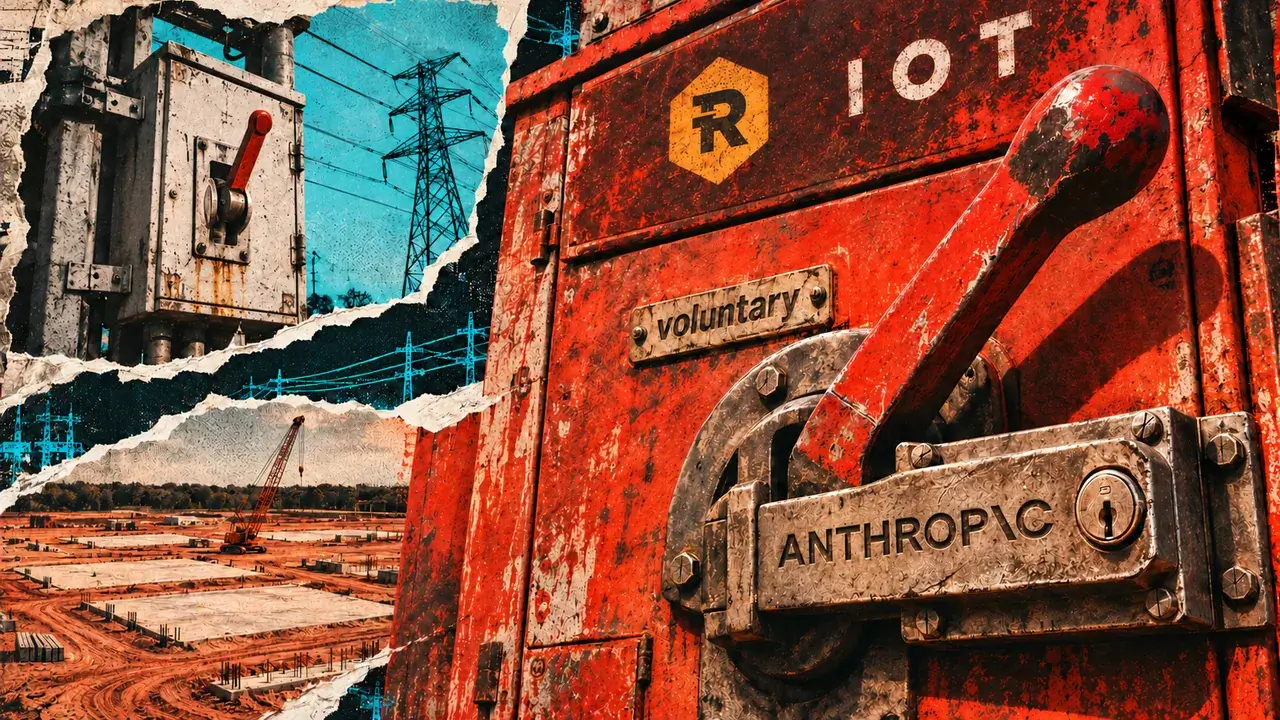
Riot Platforms has finalized a landmark agreement with artificial intelligence firm Anthropic that fundamentally alters the operational dynamics of its Corsicana, Texas facility. As of November 4, 2026, the lease agreement became legally binding, establishing a framework where Anthropic holds a "veto" over voluntary power curtailment—a strategy that has historically been a cornerstone of Riot’s revenue model as a Bitcoin miner. The deal, valued at approximately $28 billion in projected revenue over its initial term, marks one of the largest infrastructure commitments in the burgeoning intersection of high-performance computing (HPC) and energy-intensive data centers.
Under the terms disclosed in Riot’s recent Securities and Exchange Commission (SEC) filings, the company must obtain Anthropic’s express consent before voluntarily reducing the power load of the leased premises or enrolling the site in voluntary demand-response programs. While mandatory orders from the Electric Reliability Council of Texas (ERCOT) or local utility providers remain exempt from this requirement, the restriction represents a significant departure from the traditional "flexible load" model employed by Bitcoin miners.
The Strategic Shift: From Flexible Mining to Static AI Loads
For years, Riot Platforms and other large-scale Bitcoin miners have operated as "demand-response" assets for the Texas power grid. By agreeing to shut down operations during periods of peak demand or grid instability, these companies earn lucrative power credits. In the third quarter of 2026 alone, Riot reported $25 million in companywide power-curtailment credits. These credits, coupled with peak-demand transmission savings, have historically allowed Riot to lower its net energy costs to some of the lowest levels in the industry.
However, the requirements of artificial intelligence workloads differ vastly from those of cryptocurrency mining. While Bitcoin mining can be paused and resumed with minimal friction, AI model training and inference require "five-nines" (99.999%) uptime. The "veto" clause ensures that Anthropic’s critical IT capacity remains energized unless a grid emergency necessitates a mandatory shutdown. This transition effectively converts a portion of Riot’s Corsicana site from a flexible energy sink into a mission-critical infrastructure hub.
The agreement covers a planned 910 megawatts (MW) of critical IT capacity. By securing this load, Anthropic ensures the stability of its computational environment, but at the cost of Riot’s ability to arbitrage power prices through voluntary curtailment on that specific portion of its portfolio.
Financial Architecture and Revenue Projections
The $28 billion figure cited in Riot’s earnings presentation represents the estimated total contract revenue over the initial term of the lease, including annual price escalators. It is important to note that this figure represents future lease revenue rather than immediate cash flow or realized profit.
The financial structure of the deal is built on a "base rent" model:
- Monthly Rent: Base rent is set at $130 per kilowatt (kW) of delivered critical IT capacity.
- Escalators: The agreement includes a 3% annual rent increase.
- Payment Independence: Once capacity is delivered and rent commences, payments are independent of actual utilization by Anthropic.
- Operational Expenses: Anthropic is responsible for electricity costs, taxes, insurance, and site-specific operating expenses, while Riot is tasked with maintaining the underlying power infrastructure.
Riot estimates that the "hard costs" associated with the construction of the site, including site work and tenant module reimbursements, will total approximately $5.5 billion. To facilitate the specialized needs of AI hardware, Riot has agreed to reimburse Anthropic for eligible module costs up to $4 million per megawatt of capacity. If Riot is unable to secure financing for these reimbursements on reasonable market terms, the costs will be converted into rent credits, which will amortize the reimbursement plus 12% annual interest over the remaining term.
Timeline for Phased Delivery and Infrastructure Milestones
The Corsicana facility is being developed in stages, with the lease revenue tied directly to the delivery of functional capacity. The timeline for the 910 MW rollout is ambitious, reflecting the urgent demand for AI-ready data center space.
- First Block Delivery (Target: June 28, 2027): The initial block of capacity is expected to go online, triggering the start of the rent commencement period for that specific segment.
- Phase 1 Completion (Target: September 2027): The full 400 MW of the first phase is scheduled to be operational.
- Phase 2 Expansion (Target: January 2028): An additional 200 MW of capacity is slated for delivery.
- Phase 3 Finalization (Target: July 2028): The final 310 MW will be brought online, bringing the total leased capacity to 910 MW.
The agreement includes strict "use-it-or-lose-it" delivery clauses. If Riot fails to deliver capacity within 60 days of the targeted dates, it must provide escalating rent credits to Anthropic. These penalties are capped at 270 days of base rent for the affected blocks. If a phase is delayed beyond the 270-day window, Anthropic maintains the right to terminate the agreement for that phase upon 30 days’ notice, subject to force majeure extensions or delays caused by the tenant.
Broader Implications for the Energy Grid and AI Industry
The Riot-Anthropic deal is a bellwether for a broader trend in the energy sector: the "AI-ification" of Bitcoin mining infrastructure. As AI companies scramble to find sites with massive power interconnects, Bitcoin miners—who already possess the necessary permits, substations, and land—have become the preferred partners for Silicon Valley’s giants.
However, this shift poses a unique challenge for grid operators like ERCOT. The Texas grid has relied on the "interruptible" nature of Bitcoin mining to manage supply-demand imbalances during extreme weather events. As hundreds of megawatts transition from interruptible mining to non-interruptible AI loads, the "emergency brake" available to grid operators is effectively reduced.
While Riot’s agreement still allows for mandatory grid-ordered curtailments, the loss of voluntary participation in demand-response programs for nearly a gigawatt of power suggests that the grid may need to find new sources of flexibility. Analysts suggest that this could lead to increased investment in battery energy storage systems (BESS) or more frequent calls for residential energy conservation during peak periods.
Comparative Context: The Competitive Landscape
Riot’s move follows similar strategic pivots by other industry leaders. Core Scientific recently signed a multi-billion dollar deal with CoreWeave to provide infrastructure for AI, and TeraWulf has increasingly marketed its "Lake Mariner" facility for HPC workloads.
The Riot-Anthropic deal is notable for its scale and the specific "veto" power granted to the tenant. By securing 910 MW, Anthropic is positioning itself with a massive computational moat, while Riot is diversifying its revenue away from the volatility of Bitcoin’s "block subsidy" and transaction fees.
Market analysts observe that the $130/kW/month rent is competitive within the Tier 1 data center market, especially considering the scale of the power commitment. For Riot, the deal provides a predictable, long-term revenue stream that could be used to fund further mining expansions or additional HPC infrastructure. For Anthropic, the deal secures the physical foundation necessary to train the next generation of large language models (LLMs) in a market where "power is the new oil."
Risk Factors and Future Outlook
Despite the optimistic revenue projections, the project is not without risks. The $5.5 billion capital expenditure requirement is a significant burden on Riot’s balance sheet. The company recently addressed some of these financing needs through separate bridge loans for its Rockdale facility, but the Corsicana build-out will require sustained access to capital markets.
Furthermore, the 12% interest rate on tenant reimbursements (should Riot fail to find external financing) indicates a high cost of capital that could eat into the project’s net margins. There is also the technical challenge of maintaining 910 MW of high-density cooling and power distribution systems, which are significantly more complex than the air-cooled racks typically used in Bitcoin mining.
As the June 2027 deadline approaches, the industry will be watching Riot’s construction progress closely. The success or failure of this transition will likely determine whether the "Bitcoin-to-AI" pipeline becomes the standard for the next decade of American industrial energy use or if the complexities of the "always-on" AI load prove too taxing for former mining operators.
For now, the binding agreement stands as a testament to the shifting priorities of the digital economy, where the certainty of power for AI is worth a $28 billion premium.