admin
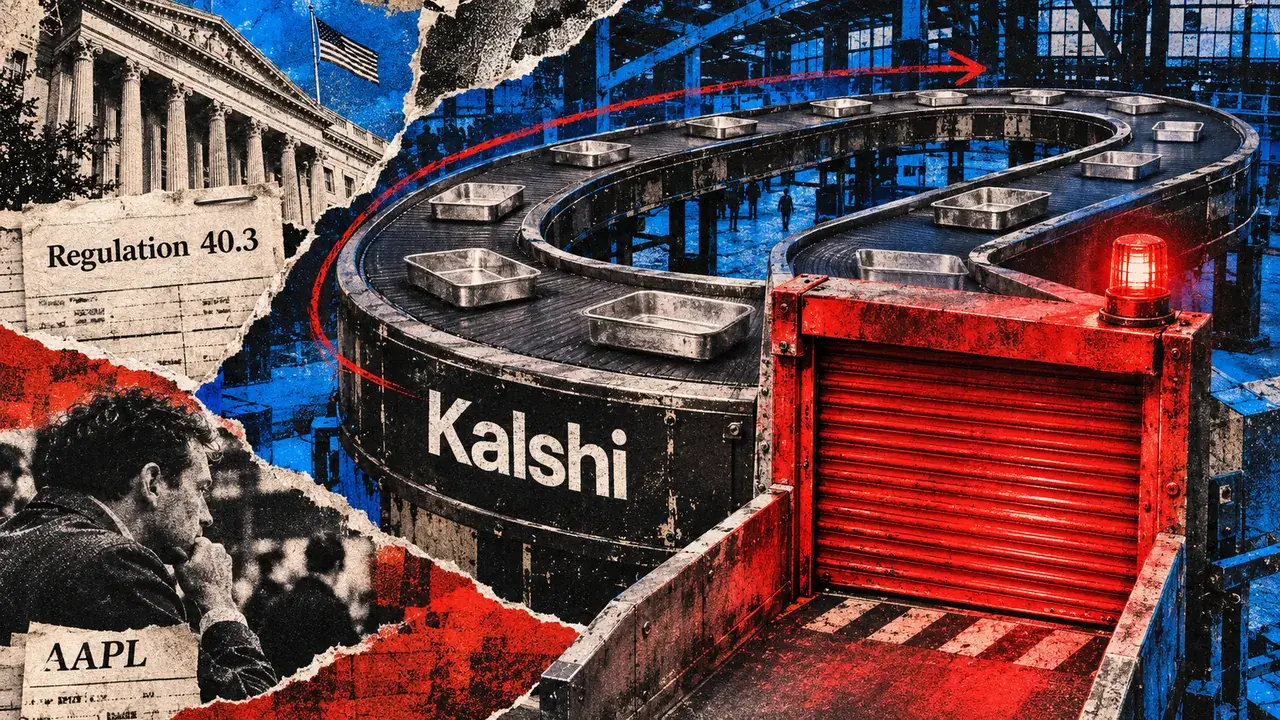
The U.S. Commodity Futures Trading Commission (CFTC) has officially greenlit the trading of single-stock perpetual futures on eligible regulated exchanges, a significant development announced on November 3rd. These innovative financial instruments, which track the price of individual stocks without a predetermined expiration date, are now poised to enter the mainstream financial landscape. However, their introduction is accompanied by intricate rules and potential complexities, particularly concerning market halts and funding mechanisms, which investors must thoroughly understand before engaging.
The approval, detailed by CFTC Chairman Michael Selig, signifies that these contracts have been "deemed approved under Regulation 40.3." This regulatory framework allows for the trading of security futures products, which combine elements of both securities and futures. For a trading venue to be eligible, it must be designated as a contract market by the CFTC and simultaneously registered with the Securities and Exchange Commission (SEC) as a securities exchange. This dual registration brings these novel products under the purview of both agencies, creating a joint security-futures framework designed to oversee their operation.
The Mechanics and Market Access of Perpetual Futures
Perpetual futures, a concept already well-established in the cryptocurrency derivatives market, differ from traditional futures contracts in their absence of an expiry date. Instead of a fixed settlement, these contracts typically rely on a "funding rate" mechanism to keep their price aligned with the underlying asset. This funding rate is a periodic payment exchanged between long and short positions, effectively incentivizing traders to maintain positions that keep the futures price close to the spot price of the underlying stock.
Platforms like Kalshi have already begun offering single-stock perpetuals, explicitly stating that while they lack an expiration date, they do not operate on a 24/7 basis. This is a critical distinction for potential investors. Trading on these platforms adheres to regular market schedules, with designated opening and closing times. Consequently, investors are unable to initiate or close positions during these scheduled market closures. Access to trading these instruments requires a specific application process, often including an educational tutorial, underscoring the need for a thorough understanding of their unique characteristics. Furthermore, the availability and terms of leverage are contingent upon the specific stock and the size of the trading position, adding another layer of consideration for risk management.
Coinbase’s Position and the Regulatory Labyrinth
While the CFTC’s general announcement on November 3rd signaled a broad approval for eligible exchanges, the specific status of individual applications remained subject to ongoing review. For Coinbase, a prominent cryptocurrency exchange that has been actively seeking to expand its derivatives offerings, the regulatory landscape presented a more nuanced picture. As of November 4th, the CFTC’s public product record for Coinbase’s individual filing still indicated "Approval Pending." Simultaneously, the SEC’s rulemaking index showed that Coinbase’s separate customer-margin proposal had been withdrawn.
These entries do not negate the CFTC’s November 3rd announcement regarding the broader category of single-stock perpetual futures. However, they highlight that specific launch dates and definitive trading terms for Coinbase customers were not yet established at that time. Coinbase’s September filing outlined a proposal for cash-settled futures on stocks and ETF shares, emphasizing that these contracts would not confer ownership of the underlying securities. The proposed product specifications, using Apple Inc. (AAPL) as a representative example, clearly stated that the listing of such futures was contingent on regulatory approvals. The controls proposed by Coinbase were designed for their platform’s specific architecture and did not necessarily set the definitive terms for all venues offering similar products.
Industry Concerns and Regulatory Safeguards
The introduction of single-stock perpetual futures has not been without scrutiny from established industry participants. The Securities Industry and Financial Markets Association (SIFMA), a key trade group representing the securities industry, voiced its concerns in a letter dated November 2nd. SIFMA called for further review of proposals submitted by various entities, including Bitnomial, Coinbase, Kalshi, and Nadex. Their concerns centered on potential risks such as market manipulation, the implications of trading in thinly liquid markets, and the precise classification of these new instruments within the existing regulatory framework.
A crucial aspect of the regulatory oversight for security futures products, including these perpetuals, is the mandated halt requirement. Under the existing security-futures regulations, any futures contract on a single security must cease trading concurrently with its underlying stock if that stock is subject to a regulatory halt. This requirement is designed to prevent trading in derivative markets when essential information about the underlying asset is unavailable or when market conditions are too volatile for orderly trading.
The joint rule explanation issued by the CFTC and SEC clarifies the rationale behind these halts. They are intended to protect investors by allowing time for information to disseminate and for markets to regain stability and order. The immediate consequence of such a halt is that holders of the affected futures contract cannot execute a closing trade to reduce their exposure. This limitation is significant because traditional methods of hedging or exiting a position, such as trading the underlying stock or its options, are generally also suspended during a regulatory halt, as these markets typically honor the same underlying trading restrictions. While broader market instruments might remain accessible, they do not adequately address the specific company-related risk inherent in a single-stock future.
The Nuances of Hedging During Halts
The scenario becomes more complex when considering the possibility of hedging against a halted position. If the cash market for the underlying stock is halted, but a separate, uncorrelated derivative instrument remains open and accessible, a trader might be able to execute a trade to offset some of their exposure. However, this is a conditional hedge. Its effectiveness is entirely dependent on the continued accessibility and liquidity of the alternative market. Crucially, even if such a hedge is executed, the original perpetual futures position remains open, still subject to the halt and any subsequent price movements once trading resumes.
Coinbase’s proposed Rule 1207, as filed, outlined a framework that would subject its contracts to broader U.S. equity market-wide circuit breakers and coordinated halts. This would also encompass restrictions triggered by corporate actions, significant market disruptions, or outages affecting index prices or data feeds. The resumption of trading for these contracts would be contingent not only on the end of the halt condition but also on a determination by the exchange that trading can recommence in a manner that upholds investor protection and market orderliness. It is important to note that the reopening of the underlying stock itself would not automatically guarantee an immediate opportunity for futures traders to exit their positions.
Funding Rate Mechanics and Potential Price Fallbacks
Beyond the complexities of market halts, the funding rate mechanism for perpetual futures introduces another layer of consideration for investors. Funding payments are essentially cash adjustments made between traders holding open positions, designed to keep the futures contract price tethered to the spot price of the underlying asset. Changes to how these funding rates are calculated are distinct from the ability to execute a closing trade.
Coinbase’s September product submission detailed a proposal for hourly funding payments and suggested trading hours from Sunday evening to Friday afternoon Eastern Time. The design of their pricing index incorporates checks for input freshness, the removal of outliers, the use of median pricing, and a fallback mechanism to a reference price when input data is insufficient. This framework permits the use of substitute price inputs and allows for the suspension, deferral, or modification of funding rates during periods of market disruption. The product appendix specifically notes that no funding rate would be published for an entire hour if trading were closed, paused, or halted during that period.
It is critical to understand that neither a fallback price mechanism nor a temporary suspension of funding rates automatically closes a trader’s position. Furthermore, these mechanisms do not guarantee a trade at the reference value. Kalshi, for instance, employs daily funding calculations, typically at 4 p.m. Eastern Time, and cautions that market closures can result in traders facing a different opening price upon resumption of trading. Significant adverse price movements could push an account below its maintenance margin requirements, potentially triggering a forced liquidation of the position.
Broader Implications and Future Outlook
The introduction of single-stock perpetual futures represents a significant evolution in the U.S. derivatives market. For sophisticated investors and traders, it offers a new tool for speculating on stock price movements, hedging existing portfolios, and potentially engaging in more complex trading strategies. The ability to hold positions indefinitely, managed through funding rates, provides a different dynamic compared to traditional futures with fixed expiries.
However, the regulatory framework, particularly concerning market halts and the intricacies of funding mechanisms, demands a high level of understanding and risk management. The reliance on a dual regulatory oversight by the CFTC and SEC highlights the hybrid nature of these instruments and the careful balancing act required to integrate them into the existing financial ecosystem.
The concerns raised by SIFMA regarding manipulation and liquidity underscore the need for ongoing monitoring by regulators. As these products gain traction, their impact on market stability, price discovery, and investor behavior will be a key area of focus for both market participants and regulatory bodies. The current regulatory approvals are a foundational step, but the practical implementation and ongoing supervision will determine the long-term success and integration of single-stock perpetual futures into the broader U.S. financial markets. Investors venturing into this new territory must prioritize education, understand the inherent risks, and exercise diligent risk management practices, recognizing that while new opportunities are emerging, so too are new complexities.