admin
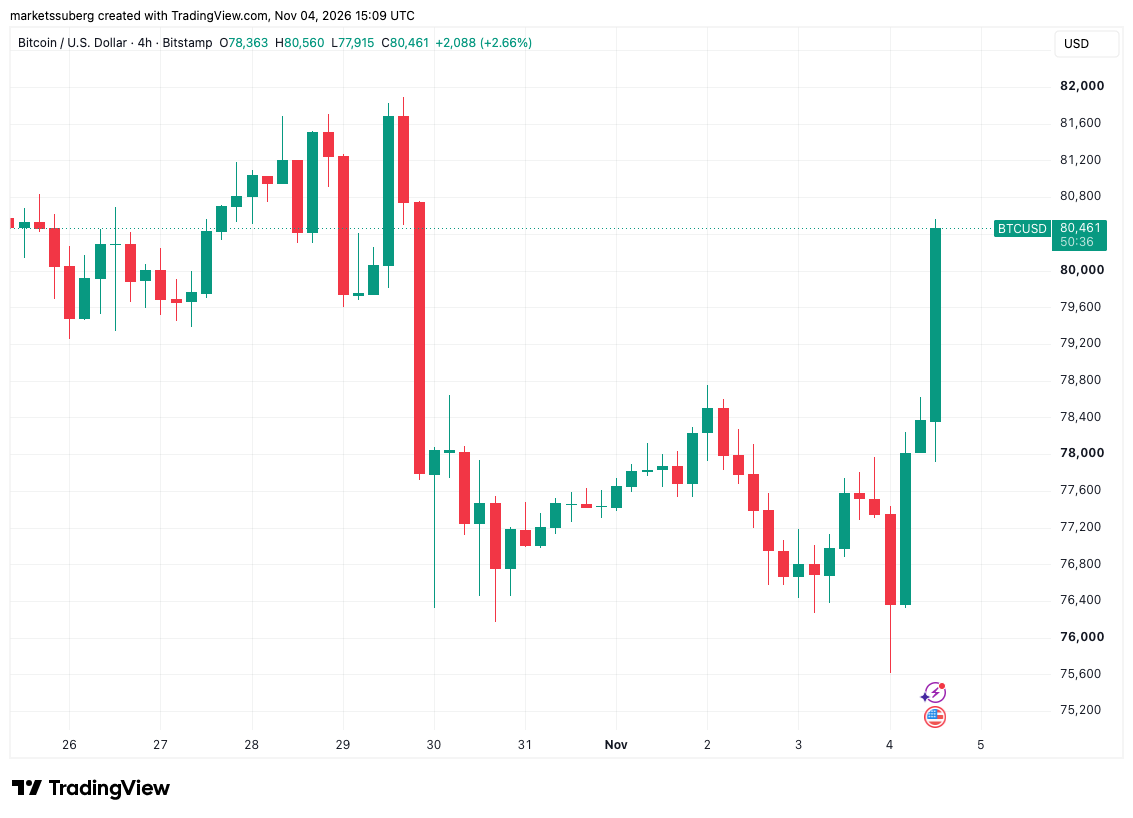
Bitcoin (BTC) experienced a significant upward trajectory, breaching the $80,000 mark at Wednesday’s Wall Street open, as global markets reacted positively to a perceived Democratic sweep in the US midterm elections. This rally in the premier cryptocurrency mirrored a broader surge in US stocks, signaling a renewed investor confidence spurred by reduced political uncertainty and shifting geopolitical dynamics. The digital asset’s swift recovery from its lowest levels in seven weeks underscores the market’s sensitivity to macroeconomic and political events, highlighting the intricate connections between traditional finance and the nascent cryptocurrency sector.
Global Markets React to Election Clarity
The immediate aftermath of the US midterm elections saw a pronounced shift in market sentiment. While initial overnight futures indicated some volatility, particularly in US equities, the full picture of the Democratic gains across both the Senate and the House of Representatives quickly propelled a robust rebound. This "Democratic sweep," as analysts termed it, suggested a potential for greater legislative stability or at least a clearer policy direction, which markets often favor over prolonged uncertainty. Investors typically brace for periods of political transition, and a decisive outcome, regardless of party, can often trigger a relief rally as one major source of ambiguity is removed.
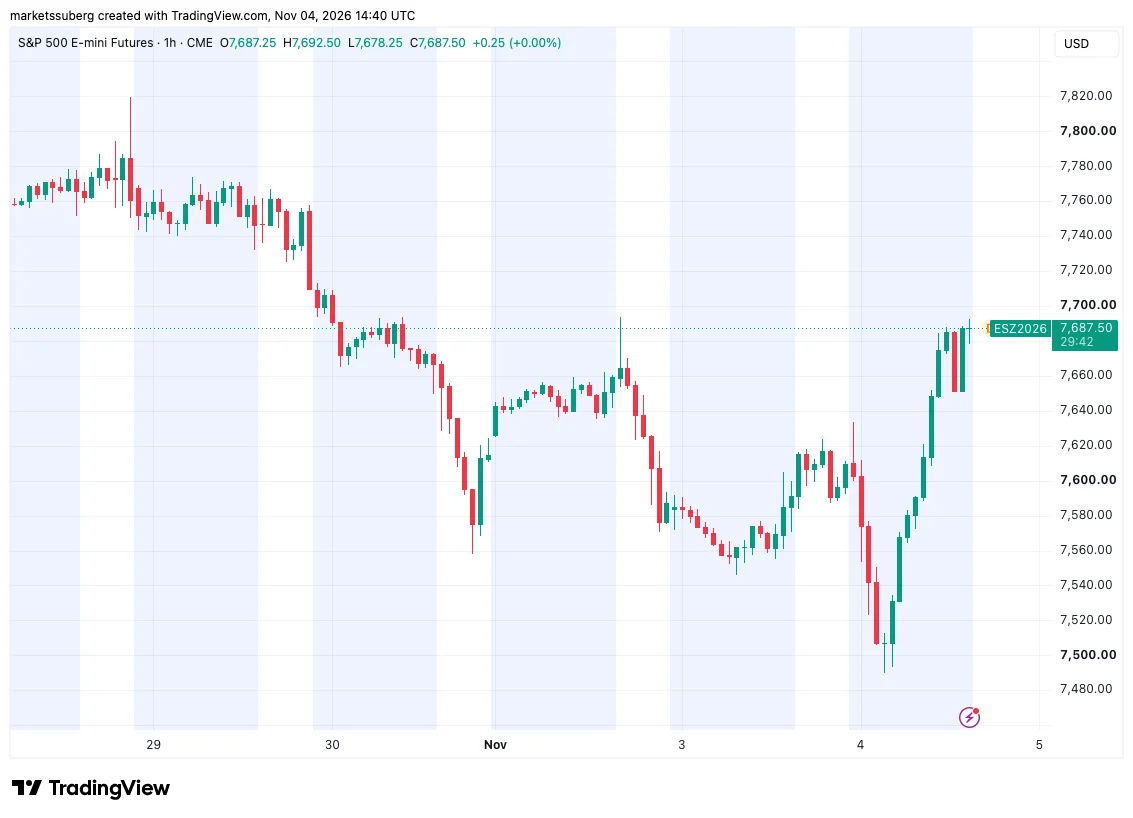
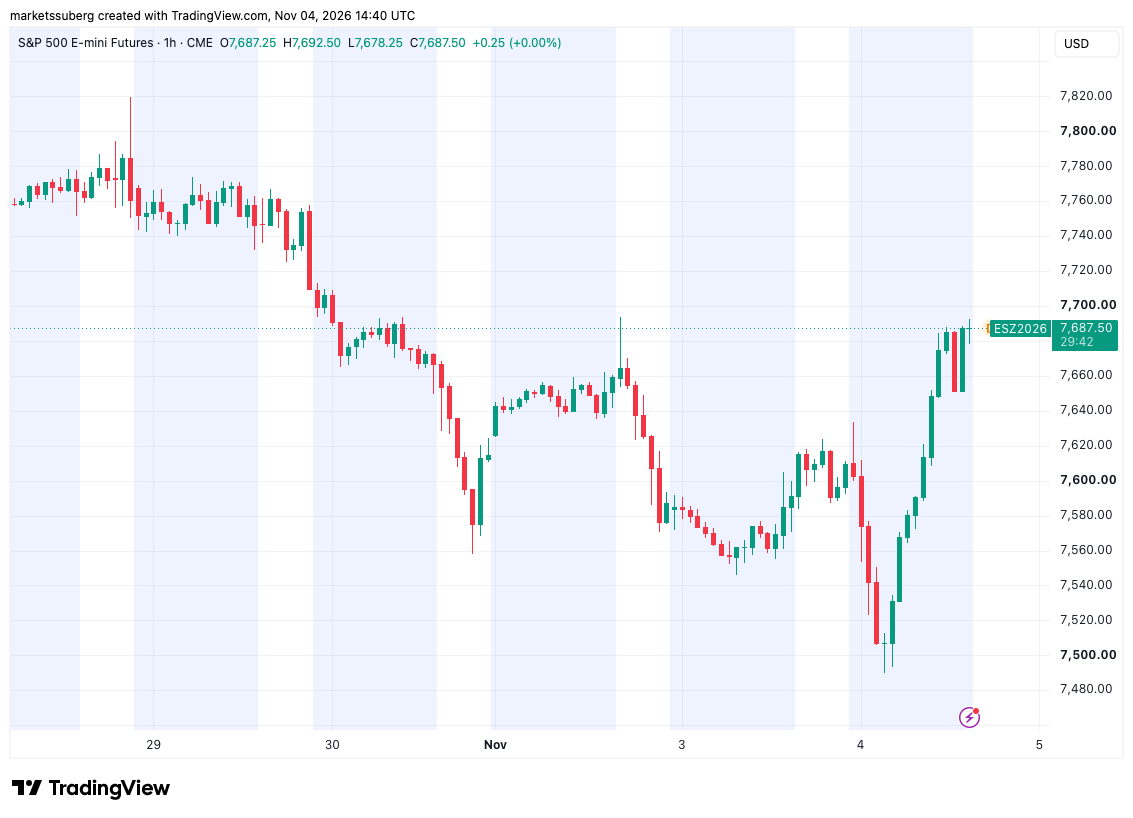
The S&P 500 futures, a key indicator of broader market sentiment, initially dipped to 7,490 points, marking their lowest level since July 31. This transient dip was quickly overshadowed by a powerful recovery, with futures climbing to 7,690 points, nearing new month-to-date highs. This dramatic reversal led trading resource The Kobeissi Letter to characterize the initial equities weakness as a "textbook bear trap" on X (formerly Twitter). A bear trap typically occurs when a market that has been in a downtrend (or experiencing a temporary dip) appears to continue falling, enticing bearish traders to sell, only for the price to reverse sharply upwards, trapping the sellers. The Kobeissi Letter further highlighted the scale of the political shift, noting that Democrats had reportedly flipped seven seats in the Senate and 25 in the House of Representatives, representing one of the most significant changes in US political power in nearly two decades. This political realignment is often scrutinized for its potential impact on fiscal policy, regulatory environments, and overall economic stability, all of which indirectly influence risk-on assets like Bitcoin.
Bitcoin’s Rapid Ascent: A Deeper Dive
Data from TradingView corroborated Bitcoin’s impressive performance, showing BTC/USD up by over 4% from its recent lows. This rebound was particularly noteworthy given that Bitcoin had just touched its lowest valuation in seven weeks, a period characterized by heightened market anxiety leading up to the midterms and ongoing concerns about global inflation, interest rate hikes by central banks, and potential economic slowdowns. The psychological threshold of $80,000 is a significant one for many traders and investors, and crossing it with such momentum after a period of decline often signals a shift in market control from sellers to buyers.
The cryptocurrency market, inherently volatile, often amplifies reactions to major macroeconomic and geopolitical developments. Before the election results, Bitcoin, like many other risk assets, had been under pressure. Factors contributing to its prior seven-week low included persistent inflation data, which strengthened expectations for continued aggressive interest rate hikes by the Federal Reserve, thereby increasing the cost of capital and making speculative assets less attractive. Furthermore, broader global economic slowdown concerns, supply chain disruptions, and the looming uncertainty of the US political landscape had collectively created a risk-off environment, pushing investors towards safer havens and away from cryptocurrencies. The post-election rally, therefore, represents a strong corrective move, driven by the release of pent-up demand and a renewed appetite for risk.
The US Midterm Landscape: From Uncertainty to Relief
The US midterm elections are always a critical juncture, often serving as a referendum on the sitting president’s party and shaping the legislative agenda for the remainder of their term. The "Democratic sweep" mentioned in the article implies that the Democratic Party gained control or strengthened its majority in both chambers of Congress. This outcome, whether it was fully anticipated or a surprise, provided markets with a clearer political path forward. Historically, markets tend to react positively to decisive election outcomes, as the clarity reduces one layer of uncertainty that can often paralyze investment decisions.
Prior to the elections, the market was grappling with several scenarios: a Republican sweep, a split Congress, or a Democratic sweep. Each scenario carried different implications for fiscal spending, taxation, regulatory policies (including those related to cryptocurrencies), and international trade. The Democratic victory, as interpreted by the markets, might have been seen as preserving a degree of policy continuity or, at the very least, avoiding legislative gridlock that could hinder economic recovery or introduce new, unfavorable regulations. The relief rally suggests that investors had priced in a higher degree of risk associated with the election outcome than what ultimately materialized, or they perceived the Democratic outcome as more favorable for market stability than alternative scenarios.
Equities Rebound: Unpacking the "Bear Trap"
The "textbook bear trap" observed in US stock futures is a crucial element in understanding the broader market psychology. As election results began to trickle in overnight, early indications might have suggested a different outcome or simply intensified the pre-election anxiety. This initial uncertainty likely led some traders to short the market, betting on further declines. However, as the Democratic gains became undeniable and the implications for political stability were digested, a rapid influx of buying pressure materialized. This forced short-sellers to cover their positions, further fueling the upward momentum, creating a classic short squeeze that propelled futures prices rapidly higher.
The S&P 500 futures’ journey from 7,490 points (a low not seen since late July) to 7,690 points, approaching month-to-date highs, illustrates the power of this market reversal. This indicates that the market quickly recalibrated its expectations, moving from a position of cautious bearishness or hedging to one of optimism. The swiftness of the rebound suggests that underlying demand for equities remained strong, and the political uncertainty was merely a temporary barrier. For Bitcoin, which often correlates with tech stocks and other growth assets, this positive sentiment spillover from the equity markets was a significant tailwind.
Analyst Perspectives: Beyond the Ballot Box
While the election outcome provided an immediate catalyst, seasoned analysts cautioned against attributing the entire rally solely to political shifts. James Butterfill, head of research at crypto asset manager CoinShares, offered a nuanced perspective to Cointelegraph, emphasizing that "For Bitcoin, real yields, dollar liquidity and ETP flows still carry more weight than the elections."
- Real Yields: This refers to the return on an investment after accounting for inflation. When real yields are high, it means investors can get a good return from relatively safe assets like government bonds, making riskier assets like Bitcoin less attractive. Conversely, lower real yields can push investors towards higher-risk, higher-reward assets. The election outcome, by potentially moderating inflation expectations (as discussed below with oil prices), could indirectly influence real yields, making Bitcoin more appealing.
- Dollar Liquidity: This refers to the availability of US dollars in the global financial system. When dollar liquidity is abundant, it generally supports risk assets, as it indicates ample capital for investment. Tighter dollar liquidity, often a result of central bank policies, can constrain capital flows and depress asset prices.
- ETP Flows: Exchange-Traded Product (ETP) flows, specifically into Bitcoin ETPs, indicate institutional and retail investor interest and capital allocation towards the cryptocurrency. Positive net inflows suggest growing adoption and demand, which is a fundamental driver of price.
Butterfill’s observation underscores the complexity of Bitcoin’s price discovery, which is influenced by a confluence of macroeconomic factors far beyond immediate political headlines. He further noted, "We are seeing oil prices plummet, relieving some inflationary pressure and consequent rate hike expectations could moderate." This connection between oil prices, inflation, and central bank policy is a critical component of the broader market narrative.
Geopolitical Shifts and the Oil Market
A significant parallel development contributing to the market’s positive mood was the sharp decline in global crude oil prices. US WTI crude oil prices plunged to their lowest levels since mid-October, falling below $93 per barrel, and marking an 11.9% drop for the week. Brent crude, the international benchmark, approached sub-$100 levels for the first time since October 7. This dramatic shift in oil prices was directly linked to renewed optimism regarding the Iran conflict.
Mohammad Bagher Ghalibaf, Iran’s speaker of parliament, posted on X, stating that voters had "said NO TO WAR, and we endorse this message." This statement, interpreted as a de-escalation signal from Iran following the US midterms, significantly impacted oil markets. Energy markets often price in a "risk premium" associated with geopolitical tensions, particularly in major oil-producing regions like the Middle East. Any sign of de-escalation or reduced conflict risk typically leads to a decrease in this premium, causing oil prices to fall.
Economist Robin Brooks reinforced this view, suggesting that oil markets had priced in a risk premium that was "too high" before the midterms. The implication is that the market was over-anticipating or over-reacting to the potential for heightened conflict, and the election results, coupled with Iran’s reaction, provided a much-needed correction. Former US President Donald Trump also conceded that the Iran conflict was partly responsible for Republican election losses, acknowledging the significant public sentiment against prolonged military engagement. The key question, as Brooks posed, is whether this outcome encourages the President to de-escalate with Iran or leads to further escalation, a factor that will continue to influence global energy markets.
Inflationary Pressures and Monetary Policy Implications
The plummeting oil prices have profound implications for global inflation and central bank monetary policy. Energy costs are a significant component of most inflation indices, and a sustained drop in crude oil prices can alleviate inflationary pressures across the economy. Lower inflation, in turn, can lead to a moderation of expectations regarding future interest rate hikes by central banks, particularly the US Federal Reserve.
For months, aggressive rate hikes by the Federal Reserve have been a primary concern for risk asset investors, as higher rates increase borrowing costs, reduce corporate earnings, and make cash-yielding investments more attractive relative to speculative assets. If inflationary pressures ease due to falling oil prices, the Fed might adopt a less hawkish stance, potentially slowing the pace or magnitude of future rate increases. This prospect is highly favorable for Bitcoin and other cryptocurrencies, as it reduces the headwind from monetary tightening and improves the overall liquidity environment. The market’s reaction suggests that investors are already beginning to price in this potential shift in central bank policy, contributing to the broader relief rally.
The Interconnectedness of Global Finance and Crypto
This series of events – a US election outcome, a rally in traditional equities, a shift in geopolitical tensions, and a drop in oil prices – underscores the increasingly interconnected nature of global financial markets, including the cryptocurrency space. Bitcoin, once seen as a completely uncorrelated asset, has shown growing correlations with major equity indices, particularly the S&P 500 and tech-heavy Nasdaq. This means that factors influencing traditional markets often have a ripple effect on Bitcoin’s price.
The post-midterm rally demonstrates how political certainty, geopolitical stability, and a more favorable macroeconomic outlook (driven by reduced inflation fears) can collectively bolster investor confidence across all asset classes, from stocks and bonds to commodities and digital currencies. The removal of key uncertainties acts as a de-risking event, prompting a shift from defensive positions to a more growth-oriented investment strategy.
Outlook: Sustaining the Momentum
While the immediate reaction to the midterm elections has been overwhelmingly positive for Bitcoin and broader markets, the sustainability of this momentum remains a key question. Analysts will continue to monitor the interplay of various factors highlighted by James Butterfill: real yields, dollar liquidity, and ETP flows. The long-term trajectory of Bitcoin will depend not just on political outcomes but also on the Federal Reserve’s actual monetary policy decisions, the persistence of lower oil prices, and the overall health of the global economy.
Furthermore, regulatory developments in the crypto space, technological advancements within the Bitcoin network, and evolving institutional adoption will also play crucial roles. The current rally provides a much-needed psychological boost for the crypto market, but investors will be looking for continued positive macroeconomic signals and sustained capital inflows to confirm a more enduring bullish trend. The midterms may have provided a powerful catalyst for a relief rally, but the path ahead for Bitcoin remains subject to the complex dynamics of a rapidly evolving global financial landscape.