Dwi Wanna
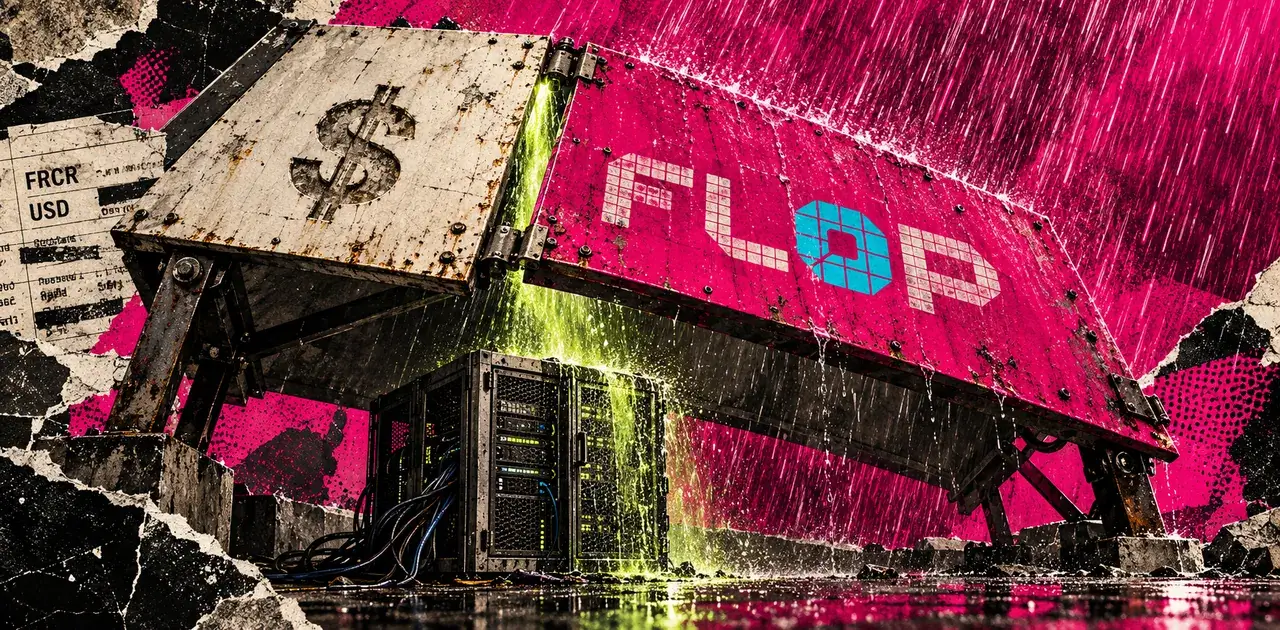
Arthur Hayes, the co-founder of BitMEX and a prominent figure in the cryptocurrency derivatives space, has unveiled a comprehensive financial blueprint designed to address the burgeoning volatility in artificial intelligence compute costs. The proposal, detailed in his October 26 essay titled "The Trifecta," outlines a sophisticated framework for AI-compute futures and perpetual swaps. These instruments are intended to allow developers and enterprises to hedge their exposure to the fluctuating costs of "inference"—the process of running trained AI models to generate responses. By connecting traditional financial contracts to the emerging FLOP Network, Hayes aims to create a standardized market for a resource that is rapidly becoming the world’s most sought-after commodity: processing power.
The proposal arrives at a critical juncture for the AI industry. As companies shift from training massive foundational models to deploying them at scale, the operational expenditure associated with inference has skyrocketed. Unlike training, which is a massive upfront cost, inference is an ongoing expense that scales with user demand. Currently, this market is dominated by centralized cloud providers, but Hayes’ vision leverages the decentralized FLOP Network to provide a transparent, market-driven alternative. However, the proposal also highlights a complex financial challenge: the decoupling of compute prices from currency exchange rates, which could leave dollar-funded buyers exposed even when they are ostensibly hedged.
The Mechanics of the Flop Reference Compute Rate
At the heart of the Hayes proposal is the Flop Reference Compute Rate (FRCR), a benchmark index designed to track the cost of compute over time. Hayes defines the FRCR as an hourly, volume-weighted rate expressed in FLOP per GigaFLOPS. This index serves as the underlying asset for the proposed derivative contracts, which could include quarterly futures and perpetual swaps traded on both traditional and decentralized exchanges.
The proposed quarterly contracts utilize a US Dollar (USD) margin system with a multiplier of $1 per index point. For example, a buyer who enters a long position on a single contract at 100 points would realize a $100 profit if the index settles at 200 points, excluding transaction costs. This linear relationship allows the contract to track the numerical movement of the compute index. However, for businesses that must acquire the native FLOP token to pay for actual inference services on the network, the financial reality is more complex. Because these businesses pay their bills in tokens but often budget in dollars, they face a dual risk: the price of compute (the index) and the exchange rate of the FLOP token against the dollar.
Hayes explicitly acknowledges this "quanto" relationship—a term used in finance to describe derivatives where the underlying asset is denominated in one currency but settled in another. Pricing these contracts requires a sophisticated adjustment for covariance, or how the compute index and the FLOP-dollar exchange rate move in tandem. Without this adjustment, a buyer’s hedge may fail to protect their actual dollar-denominated liabilities.
Analyzing the Impact of Currency Volatility on Hedging
The distinction between hedging an index and hedging a bill is vital for corporate treasury departments. To illustrate the risks, consider a hypothetical scenario where an AI startup requires a fixed workload of 100,000 FLOP units. At an initial index level of 100 and an exchange rate of $1 per FLOP, the startup’s bill is $100,000. If the startup goes long on 1,000 futures contracts to hedge its costs, the effectiveness of that hedge depends entirely on the stability of the token’s price.
In a scenario where the compute index doubles to 200 but the token remains at $1, the bill increases to $200,000. The futures gain of $100,000 perfectly offsets this increase, leaving a net outlay of $100,000. However, if the index remains unchanged at 100 but the FLOP token doubles in value to $2, the dollar bill still rises to $200,000. In this case, the index-linked futures provide zero payout, leaving the startup fully exposed to the currency fluctuation. Conversely, if the index doubles but the token’s value halves to $0.50, the dollar bill remains at $100,000, yet the futures still pay out $100,000, potentially resulting in "free" compute for the buyer.
These scenarios demonstrate that a matched index hedge alone does not guarantee fixed dollar spending. Businesses must also manage their currency funding and purchase timing. While some might opt for prepaid forward purchases to lock in token acquisition costs upfront, others may rely on the FLOP Network’s internal architecture, which aims to anchor inference prices to the dollar to mitigate these very issues.
Technical Specifications and the FLOP Compute Unit
The implementation of Hayes’ blueprint relies on the technical maturity of the FLOP Network and its "Yellow Paper" specifications. A key component of this system is the FLOP Compute Unit (FCU). Unlike a raw hardware metric like a GPU’s peak speed, an FCU represents a specific amount of reference work performed under an identified metering profile on a supported AI model.
This model-specific nature of compute introduces another layer of complexity for hedgers. Because the FRCR is a composite index, it may not perfectly track the price movements of the specific AI models a company is actually using. A trader seeking synthetic exposure to the broad market would need to hold a basket of model-specific FCUs in weights that match the index. If a company uses a niche model that deviates from the market average, they may experience "basis risk," where the hedge and the actual cost do not move in sync.
Furthermore, the duration and delivery of these units remain a point of technical evolution. While Hayes describes a system of rolling 30-day FCUs to maintain perpetual exposure, the current draft of the FLOP Network yellow paper specifies different delivery rules. Standardized primary delivery is currently slated to start between one and fourteen days ahead of the request, with a seven-day lead time as the default. This gap between the proposed financial blueprint and the actual network protocol suggests that the "implementation matrix" is still in a partial state of development.
Chronology and Roadmap of the FLOP Network
The market for these compute derivatives remains theoretical as the underlying infrastructure undergoes testing. The timeline for the FLOP Network suggests a multi-year path toward full functionality:
- August 19, 2024: The Commodity Futures Trading Commission (CFTC) launched a consultation regarding compute cash-market liquidity, seeking input on potential manipulation, customer protection, and the viability of perpetual futures in the compute space.
- October 26, 2024: Arthur Hayes publishes "The Trifecta," outlining the financial framework for compute derivatives.
- October 30, 2024: The FLOP Network updates its GPU-provider guide, clarifying that the network currently operates as a development environment with no "real money" or tradable tokens yet in circulation.
- November 2, 2024: The official status page confirms that the network is in a planned phase, with the core software for "HARD-tier" bridge settlement not yet deployable.
- November 3, 2024 (Target): The provisional date for the launch of the FLOP testnet.
- Q1 2027 (Target): The projected window for the mainnet launch and the official generation of the FLOP token.
This extended timeline reflects the significant engineering and regulatory hurdles involved in creating a decentralized compute market. The "SOFT" verification tier, which handles initial settlement and dispute paths, remains open for development, while the physical pilot programs required to calibrate the network’s economics are still in their infancy.
Regulatory Landscape and Market Implications
The proposal by Hayes does not exist in a vacuum; it is part of a broader push to commoditize data center resources. Regulators like the CFTC are increasingly interested in "event contracts" and commodity markets that don’t fit the traditional mold of oil or grain. The CFTC’s inquiry into compute markets suggests that federal agencies are preparing for a future where processing power is traded with the same frequency and complexity as electricity or natural gas.
For the AI industry, the implications of a functional compute derivatives market are profound. It would allow smaller AI startups to compete with tech giants by locking in their most significant operational cost, thereby providing the price certainty needed to attract venture capital and project long-term profitability. However, the risks are equally significant. The reliance on collateral—where providers must bond FLOP tokens to guarantee delivery—creates a system that is only as strong as its enforcement mechanisms. If a provider defaults and a buyer receives a token refund instead of the actual inference they need to serve their customers, the hedge has failed in its primary purpose of ensuring business continuity.
Conclusion: Bridging TradFi and DePIN
Arthur Hayes’ blueprint offers a pioneering vision for transferring exposure to a compute index, bridging the gap between traditional finance (TradFi) and Decentralized Physical Infrastructure Networks (DePIN). By proposing a standardized way to price and trade AI work, Hayes is attempting to build the financial plumbing for the next phase of the digital economy.
However, as the analysis of the FRCR and FCU mechanisms shows, the path from a theoretical blueprint to a functional hedge is fraught with currency risks, model mismatches, and execution hurdles. For a buyer to achieve truly predictable dollar spending, they will need a sophisticated combination of model-price protection and currency hedging. As the FLOP Network moves toward its 2027 mainnet target, the focus will likely shift from these high-level financial theories to the grueling work of technical verification and regulatory compliance. Until then, the "Trifecta" remains a compelling look at how the world might eventually trade the heartbeat of artificial intelligence.