admin

Bitcoin has shown remarkable stability and a less severe price decline than anticipated in the wake of the unprecedented $6.3 billion hack targeting Binance, the world’s largest cryptocurrency exchange. Industry leaders are quick to distinguish this exploit as a failure of centralized exchange security rather than an indictment of Bitcoin’s fundamental network integrity, reinforcing the long-term investment thesis for the decentralized digital asset. Matt Cole, CEO of Strive, a publicly traded company with significant Bitcoin holdings, likened the breach to a traditional bank robbery, emphasizing that it does not undermine the foundational principles or future prospects of Bitcoin.
The Unprecedented Binance Breach: A Deep Dive into the Record-Setting Exploit
The colossal $6.3 billion breach, which began on Thursday, October 28, marks the largest cryptocurrency hack on record, significantly surpassing all previous incidents in scale. This event cast a long shadow over the crypto market, raising immediate concerns about security protocols within centralized exchanges. According to analysis from Glassnode, the magnitude of the Binance exploit alone exceeded the combined losses from the next nine largest cryptocurrency hacks in history, underscoring its unparalleled severity. For context, the previous record holder was the $1.5 billion Bybit exploit in February 2025. Glassnode further reported a concerning trend: three of the ten largest crypto hacks have occurred since the beginning of 2025, all targeting centralized exchanges, highlighting a persistent vulnerability in platform-level security across the industry.
The attack specifically targeted Binance’s systems, with Blockaid CEO Ido Ben-Natan suggesting that the attackers likely compromised the exchange’s transaction signing process. Ben-Natan’s analysis identified an Ethereum transaction containing 50 signed authorizations covering various transaction counts, allowing attacker-controlled code to operate through the affected wallet. While Binance stated on Friday that its ongoing investigation had found no evidence of leaked wallet private keys, the incident points to a sophisticated attack vector that bypassed existing safeguards. Such a compromise of the signing process indicates a critical flaw in the operational security framework designed to protect digital assets held in custodial wallets, distinguishing it sharply from any vulnerability within the Bitcoin network itself.
Bitcoin’s Measured Response: A Test of Market Maturity
Despite the monumental scale of the Binance hack, Bitcoin’s price reaction has been surprisingly subdued, demonstrating a degree of resilience that has impressed market observers. By Saturday, October 30, at 4:00 pm, Bitcoin was trading near $77,400, representing a decline of approximately 4% from its price shortly before the attack commenced on Thursday. This modest dip stands in stark contrast to historical precedents and expert expectations for an event of this magnitude.
Matt Cole of Strive acknowledged this unexpected stability during an appearance on Cointelegraph’s Chain Reaction on Friday. He expressed that Bitcoin’s decline was less severe than he had anticipated, particularly given the unprecedented scale of the breach and the prevailing broader market weakness. This sentiment is further supported by data from Anchorage Digital, cited by CNBC, which indicated that Bitcoin’s average decline in the first 24 hours following previous crypto exchange exploits typically hovers around 8.3%. The 4% drop post-Binance hack, therefore, represents a significantly smaller impact, suggesting a growing maturity and robustness in Bitcoin’s market dynamics.
Comparing this to the Bybit exploit in February 2025, where Bitcoin fell roughly 5% from nearly $100,000 to around $95,000 amidst the breach and broader market volatility, the Binance incident, despite being over four times larger in value, resulted in a proportionally smaller percentage decline for Bitcoin. This could be indicative of several factors, including a more sophisticated and discerning investor base, a clearer understanding of the distinction between exchange risk and protocol risk, and potentially a greater degree of institutional adoption providing a stronger market floor.
Expert Perspectives: Safeguarding the Bitcoin Thesis Amidst Exchange Vulnerabilities
A central theme emerging from industry reactions is the critical distinction between an attack on a centralized service provider and a compromise of the underlying blockchain technology. Matt Cole articulated this clearly, likening the Binance hack to a "bank robbery" rather than a systemic failure of the Bitcoin network itself. This analogy underscores that the vulnerability lies with the custodial entity holding the assets, not with the decentralized, immutable ledger system that underpins Bitcoin.
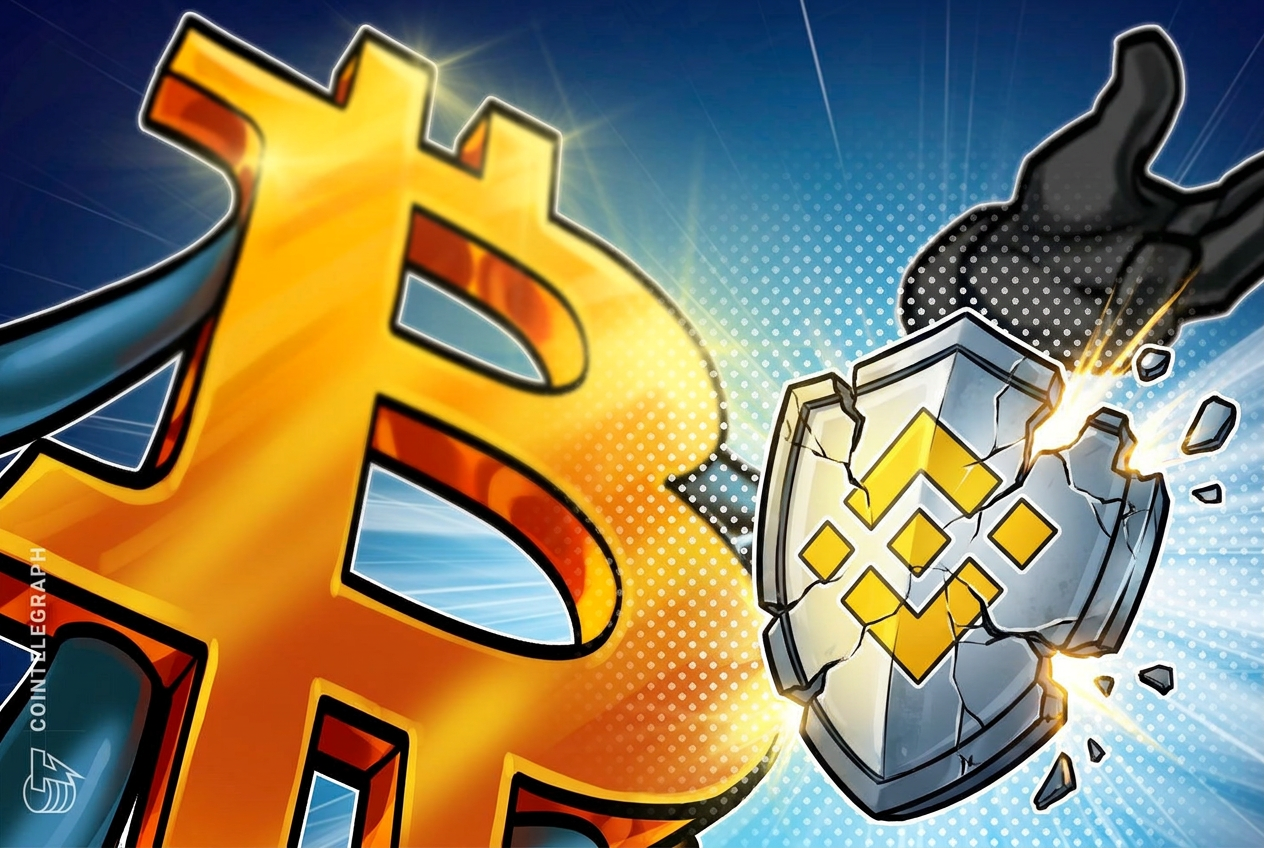
Paul Chapman, Financial Crime Director at Wirex, echoed this crucial clarification, stating, “It’s important to be clear that Bitcoin itself hasn’t been hacked — this was an attack on one company’s systems, not the network.” This distinction is paramount for investor confidence and for a nuanced understanding of cryptocurrency security. The Bitcoin network, with its decentralized architecture, cryptographic security, and global consensus mechanism, has never been successfully breached or compromised. Its security model is designed to withstand attacks by distributing control and requiring an overwhelming majority of network participants to agree on any changes, a stark contrast to the centralized servers and private key management systems of an exchange.
For Strive, a company that holds 43,000 BTC on its balance sheet as of October 23, this conviction remains unwavering. Cole affirmed, “I do have conviction that over any reasonable time frame, this does not change the investment thesis on Bitcoin.” This statement highlights a growing understanding among institutional players that while operational risks exist within the broader crypto ecosystem, particularly concerning centralized entities, these risks are largely separate from the intrinsic value proposition and security of Bitcoin as a decentralized store of value.
Strive’s Conviction and Broader Market Sentiment: Navigating an "Early Spring" Recovery
Strive’s significant Bitcoin holdings underscore a broader trend of increasing institutional confidence in the digital asset. For companies like Strive, which have integrated Bitcoin into their corporate treasury strategies, events like the Binance hack, while disruptive to the wider market, do not fundamentally alter their long-term strategic outlook for Bitcoin. Their conviction is rooted in Bitcoin’s finite supply, censorship resistance, and its role as a hedge against inflation and traditional financial system instability.
Matt Cole further elaborated on the current market climate, describing it as an "early spring" recovery phase. This analogy suggests a period of gradual, sustained growth following a downturn, rather than a rapid surge to new all-time highs. Cole indicated that this recovery phase could potentially last another six to nine months, characterized by steadily rising prices and a rebuilding of market confidence. While he acknowledged it was too early to definitively determine if Bitcoin had reached a price bottom, his optimistic outlook for a prolonged recovery phase provides a hopeful perspective for investors navigating the aftermath of the hack and broader market volatility. This "early spring" metaphor implies a slow but steady thawing of market sentiment, encouraging accumulation and long-term positioning rather than speculative short-term trading.
Implications for Centralized Exchange Security and the Regulatory Landscape
The Binance hack inevitably brings renewed and intense scrutiny to the security practices of centralized cryptocurrency exchanges. Ido Ben-Natan’s analysis, pointing to a compromise in Binance’s transaction signing process, highlights a critical vulnerability that needs urgent addressing across the industry. While Binance’s ongoing investigation aims to pinpoint the exact vector, the incident underscores the imperative for exchanges to implement more robust multi-factor authentication, advanced intrusion detection systems, rigorous internal auditing, and potentially even innovative decentralized security solutions for their custodial holdings.
The sheer scale of the breach will likely accelerate calls for increased regulatory oversight of cryptocurrency exchanges globally. Regulators have long voiced concerns about consumer protection, anti-money laundering (AML), and the financial stability risks posed by large-scale hacks. This event could serve as a catalyst for governments to push for stricter licensing requirements, mandatory insurance policies, independent security audits, and more transparent reporting mechanisms for exchanges. The goal would be to minimize systemic risk and enhance the safety of investor funds held on these platforms. The incident also reignites the debate around self-custody versus exchange custody, with many proponents of decentralized finance (DeFi) and individual wallet management leveraging such events to advocate for greater personal control over digital assets.
Reaffirming the Long-Term Bitcoin Investment Thesis
Ultimately, the Binance hack, while a significant blow to the reputation of centralized exchanges and a stark reminder of operational risks, paradoxically strengthens the core investment thesis for Bitcoin itself. Bitcoin’s value proposition rests on its decentralized, tamper-proof nature, which remains unassailed. The event serves as a powerful distinction: the robustness of a decentralized network like Bitcoin is separate from the security vulnerabilities inherent in any centralized entity, whether it be a traditional bank or a cryptocurrency exchange.
As the cryptocurrency market matures, such incidents, though painful, contribute to a greater understanding of risk management and the critical importance of due diligence. Investors are increasingly learning to differentiate between the security of the blockchain protocol and the security of the platforms built atop it. The resilience demonstrated by Bitcoin’s price, coupled with the unwavering conviction of institutional players like Strive, suggests that the market is becoming more sophisticated in its interpretation of these events. While the path to widespread adoption is fraught with challenges, including security exploits, Bitcoin’s fundamental value as a scarce, decentralized, and censorship-resistant digital asset continues to drive its long-term investment narrative, allowing it to weather even the most formidable storms impacting its surrounding ecosystem. The "early spring" Cole envisions may well be a testament to Bitcoin’s enduring strength, steadily recovering and building a stronger foundation for the future.