admin
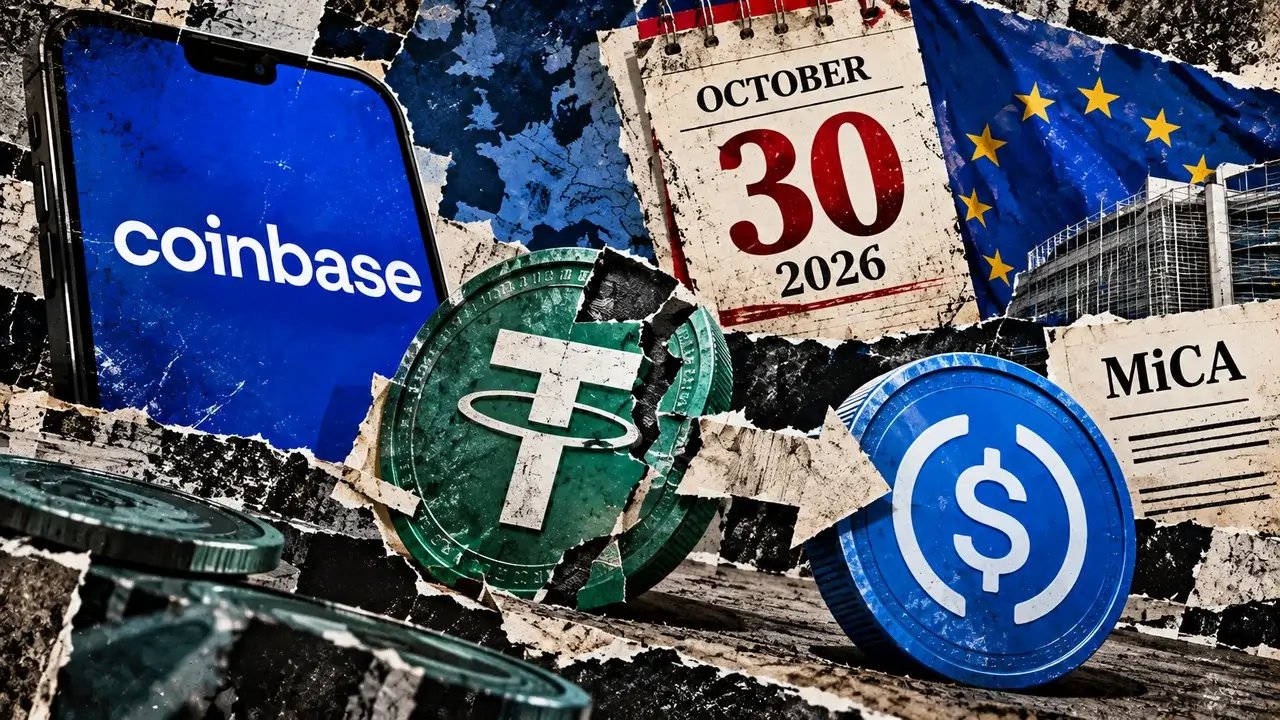
Coinbase will automatically convert 14 restricted crypto tokens held by European customers on October 30th, including Tether’s USDT, as the exchange navigates the stringent requirements of the European Union’s Markets in Crypto-Assets Regulation (MiCA). This significant move impacts retail users across the European Economic Area (EEA) and signals a broader industry-wide recalibration to comply with new regulatory frameworks governing digital assets.
The Regulatory Imperative: MiCA’s Impact on Stablecoins
The core driver behind Coinbase’s decision is the European Union’s landmark Markets in Crypto-Assets Regulation (MiCA). Introduced to provide a comprehensive and harmonized legal framework for crypto-assets across member states, MiCA aims to enhance investor protection, market integrity, and financial stability within the rapidly evolving digital asset landscape. A key component of MiCA is its specific treatment of stablecoins, which are designed to maintain a stable value relative to a specified asset or basket of assets, such as fiat currencies or commodities.
Under MiCA, issuers of qualifying stablecoins are required to obtain regulatory authorization from relevant authorities. This authorization process involves rigorous compliance checks, including capital requirements, governance standards, and risk management protocols, ensuring that these stablecoins are issued responsibly and do not pose systemic risks to the financial system. The transitional period for stablecoin issuers to secure these necessary authorizations expired on July 1, 2026, without an extension. Consequently, crypto exchanges like Coinbase, operating within the EEA, are now obligated to cease supporting tokens issued by entities that have not met these regulatory prerequisites.
Coinbase’s Action Plan: Conversion and Withdrawal Deadlines
Coinbase has issued a clear customer notice outlining the implications for EEA-based retail users holding the affected tokens. The deadline of October 30th mandates that customers either withdraw their holdings to a supported external wallet before this date or face an automatic conversion of their balances. Where suitable, these balances will be converted into Circle’s USD Coin (USDC), a stablecoin that has obtained the necessary regulatory approvals, or another supported asset or currency.
The list of restricted tokens is extensive and includes several prominent stablecoins: Tether (USDT), PayPal’s PYUSD, World Liberty Financial’s USD1, DAI, PAX, GUSD, GYEN, BUST, UST, RAI, PAXG, MUSD, USDS, and TGBP. Previously, Coinbase had already restricted purchases, sales, and conversions involving these assets, leaving withdrawals to external wallets as the sole option for customers wishing to retain them in their original form. The upcoming conversion marks a further step in enforcing compliance with MiCA.
The ESMA’s Supervisory Expectations and Extended Timeline
The urgency of Coinbase’s deadline is further underscored by recent pronouncements from the European Securities and Markets Authority (ESMA). On October 8th, ESMA issued an opinion directing authorized crypto firms to cease providing services related to stablecoins that fail to meet MiCA requirements. This directive extended beyond mere trading activities, encompassing critical services such as custody, transfers, and portfolio management.
ESMA instructed national competent authorities to address remaining exposures within three months. While this effectively sets an outer regulatory deadline of January 8, 2027, for the complete cessation of services related to non-compliant stablecoins, it also empowers national regulators and, by extension, regulated entities to implement earlier restrictions. Coinbase’s October 30th cutoff, therefore, aligns with this regulatory pressure, demonstrating a proactive approach to ensure full compliance well ahead of the ultimate deadline.
Risks Associated with Late Deposits and Unsupported Assets
Coinbase has also introduced an additional layer of risk for customers who may continue to use previously supported deposit addresses for these restricted assets after the October 30th deadline. The exchange has explicitly warned that any affected assets sent to Coinbase after this date will not be credited to customer accounts. Furthermore, these late deposits will be ineligible for trading, transfer, or the automatic conversion process.
In such instances, the deposited assets may become unrecoverable. While Coinbase offers an unsupported-asset recovery service, eligibility is contingent on the specific token and blockchain network involved, and the company provides no guarantee of retrieval. The terms for this recovery service stipulate a 5% charge on any recovered assets exceeding $100, in addition to applicable network fees. This serves as a strong deterrent against depositing restricted assets after the deadline.
Analysis of Market Implications and Competitive Landscape
The decision by Coinbase to enforce these restrictions and automate conversions is poised to have significant implications for the European stablecoin market. By directing balances away from non-compliant tokens, particularly Tether’s USDT, the move could inadvertently strengthen the position of regulated stablecoins like Circle’s USDC. Circle, through its USDC stablecoin, has been actively pursuing regulatory compliance across various jurisdictions, positioning itself as a trusted and authorized player in the European market.
However, the exact scale of these conversions remains unclear, as Coinbase has not disclosed the aggregate value of affected customer holdings. This lack of transparency makes it difficult to quantify the immediate impact on individual stablecoin issuers and the overall market share shifts.
Automatic Conversions: Market Rates and Potential Tax Consequences
The automatic conversion process will occur at prevailing market rates at the time of conversion. This introduces a potential for value fluctuations, particularly for customers holding assets denominated in currencies other than the US dollar. The restricted list includes PAXG, a gold-backed token, and GYEN, which tracks the Japanese yen. Customers holding these assets may experience conversions that reflect the market value of gold or the Japanese yen against the US dollar at the point of conversion, rather than a direct peg to a stable currency.
Furthermore, Coinbase has cautioned that exchanging one crypto asset for another, even through an automatic conversion process, could trigger tax obligations in certain jurisdictions. This is a critical consideration for retail users, who may need to consult with tax professionals to understand their liabilities related to these automatic conversions. The complexity of digital asset taxation continues to be a significant concern for users navigating evolving regulatory landscapes.
Coinbase’s Commitment to Regulatory Compliance and Future Outlook
Coinbase’s Luxembourg subsidiary, which serves EEA customers under a MiCA authorization, has stated its ongoing commitment to reviewing the regulatory status of restricted tokens. This suggests a dynamic approach where tokens issued by entities that subsequently obtain the required MiCA approvals could potentially regain access to Coinbase’s European customer base.
However, it is crucial to note that any future restoration of support for these tokens will not retroactively reverse conversions that have already been completed under the October 30th deadline. This policy underscores the finality of the conversion process and reinforces the importance of adhering to the specified timelines.
The stringent measures implemented by Coinbase, driven by MiCA and ESMA’s guidance, represent a significant step in the maturation of the cryptocurrency industry within regulated markets. As regulatory frameworks continue to solidify, exchanges and issuers alike must prioritize compliance to ensure the long-term sustainability and integrity of the digital asset ecosystem. The October 30th deadline serves as a stark reminder of the evolving compliance landscape and the imperative for users to adapt accordingly.