admin

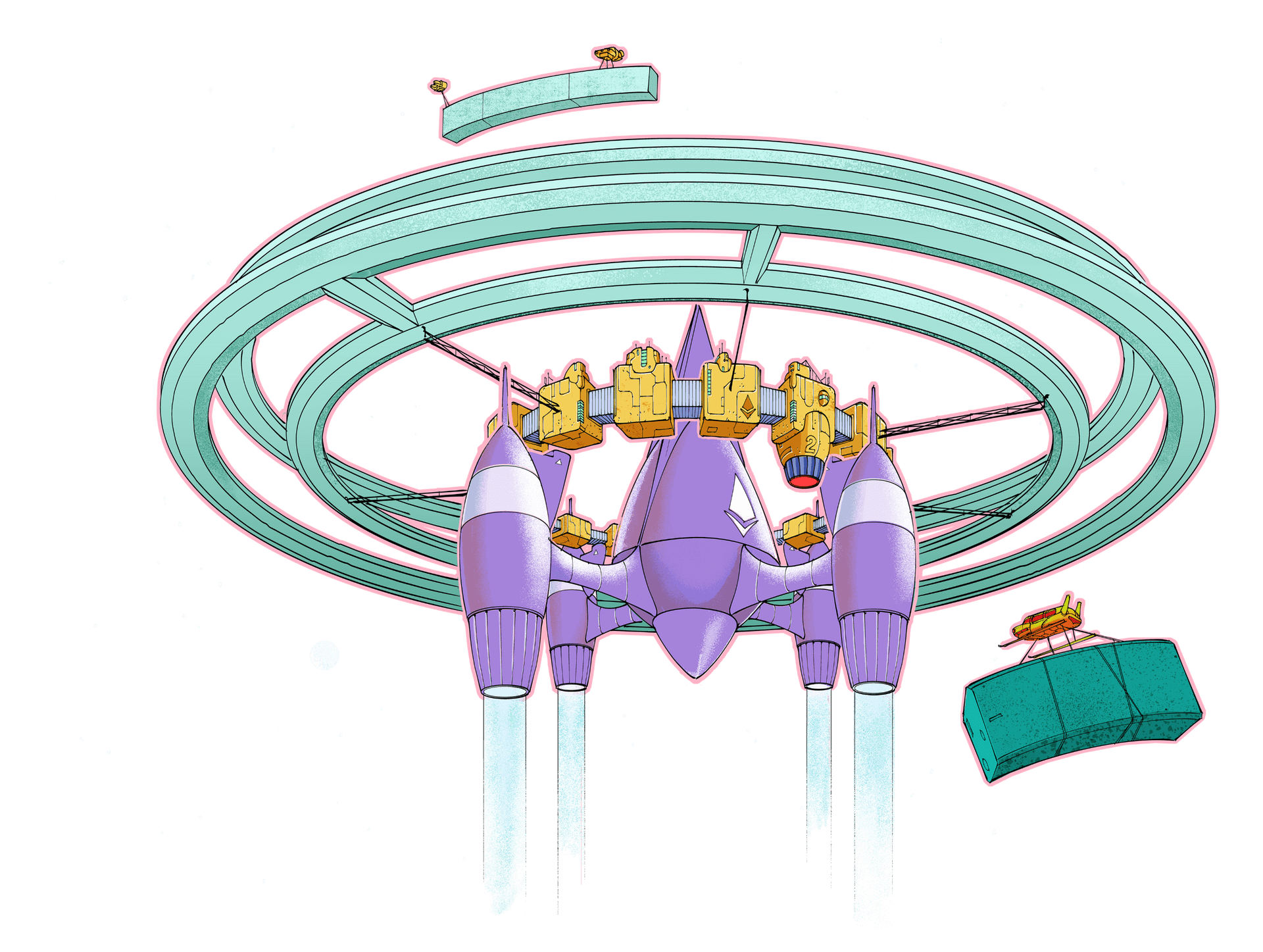
The Ethereum network, currently the world’s second-largest blockchain by market capitalization, is preparing for one of the most significant technical transformations in the history of decentralized finance. With hundreds of billions of dollars in assets secured by its protocol, the transition from a Proof-of-Work (PoW) consensus mechanism to a Proof-of-Stake (PoS) system represents a monumental shift in how the network achieves security and processes transactions. This transition, widely known as "The Merge," is frequently compared to the act of replacing a jet engine while the aircraft is still in flight. Because Ethereum serves as the foundational layer for thousands of decentralized applications (dApps), stablecoins, and non-fungible tokens (NFTs), the network cannot afford even a momentary lapse in block production or validity.
As the mid-year target for The Merge approaches, the Ethereum developer community, supported by the Ethereum Foundation (EF), has emphasized a multi-client philosophy. Unlike Bitcoin, which relies almost exclusively on the Bitcoin Core implementation, Ethereum’s architecture encourages the development of several distinct client software versions. These versions, written in different programming languages and maintained by independent teams, are designed to ensure that the network remains resilient against software bugs. However, recent data suggests that a lack of diversity among these clients—specifically the dominance of the Prysm client—presents a systemic risk that could lead to catastrophic failure if not addressed before the transition is finalized.

The Architectural Blueprint of the Post-Merge Network
The Merge is not a simple software update; it is a structural fusion of two independent layers. Since December 2020, a PoS-based chain known as the Beacon Chain has been running in parallel with the main Ethereum PoW chain. The Beacon Chain currently manages the registry of validators and their staked ether but does not process transactions or smart contract interactions. The Merge will see the current Ethereum execution layer—the environment where smart contracts live and transactions occur—stop using PoW and begin using the Beacon Chain as its consensus engine.
Following this integration, Ethereum nodes will be split into two functional categories. The first category, the execution node, will host the Ethereum Virtual Machine (EVM). Its primary responsibility will be to process transactions and present the state of smart contracts to users. The second category, the validator node (or consensus node), will handle the validation of those transactions and the proposal of new blocks. While these two layers will communicate via an Engine API, they function as separate logical entities. This separation is intended to enhance the robustness of the network by decoupling the complexities of smart contract execution from the critical task of maintaining network consensus.
The Technical Imperative of Client Diversity
The rationale behind Ethereum’s multi-client strategy is rooted in the concept of fault tolerance. In a decentralized system, a software bug in a single implementation can lead to a consensus failure, where nodes disagree on the state of the blockchain. If the network is distributed across multiple independent clients, a bug in one client would only affect a minority of nodes, allowing the rest of the network to continue operating normally while the issue is patched.
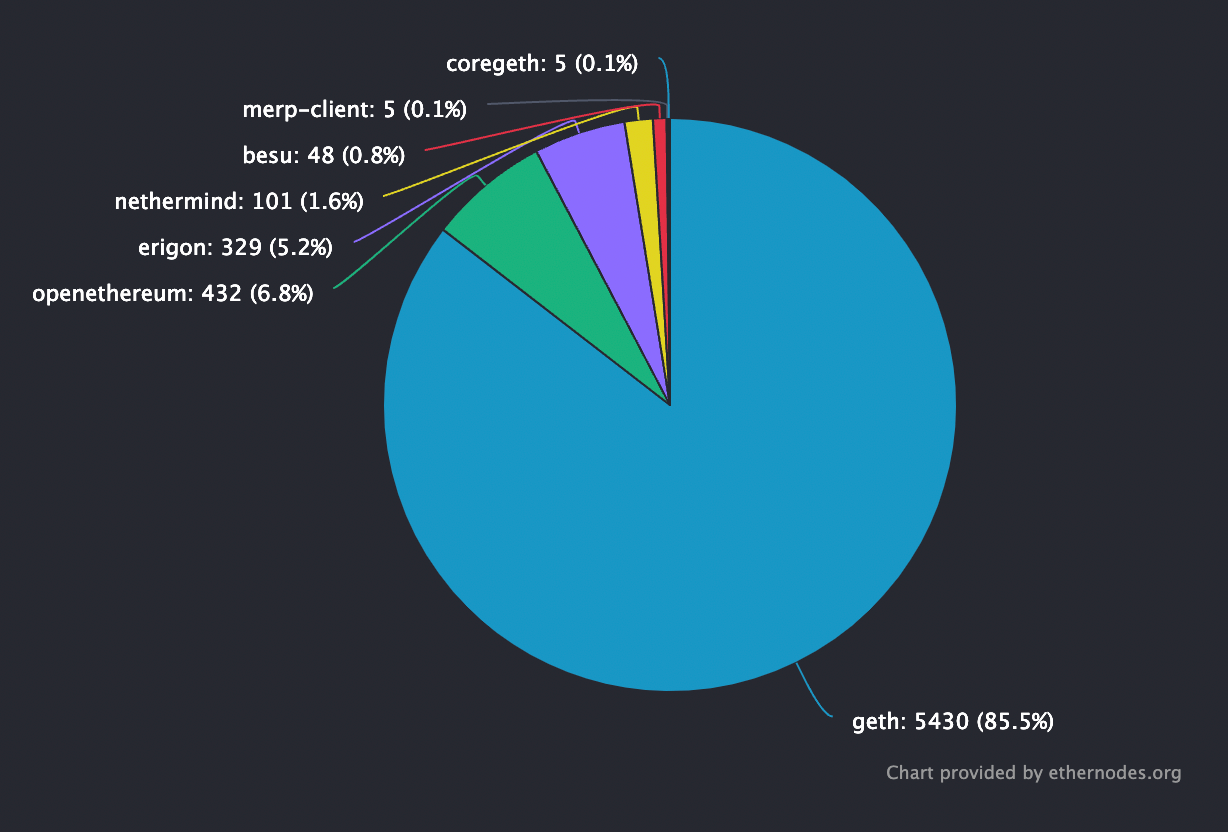
In the current PoW environment, this diversity is already somewhat skewed. The Geth (Go-ethereum) client currently commands approximately 85% of the execution layer market share. While this is a high concentration, the risks in a PoW system are different from those in PoS. In PoS, the security of the network is tied directly to the "finality" of blocks, which requires a two-thirds majority of staked ether to agree on the chain’s state.
The distribution of consensus clients is, therefore, a matter of existential importance. If a single client implementation is used by more than 33% of the network’s staking power, a bug in that software could prevent the network from reaching finality. If a client exceeds a 50% market share, a bug could lead to a split in the chain, causing significant disruption. Most critically, if a single client controls more than 66% (a supermajority) of the staked ether, a bug in that client could cause the network to finalize an incorrect or "buggy" chain. In this "game over" scenario, the non-buggy clients would be forced to either follow the incorrect chain or initiate a permanent hard fork, effectively splitting Ethereum into two separate networks.
Analyzing the Dominance of the Prysm Client
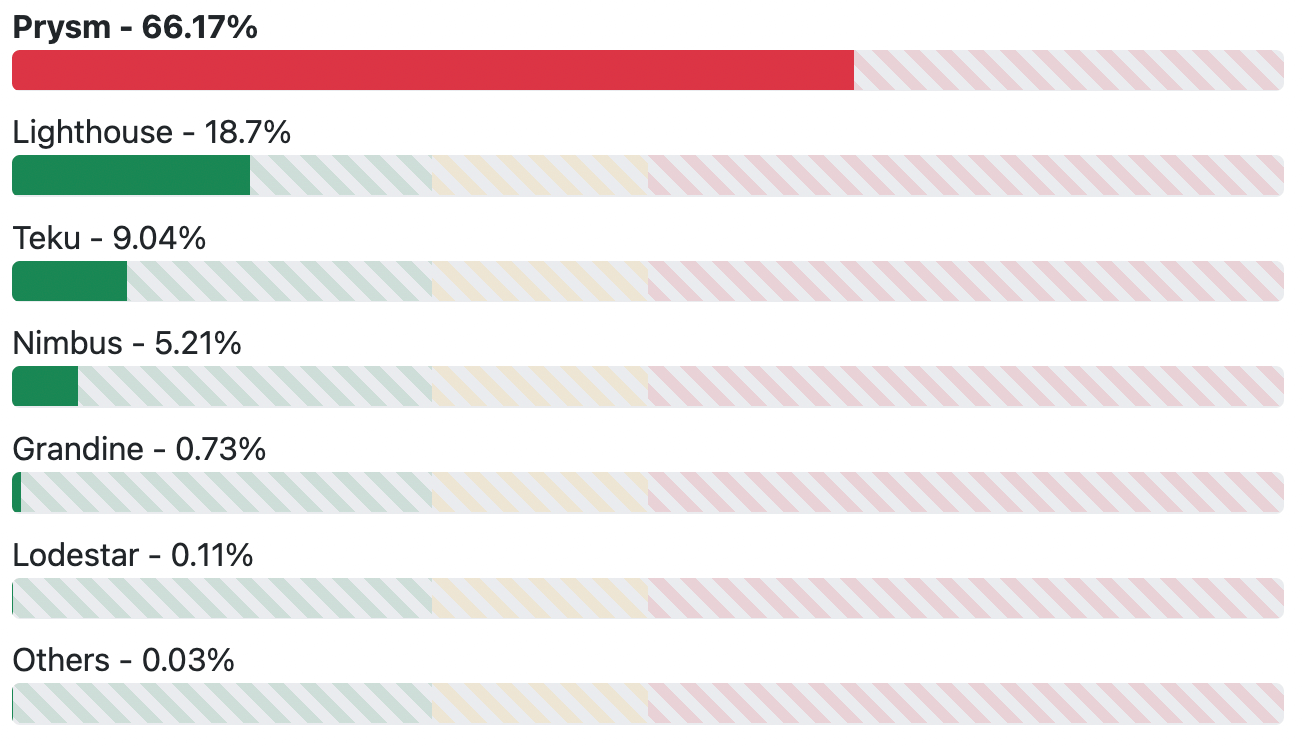
As of early 2022, the Prysm client, developed by Prysmatic Labs, has emerged as the dominant force in the consensus layer. Data indicates that approximately two-thirds of the network’s staking power is currently running on Prysm. While Prysm is a highly regarded and well-tested implementation, its proximity to the 66% supermajority threshold has caused alarm within the Ethereum Foundation and the broader developer community.
The dominance of Prysm can be attributed to several factors, primarily its "first-mover advantage." Marius van der Wijden, an Ethereum core developer, notes that Prysm was the first prototype implementation of a beacon client to reach maturity. "Because they were first, they could start optimizing their client early on and had more time to create additional tooling, such as a user-friendly Web UI and comprehensive documentation," van der Wijden explained.
Furthermore, Prysm is written in Golang, the same programming language used for Geth. This makes it an attractive choice for developers and node operators who are already familiar with the Geth codebase. Other available clients—such as Lighthouse (written in Rust), Teku (Java), and Nimbus (Nim)—offer high levels of performance and security but have struggled to overcome the momentum established by Prysm’s early entry into the market.
The Role of Institutional Stakers and Exchanges
The concentration of client usage is largely driven by major institutional players and staking services. Because a single validator requires 32 ETH to participate in consensus, many users opt for staking pools or centralized exchanges to earn rewards. Consequently, a handful of large organizations control a significant portion of the total staked ether.
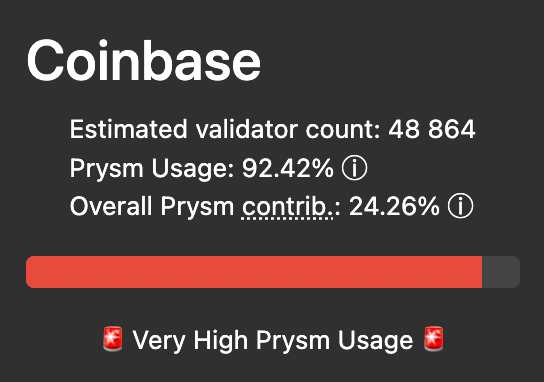
Coinbase, one of the largest exchanges in the world, manages nearly 17.5% of the validators on the Beacon Chain. Reports indicate that over 92% of Coinbase’s validators run on the Prysm client. When questioned about this concentration, Coinbase pointed to security as the primary motivator. In a statement released via Coinbase Cloud, the company noted that at the time of their launch, Prysm was the only viable client that supported "remote signers." This feature allows validator keys to be stored in isolated, secure environments rather than on the validator server itself, which is a critical requirement for institutional-grade security.
Similarly, Kraken holds roughly 11% of the validator market share, with approximately 94.9% of its nodes utilizing Prysm. Brian Hoffman, Senior Product Manager at Kraken, acknowledged the issue, stating that while Prysm was chosen for its initial maturity and stability, the exchange has begun working with the Ethereum Foundation to migrate some of its infrastructure to the Teku client.
Binance and the decentralized staking protocol Lido also contribute significantly to the Prysm dominance, with Prysm usage rates of 76.6% and 42.8%, respectively. In contrast, smaller, decentralized pools like Rocket Pool have demonstrated a much higher commitment to diversity, with only about 10.6% of their validators running on Prysm.
A Chronology of Ethereum’s Evolution
To understand the stakes of The Merge, it is necessary to view it within the context of Ethereum’s long-term roadmap:
- July 2015: Ethereum launches as a Proof-of-Work blockchain, introducing smart contract functionality to the world.
- 2018-2019: Research intensifies on "Ethereum 2.0," a multi-phase plan to transition to PoS and introduce sharding for scalability.
- December 2020: The Beacon Chain launches, marking the beginning of the PoS era. Users begin "locking up" ether to become validators.
- August 2021: The London Hard Fork introduces EIP-1559, reforming the fee market and burning a portion of transaction fees, signaling the network’s readiness for major upgrades.
- October 2021: The Altair upgrade successfully updates the Beacon Chain, testing the network’s ability to perform live upgrades.
- Early 2022: The focus shifts entirely to "The Merge," as developers begin running testnets (such as Kintsugi and Kiln) to simulate the transition.
- Mid-2022 (Projected): The official Merge occurs, ending Ethereum’s reliance on GPU mining and reducing the network’s energy consumption by an estimated 99.95%.
Risks, Mitigation, and the Path Forward
Despite the risks associated with client concentration, Ethereum core developers remain confident in the safety of the transition. Marius van der Wijden emphasizes that the community has developed robust "fuzzing" infrastructure—automated systems that constantly bombard different clients with data to identify any discrepancies in how they process transactions.
However, the developer community has also issued a stern warning to stakers: there will be no "bailouts" for those running a majority client in the event of a consensus failure. Under the rules of Proof-of-Stake, if a supermajority client experiences a bug that causes a fork, the validators on that chain will face "slashing" or "inactivity leaks." These are automated penalties that burn a portion of the validator’s staked ether. If a supermajority client fails, the financial losses for those running it could be devastating.
This economic incentive is intended to force exchanges and large staking pools to diversify their software stack. "It’s not actually difficult for a node operator to switch clients," van der Wijden noted. "All major implementations are well-tested. The primary hurdle for large stakers is the need to update their internal monitoring and API integrations."
Broader Implications for the Global Blockchain Ecosystem
The successful execution of The Merge will be a watershed moment for the cryptocurrency industry. Beyond the immediate technical benefits, it will position Ethereum as a "green" blockchain, potentially opening the door for increased institutional adoption from ESG-conscious (Environmental, Social, and Governance) investors.
However, the client diversity issue serves as a vital reminder that decentralization is not a static state but a continuous process of vigilance. The concentration of software power in the hands of a single implementation—or a few large centralized exchanges—creates "choke points" that run contrary to the ethos of blockchain technology. As Ethereum nears its historic transition, the community’s ability to resolve the Prysm dominance issue will serve as a litmus test for the network’s long-term resilience and its commitment to a truly decentralized future. The eyes of the financial world remain fixed on the mid-year horizon, waiting to see if Ethereum can successfully switch its engine without losing its altitude.