admin
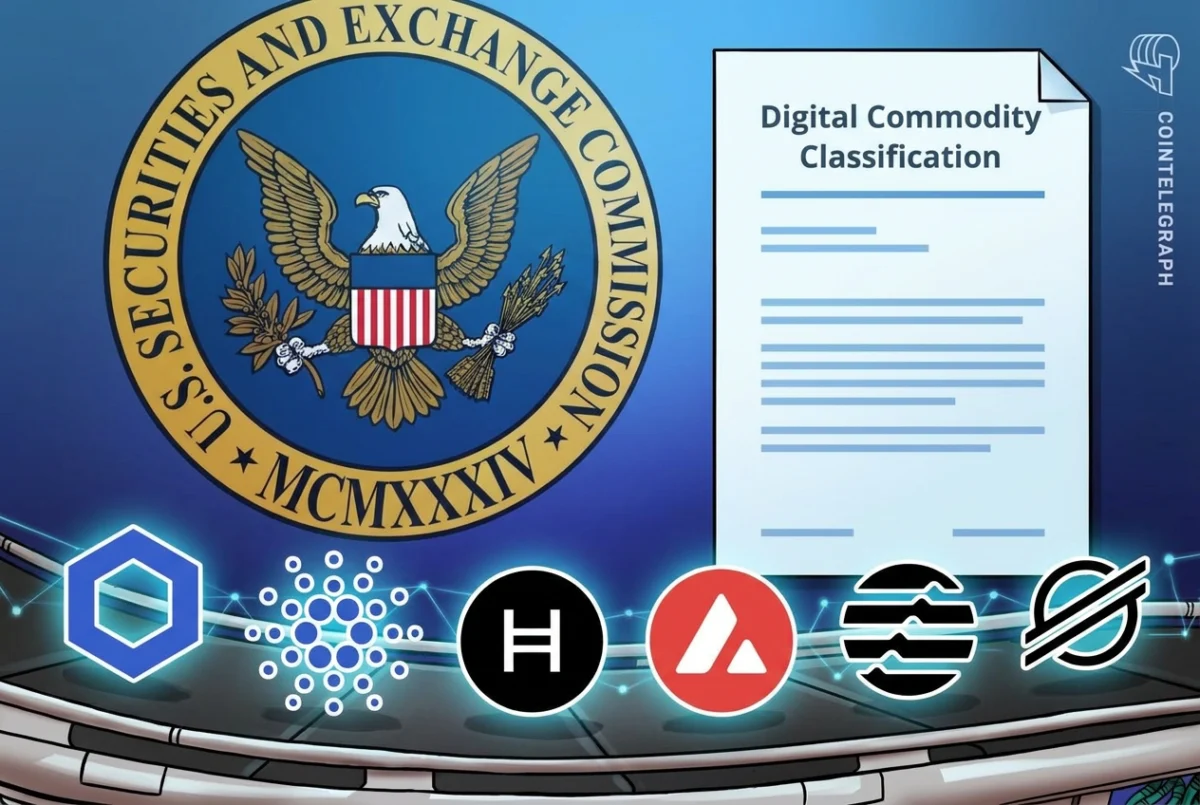
Six of the leading blockchain organizations, including prominent entities like Chainlink Labs and the Cardano Foundation, have collectively urged the U.S. Securities and Exchange Commission (SEC) to explicitly classify digital commodities as non-securities within its proposed regulatory framework. This significant appeal was made as the agency’s public consultation period on its anticipated crypto regulations concluded on a recent Tuesday, highlighting a critical juncture in the ongoing debate over digital asset oversight. The consortium of blockchain innovators argues that the prevailing reliance on interpretive guidance is insufficient, fostering an environment of legal ambiguity that impedes innovation and market stability.
The Industry’s United Front for Regulatory Clarity
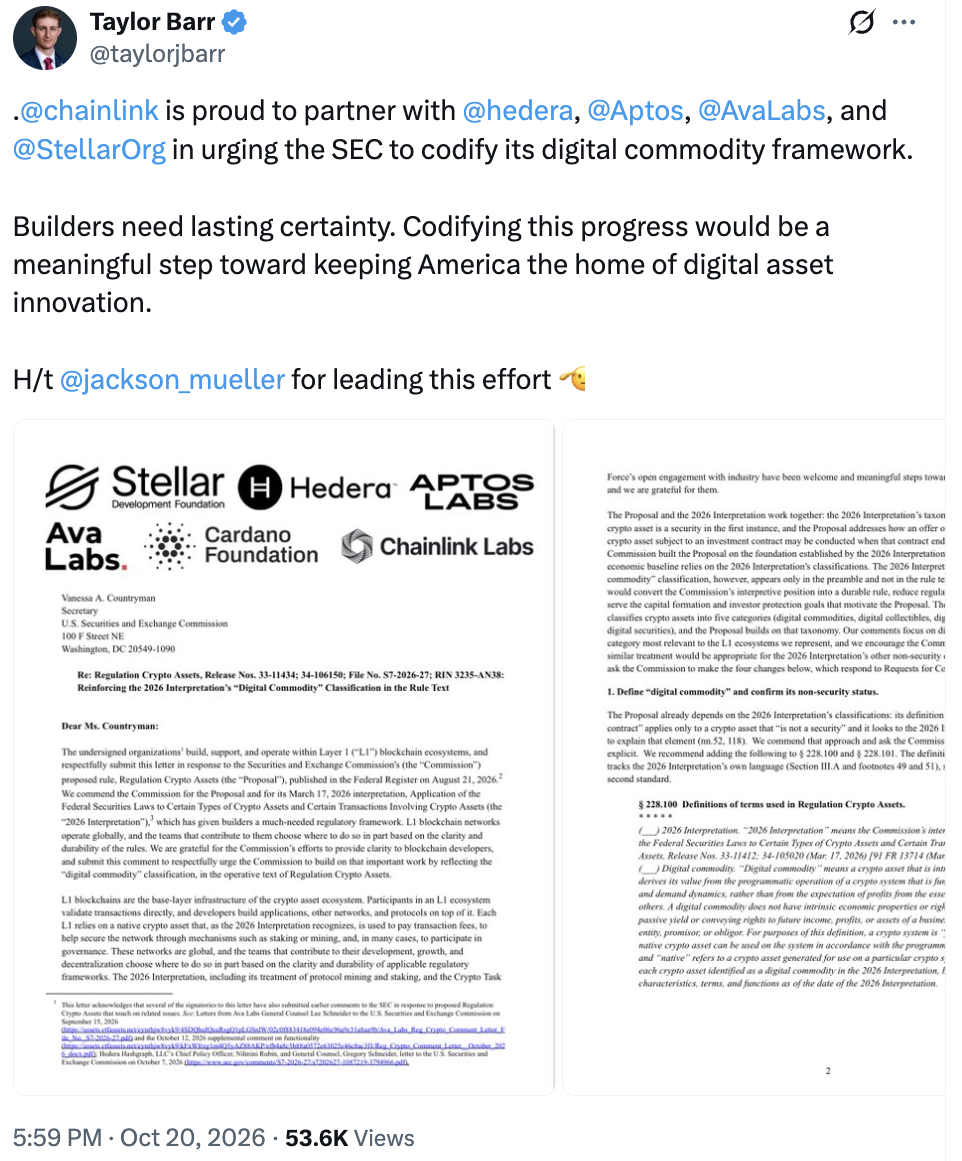
The joint letter, dated October 20, was spearheaded by Chainlink Labs, the Cardano Foundation, Hedera, Aptos Labs, Ava Labs, and the Stellar Development Foundation. These influential players in the decentralized technology space directed their appeal to the SEC, advocating for the direct integration of a clear digital commodity classification into the proposed Regulation Crypto Assets framework. Their core contention revolves around the inadequacy of current interpretive guidance, which, despite acknowledging a distinct category for digital commodities, fails to enshrine this distinction explicitly within the regulatory text. This oversight, they argue, leaves a vast spectrum of market participants—from developers and innovators to investors and enterprises—grappling with uncertainty regarding the applicability of securities laws.
The groups articulated a pressing need for the SEC to move beyond its existing, often vague, interpretations. They contend that while the SEC has, on occasion, recognized certain digital assets as commodities (primarily through its Chairman’s public statements or the actions of other regulatory bodies), these recognitions have not been formalized into binding rules. This lack of explicit codification creates a volatile regulatory landscape, where the risk of retrospective reclassification or enforcement actions looms large, thereby stifling legitimate development and investment within the nascent digital asset ecosystem. The industry’s plea underscores a desire for proactive, well-defined rules rather than reactive, enforcement-driven regulation.
The SEC’s Regulatory Landscape and the Howey Test
The U.S. Securities and Exchange Commission, tasked with protecting investors, maintaining fair, orderly, and efficient markets, and facilitating capital formation, has historically approached digital assets through the lens of existing securities laws, most notably the Howey Test. Established by the Supreme Court in 1946, the Howey Test defines an "investment contract" as an investment of money in a common enterprise with a reasonable expectation of profits to be derived from the entrepreneurial or managerial efforts of others. The SEC, under Chairman Gary Gensler, has frequently asserted that the vast majority of digital assets currently trading in the market meet the criteria of an investment contract and are therefore unregistered securities subject to the agency’s comprehensive oversight.
This interpretation has been a cornerstone of the SEC’s enforcement strategy, leading to numerous actions against various crypto projects, exchanges, and individuals. However, the application of an 80-year-old test, designed for an entirely different era of financial instruments, to the rapidly evolving and technologically complex world of digital assets has been a source of significant friction. The blockchain industry argues that many digital assets, particularly those associated with decentralized networks and offering genuine utility, evolve beyond their initial fundraising stages to become more akin to commodities or even software protocols, losing their "security" characteristics over time. The distinction is paramount: if an asset is deemed a security, it falls under the stringent registration and disclosure requirements of the SEC; if it’s a commodity, it typically falls under the jurisdiction of the Commodity Futures Trading Commission (CFTC) for derivatives, with spot markets often lacking a primary federal regulator. The SEC’s proposed framework, without clear delineations, risks treating all digital assets as securities by default, an outcome the industry is vehemently opposing.
A Chronology of Regulatory Engagement and Frustration
The call for clarity from the blockchain industry is not a new phenomenon but rather the latest escalation in a multi-year saga of regulatory uncertainty. Since the initial boom of cryptocurrencies in the mid-2010s, industry participants, legal experts, and even some policymakers have advocated for a tailored regulatory approach for digital assets.
- Early Calls (2017-2019): As Initial Coin Offerings (ICOs) proliferated, the SEC issued guidance and began enforcement actions, often classifying ICO tokens as unregistered securities. This period saw the emergence of the "security vs. commodity" debate as a central theme.
- The "Regulation by Enforcement" Era (2020-Present): Under Chairman Gensler, the SEC intensified its enforcement efforts, leading to high-profile lawsuits against major players like Ripple Labs, Coinbase, and Binance. These actions, while aimed at investor protection, were widely criticized by the industry for lacking clear rules and forcing legal battles to define boundaries.
- Legislative Attempts (Ongoing): Recognizing the gaps in existing laws, various legislative proposals have emerged in Congress, such as the Digital Asset Market Structure Bill (often referred to as the Lummis-Gillibrand bill) and more recently, the Financial Innovation and Technology for the 21st Century Act (FIT21). These bills aim to provide a comprehensive framework, often delineating clear roles for the SEC and CFTC based on whether an asset is a security or a commodity.
- The SEC’s Proposed Framework (Recent Past): In August of the current year, the SEC unveiled its proposed regulatory framework for crypto assets. This initiative opened a 60-day public comment period, inviting stakeholders to provide feedback. It is within this window that the six blockchain organizations submitted their crucial letter. The close of this consultation period marks a significant milestone, as the SEC now reviews the diverse and often conflicting viewpoints before potentially finalizing or revising its rules.
The consistent theme throughout this chronology has been the industry’s demand for a regulatory environment that fosters innovation while ensuring consumer protection, a balance they argue is currently skewed towards an overly broad application of securities laws.
The Stakes: Market Size, Innovation, and Global Competitiveness
The lack of a clear regulatory framework in the U.S. carries profound implications for the global digital asset market, which boasts a capitalization often fluctuating in the trillions of dollars and encompasses tens of thousands of unique digital assets. The United States has historically been a leader in financial innovation, but the current regulatory ambiguity threatens this position.
Economic Impact: A definitive classification of digital commodities as non-securities would unlock significant investment and development. Projects that currently hesitate to establish or expand in the U.S. due to fear of regulatory action could thrive, leading to job creation, increased tax revenue, and the retention of highly skilled talent. Conversely, continued uncertainty pushes capital and talent to more crypto-friendly jurisdictions, often described as a "brain drain" from the U.S. to regions like the European Union (with its comprehensive MiCA framework), the UK, Dubai, Singapore, and Hong Kong, which are actively developing clear regulatory regimes.
Innovation Stifled: Blockchain technology is at the forefront of a new wave of internet innovation, with applications ranging from decentralized finance (DeFi) and supply chain management to digital identity and Web3 infrastructure. Many of these applications rely on utility tokens or native network assets that function as commodities or access rights, not traditional securities. Without a clear distinction, developers face immense legal risks, hindering the creation of new protocols, decentralized applications, and underlying infrastructure that could drive future economic growth. The fear of litigation can lead to self-censorship and a reluctance to experiment with novel blockchain use cases.
Investor Protection: Paradoxically, the industry argues that regulatory clarity ultimately benefits investors. When assets are clearly defined, investors can better understand the associated risks and regulatory oversight. Ambiguity, however, can create loopholes and confusion, making it harder for both retail and institutional investors to navigate the market safely. A well-defined framework allows for targeted consumer protection measures appropriate for commodities, distinct from those applicable to securities.
Conflicting Jurisdictions: SEC vs. CFTC
Central to the U.S. digital asset debate is the jurisdictional tug-of-war between the SEC and the CFTC. The CFTC, responsible for overseeing commodity markets, including futures and derivatives, has explicitly stated that certain major cryptocurrencies, such as Bitcoin and Ethereum, are commodities. This stance creates a regulatory schism: while the CFTC regulates derivatives of these assets, their spot markets remain largely unregulated at the federal level, or, in the SEC’s view, might still fall under securities laws depending on their characteristics.
This jurisdictional overlap and lack of clear demarcation contribute significantly to the industry’s frustration. Businesses dealing with digital assets often find themselves in a precarious position, potentially subject to the rules of both agencies, or neither, depending on the asset’s classification and its use case. This complexity complicates compliance efforts and discourages institutional participation. Legislative efforts in Congress are largely aimed at resolving this inter-agency dispute, seeking to establish a clear "on-ramp" for digital assets to transition from securities (if they start as such during fundraising) to commodities as they decentralize and gain utility.
Legal Precedents and Ongoing Battles
The SEC’s "regulation by enforcement" strategy has shaped much of the legal landscape for digital assets. Cases like the SEC vs. Ripple Labs have become bellwethers, scrutinizing whether the sale of a digital asset (XRP) constitutes an unregistered securities offering. While a federal court ruling in the Ripple case provided some nuance, distinguishing between institutional sales (deemed securities) and programmatic sales to retail investors (not deemed securities), the broader implications remain debated and have not led to the comprehensive clarity the industry seeks.
Similarly, the SEC’s lawsuits against major cryptocurrency exchanges like Coinbase and Binance, alleging they operate as unregistered securities exchanges, further underscore the agency’s expansive view of its jurisdiction. These ongoing legal battles, while potentially establishing specific precedents, consume vast resources and prolong the period of uncertainty, leading many to conclude that legislative action, rather than judicial interpretation of decades-old laws, is the only sustainable path to a coherent regulatory framework. The industry argues that such an approach creates an adversarial environment, hindering collaborative efforts to build a robust and compliant digital economy.
The Call for a Tailored Framework: Beyond Interpretive Guidance
The joint letter from the six blockchain organizations reiterates several specific demands beyond just formal commodity classification:
- Formal Recognition of Digital Commodities: The most critical demand is the explicit inclusion of a definition for "digital commodities" within the SEC’s proposed rules, affirming that such assets are not securities. This would provide a foundational legal certainty that interpretive guidance, which can be changed or challenged, simply cannot offer.
- Clarity on Secondary Market Transactions: The groups also seek greater clarity on how securities laws apply to secondary-market transactions involving digital assets. An asset might be offered as a security in its initial sale, but its nature can change as it becomes decentralized and widely distributed. The industry argues that once an asset achieves sufficient decentralization and utility, secondary market transactions should not automatically be treated as securities transactions, regardless of its initial offering status.
- Treatment of Staking and Other Decentralized Activities: The letter specifically addresses the treatment of staking, lending, and other activities associated with decentralized blockchain networks. Staking, a process crucial for the security and operation of many proof-of-stake blockchains, has been targeted by the SEC as potentially constituting a securities offering. The industry seeks clear guidelines that differentiate legitimate network participation from investment contracts, ensuring that essential decentralized activities are not inadvertently stifled by overly broad interpretations of securities law.
The core argument is that the existing regulatory toolkit is ill-suited for the unique characteristics of decentralized digital assets. A "one-size-fits-all" approach, they contend, fails to recognize the fundamental differences between traditional financial securities and many blockchain-native assets. A tailored framework, potentially involving new legislation or detailed regulatory rulemaking that accounts for decentralization, utility, and network function, is deemed essential.

Reactions and Expert Opinions
While the SEC has yet to formally respond to the specific letter, its general stance remains consistent: existing securities laws are robust enough to cover digital assets, and the agency’s primary mandate is investor protection. Chairman Gensler has repeatedly called for crypto platforms to "come in and register," implying that most digital asset offerings fall under the SEC’s purview.
Industry leaders, conversely, consistently express frustration with the SEC’s approach. They argue that the current regulatory climate creates an uneven playing field, where innovative U.S. companies are at a disadvantage compared to those operating in jurisdictions with clearer rules. Legal scholars and policy experts offer a spectrum of opinions. Some agree with the industry, advocating for new legislation to create a bespoke regulatory framework for digital assets. Others argue that while the Howey Test might be imperfect, it remains a flexible enough tool that could be adapted through clearer guidance and targeted rulemaking, without the need for entirely new laws, provided the SEC adopts a more nuanced and less aggressive enforcement stance.
Looking Ahead: The Path to Regulatory Certainty
The close of the public comment period signifies a critical juncture for digital asset regulation in the United States. The SEC now faces the arduous task of sifting through potentially hundreds of comments, including this significant joint submission from major blockchain players. The path forward could involve:
- Revision of Proposed Rules: The SEC may choose to revise its proposed framework to incorporate some of the industry’s feedback, potentially introducing more explicit definitions or exemptions.
- Continued Litigation: Should the SEC maintain its current posture, the industry’s push for clarity will likely continue through ongoing legal battles and potentially new lawsuits challenging the agency’s jurisdiction.
- Legislative Action: The growing bipartisan support for comprehensive digital asset legislation in Congress indicates that a legislative solution remains a strong possibility. Such legislation could definitively delineate the roles of the SEC and CFTC and establish a new framework for digital assets.
- Impact on Investor Confidence and Institutional Adoption: Ultimately, the clarity (or continued ambiguity) of U.S. regulation will profoundly impact investor confidence and the pace of institutional adoption of digital assets. A clear, predictable regulatory environment is crucial for mainstream financial institutions to fully engage with the blockchain ecosystem, bringing greater capital, liquidity, and stability to the market.
The collective voice of these six blockchain giants underscores the urgency and depth of the industry’s demand for regulatory precision. As the global race for blockchain leadership intensifies, the decisions made by the SEC in the coming months will play a pivotal role in determining the future trajectory of digital asset innovation and investment within the United States. The industry’s message is clear: formal recognition, not just interpretive guidance, is essential for a thriving and legally sound digital economy.