admin

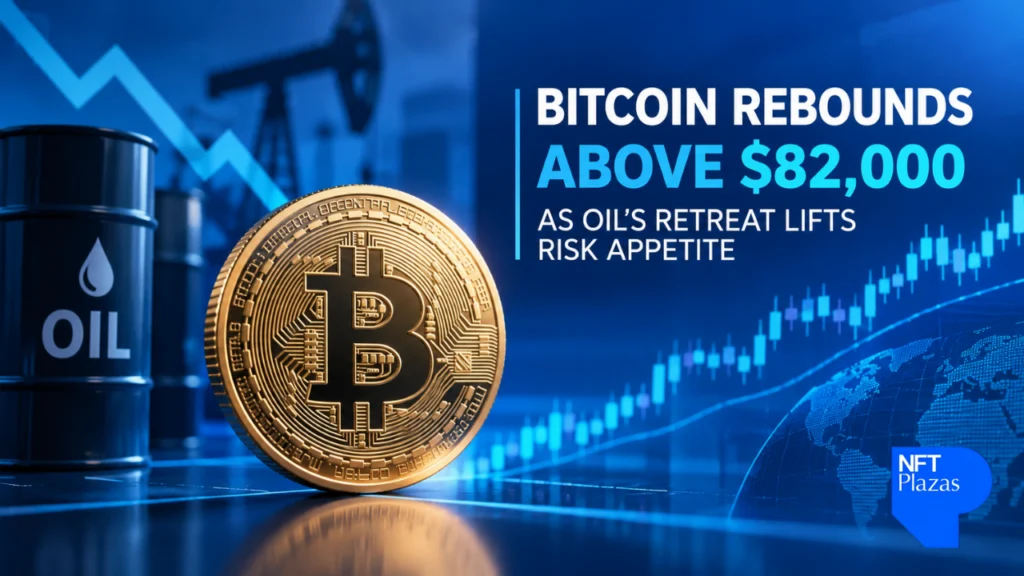
Bitcoin, the world’s leading cryptocurrency by market capitalization, staged a notable recovery on Monday, climbing back above the critical $84,000 mark. This rebound offered a degree of relief to cryptocurrency markets, which have been grappling with persistent macroeconomic uncertainties and shifting investor sentiment. The digital asset traded near $84,050, having briefly dipped to $83,500 earlier in the session, a move that suggested buyers were actively defending current price levels. This resilience comes despite a significant institutional withdrawal, with U.S. spot Bitcoin Exchange-Traded Funds (ETFs) recording their largest weekly net outflows since June, amounting to $681 million. Concurrently, easing crude oil prices provided a macro-economic tailwind, alleviating some concerns regarding energy-driven inflation, a factor that has heavily influenced global financial markets in recent months.
Bitcoin’s Resilient Recovery Amidst Market Crosscurrents
Monday’s price action saw Bitcoin demonstrate a degree of fortitude, shaking off early-session weakness to reclaim key psychological and technical levels. The recovery pushed Bitcoin close to its Sunday high of $84,145, a level that technical analysts often monitor for signs of short-term momentum. This upward movement, while significant, unfolded against a complex backdrop of contradictory signals. On one hand, the broader cryptocurrency market mirrored Bitcoin’s gains, indicating a wider sentiment improvement. Nine of the ten largest cryptocurrencies by market capitalization posted gains over the preceding 24 hours, as noted by Purvang Mashru, an analyst at BitDelta India. Avalanche (AVAX) led this advance, climbing 5.1% to $10.91, followed by Chainlink (LINK) with a 2.4% gain to $13.35. Solana (SOL) also saw a 1.2% rise, with BNB, XRP, Dogecoin, and Cardano all registering positive movement. This broad-based recovery suggests that positive sentiment was not confined solely to Bitcoin, hinting at a cautious return of investor confidence across the digital asset space. However, the relatively modest increases across most major tokens underscored that investors remained watchful, rather than aggressively increasing their exposure, reflecting lingering caution in the market.
The ability of Bitcoin to maintain its position above $84,000 is particularly crucial following a period of selling pressure. A sustained move higher from these levels could encourage further buying activity, potentially attracting traders to increase their long positions. Conversely, a decline back towards the $82,000 support level would undoubtedly test the resolve of buyers and challenge the nascent recovery, raising questions about the sustainability of the current upward momentum. For the immediate future, the market appears to be in a phase of stabilization rather than embarking on a definitive bullish trend, characterized by a tug-of-war between bullish price action and underlying institutional caution.
Institutional Disengagement: The $681 Million ETF Outflow

Perhaps the most striking divergence in the current market landscape is the substantial institutional withdrawal from U.S. spot Bitcoin ETFs, occurring concurrently with Bitcoin’s price recovery. According to data compiled by SoSoValue, these investment vehicles collectively experienced $681 million in net outflows last week, marking the largest weekly redemption since June. The bulk of this selling pressure was concentrated on October 7 and 8, suggesting a deliberate reduction in exposure by institutional investors ahead of potentially market-moving economic announcements.
The introduction of U.S. spot Bitcoin ETFs earlier this year was hailed as a landmark development, opening the floodgates for traditional finance participants to gain exposure to Bitcoin through regulated brokerage accounts without directly holding the cryptocurrency. These products were widely expected to usher in a new era of institutional adoption, driving significant capital into the digital asset space. Consequently, ETF flows have rapidly become a vital barometer of institutional demand. When investors withdraw funds from these ETFs, the fund managers are typically required to sell a corresponding amount of the underlying Bitcoin to meet these redemptions. Therefore, sustained withdrawals can exert considerable selling pressure on the Bitcoin market, especially during periods of lower liquidity.
The current situation, where Bitcoin’s price shows resilience despite such significant outflows, highlights a complex interplay of market dynamics. It suggests that other segments of the market—such as retail investors, offshore exchanges, or the derivatives market—may be absorbing the selling pressure from ETF redemptions. Vikram Subburaj, CEO of cryptocurrency exchange Giottus, observed that ETF flows remain volatile, indicating that Bitcoin’s recent stabilization has not yet translated into consistent institutional inflows. This contrast is highly significant; while Bitcoin has managed to recover above $84,000, a stronger, more robust, and sustainable rally will likely necessitate a renewed and consistent demand from ETF investors. Until such a shift occurs, the current institutional positioning represents a potential headwind for further significant gains. The implications extend beyond immediate price action, raising questions about the long-term institutional appetite for Bitcoin amidst prevailing macroeconomic uncertainties and evolving regulatory landscapes.
Macroeconomic Relief: Falling Oil Prices Ease Inflationary Pressures
Adding another layer of complexity to the market narrative, a decline in crude oil prices provided a crucial source of support for cryptocurrency markets. West Texas Intermediate (WTI) crude futures, a key benchmark for U.S. oil prices, dropped by 1.8% to $90.28 per barrel. This retreat reversed a portion of the previous week’s gains, which had been spurred by an announcement from President Donald Trump regarding an agreement involving Russian diesel supplies. Details surrounding these proposed arrangements, including their implementation and potential material impact on global energy supply, remain shrouded in uncertainty.
Nevertheless, the easing of oil prices offered a palpable sense of relief to investors who have been increasingly concerned about renewed inflationary pressures. Higher energy costs have a cascading effect across economies, pushing up transportation, manufacturing, and consumer prices. Such persistent inflation makes the task of central banks, particularly the U.S. Federal Reserve, considerably more challenging in their efforts to bring inflation under control and steer economies towards stability. Historically, periods of elevated inflation have often prompted central banks to adopt restrictive monetary policies, characterized by higher interest rates and quantitative tightening. These measures increase borrowing costs, reduce liquidity in the financial system, and consequently diminish investors’ appetite for risk-sensitive and speculative assets like cryptocurrencies.

Conversely, a sustained decline in energy prices could help to temper inflation expectations, potentially strengthening the argument for a more accommodative monetary policy stance from central banks in the future. A less hawkish Federal Reserve, in turn, could foster an environment more conducive to risk-taking, potentially benefiting Bitcoin and the broader crypto market. However, it is crucial to temper expectations; one session of falling oil prices is unlikely to fundamentally alter the broader macroeconomic outlook. Elevated U.S. Treasury yields, reflecting persistent inflation expectations and a strong economy, coupled with ongoing geopolitical uncertainties, continue to cast a shadow over risk-sensitive markets, including the volatile cryptocurrency sector. The intricate dance between energy prices, inflation, and monetary policy remains a dominant theme, dictating market sentiment and investor behavior across asset classes.
Anticipating the Next Catalyst: U.S. CPI Report and Key Support Levels
As the market navigates these conflicting signals, attention is now firmly shifting to the upcoming U.S. Consumer Price Index (CPI) report, scheduled for release on October 14. This inflation data is widely anticipated to be a significant market mover, as it will heavily influence expectations for the Federal Reserve’s next policy decisions. Investors and analysts will scrutinize the figures to assess whether price pressures are indeed easing sufficiently to support a potential shift towards lower interest rates or a less aggressive stance on monetary tightening.
The implications of the CPI report for Bitcoin and the broader crypto market are direct and substantial. A softer-than-expected inflation reading could significantly strengthen risk appetite across global financial markets. Such a scenario would imply that the Federal Reserve might have more leeway to pause or even pivot its restrictive monetary policy, which could lead to a rally in speculative assets. Conversely, a stronger-than-expected inflation report would likely trigger renewed concerns about persistent price pressures, potentially pushing U.S. Treasury yields higher and triggering a fresh wave of selling pressure across risk assets, including cryptocurrencies.
From a technical analysis perspective, both Vikram Subburaj and Purvang Mashru have identified the $82,000 level as a critical near-term support for Bitcoin. A decisive break below this threshold could weaken the current recovery trajectory, signaling a loss of buyer confidence and potentially encouraging additional selling, leading to further price corrections. Maintaining prices above $82,000, however, would reinforce the idea that buyers remain active and committed to defending current levels, even in the face of prevailing macroeconomic uncertainties. On the upside, Sunday’s high near $84,145 serves as an immediate reference point for short-term momentum. A sustained move beyond this level would be a positive signal, though stronger confirmation of a bullish trend would require broader buying activity and a more convincing display of market strength.
The next few trading sessions, therefore, are poised to be pivotal for Bitcoin’s immediate direction. While the recent decline in oil prices has offered a temporary reprieve and contributed to the current market stabilization, the confluence of persistent ETF withdrawals, elevated bond yields, and the imminent release of crucial inflation data leaves the recovery vulnerable to sudden shifts in investor sentiment. Bitcoin has managed to reclaim the $84,000 level, a testament to its underlying resilience, but whether it can build upon this recovery will largely hinge on how investors respond to the forthcoming U.S. economic data and the subsequent adjustments in monetary policy expectations. The digital asset market remains in a delicate balance, awaiting clear signals from the broader economic environment to determine its next decisive move.