admin
admin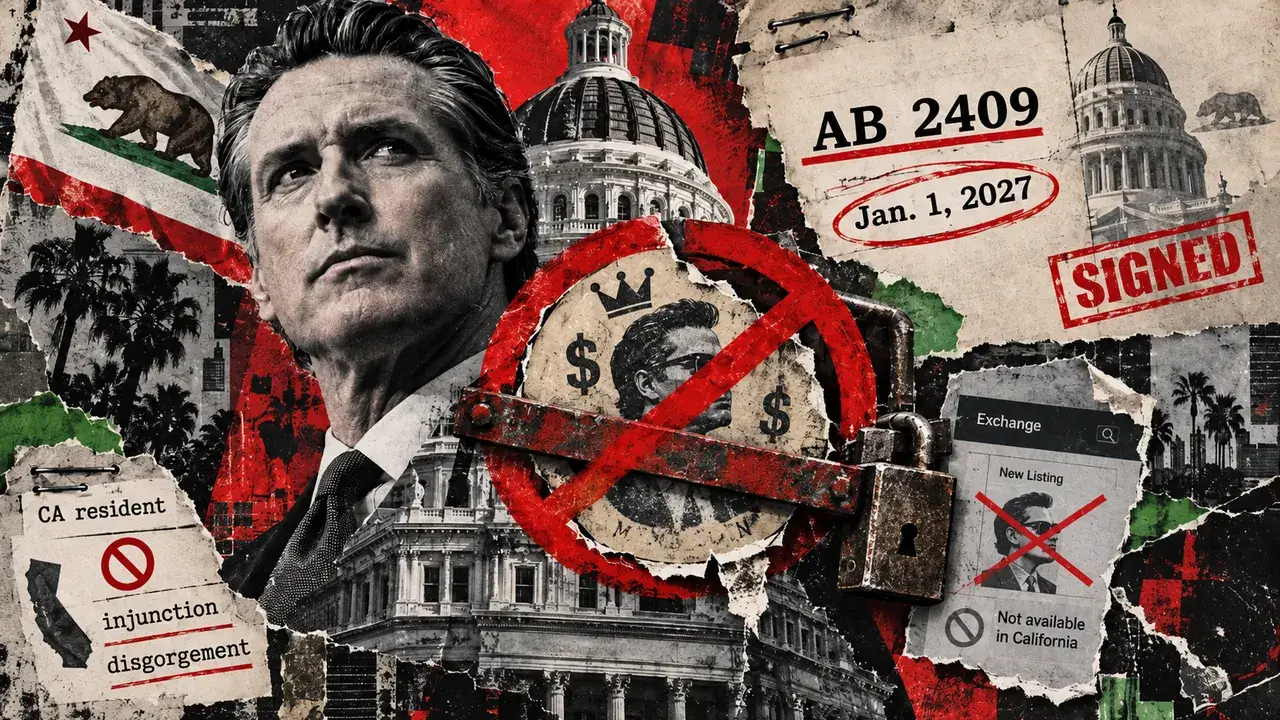
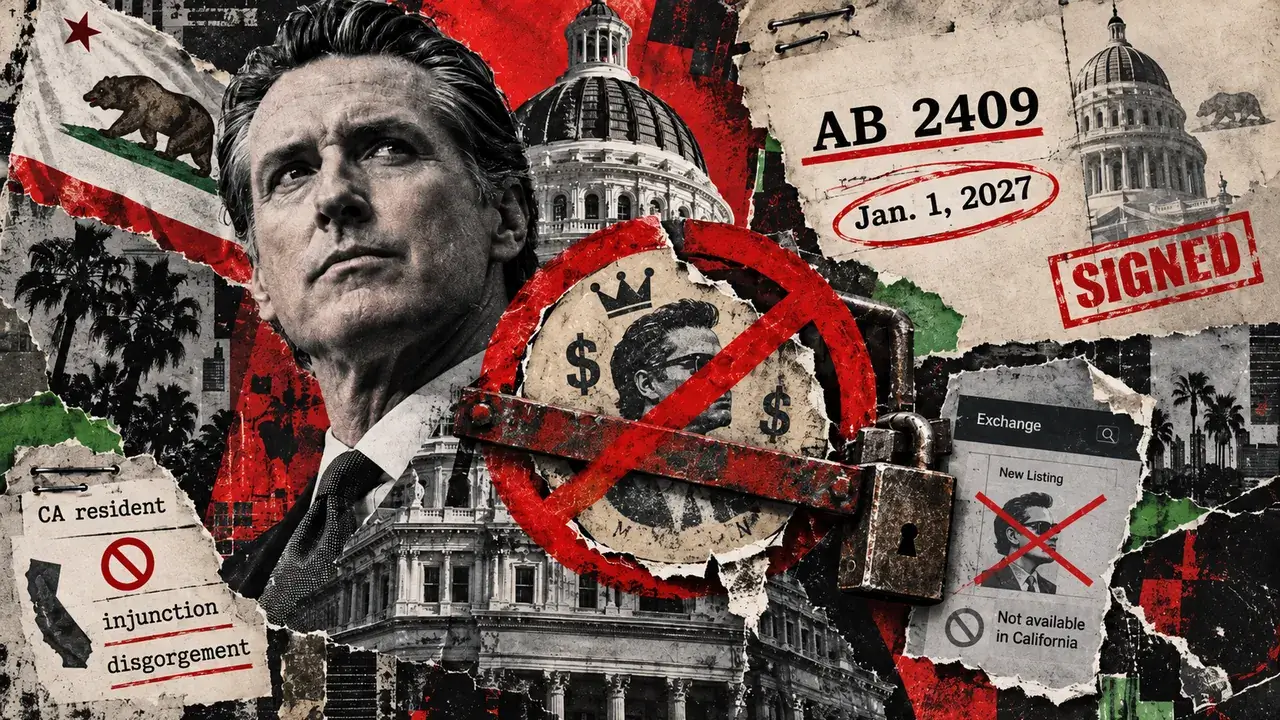
California Governor Gavin Newsom has signed into law Assembly Bill 2409 (AB 2409), a piece of legislation that introduces significant restrictions on the issuance and listing of meme coins by public officials and certain government employees. The bill, signed on September 27, 2023, aims to curb potential conflicts of interest and protect the public from speculative digital assets linked to political figures. This landmark legislation marks a notable step in the evolving regulatory landscape of cryptocurrencies, particularly those with a political or social trending basis.
Key Provisions of AB 2409
AB 2409 establishes two primary prohibitions. Firstly, it bars California public officers and certain government employees from issuing meme coins. This provision directly targets individuals in positions of power within the state, preventing them from leveraging their influence for the creation and distribution of these digital assets. Secondly, the bill imposes limitations on digital asset service providers concerning the listing of new "official-linked coins" for California residents. These official-linked coins are defined as those offered by or in partnership with a federal public official or a state or local public officer, provided the coin was issued on or after January 1, 2027.
The definition of a "meme coin" within the bill is broad, encompassing digital assets primarily tied to internet memes, public figures, fictional characters, current events, or social trends. Their value is understood to be derived predominantly from public interest, speculation, or community engagement, distinguishing them from more utility-focused or fundamentally backed digital assets. The bill clarifies that the act of "issuing" includes making a meme coin available for public purchase, donation, or exchange of any value, irrespective of whether it is formally promoted.
Scope of Prohibited Individuals
The legislation meticulously defines who falls under the purview of these restrictions. A "California public officer" includes elected officials, appointed state or local officers, legislators, and members of government boards or commissions, even those with purely advisory roles. The employee category extends to state and local government workers who possess decision-making authority over procurement offers and contracts relevant to their employer. This detailed definition ensures a wide net is cast, aiming to prevent indirect or circumventing actions.
The provisions also extend to federal public officials regarding the provider listing clause. Federal officials are defined to include elected and appointed officers and members of federal government bodies, including those with advisory functions. While the direct issuance ban focuses on California state and local officers and defined employees, the provider listing clause encompasses federal officials, creating distinct but overlapping sets of individuals and entities impacted by the law.
The January 1, 2027, Threshold
A critical component of the new law is the January 1, 2027, effective date for the provider listing restriction. This date serves as a clear demarcation for newly issued official-linked coins. Digital asset service providers are prohibited from listing for sale, on behalf of, or for purchase by a California resident, any qualifying meme coin that was issued on or after this date, and is offered by or in partnership with a public official specified in the statute. This means that meme coins issued before January 1, 2027, are not subject to this particular listing condition. The statute’s focus on an official’s "offer or partnership" is a key element for platforms to consider when assessing new coins for California residents, requiring them to verify the statutory connection.
Political Context and Motivations
Governor Newsom’s office explicitly framed the signing of AB 2409 as a measure to establish a clear contrast with political figures engaging in the meme coin market. The announcement accompanying the bill’s signing referenced former President Donald Trump’s meme coin, which was launched in 2025. While Trump’s existing coin predates the January 1, 2027, threshold for the listing rule, its existence serves as a prominent example of the political involvement the legislation seeks to address. Newsom’s administration positioned this bill as part of a broader package of consumer protection and anti-fraud measures, highlighting a commitment to safeguarding Californians from emerging financial risks.
The findings section of the bill underscores the legislative intent, citing concerns about conflicts of interest, erosion of public trust, and the potential for "pay-to-play" arrangements when public officials engage with financial instruments. The creation of meme coins by political figures, the bill argues, can exploit public interest and potentially mislead investors who may associate the coin with the official’s endorsement or credibility.
Enforcement and Civil Remedies
AB 2409 includes robust enforcement mechanisms. The California Attorney General is empowered to seek injunctions against violations of either the issuance ban or the provider listing rule, and may also pursue disgorgement of illicit gains. For the direct issuance ban, district attorneys, city attorneys, and county counsels are also granted the authority to seek similar remedies. The Attorney General holds the primary enforcement role for the separate provider listing clause, ensuring dedicated oversight for this aspect of the legislation. This multi-faceted enforcement structure suggests a serious commitment to upholding the new regulations.
Background and Broader Implications
The rise of meme coins, often characterized by rapid price fluctuations driven by social media trends and community sentiment rather than underlying technological innovation or utility, has presented new challenges for regulators globally. These digital assets, while sometimes offering opportunities for speculative gains, are also susceptible to pump-and-dump schemes and can be used to capitalize on public figures’ popularity without providing genuine value.
The inclusion of public officials in the issuance or promotion of such assets raises significant ethical and legal questions. It blurs the lines between public service and private financial gain, potentially undermining the integrity of governmental institutions. The concept of a "meme coin" itself is a relatively new phenomenon in the financial world, stemming from the decentralized finance (DeFi) movement and the broader internet culture. These coins often have minimal development behind them, with their value being almost entirely speculative and driven by virality.
California’s legislative action positions it as a proactive state in the digital asset space. By addressing this specific niche of cryptocurrencies, lawmakers are signaling an intent to regulate based on the nature and origin of digital assets, not just their underlying technology. The January 1, 2027, implementation date for the provider listing clause provides a reasonable transition period for the industry to adapt to these new requirements. It allows digital asset service providers time to implement necessary compliance checks and for existing projects to potentially fall outside the scope of the new rule if they were issued prior to the deadline.
Analysis of Impact
The implications of AB 2409 are far-reaching for both public officials and the digital asset industry operating within California. For public officials, the law creates a clear prohibition, reducing the temptation and opportunity to engage in the creation or promotion of meme coins. This is likely to foster a greater sense of trust and accountability in government.
For digital asset service providers, the law introduces a new layer of due diligence. Platforms operating in or serving California residents will need to develop sophisticated methods for identifying meme coins, determining their issuance dates, and verifying any partnerships or offers involving public officials, including federal, state, and local levels. Failure to comply could result in significant legal and financial penalties, including injunctions and disgorgement of profits.
The definition of "official-linked coins" and the "offer or partnership" test are crucial for compliance. Platforms will need to carefully scrutinize the origins and promotional activities surrounding any new meme coin listing. The distinction between coins issued before and after January 1, 2027, will necessitate meticulous record-keeping and verification processes.
This legislation also sets a precedent that other states or jurisdictions might consider following. As the digital asset landscape continues to mature and intersect with traditional finance and politics, regulatory bodies are increasingly seeking to establish guardrails against potential abuses. California’s approach, focusing on the specific characteristics of meme coins and their connection to public office, offers a targeted regulatory strategy.
Future Considerations
While AB 2409 addresses a specific type of digital asset and a particular class of issuers, it opens the door for broader discussions about the regulation of politically-adjacent cryptocurrencies. The effectiveness of the law will ultimately depend on the diligence of enforcement agencies and the proactive compliance efforts of digital asset service providers.
The evolving nature of the cryptocurrency market means that new forms of digital assets and novel ways of engaging the public are constantly emerging. Future legislation may need to adapt to these changes, potentially addressing other categories of digital assets or new forms of official endorsement. However, for now, AB 2409 provides a clear legal framework in California aimed at preventing the politicization of speculative digital assets and reinforcing the integrity of public service. The inclusion of consumer protection measures alongside these crypto-specific regulations indicates a comprehensive approach to safeguarding the state’s residents in an increasingly complex financial ecosystem.