Dwi Wanna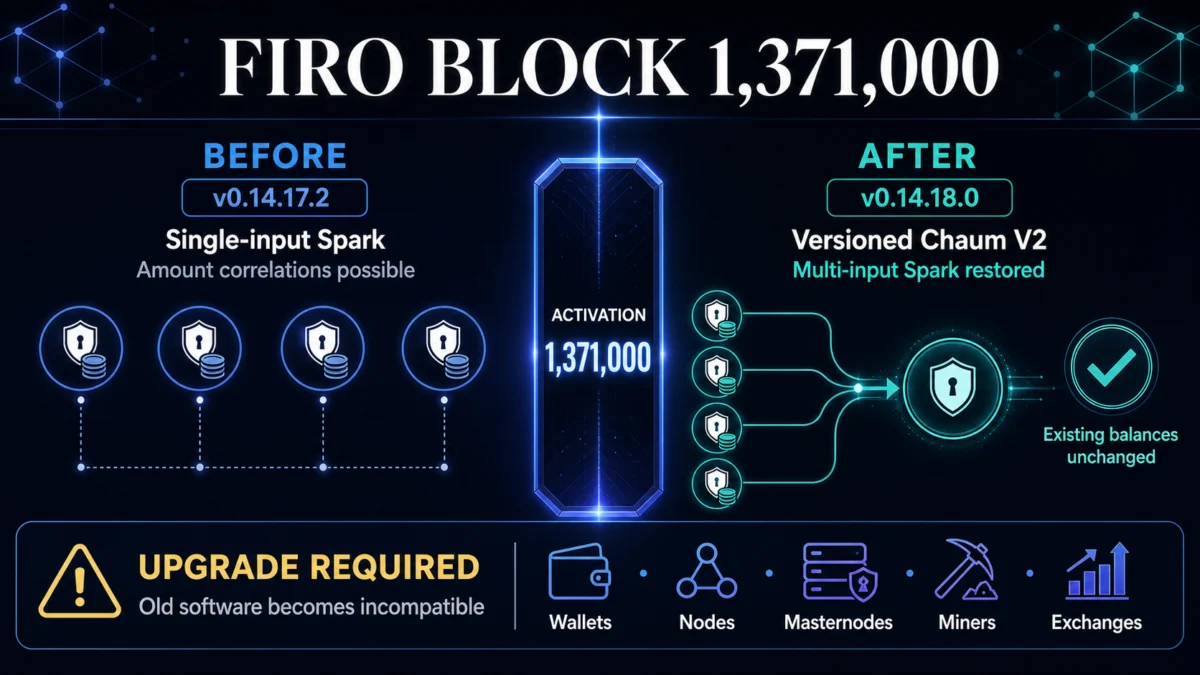
The Firo blockchain is currently navigating a critical transition period as it approaches a mandatory hard fork designed to address a high-severity vulnerability within its Spark transaction system. At block height 1,371,000, the network will undergo a consensus-level upgrade that renders all previous software versions obsolete, effectively mandating that every participant—from individual wallet users to large-scale exchange operators—migrates to version 0.14.18.0. This upgrade is not merely a routine maintenance patch; it is a vital defensive measure aimed at permanently closing a loophole that could have allowed for the unlimited creation of forged tokens, a scenario that poses an existential threat to any cryptocurrency’s economic integrity.
The activation of this hard fork follows a tense period for the Firo community, which began in mid-August when a researcher discovered a flaw in the Spark protocol’s multi-input spending mechanism. Early Friday morning, the chain was less than 160 blocks away from the target height. With an average block time of approximately five minutes, the window for node operators to ensure compatibility was narrowed to a matter of hours. The Firo development team estimated that the transition would occur around 10:00 a.m. UTC on September 4, though they emphasized that the exact timing is dictated by the cryptographic progression of the blockchain rather than the clock.
Technical Origins of the Spark Vulnerability
To understand the necessity of this hard fork, one must examine the role of the Spark protocol within the Firo ecosystem. Spark is Firo’s flagship privacy protocol, designed to provide robust anonymity by concealing the sender, receiver, and amount of a transaction. It was developed to replace earlier iterations like Lelantus, offering better scalability and a more flexible "addressing" system. However, on August 13, the Firo team disclosed a critical vulnerability specifically affecting "multi-input" Spark spends.
In a standard cryptocurrency transaction, a user often combines several smaller "inputs" (previous unspent outputs) to reach a desired total for a "spend." The discovered flaw allowed a sophisticated attacker to exploit the mathematical proofs used to verify these multi-input transactions. Under specific conditions, an attacker could manipulate the system into validating a transaction that created more value than it consumed, effectively minting new FIRO tokens out of thin air.
The gravity of an inflation bug cannot be overstated in the decentralized finance space. While most security breaches involve the theft of existing funds from specific wallets, an inflation bug devalues the entire supply, potentially leading to a total collapse of market confidence. In this instance, the researcher who identified the flaw demonstrated its viability by generating approximately 200 FIRO on the mainnet during a controlled test. Firo’s core developers conducted an extensive audit of the ledger following the discovery and reported that, as of their initial notice on August 13, there was no evidence that any malicious actors had exploited the vulnerability to inflate the supply.
The Interim Defense and Privacy Trade-offs
Upon the discovery of the flaw, the Firo team acted swiftly to implement a temporary mitigation strategy. They released version 0.14.17.2, which introduced a restrictive rule: Spark transactions were limited to a single input. While this "stopgap" effectively blocked the path to inflation—since the vulnerability relied on the interaction between multiple inputs—it introduced significant practical hurdles for users and diminished the protocol’s privacy efficacy.
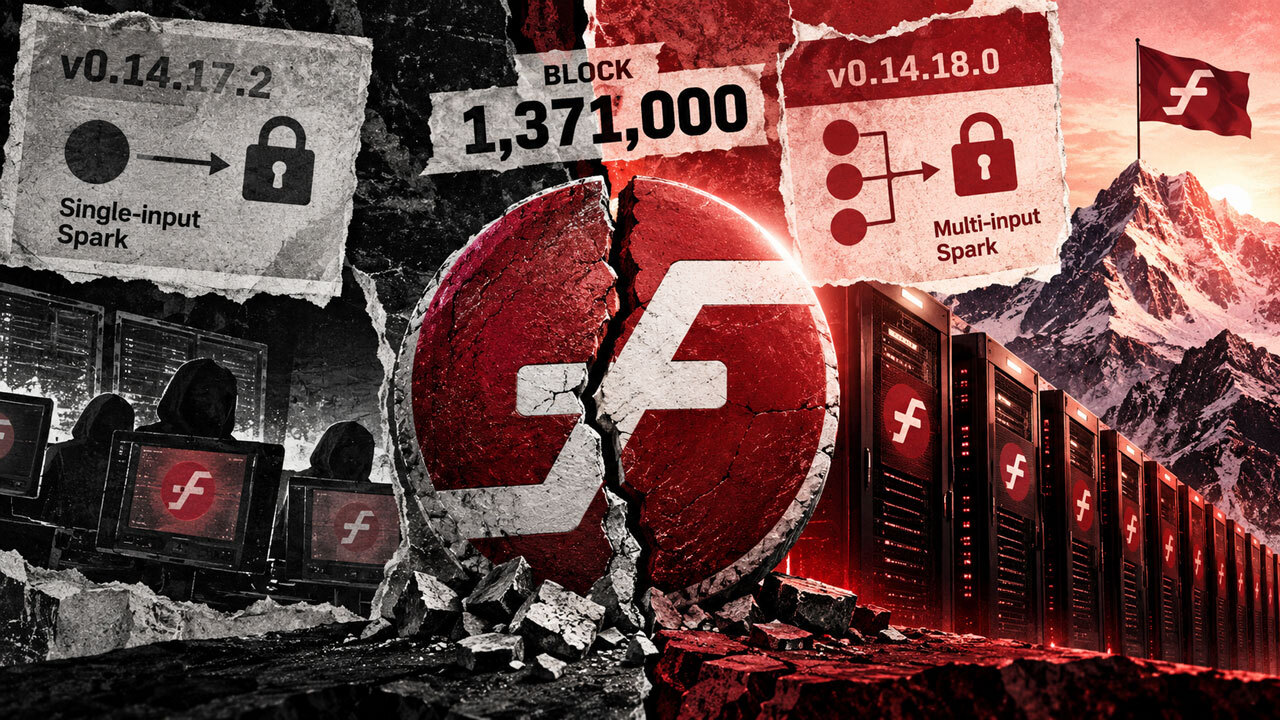
Users wishing to send a large amount of FIRO that was previously stored across several small Spark "notes" were forced to break their payments into multiple separate transactions. For example, if a user had ten 1-FIRO inputs and wanted to send 10 FIRO, they had to broadcast ten individual transactions rather than one unified spend. This fragmentation created a "correlation risk." Because the separate transactions often appeared on the blockchain at similar times or with similar metadata, a dedicated observer could potentially link them together, thereby eroding the anonymity that Firo users expect.
The interim period was characterized by this delicate balance between maintaining the integrity of the total supply and providing the highest level of privacy. The Firo team was transparent about this trade-off, advising users that while their funds remained secure and their private keys were never at risk, the privacy of their transactions would be "weaker" until a permanent fix could be deployed via a hard fork.
The v0.14.18.0 Upgrade and Chaum V2 Proofs
The permanent solution arriving with block 1,371,000 is contained within the v0.14.18.0 release. This version introduces a sophisticated new transaction format and a "versioned Chaum V2 proof." These cryptographic upgrades are designed to allow the safe resumption of multi-input spending by refining the way the network validates the zero-knowledge proofs associated with Spark.
Unlike a soft fork, which is backward-compatible, this hard fork is a "non-backward-compatible" change. This means that any node running software older than v0.14.18.0 will see the new blocks as invalid and will be "forked off" onto a dead-end chain. For exchanges, this requires a complete halt of deposits and withdrawals until their infrastructure is confirmed to be on the correct side of the split. For miners and masternode operators—who provide the computational power and collateralized services that secure the Firo network—the upgrade is mandatory to continue receiving rewards.
The Firo team has confirmed that for the average "HODLer" or passive investor, no immediate action is required if their funds are stored in a wallet they do not intend to use during the transition. The coins, balances, and private keys remain valid across the fork. However, any active wallet software or third-party service must be updated to interact with the network post-fork.
Market Performance and Community Reaction
Despite the technical challenges and the disclosure of a potential inflation risk, the market response to Firo has been surprisingly bullish. Over the seven days leading up to the hard fork, FIRO’s price surged by more than 60%. This upward trajectory extended into a 30-day window, showing a price increase of over 92%. At the time of the final countdown to the fork, Firo sat at a market capitalization of approximately $23.26 million, ranking #640 in the global cryptocurrency market.
Analysts suggest that the price rally may be attributed to "relief buying," as the community responded positively to the dev team’s transparency and the rapid deployment of a permanent fix. In the world of privacy coins, which often face regulatory scrutiny and delisting threats from major exchanges, technical resilience is seen as a key indicator of a project’s long-term viability. The fact that the vulnerability was caught by a researcher and handled via a coordinated disclosure rather than an active exploit has bolstered confidence in Firo’s security protocols.

Furthermore, the 24-hour trading volume for FIRO saw a 60.12% increase, reaching over $281,000. This spike in activity suggests that traders were positioning themselves ahead of the fork, either anticipating a "successful upgrade" rally or reacting to the increased visibility of the project due to the technical news.
Chronology of the Firo Security Crisis
The timeline of the event illustrates the high-stakes nature of blockchain development:
- Early August 2024: A security researcher identifies a flaw in the Spark protocol’s handling of multi-input transactions.
- August 13, 2024: Firo officially discloses the vulnerability. The team confirms a controlled test generated 200 FIRO but finds no evidence of malicious inflation.
- August 14–26, 2024: The interim v0.14.17.2 software is widely adopted, restricting Spark to single-input spends to protect the supply.
- August 27, 2024: The permanent fix, v0.14.18.0, is released. The hard fork is scheduled for block 1,371,000.
- September 3–4, 2024: The final countdown begins. Exchange partners and masternode operators are urged to complete upgrades as the block height nears the threshold.
- September 4, 2024 (Post-Fork): Firo plans to release a comprehensive post-mortem and full technical disclosure once the network is confirmed stable.
Broader Implications for Privacy Coins
The Firo hard fork highlights a broader trend in the cryptocurrency industry: the increasing complexity of privacy-preserving technologies. Protocols like Spark, which utilize advanced zero-knowledge proofs, are among the most mathematically complex systems in the digital asset space. While they offer unparalleled anonymity, the "attack surface" for such systems is often found in the subtle interactions of these mathematical proofs.
Firo’s experience also serves as a case study for "emergency governance" in decentralized networks. The ability to coordinate a global network of independent node operators to upgrade their software within a window of a few weeks is a significant feat. It contrasts with the struggles of larger, more ossified networks where consensus on hard forks can take months or years.
As the privacy coin landscape faces ongoing pressure from international regulators—such as the European Union’s MiCA (Markets in Crypto-Assets) regulation and potential bans on "anonymity-enhanced" tokens in certain jurisdictions—the ability to maintain a bug-free, secure, and transparently managed network is crucial. Firo’s successful navigation of this vulnerability may provide a blueprint for other privacy-centric projects, such as Monero or Zcash, in handling similar technical crises.
Conclusion and Outlook
As the Firo network crosses the block 1,371,000 threshold, the focus will shift to network stability. The restoration of multi-input private spending marks the return of full functionality to the Spark protocol, allowing users to once again conduct large, private transactions with maximum efficiency and anonymity.
The Firo development team has promised a full post-mortem, which is expected to provide deeper insights into the Chaum V2 proof and the specific nature of the math error that allowed for the inflation risk. For the broader cryptocurrency market, the event serves as a reminder of the "permanent beta" state of many blockchain technologies and the critical importance of active, transparent development teams. With the inflation threat neutralized, Firo aims to regain its momentum as a leader in the privacy-preserving digital cash space, backed by a community that has proven its ability to respond to technical adversity with speed and cohesion.