admin
admin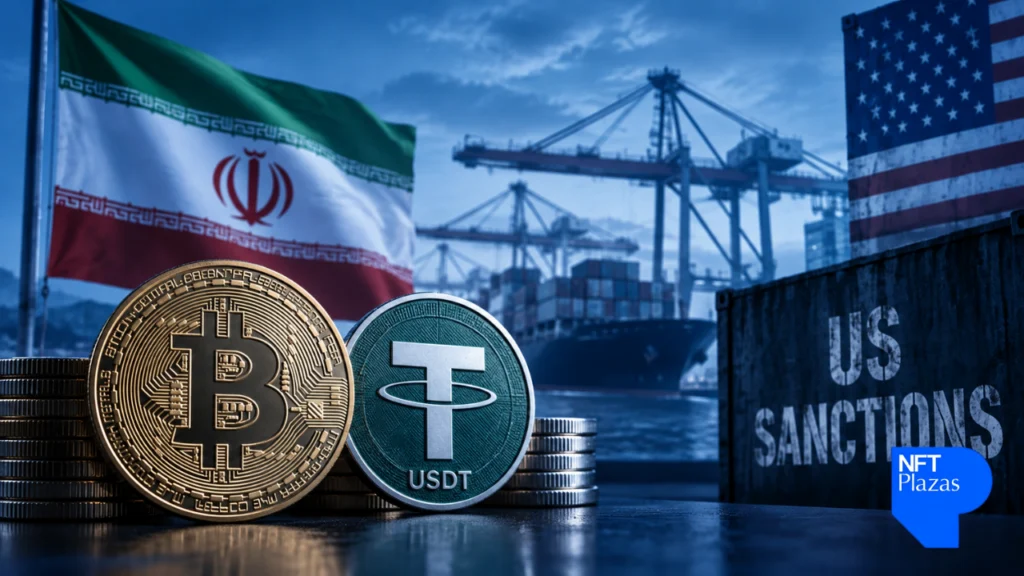
Iran is increasingly leveraging cryptocurrencies, including Bitcoin and Tether’s USDT stablecoin, to facilitate cross-border financial transactions and circumvent the stringent restrictions imposed by the U.S. financial sanctions regime. This strategic pivot, as detailed in a recent Financial Times report, underscores a deepening integration of digital assets into Iran’s long-standing shadow financial system, enabling the nation to maintain vital economic lifelines amidst intensified international pressure.
The shift signifies a crucial evolution in Iran’s approach to economic resilience. For decades, the Islamic Republic has operated under various degrees of international financial isolation due to its nuclear program, human rights record, and alleged support for terrorism. These sanctions have systematically severed Iran’s access to conventional global banking networks, making traditional international payments exceedingly difficult for businesses and the government alike. Consequently, Iranian entities have historically relied on a complex web of alternative channels, including foreign-exchange houses, informal networks, and intermediaries, to conduct trade and move money. The latest development indicates a significant expansion of this intricate system, with cryptocurrencies now playing an increasingly prominent role.
A Deep Dive into Iran’s Sanctions Landscape and Evasion Tactics
The history of U.S. sanctions against Iran dates back to the 1979 hostage crisis, but they significantly intensified in the 21st century, particularly in response to Iran’s nuclear ambitions. Key milestones include:
- 2006-2010: United Nations Security Council resolutions, followed by unilateral U.S. and European Union sanctions, targeted Iran’s nuclear and missile programs, financial institutions, and energy sector. These measures included freezing assets, restricting access to international banking, and imposing embargos on oil and gas.
- 2012: Iran was largely cut off from the SWIFT global financial messaging system, a critical move that severely hampered its ability to conduct international trade through conventional channels. This effectively forced the country to develop parallel financial structures.
- 2015: The Joint Comprehensive Plan of Action (JCPOA), or Iran nuclear deal, brought a temporary easing of some sanctions in exchange for limitations on Iran’s nuclear program.
- 2018: The U.S. withdrew from the JCPOA under the Trump administration and reimposed "maximum pressure" sanctions, which have since expanded to target virtually all sectors of Iran’s economy, including oil exports, shipping, banking, and strategic industries.
- Current Context: The Biden administration has largely maintained these sanctions, signaling a continued commitment to economic pressure on Tehran. Treasury officials have explicitly warned that digital assets are becoming a new frontier for the Iranian regime to circumvent these financial restrictions.
Under these conditions, Iran’s central bank has recently adopted a more pragmatic, albeit quiet, stance. Officials familiar with the country’s trade and financial sector have indicated to the Financial Times that the central bank has relaxed some of its traditional controls, tacitly encouraging traders to repatriate overseas earnings through "whatever means available." This represents a departure from previous, more rigid policies that mandated exporters return a large portion of their foreign currency earnings and sell them through government-run platforms at often unfavorable official exchange rates. Such previous requirements frequently incentivized companies to either keep earnings abroad or bring them back through illicit or unofficial channels. The new flexibility allows traders to exchange foreign currency through the open market and, in some cases, directly use export proceeds to finance imports, bypassing the official foreign-exchange system altogether. A business executive with close ties to the regime confirmed that authorities are now less concerned with the specific transfer mechanisms, noting that receiving cryptocurrency for exports has become an "established practice."
Cryptocurrency: A New Lifeline for Cross-Border Transactions
The appeal of cryptocurrencies like Bitcoin and Tether (USDT) for Iran lies in their ability to facilitate value transfer across borders without relying on the conventional banking infrastructure that is directly targeted by U.S. sanctions.
Tether (USDT): The Workhorse of Trade Settlement

USDT, a stablecoin designed to maintain a value pegged to the U.S. dollar, has emerged as particularly useful for cross-border trade. For Iranian businesses grappling with highly volatile domestic exchange rates and severe restrictions on dollar transactions, a digital asset linked to the dollar provides a relatively stable and convenient medium for transferring and holding value. Unlike traditional dollar transactions, which would typically involve correspondent banks and the global SWIFT network, USDT transfers occur on blockchain networks, largely outside the direct control of legacy financial institutions. This makes it an attractive tool for settling commercial transactions, allowing Iranian companies to price goods and services in a globally recognized stable currency without direct interaction with the U.S. dollar banking system.
Bitcoin: Store of Value and Mining Revenue
While USDT serves practical trade settlement needs due to its stability, Bitcoin plays a different, yet equally critical, role. Bitcoin functions primarily as a store of value and a transferable asset, offering a degree of censorship resistance and global liquidity. Its price volatility, however, makes it less suitable for routine commercial settlements where predictable pricing is paramount.
Beyond direct trading and payments, Iran has also strategically positioned itself as a significant global Bitcoin mining hub. Leveraging its relatively cheap and often subsidized domestic energy resources, Iran has found a way to generate crypto assets without directly purchasing them through international financial markets. Blockchain analytics firm Elliptic has estimated that Iran accounts for approximately 4.5% of global Bitcoin mining activity. This provides Tehran with a domestic source of Bitcoin that can then be used to purchase imports or move value outside conventional financial channels, effectively monetizing its energy resources into a globally accepted digital asset. This mining activity is a strategic advantage, offering a continuous stream of cryptocurrency that can be converted or used directly for various economic purposes.
The Scale of Crypto Activity and Iran’s Economic Challenges
The figures illustrate the magnitude of Iran’s economic challenges and the increasing reliance on alternative financial channels. Iranian authorities estimate that over $100 billion in undeclared earnings is held both domestically and overseas. Furthermore, the country’s General Inspection Organisation has separately reported that more than 20,000 individuals and companies failed to meet obligations to repatriate the equivalent of €94 billion in export proceeds. These staggering amounts highlight a significant capital flight problem and a desperate need for the government to bring these funds back into the formal economy. Cryptocurrencies, while not replacing Iran’s traditional financial system, offer a critical parallel channel to address these issues and keep the economy minimally connected to international trade.
Data from TRM Labs further underscores the persistent and significant nature of Iran’s crypto economy. The firm estimated that approximately $10 billion in cryptocurrency moved through Iran in 2025, a slight decrease from about $11.4 billion in 2024. This sustained volume, despite escalating U.S. enforcement actions, indicates a structural demand for digital assets within Iran rather than merely speculative trading, cementing crypto’s role as a fundamental component of the country’s economic survival strategy.
Washington’s Counter-Measures and the Digital Arms Race
The growing adoption of cryptocurrencies by Iran has not gone unnoticed by U.S. authorities, placing digital assets squarely within Washington’s sanctions campaign against Tehran. The U.S. Treasury Department’s Office of Foreign Assets Control (OFAC) has been actively targeting the infrastructure supporting Iran’s crypto economy.

- June 2024: OFAC designated four prominent Iranian cryptocurrency exchanges – Nobitex, Bit Pin, Wallex, and Ramzinex. These platforms were accused of facilitating sanctions evasion and other illicit financial activities. TRM Labs estimated that these four platforms alone accounted for roughly 78% of Iran’s attributed crypto volume in 2025, representing about $7.7 billion. This designation aimed to disrupt the primary on-ramps and off-ramps for crypto within Iran.
- August 2024: The Treasury Department intensified its pressure by sanctioning additional exchanges, asserting that they were being used by Tehran to move billions of dollars and provide financial support to the Islamic Revolutionary Guard Corps (IRGC), a designated foreign terrorist organization.
Beyond targeting exchanges, U.S. authorities are also exerting pressure on stablecoin issuers. Tether, the issuer of USDT, has previously demonstrated its willingness and ability to cooperate with U.S. law enforcement. The company has frozen hundreds of millions of dollars in USDT associated with Iranian-linked addresses after U.S. authorities identified the wallets. This highlights a crucial vulnerability for stablecoins like USDT: despite operating on decentralized blockchains, their centralized issuers are subject to regulatory pressure and can act to freeze assets, thereby potentially disrupting Iran’s ability to utilize these specific digital assets.
Treasury Secretary Scott Bessent has recently indicated that digital assets could become additional targets as Washington expands its campaign to pressure Iran’s economy, signaling a proactive approach to evolving evasion tactics. This ongoing "digital arms race" pits Iran’s innovative circumvention strategies against the U.S.’s expanding regulatory and enforcement toolkit.
Implications and the Future of Economic Sanctions
Iran’s experience with cryptocurrency highlights both the inherent strengths and limitations of digital assets under a sanctions regime. On one hand, cryptocurrencies enable value to move across borders without direct reliance on correspondent banks or conventional payment networks, offering a powerful tool for circumventing traditional financial choke points. This decentralized nature presents a formidable challenge for regulators seeking to impose complete financial isolation.
On the other hand, the ecosystem surrounding cryptocurrencies – including centralized exchanges, stablecoin issuers, wallet providers, and various intermediaries – remains vulnerable to sanctions, asset freezes, and enforcement actions. Blockchain analytics firms are also becoming increasingly sophisticated at tracing on-chain transactions, creating a digital ledger that can potentially be scrutinized by authorities, thereby creating a "double-edged sword" for sanctioned entities. Every additional transaction, while bypassing traditional banks, leaves a permanent, albeit sometimes anonymized, record on a public ledger.
For Tehran, the objective appears less about completely replacing its traditional financial system with a crypto-based one, and more about ensuring enough alternative channels remain open to prevent sanctions from completely cutting the economy off from international trade. Cryptocurrency is now firmly entrenched as one of these crucial channels, alongside long-standing foreign-exchange houses, offshore intermediaries, and informal trading networks.
This evolving dynamic carries significant implications for the future of international finance and economic warfare. It sets a precedent for how other sanctioned nations or entities might seek to bypass restrictions, potentially influencing the policies of countries like North Korea or Russia. It also intensifies the global debate around cryptocurrency regulation, with governments increasingly looking to impose stricter controls to prevent their misuse for illicit finance and sanctions evasion.
The result for Iran is a financial system that is increasingly pushed underground, where Bitcoin and USDT are becoming indispensable tools for maintaining trade and moving money when conventional channels are no longer reliable. As one Tehran-based economist concisely articulated to the Financial Times, "the deeper Iran’s economy moves underground, the greater the need for cryptocurrency." This statement encapsulates the complex reality of a nation navigating severe economic pressure by embracing a new, albeit still vulnerable, frontier of global finance. The ongoing interplay between U.S. sanctions and Iran’s innovative evasion tactics will undoubtedly continue to shape the landscape of both geopolitics and digital asset regulation for years to come.