admin
admin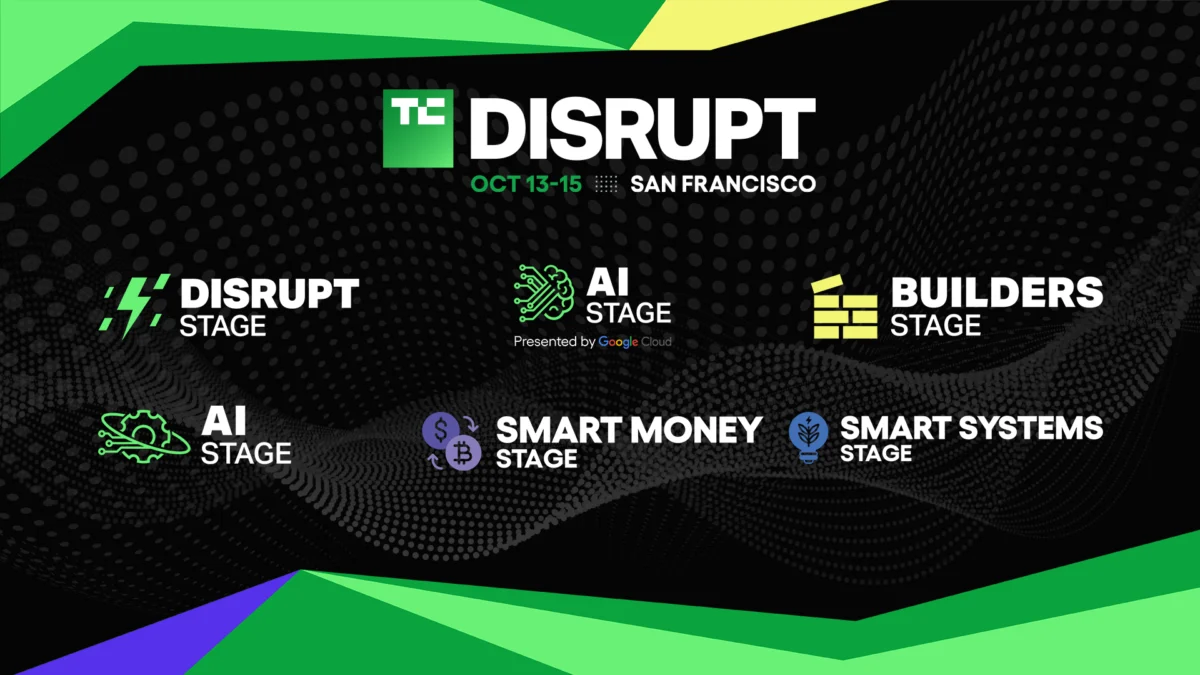
As the global technology ecosystem grapples with the transition from theoretical artificial intelligence to large-scale industrial implementation, the margin for error for early-stage companies has narrowed significantly. The primary threat facing modern founders and venture capitalists is no longer a lack of speed, but rather a delayed reaction to fundamental market shifts that have already occurred. To address these complexities, TechCrunch Disrupt 2026 has announced a comprehensive restructuring of its programming, introducing six specialized stages designed to provide actionable intelligence for 10,000+ attendees. Scheduled to take place from October 13–15 at Moscone West in San Francisco, the event serves as a critical junction for the 250+ speakers and thousands of operators navigating a landscape defined by infrastructure bottlenecks, AI-native competition, and a more disciplined fundraising environment.
The Evolution of TechCrunch Disrupt: A Strategic Timeline
TechCrunch Disrupt has long served as a bellwether for the technology industry. Historically, the event has been the launching pad for some of the most influential companies in the digital age, including Dropbox, Uber, and Fitbit. However, the 2026 iteration marks a departure from the "growth at all costs" era that characterized much of the previous decade. The current market cycle demands a more granular focus on operational sustainability and hardware-software integration.

The timeline for the 2026 event is structured to maximize engagement before the doors even open. Prospective participants in the Startup Battlefield 200—the prestigious competition that has seen its alumni raise more than $9 billion in collective funding—must submit their applications by May 29. Following this selection process, the three-day summit in October will feature over 250 sessions, each curated to address specific pressure points in the current venture cycle. This chronology reflects the increasing need for founders to be proactive rather than reactive, aligning with the event’s central thesis that market timing is the ultimate arbiter of success.
High-Level Strategy on the Disrupt Stage
The Disrupt Stage remains the focal point of the conference, acting as the "center of gravity" for high-level discourse between headline founders, institutional investors, and global policy leaders. In 2026, the discussions on this stage are expected to move beyond general market optimism to focus on the structural shifts in global capital. Key themes include the consolidation of the AI sector, the impact of geopolitical tensions on supply chains, and the evolving exit landscape for late-stage startups.
A significant portion of the Disrupt Stage programming is dedicated to the Startup Battlefield 200. This competition provides a unique data set for investors, offering a snapshot of which categories—from climate tech to quantum computing—are attracting the highest caliber of entrepreneurial talent. For the broader audience of founders and operators, the Disrupt Stage serves as a signal-processing hub, helping them identify where attention is concentrating and which industries are accelerating toward maturity.

Operational Resilience: The Builders Stage
The Builders Stage addresses the tactical realities of running a company in a high-interest-rate environment. Unlike traditional conference content that often focuses on success stories, this stage is built around current operational pressure points. As venture capital dynamics have shifted from prioritizing user acquisition to prioritizing unit economics, founders require a different set of tools for survival.
One of the most anticipated sessions, "How to Win When You’re Not Building AI," highlights a growing divide in the startup world. While AI-first companies have captured the lion’s share of recent investment, non-AI startups—particularly those in SaaS, healthcare, and consumer goods—face a steeper climb for capital and talent. The Builders Stage provides a roadmap for these companies to leverage operational efficiency as a competitive advantage.
Speakers confirmed for this stage include a diverse array of industry leaders:

- Nina Achadjian, Partner at Index Ventures, who brings expertise in international scaling.
- Rajeev Dham, Managing Partner at Sapphire Ventures, focusing on growth-stage resilience.
- Josh Reeves, CEO and Co-founder of Gusto, offering insights into building durable human capital systems.
- Grant Lee, CEO of Gamma, and Robby Stein, Head of Product at Google, discussing the intersection of product-market fit and user experience.
- Mo Jomaa, Partner at CapitalG, providing the perspective of late-stage institutional backing.
Smart Money: The Future of Financial Infrastructure
The fintech sector has entered a period of intense scrutiny, moving away from the speculative hype of the early 2020s toward a focus on durable growth and digital financial systems. The Smart Money Stage at Disrupt 2026 is dedicated to exploring how financial infrastructure is evolving to meet these new standards.
The programming on this stage centers on the transition from "disruption" to "integration." Sessions will examine the rise of real-time payments, the challenges facing embedded finance models, and the regulatory hurdles that startups must clear to achieve scale. Industry veterans such as Jack Zhang, founder and CEO of Airwallex, and Lotti Siniscalco, General Partner at Emergence Capital, will lead discussions on where capital is flowing and which fintech models are proving to be resilient in a skeptical market. The core objective is to identify where the digital financial system is creating real-world value versus where market enthusiasm is beginning to wane.
Smart Systems: Solving the Physical Constraints of AI
Perhaps the most significant addition to the 2026 agenda is the focus on physical infrastructure. As AI expansion accelerates, the demand for data center capacity, energy grid connectivity, and industrial automation has reached a breaking point. The Smart Systems Stage focuses on these often-overlooked operational systems that modern software companies increasingly depend upon.

The tech industry is beginning to realize that software cannot exist without the "hard" infrastructure to support it. This stage explores the intersection of software and the physical world, featuring sessions on energy resilience, robotics, and logistics. High-profile leaders such as Jeff Lawson, co-founder and CEO of Inertia, and David Kirtley, CEO of Helion, will discuss how infrastructure innovations are becoming the next great competitive advantage. For founders in climate tech or energy, this stage provides a clearer understanding of how grid constraints could either act as a barrier or create the next multibillion-dollar opportunity.
AI in the Real World: Reliability and Deployment
While 2024 and 2025 were characterized by the "demo" phase of generative AI, 2026 is the year of implementation. The AI in the Real World Stage addresses the transition of AI systems from controlled environments to complex, physical systems where reliability is a business-critical requirement.
In sectors such as drug discovery, autonomous manufacturing, and robotics, a 90% accuracy rate is often insufficient. This stage tackles the technical and ethical challenges of building trustworthy AI. Programming will explore what happens when cloud access is limited (edge computing), how physical AI products scale across different geographies, and where deployment failures create significant financial risk. For investors, this stage offers a rubric for evaluating which AI companies have the technical depth to survive the transition from a flashy prototype to a production-grade tool.

The AI Stage: Rewriting the SaaS Business Model
Presented by Google Cloud, the AI Stage focuses on the software layer of the intelligence revolution. The central theme of this stage is the erosion of traditional SaaS advantages. As AI agents and generative models change user expectations, the old business models based on per-seat licensing are being challenged by consumption-based or outcome-based models.
Sessions such as "Rewriting SaaS: Why AI Breaks the Old Business Model" will analyze how companies are adapting their product economics in real-time. The stage will also delve into the technical side of AI development, covering model fine-tuning, data privacy, and the role of open-source versus proprietary systems. This is a tactical environment for operators who need to understand how AI is changing the very fabric of software development and distribution.
Broader Impact and Industry Analysis
The restructuring of TechCrunch Disrupt 2026 reflects a broader stabilization within the tech industry. After the volatility of the mid-2020s, there is a renewed focus on "hard tech" and operational excellence. San Francisco’s Moscone West, once again the venue for this gathering, symbolizes the city’s enduring status as the global epicenter for venture activity, despite repeated narratives of a "tech exodus."

The inclusion of 250+ sessions across six stages suggests that the industry is no longer looking for a single "next big thing," but is instead managing a series of concurrent revolutions in energy, finance, and intelligence. For the 10,000+ attendees, the event is more than a networking opportunity; it is an intensive briefing on the state of global innovation.
As the industry moves toward the final quarter of 2026, the insights gleaned from Disrupt will likely influence the investment strategies of the 2027 fiscal year. The emphasis on infrastructure and reliability suggests that the next wave of unicorn companies will be those that can successfully bridge the gap between digital intelligence and physical reality. For founders and investors alike, the message from TechCrunch Disrupt 2026 is clear: the market has shifted, and only those who have updated their operational maps will find their way forward.