admin
admin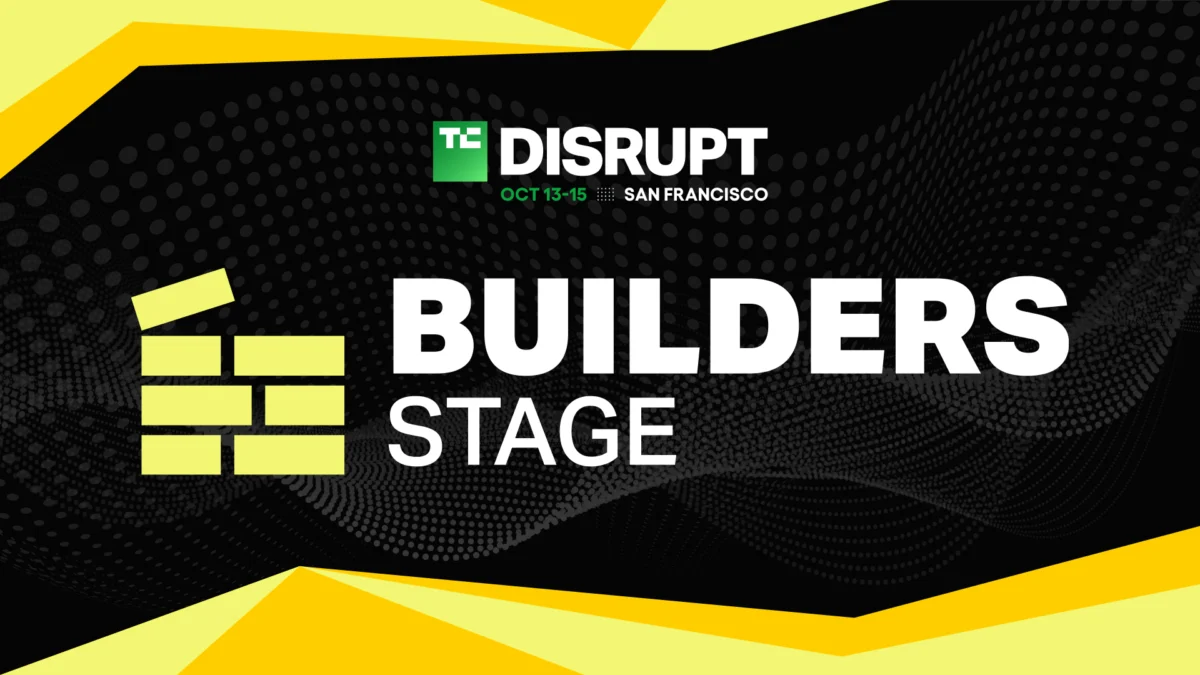
TechCrunch Disrupt 2026 will see the return of the Builders Stage to the Moscone Center in San Francisco from October 13 to 15, marking a pivotal moment for the global startup ecosystem as it navigates the complexities of the post-AI-hype era. This year’s programming is designed to provide more than 10,000 founders, investors, and startup operators with a tactical roadmap for moving beyond initial ideation toward sustainable, large-scale growth. As venture capital remains discerning and the bar for Series A funding continues to rise, the Builders Stage serves as a critical forum for high-level operational strategy, featuring a lineup of industry veterans from Google, Reddit, Index Ventures, and Blackstone.
The 2026 edition of Disrupt arrives at a time when the "growth at all costs" mentality has been firmly replaced by a focus on unit economics and efficient scaling. The Builders Stage specifically addresses the "middle-stage" chasm—the difficult transition between a successful seed round and the institutional rigor required for a Series A or B. Through a series of candid fireside chats, panel discussions, and real-world case studies, the event aims to demystify the internal mechanics of high-growth companies. Key themes for this year include the defensive strategies required to compete with AI giants, the evolution of human-AI hybrid workforces, and the shifting landscape of early-stage mergers and acquisitions.
The Evolution of Disrupt and the San Francisco Tech Resurgence
TechCrunch Disrupt has long served as the premier proving ground for emerging technology, famous for its Startup Battlefield competition which has seen alumni like Dropbox, Fitbit, and Mint go on to achieve massive exits. By 2026, the event’s location at the Moscone Center in San Francisco underscores the city’s enduring status as the world’s primary hub for artificial intelligence and venture capital. Following a period of remote-work decentralization, the "Back to SF" movement has solidified, with the city seeing a record influx of AI-related commercial real estate leases in 2025.
The Builders Stage represents one of six industry-focused stages at the conference. While other stages may focus on the "what" of new technology, the Builders Stage focuses on the "how." Historically, startup success rates remain low, with roughly 90% of new ventures failing within the first decade. Data from the 2024-2025 fiscal years suggests that the "Series A crunch" has intensified, with only one in four seed-funded startups successfully raising a follow-on round. The 2026 agenda is specifically curated to combat these statistics by providing founders with the "human infrastructure" and operational playbooks used by the top 1% of performers.
Strategic Defensibility in the Age of AI Hegemony
A central pillar of the 2026 Builders Stage agenda is the existential challenge posed by foundational model providers like OpenAI and Anthropic. In a session titled "What Happens When OpenAI Ships Your Roadmap," industry leaders including Michel Tricot (CEO of Airbyte), Rob Toews (Partner at Radical Ventures), and Linda Tong (CEO of Webflow) will analyze the "moat" problem. As large language models (LLMs) expand their native capabilities, many startups find their core features being integrated into the platform layer. The discussion will focus on where defensibility still exists—specifically in proprietary data moats, deep workflow integration, and vertical-specific applications that general-purpose AI cannot easily replicate.

Complementing this is a session for the "silent majority" of the tech world: founders who are not building AI-centric products. In "How to Win When You’re Not Building AI," Shan Shan of Baillie Gifford and Yuri Sagalov of General Catalyst will discuss the return to fundamentals. With over 60% of venture capital currently flowing toward AI, non-AI founders must work harder to prove retention, revenue quality, and disciplined execution. This session serves as a reminder that enduring businesses are built on solving fundamental human and enterprise needs, regardless of whether the underlying technology uses a neural network.
The New Human Infrastructure: Hiring and Culture
The definition of a "startup team" is undergoing a radical transformation, a topic explored in "Hiring When AI Is a Co-Founder." Featuring Josh Reeves, CEO of Gusto, the session examines how early-stage companies are delegating engineering, customer support, and administrative operations to AI agents. This shift allows startups to remain leaner for longer, but it creates new challenges in maintaining company culture and accountability.
Furthermore, the competition for specialized talent has never been more intense. In the session "Competing for AI Talent: Pay, Equity, and Retention," experts like Matt Birnbaum (Wylder.co) and Atli Thorkelsson (Redpoint Ventures) will provide data-backed insights into current compensation trends. As of 2026, senior AI engineers often command total compensation packages exceeding $500,000, forcing startups to innovate with secondary sales, creative equity structures, and remote-first cultures to remain competitive against "Big Tech" incumbents.
Scaling Product Decisions: From MVP to Billions of Users
One of the most anticipated sessions features Robby Stein, VP of Product at Google, who will discuss the psychological and operational shift required when a product scales from a Minimum Viable Product (MVP) to a global platform. The instincts that serve a founder in the "0 to 1" phase—speed, risk-taking, and rapid pivoting—can become liabilities when managing a product used by billions. Stein will share how Google balances the need for innovation with the necessity of reliability and user trust, providing a rare look into the decision-making frameworks of the world’s largest product organization.
Similarly, Maria Angelidou-Smith, CPO of Reddit, will lead a discussion on "Rebuilding Consumer Products for the AI Era." Alongside leaders from Square and Uber, she will explore how established platforms are redesigning user interfaces to accommodate AI-driven search and discovery. The panel will argue that AI is not just an "add-on" feature but a fundamental shift in how humans interact with digital interfaces, requiring a complete rethink of the traditional "feed" or "search bar" paradigms.
The Financial Roadmap: Fundraising and M&A in 2027
The fundraising landscape has shifted from the "liquidity party" of 2021 to a high-conviction, data-driven environment. In "The Series A in 2027," partners from Index Ventures, Peak XV, and Bessemer Venture Partners will forecast the metrics that will be required for success in the coming year. The panel is expected to emphasize that "fundable" now means more than just high growth; it requires a clear path to profitability and a sustainable customer acquisition cost (CAC) to lifetime value (LTV) ratio.

Interestingly, the Builders Stage will also highlight M&A as an early-stage strategy rather than just an exit event. Karl Alomar of M13 and Lindsey Mignano of Mignano Law Group will discuss why the smartest founders are building with acquisition in mind from day one. As the IPO window remains unpredictable, strategic acquisitions by larger tech firms seeking to "acqui-hire" talent or integrate specific IP have become a primary liquidity path for the 2026 vintage of startups.
Operational Excellence and Mental Resilience
Beyond the spreadsheets and code, the Builders Stage addresses the "human cost" of entrepreneurship. "Yes, It’s Hard to Be a Founder: An Honest Conversation" features Nell Daly of Revenge Capital and Harvard Medical School’s David H. Rosmarin. This session aims to strip away the "hustle culture" facade to discuss burnout, decision fatigue, and the psychological strain of leadership. By providing founders with mental frameworks and habits for endurance, the session acknowledges that a founder’s mental health is a critical, though often overlooked, business asset.
Tactical execution remains at the forefront with "The Zero-to-1K Playbook," where Grant Lee (Gamma) and Leah Solivan (Precedent.vc) will break down how to acquire the first 1,000 customers without a traditional marketing budget. This session focuses on founder-led sales and community building, emphasizing that in the early days, "unscalable" activities are often the most productive.
Broader Impact and Industry Implications
The insights shared at the Builders Stage are expected to ripple through the broader tech economy. By focusing on the "Builders," TechCrunch is signaling a shift toward a more mature startup ecosystem—one that values longevity over hype. The event also serves as a critical networking node; with over 10,000 attendees, the Moscone Center will become a concentrated environment for the "collisions" that often lead to the next decade’s major partnerships and funding rounds.
As the tech industry continues to grapple with the rapid pace of AI advancement, the 2026 Builders Stage offers a stabilized ground for founders to regroup and strategize. Whether it is through the "High-Conviction Filter" of the Startup Battlefield judges or the "Ask the Investors" Q&A, the overarching message of Disrupt 2026 is clear: the future belongs to those who can bridge the gap between visionary technology and disciplined, scalable execution. Registration for the event is currently open, with tiered pricing designed to encourage early participation from the global founder community.