admin
admin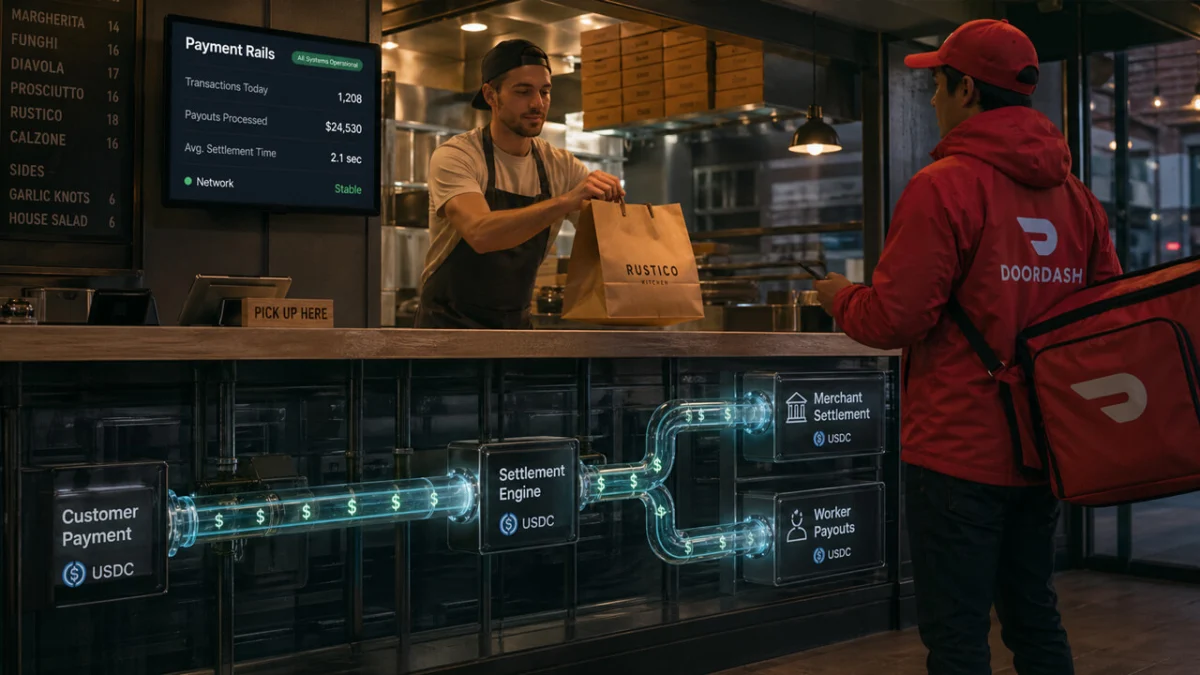
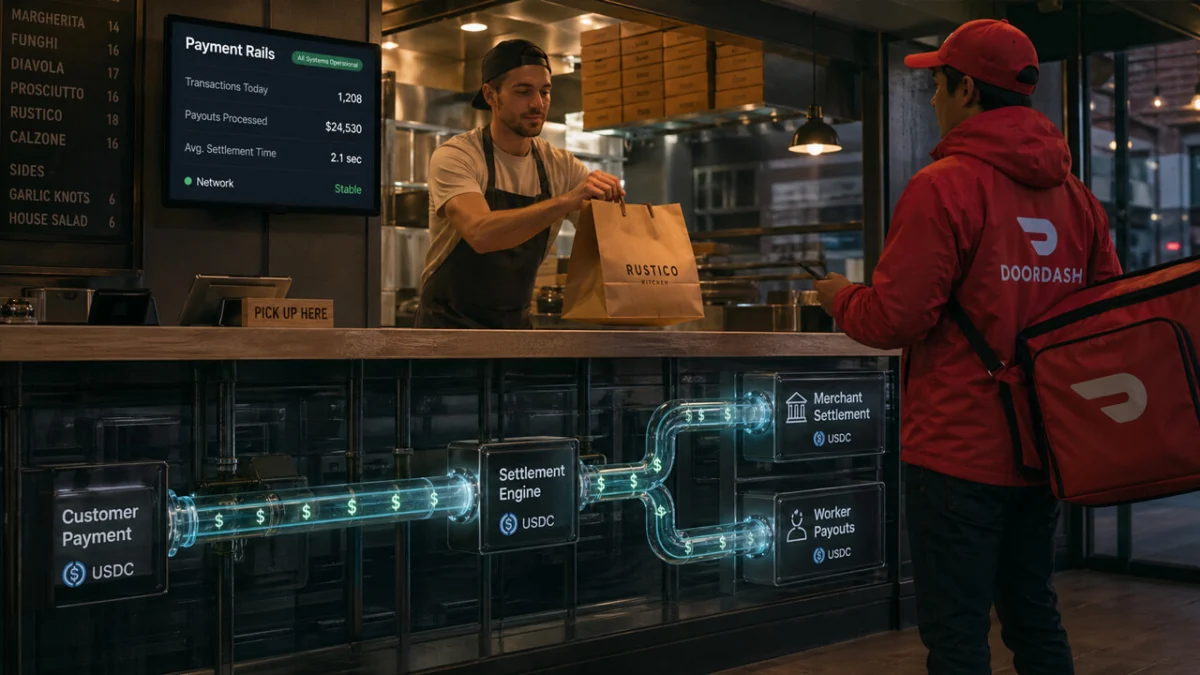
DoorDash has officially announced a strategic partnership with Tempo, a Stripe-backed blockchain infrastructure provider, to integrate stablecoin-powered payouts into its global marketplace. This move signals a major shift in how one of the world’s largest delivery platforms manages its complex financial ecosystem, which spans more than 40 countries and involves millions of stakeholders, including customers, merchants, and independent contractors known as Dashers. By leveraging stablecoin technology, DoorDash aims to address the inherent inefficiencies of traditional banking systems, specifically targeting the friction caused by settlement delays, high foreign exchange costs, and the fragmented nature of international payment rails.
The integration represents one of the most significant real-world applications of stablecoins to date, moving the technology from the periphery of speculative trading into the core operational infrastructure of a Fortune 500 company. For DoorDash, the primary objective is to streamline the movement of capital within its three-sided marketplace. Currently, money flows in multiple directions simultaneously: customers pay at checkout using various localized methods, merchants wait for settlement to manage their daily operations, and Dashers rely on rapid payouts to cover immediate expenses such as fuel and living costs. By utilizing the Tempo network, DoorDash intends to make these financial flows faster, more affordable, and more reliable across diverse jurisdictions.
The Operational Challenge of Global Marketplace Logistics
DoorDash co-founder Andy Fang has emphasized that the appeal of stablecoin integration lies in solving a tangible operational problem rather than pursuing innovation for its own sake. In a modern delivery marketplace, the consumer experience is characterized by extreme efficiency; a customer can place an order with a few taps on a smartphone. However, the financial backend supporting that transaction remains tethered to a legacy system built on banking cutoffs, regional clearinghouses, and manual reconciliation processes.
In many regions where DoorDash operates, settlement delays can stretch from several hours to several business days. These delays are often exacerbated by weekends, public holidays, and the varying speeds of local banking rails. For a company operating at DoorDash’s scale, these "micro-delays" aggregate into significant liquidity bottlenecks. The friction is felt most acutely by the participants who are least likely to be focused on the technical nuances of cryptocurrency: the small business owners and the gig workers.
Merchants, particularly small and medium-sized restaurants, operate on thin margins and require consistent access to working capital. Slower settlement times directly impact their ability to manage payroll, purchase inventory, and handle short-term liquidity planning. For Dashers, the need for immediate cash is even more pressing. As independent contractors, their ability to continue working is often contingent on their ability to fund immediate costs like gasoline. DoorDash highlighted this sensitivity recently by introducing gas relief measures for US and Canadian Dashers in response to rising fuel prices. Stablecoin payouts offer a technological solution to this economic pressure by providing near-instant access to earnings.
The Technical Architecture: Understanding the Tempo Blockchain
Tempo, the infrastructure provider at the heart of this transition, was introduced as a collaborative effort between the payments giant Stripe and the venture capital firm Paradigm. It is designed as a payments-focused Layer 1 blockchain, specifically engineered to handle the throughput and finality requirements of enterprise-scale commerce. Unlike general-purpose blockchains that may suffer from congestion or high transaction fees during periods of peak activity, Tempo’s design choices prioritize sub-second finality and stablecoin-native fee structures.
The network’s partner list underscores its institutional credibility, featuring a diverse array of global leaders including Deutsche Bank, Shopify, OpenAI, Revolut, Visa, and Coastal Bank. This coalition suggests a broader industry consensus that existing blockchain networks have historically struggled to serve enterprise payment flows cleanly. By focusing on high-throughput settlement, Tempo provides the "plumbing" necessary for companies like DoorDash to move value without the volatility associated with traditional cryptocurrencies or the sluggishness of legacy fiat systems.
While the full technical breakdown of DoorDash’s implementation remains under wraps, the industry anticipates a hybrid backend model. In such a structure, the blockchain handles the high-speed transfer and settlement of value, while traditional financial institutions, custodians, and compliance providers manage the "on-ramps" and "off-ramps" that convert stablecoins back into local fiat currencies for those who prefer traditional bank deposits.
Chronology of Enterprise Stablecoin Adoption
The partnership between DoorDash and Tempo is the latest milestone in a multi-year timeline of stablecoin integration within the mainstream financial sector.
- 2018-2020: The Exploration Phase. Major payment processors like Stripe initially experimented with Bitcoin but retreated due to high volatility and slow transaction speeds. During this period, the industry began shifting its focus toward stablecoins pegged to the US Dollar as a more viable medium of exchange.
- 2021: Visa and USDC. Visa became one of the first major networks to announce it would allow the use of the stablecoin USDC to settle transactions on its payment network, marking a turning point for institutional acceptance.
- 2023: The Launch of Tempo. Stripe and Paradigm revealed Tempo, specifically targeting the "settlement gap" in global commerce. This year also saw PayPal launch its own stablecoin, PYUSD, further legitimizing the asset class.
- Early 2024: Massive Scale. Data indicated that stablecoin transaction volumes reached staggering heights, with $28 trillion flowing through the ecosystem in the first quarter alone. Although a large portion of this volume was attributed to automated trading bots, it proved the network’s capacity for handling immense scale.
- Late 2024: DoorDash Integration. DoorDash joins the Tempo ecosystem, shifting the narrative from financial services to real-world logistics and gig economy applications.
Supporting Data and Economic Implications
The economic argument for stablecoin-powered payouts is supported by the sheer volume of capital currently trapped in "transit" within the global financial system. According to industry reports, cross-border payment frictions cost businesses billions of dollars annually in transaction fees and lost opportunity costs. For a company like DoorDash, which operates across 40+ countries, the cost of converting currencies and navigating different national banking systems is a significant line item.
Stablecoins operate 24/7/365, bypassing the "banking hours" limitation that has governed commerce for centuries. When a Dasher completes a delivery at 11:00 PM on a Saturday, a stablecoin-based system can settle that payment immediately, whereas a traditional ACH transfer might not process until the following Tuesday.
Recent data from the first quarter of 2024 highlights the growing utility of these digital dollars. While critics often point to the fact that approximately 76% of stablecoin volume is driven by bots and automated systems, proponents argue that this is actually a testament to the technology’s reliability. If automated systems can move trillions of dollars with high frequency and zero downtime, the same rails are more than capable of supporting the payout needs of a global workforce.
Official Responses and Industry Reactions
While DoorDash co-founder Andy Fang has focused on the efficiency gains, other partners in the Tempo ecosystem have echoed the sentiment that this is a "watershed moment" for the industry. Representatives from Stripe have frequently noted in recent whitepapers that businesses are increasingly prioritizing "predictability" in cross-border transfers. The ability to know exactly when a payment will land, regardless of the destination’s local infrastructure, is a competitive advantage in the platform economy.
Market analysts suggest that DoorDash’s role is particularly significant because it serves as a "stress test" for stablecoin rails. Unlike a crypto-native startup, DoorDash must navigate rigorous compliance standards, tax reporting requirements, and the operational complexity of managing millions of unique users. If DoorDash can successfully integrate these rails, it sets a precedent for other "super-apps" and marketplaces like Uber, Airbnb, and Amazon to follow suit.
Broader Impact and the Future of Financial Plumbing
The DoorDash-Tempo partnership suggests that the "next consumer story" for cryptocurrency will not be about consumers buying tokens on an exchange, but rather about the invisible redesign of the financial plumbing that governs daily life. Most Dashers and merchants will likely interact with these systems without ever needing to understand the underlying blockchain technology. They will simply experience a service where money arrives faster and costs less to move.
This development reinforces a growing divide in the digital asset market. On one side sits Bitcoin, which has solidified its role as a macro asset and "digital gold" for institutional portfolios. On the other side sit stablecoins, which are evolving into the primary transactional layer for internet-native commerce. Stablecoins capture the mechanics of how capital moves, while Bitcoin captures the capital itself.
As stablecoins move deeper into the operating infrastructure of global platforms, the focus will shift toward resolving the remaining hurdles: regulatory clarity, standardized compliance across jurisdictions, and the seamlessness of fiat-to-stablecoin conversions. DoorDash’s move proves that for large-scale enterprises, the benefits of faster settlement and reduced friction are now significant enough to outweigh the perceived risks of adopting nascent technology. The success of this integration will likely be measured not by "crypto" metrics, but by the tangible improvement in liquidity and satisfaction for the merchants and workers who power the modern delivery economy.