admin
admin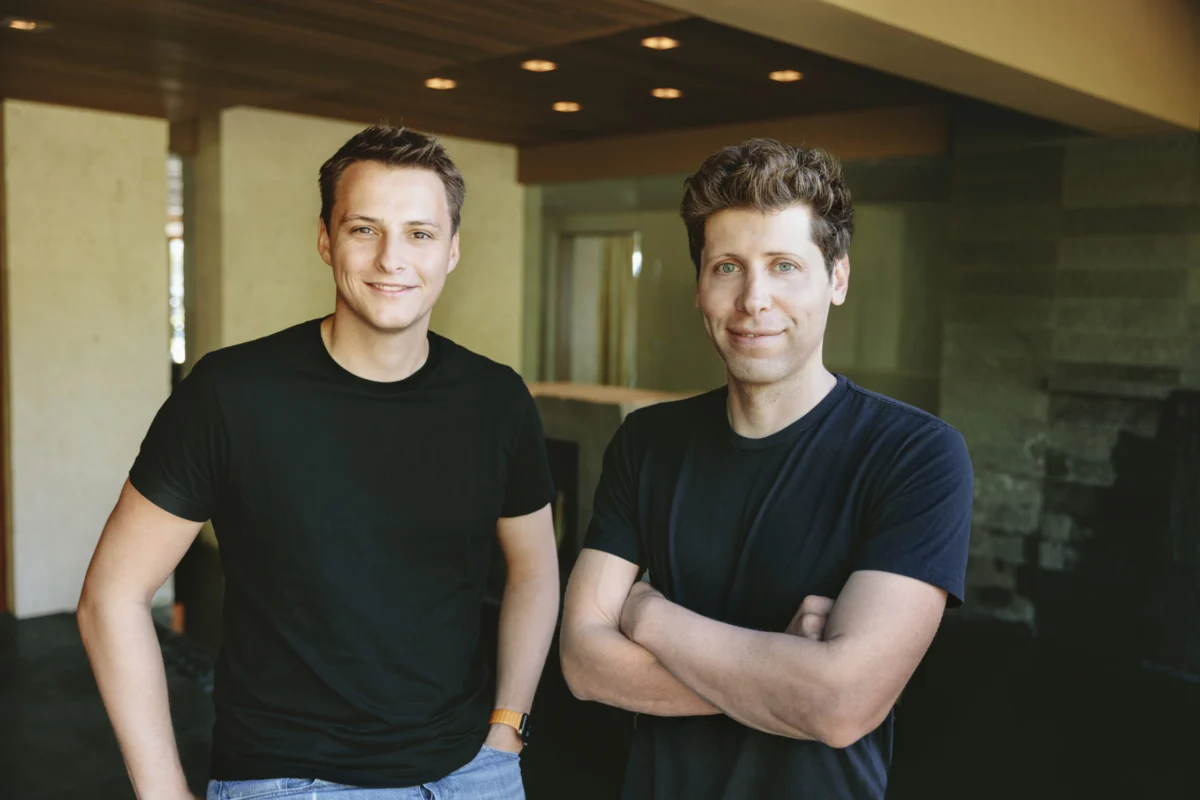
World, the ambitious online verification initiative co-founded by OpenAI Chief Executive Officer Sam Altman, has successfully completed a $52.5 million funding round through a strategic sale of its native WLD tokens. The capital raise, which was announced via a corporate press release, represents a significant vote of confidence from the digital asset investment community at a time when the intersection of artificial intelligence and digital identity is becoming a central theme in global technology.
The sale was structured with a mandatory 12-month lockup period, a financial mechanism designed to ensure that participating investors maintain their positions for at least one year. According to the company, this lockup period serves as a testament to the investors’ "long-term commitment to World’s continued growth and utility." By preventing the immediate liquidation of the tokens on the open market, the arrangement aims to stabilize the token’s ecosystem while providing the necessary liquidity for the project’s next phase of development.
Strategic Backing and Financial Structure
The funding round was led by Pantera Capital, a prominent venture capital firm specializing in blockchain technology and digital assets. Pantera was joined by a consortium of strategic investors, including Eightco Holdings, Bain Capital Crypto, Susquehanna Crypto, and Selini Capital. The involvement of such high-profile institutional players underscores the growing interest in "Proof of Personhood" (PoP) protocols—systems designed to distinguish human users from automated bots in an increasingly AI-driven digital landscape.
The proceeds from the token sale are designated for the World Foundation, a non-profit entity structured as an exempted limited guarantee foundation based in the Cayman Islands. The Foundation acts as the steward for the World network, overseeing the decentralization of the protocol and managing the expansion of its global infrastructure. While the World Foundation manages the network’s governance, the technical operations and development are spearheaded by Tools for Humanity (TFH). Based in San Francisco, TFH is led by CEO and co-founder Alex Blania, alongside co-founder Sam Altman.
The Core Mission: Solving the AI Identity Crisis
World occupies a unique and often controversial niche in the technology sector. Its primary product is a suite of tools centered on the concept of "Proof of Human." As generative artificial intelligence continues to advance, the internet is increasingly flooded with synthetic content, deepfakes, and sophisticated bots that can mimic human behavior. World’s mission is to create a global, permissionless identity and financial network that can verify whether an individual is a real person without compromising their privacy or requiring traditional government-issued identification.
The cornerstone of this mission is the World ID, a digital passport that allows users to prove their humanity to third-party applications. This is achieved through several levels of verification. At its most basic level, World ID can be linked to a phone number. However, the highest tier of verification—and the most widely discussed aspect of the project—requires a biometric scan.
To obtain a verified World ID, users must interact with an "Orb," a custom-built, metallic spherical device. The Orb utilizes high-resolution cameras and infrared sensors to scan a user’s iris. This biological data is then converted into a unique cryptographic identifier, or "iris code," which is compared against a database to ensure the person has not already registered. Once verified, the raw biometric images are reportedly deleted (unless a user opts into data sharing for system improvement), leaving only the cryptographic hash as proof of uniqueness. These Orbs have been deployed in major cities globally, including London, Tokyo, and San Francisco, and are often hosted at partner retail locations or dedicated World pop-up offices.
Chronology of Evolution: From Worldcoin to World
The project was originally introduced to the public under the name "Worldcoin." The initial rollout focused heavily on the distribution of its WLD token as a form of universal basic income (UBI) for those who agreed to have their irises scanned. However, the project faced significant scrutiny from privacy advocates and government regulators almost immediately upon its debut.
The timeline of World’s development reflects a series of strategic pivots intended to distance the project from the volatility and negative perceptions often associated with the broader cryptocurrency market.
- Founding (2019-2020): Sam Altman and Alex Blania conceptualized the project during the early stages of the AI boom, recognizing that the proliferation of AI would eventually necessitate a robust "human-only" verification layer.
- Global Rollout (2021-2023): The project began deploying Orbs in various countries, attracting millions of users who were incentivized with WLD tokens.
- Rebranding (Late 2023 – Early 2024): Amidst a "crypto winter" and heightening regulatory pressure, the project rebranded from Worldcoin to simply "World." The shift was intended to emphasize the project’s identity and verification utility over its speculative tokenomics.
- Integration Phase (April 2024): World announced a significant update to its mobile application and revealed integrations with major digital platforms, including Tinder, Zoom, and DocuSign. These partnerships were designed to show the practical utility of a "Proof of Human" marker in online dating, professional communication, and legal document signing.
- Operational Adjustments (June 2024): Despite the high-profile nature of the project, Tools for Humanity faced internal challenges. In June, the company conducted a round of layoffs, citing the need to streamline operations and focus on core scaling objectives.
- Strategic Token Sale (July 2024): The $52.5 million raise marks a renewed effort to capitalize the project and secure the involvement of institutional partners committed to the long-term vision.
Regulatory Scrutiny and Privacy Challenges
Despite its financial successes, World has navigated a complex regulatory environment. Data protection authorities in several jurisdictions, including Spain, Portugal, and Kenya, have at various times suspended or investigated the project’s data collection practices. The primary concern among regulators is the sensitivity of biometric data and the potential for misuse, even with World’s claims of cryptographic anonymity.
In response to these challenges, World has implemented several "Privacy-First" updates. These include the introduction of "Personal Custody," which allows users to store their own data on their personal devices rather than in a centralized database, and "Unverify," a feature that allows users to permanently delete their iris codes. The World Foundation has consistently maintained that it does not sell user data and that its system is designed to be "privacy-preserving by default."
Market Impact and Future Implications
The $52.5 million influx of capital arrives at a critical juncture. The WLD token, which serves as the native currency of the network, has experienced significant price volatility since its launch. By securing a strategic sale with a lockup period, the Foundation is attempting to insulate the project from short-term market fluctuations and build a more stable economic foundation.
The implications of World’s success or failure extend beyond the crypto industry. If the project achieves its goal of becoming a global standard for human verification, it could fundamentally change how we interact with the internet. For instance, social media platforms could use World ID to eliminate bot farms, and financial institutions could use it to streamline Know Your Customer (KYC) processes without requiring intrusive personal documentation.
Furthermore, the project represents a philosophical hedge against the technology Altman himself is helping to pioneer through OpenAI. As AI models become capable of passing the Turing Test with ease, the "Proof of Personhood" becomes a vital infrastructure for maintaining the integrity of democratic processes, economic transactions, and digital communication.
Conclusion
The recent $52.5 million token sale provides World with the runway necessary to continue its global deployment of Orbs and further refine its cryptographic protocols. With the backing of Pantera Capital and other institutional heavyweights, the project is positioning itself as a leader in the emerging field of decentralized identity.
However, the path forward remains fraught with challenges. World must still convince a skeptical public to trust a private entity with biometric data, and it must navigate a fragmented global regulatory landscape that is increasingly wary of big tech’s reach. Whether World can successfully scale its "Proof of Human" tools to a billion users remains to be seen, but this latest funding round ensures that the project remains a central player in the ongoing debate over the future of digital identity in the age of artificial intelligence.
As the World Foundation expands its footprint from the Cayman Islands to the rest of the globe, the focus will likely shift from mere user acquisition to deep technical integration. The success of its recent partnerships with Zoom and DocuSign will serve as a bellwether for whether the broader tech industry is ready to adopt a biometric, blockchain-based solution for the problem of human verification. For now, the commitment of $52.5 million from strategic investors suggests that, at least in the eyes of the venture capital community, the "Proof of Personhood" is a challenge worth investing in.