admin
admin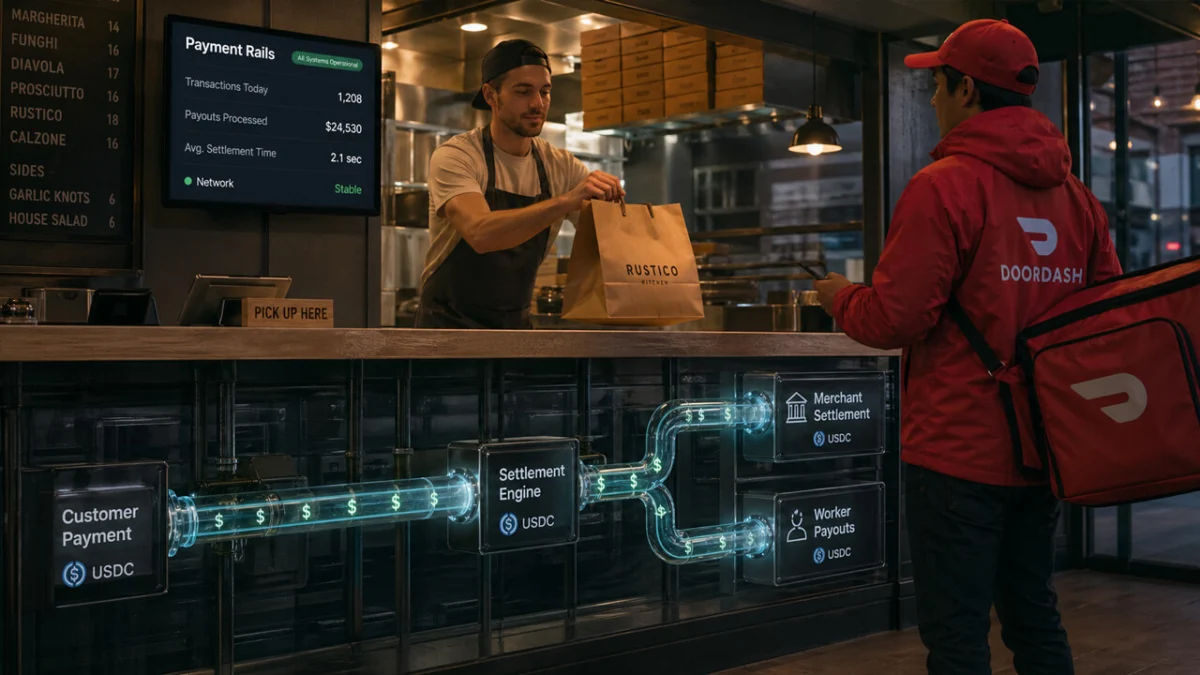
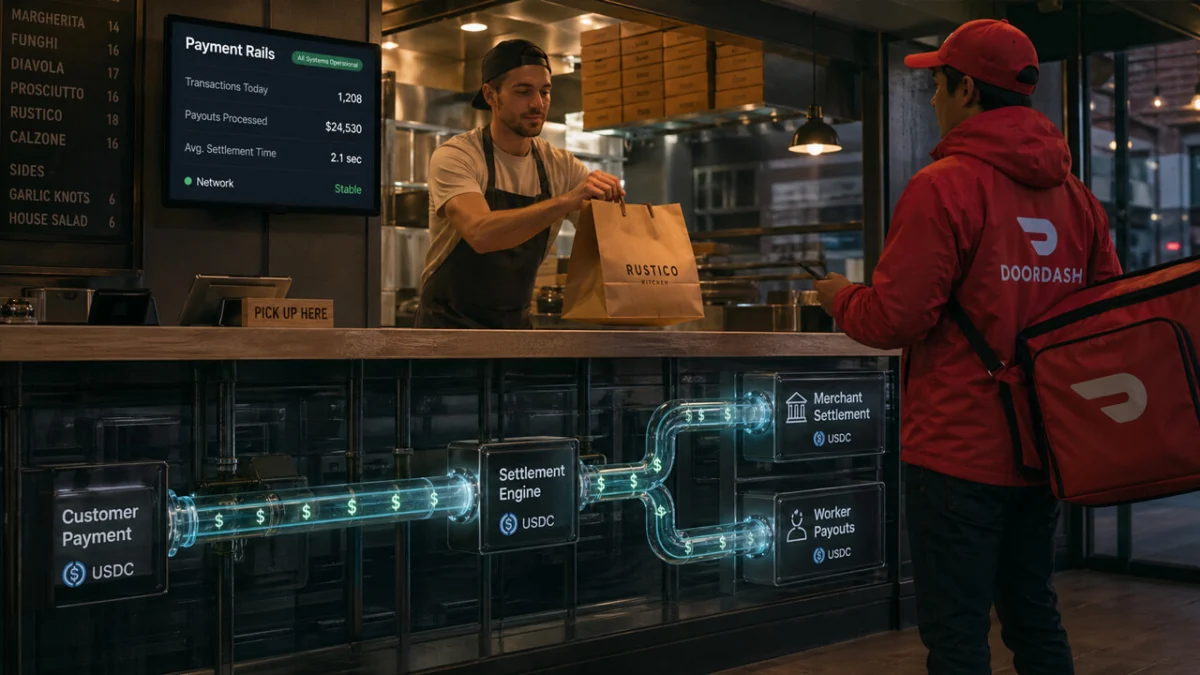
DoorDash, the global leader in last-mile logistics, has officially initiated a partnership with Tempo, a payments-focused Layer 1 blockchain backed by Stripe and Paradigm, to integrate stablecoin-powered payouts into its vast digital marketplace. This strategic move marks a significant shift in how one of the world’s largest gig-economy platforms manages the complex flow of capital across its international operations. By utilizing stablecoin rails, DoorDash aims to bypass the inherent delays and costs associated with traditional banking systems, providing its ecosystem of merchants and delivery contractors—known as "Dashers"—with faster, more reliable access to their earnings. This development is being viewed by industry analysts as a milestone in the transition of blockchain technology from a speculative asset class to a fundamental component of global enterprise infrastructure.
The Strategic Integration of Stablecoin Rails
The operational scale of DoorDash necessitates a sophisticated financial architecture. Currently operating in more than 40 countries, the company manages a marketplace where money moves in several directions simultaneously: customers pay for services at checkout, merchants await the settlement of funds to manage inventory and payroll, and Dashers rely on frequent payouts to cover immediate expenses like fuel and living costs. Historically, these transactions have been mediated by a fragmented network of regional banks, domestic clearinghouses, and international payment rails. This legacy system is often subject to banking holidays, "cut-off" times, and multi-day settlement windows that can create significant liquidity bottlenecks.
The integration of Tempo’s blockchain infrastructure allows DoorDash to experiment with near-instantaneous settlement. By using stablecoins—digital assets pegged to the value of a fiat currency like the U.S. Dollar—the company can facilitate transfers that settle in seconds rather than days. This is particularly relevant for a marketplace that relies on the real-time participation of millions of independent contractors. When a Dasher completes a delivery, the delay between the completion of work and the availability of cash is a critical factor in worker satisfaction and retention. DoorDash co-founder Andy Fang has noted that the appeal of this technology lies in its ability to make payouts both faster and more affordable, directly addressing the operational friction that characterizes global logistics.
The Technical Foundation: Tempo and the Stripe-Paradigm Collaboration
The platform enabling this shift, Tempo, was introduced as a collaborative effort between the fintech giant Stripe and the crypto-focused venture firm Paradigm. Unlike general-purpose blockchains that prioritize decentralization or smart-contract complexity, Tempo was designed specifically for high-throughput payment flows and enterprise-scale financial operations. The network features sub-second finality and a fee structure optimized for stablecoin transactions, making it an ideal candidate for companies that require the reliability of traditional finance with the speed of digital native assets.
DoorDash is not the only major entity exploring this infrastructure. Tempo’s partner list includes a prestigious roster of global firms, including Deutsche Bank, Shopify, OpenAI, Revolut, and Visa. The involvement of these organizations suggests a growing consensus among technology and finance leaders that existing financial rails are no longer sufficient for the speed of internet-native commerce. For Stripe, the backing of Tempo represents a deepening commitment to the stablecoin ecosystem. The company has recently published extensive resources on stablecoin payout strategies, emphasizing how these tools can reduce cross-border friction and improve treasury management for multinational corporations.
A Chronology of Institutional Stablecoin Adoption
The move by DoorDash follows a series of incremental steps taken by major financial players to normalize the use of stablecoins in commercial settings. The timeline of this evolution highlights a shift from experimental pilots to core infrastructure integration:
- Early 2023: Stripe signals a renewed interest in crypto-native payments, focusing on stablecoins as a solution for global creator payouts.
- Late 2023: Stripe and Paradigm reveal Tempo, a Layer 1 blockchain specifically engineered for stablecoin-native payment infrastructure.
- Q1 2024: Market data reveals that stablecoin transaction volume reached a staggering $28 trillion, though reports suggest a large portion of this volume is driven by automated "agent" economies and bots.
- Mid-2024: DoorDash announces gas relief measures and support programs for Dashers in the U.S. and Canada, underscoring the urgency of liquidity for its workforce amidst rising inflation.
- Current Phase: DoorDash, alongside Coastal Bank and ARQ, begins the implementation of stablecoin-powered payout systems via the Tempo network.
This timeline illustrates that DoorDash’s decision is not an isolated event but rather part of a broader industry trend where the "payout problem" has become the primary catalyst for blockchain adoption.
Economic Impact on Merchants and Dashers
The real-world implications of this technology are most visible at the edges of the DoorDash marketplace. For merchants, particularly small and medium-sized enterprises (SMEs), the "settlement gap" is a matter of working capital management. When a restaurant sells a meal via a delivery app, the funds may take 48 to 72 hours to arrive in their bank account. During that window, the merchant may need to purchase more ingredients or pay staff. Slower settlement effectively forces these businesses to provide an interest-free loan to the payment processor. By moving to stablecoin-based settlement, merchants can gain immediate access to their revenue, enhancing their short-term liquidity and financial flexibility.
For Dashers, the impact is even more direct. The gig economy thrives on the promise of flexible, on-demand work, but that flexibility is undermined if the compensation for that work is delayed by banking protocols. During periods of economic volatility—such as the recent spikes in fuel prices—the ability to access earnings immediately can be the difference between a Dasher being able to fund their next shift or being forced to stop working. DoorDash’s previous initiatives, such as the "Gas Price Relief" program, were temporary fixes for a systemic liquidity issue. Stablecoin payouts represent a structural solution to that same problem.
The Invisible Mainstream: Crypto as Financial Plumbing
One of the most significant aspects of the DoorDash-Tempo partnership is that it bypasses the traditional "consumer crypto" narrative. Most Dashers and merchants may never need to understand the underlying blockchain technology or manage private keys. Instead, the stablecoin serves as the "backend" rail, with the end user potentially receiving the value in a familiar fiat-equivalent format or through a seamless digital wallet.
This reflects a maturing perspective on crypto adoption. While Bitcoin has found its niche as a "digital gold" or institutional reserve asset—supported by the launch of spot ETFs—stablecoins are evolving into the "financial plumbing" of the internet. They are increasingly used to settle the mechanics of how capital moves across exchanges, fintech systems, and now, massive commercial platforms. The objective is not to replace the dollar, but to provide a more efficient vehicle for moving the dollar’s value across borders and through complex organizational structures.
Broader Implications and Future Outlook
The success of DoorDash’s integration with Tempo will likely serve as a litmus test for the rest of the enterprise world. If a platform with the operational complexity of DoorDash can successfully navigate the compliance, custody, and technical hurdles of stablecoin payouts, it will provide a blueprint for other global marketplaces like Uber, Airbnb, or Amazon.
However, several questions remain regarding the full implementation. DoorDash has yet to release a comprehensive technical breakdown of which specific payment flows will be migrated to the blockchain and how much of the process will rely on "hybrid" models. In many enterprise crypto systems, the blockchain handles the movement of value, while traditional banks and compliance providers manage the "on-ramps" and "off-ramps" to ensure regulatory adherence.
Furthermore, the regulatory environment for stablecoins continues to evolve. As large platforms move deeper into this space, they will face increased scrutiny regarding Anti-Money Laundering (AML) and Know Your Customer (KYC) requirements. The partnership with Stripe—a company with deep experience in navigating global financial regulations—is likely a strategic choice by DoorDash to mitigate these risks.
In conclusion, DoorDash’s move into stablecoin payouts signifies that the next major chapter of cryptocurrency adoption will likely be defined by utility rather than speculation. By focusing on the "payout problem," DoorDash is addressing a tangible pain point for millions of users. If stablecoins can indeed reduce settlement times and lower costs at scale, the most profound impact of blockchain technology may not be a visible consumer revolution, but a subtle, powerful redesign of the global financial systems that underpin modern commerce. The redesign is already underway, and its success will be measured by how effectively it solves real-world problems before the end user even realizes the technology has changed.