admin
admin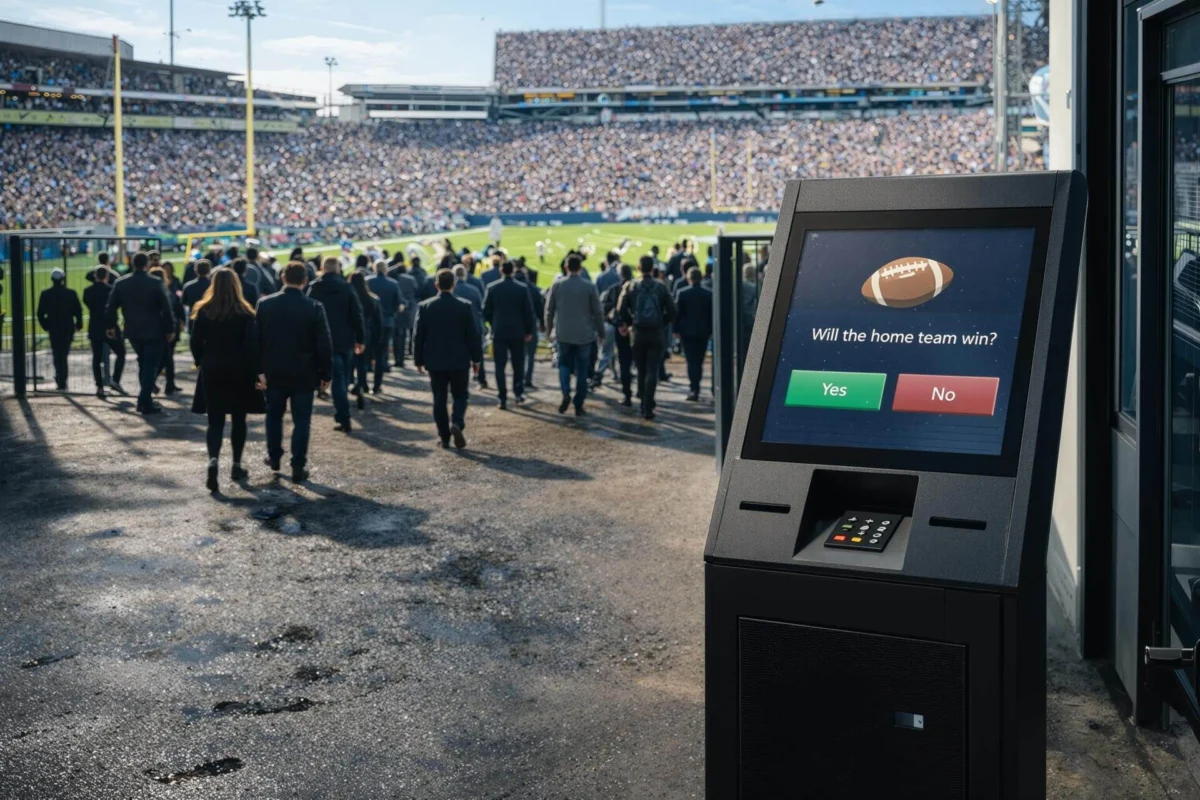
Prediction markets, long striving to establish themselves as sophisticated financial instruments rather than mere gambling platforms, are now grappling with an existential crisis ignited by their own explosive success in the sports betting arena. What began as a niche activity trading on the outcomes of elections, economic indicators, and policy decisions has, through the sheer scale of sports wagering, transformed into a mass-market phenomenon. This rapid growth, however, has blurred the lines between financial derivatives and speculative bets, attracting intense scrutiny from federal regulators, state authorities, and now, Congress, threatening to redefine the industry’s future.
From Niche to National: The Sports Betting Inflection Point
For years, prediction markets operated on the fringes, offering platforms for users to wager on a wide array of future events. Their proponents argued these markets provided valuable price discovery and a unique form of hedging, distinguishing them from the more straightforward gambles offered by traditional casinos and sportsbooks. However, these arguments struggled to gain widespread traction or achieve significant scale.
The landscape dramatically shifted with the integration of sports betting. Platforms like Kalshi and Polymarket discovered that contracts tied to the outcomes of major sporting events – from championship games to individual player performances – resonated deeply with a broad audience. This influx of activity propelled prediction markets from a specialized interest into a mainstream product, attracting millions of users and billions in potential valuations. Suddenly, what was once a small-scale endeavor was generating the kind of volume that demanded regulatory attention.
This newfound popularity, however, came at a significant cost. The very contracts that fueled this growth – those closely resembling sports bets – simultaneously exposed the industry to a wave of regulatory challenges and political vulnerability. The ease with which users could engage with these markets, often with little more than a few clicks, mirrored the user experience of online sportsbooks, raising immediate red flags for authorities accustomed to a state-by-state licensing framework for gambling.
The Regulatory Onslaught: A Multifaceted Challenge
The friction point between prediction markets and existing regulatory structures began to escalate rapidly in early 2026. On March 12, the U.S. Commodity Futures Trading Commission (CFTC) initiated a formal rulemaking process specifically for prediction markets. This move signaled a federal intent to grapple with issues of market manipulation, oversight, and the fundamental structure of these contracts, bringing them under the direct purview of federal financial regulation.
This federal action was quickly followed by aggressive state-level interventions. Just days later, on March 17, Arizona took the unprecedented step of filing criminal charges against Kalshi, marking a significant escalation from civil penalties to criminal prosecution. This was swiftly followed by a Nevada judge’s temporary injunction on March 20, blocking Kalshi from operating within the state without a proper gambling license. These actions underscored a growing consensus among state regulators: that these prediction markets, particularly those focused on sports, were operating as unlicensed gambling operations. Massachusetts had already signaled its intent to move against Kalshi’s sports-related contracts prior to these more dramatic interventions.
The legislative branch has not been idle. A bipartisan coalition of senators began preparing legislation aimed at banning sports bets and casino-style contracts from CFTC-regulated prediction markets. The core argument behind this proposed legislation is that these platforms are exploiting a legal loophole to circumvent established state gambling regulations and infringe upon tribal sovereignty, a critical consideration in the complex landscape of U.S. gaming law. This congressional move indicates that the debate is no longer confined to a few isolated legal disputes but has evolved into a national policy discussion with significant legislative implications.
The Core Conflict: Bet or Swap?
At the heart of this escalating regulatory battle lies a fundamental definitional question: Are prediction markets engaging in betting or offering financial swaps and derivatives? The answer to this question dictates which regulatory body holds jurisdiction.
Linda Goldstein, a partner at CM Law, articulates this critical distinction: "If these transactions are bets, states regulate them. If they’re swaps or derivatives, then the CFTC has the lead role." This dichotomy forms the crux of the legal arguments being presented.
States contend that while prediction market contracts might superficially resemble financial derivatives, their underlying function is that of a wager. This argument is particularly potent when there is no apparent commercial hedging purpose, and users are primarily staking money on uncertain outcomes for the sole purpose of a payout. They argue that allowing these markets to operate under federal commodities law would effectively bypass the intricate, state-by-state licensing and oversight systems that have been painstakingly built over decades to regulate sports betting.
Conversely, operators maintain that event contracts have historically fallen under the umbrella of commodities law. They argue that a functional national market cannot exist if individual states are empowered to classify the same federally regulated product as illegal gambling. This perspective emphasizes the potential for regulatory arbitrage and the fragmentation of a potentially unified financial market.
The consumer experience on these platforms often appears straightforward and familiar: individuals place money on uncertain events and are rewarded if their predictions are correct. However, the dispute itself is abstract, centering on the legal classification of the contract. The fundamental problem is that the same product can be framed as a federally supervised derivative by one set of regulators and as illegal gambling by another. This creates an unstable environment where the same activity can be simultaneously legal and illegal depending on the jurisdiction and the interpretation of the law.
This jurisdictional fight has evolved beyond individual companies like Kalshi or Polymarket. It has become a broader struggle over who governs event-based wagering when it is packaged as a federally supervised market product. The rise of sports as the dominant use case for prediction platforms has transformed the debate into a question of whether a national sports-betting business can operate under commodities law, thereby sidestepping the rigorous state licensing systems required of traditional sportsbooks. This is precisely why states like Utah, Arizona, and Nevada are aggressively challenging these markets, seeking to prevent gambling-like activity from migrating into a federal regulatory regime over which they have no control.
Product Design: A Crucial Determinant of Legitimacy
Beyond the legal classifications, the very design of prediction market products plays a pivotal role in their regulatory fate and overall legitimacy. The temptation to list fast-moving and popular events, driven by the desire for high trading volume, can lead to a dilution of standards. When these products lack precise definitions and irrefutable settlement mechanisms, they risk devolving into mere entertainment wagering, akin to gambling.
This drift towards gambling-like characteristics occurs when spectacle and volume overshadow precision, and when contract settlements become overly reliant on subjective interpretation. Binary contracts, which appear simple on the surface, can become contentious when users begin to dispute their settlement. A yes-or-no contract is only as robust as the definition embedded within it. When the terms defining the outcome become elastic, the market can devolve into judgment calls, arguments, and ultimately, litigation.
Ross Weingarten, a partner and co-chair of the Sports Integrity Group at Steptoe, highlights a key difference from traditional sportsbooks: "users are trading ‘yes’ or ‘no’ positions against each other, not against a house." However, when the clarity of the question or the certainty of the answer is compromised, the binary nature of the contract breaks down. An example cited involved bets on whether Cardi B would perform at the Super Bowl. While she was on stage, the lack of a microphone led to ambiguity, with the outcome depending on which side of the bet one held. Such ambiguous contracts frequently lead to legal disputes for prediction markets.
The defensibility of sports contracts varies significantly. Simple, hard-to-manipulate outcomes, such as predicting the winner of a game, are more easily defended. Conversely, in-game prop bets, performance claims, outcomes dependent on officiating, and anything vulnerable to insider knowledge or integrity distortions operate on precarious ground.
The credibility of the industry hinges on its ability to present itself as a neutral exchange. Platforms that feature transparent order books, clear pricing, independent settlement sources, and robust abuse detection systems possess a stronger claim to federal market status. In contrast, platforms that visually and functionally resemble bookmakers face a much weaker legal and regulatory standing. While courts will ultimately decide the legal questions, the perceived legitimacy of these markets will be determined by the architecture and integrity of their actual products.
The Endgame: A Congressional Decision on Existence
States initially spearheaded the charge against prediction markets, framing the issue as one of consumer protection and public policy. Their arguments hold weight, given that licensed sportsbooks operate within a regulated framework that includes age controls, responsible gambling initiatives, integrity monitoring, tax collection, and jurisdiction-specific rules. Prediction markets, by potentially operating under a federal financial regulatory umbrella, threaten to bypass this established system.
Goldstein points to financial incentives as a primary driver for state opposition: "Event contracts on sporting events account for the vast majority of transactions on prediction platforms like Kalshi and Polymarket, with some data estimating that it could be as much as 90% of the event contracts. These contracts are directly competing with licensed sportsbooks. Traditional sports betting generates significant tax revenue for the states because the states receive taxes on the gross gaming revenue. The American Association of Gaming has estimated that, since the beginning of 2025, sports betting platforms have lost over $600 million to prediction markets."
States also emphasize the circumvention of consumer safeguards. Prediction markets, they argue, bypass crucial protections such as age verification, game integrity oversight, and mandatory contributions to problem gambling funds. The American Gaming Association has been vocal in its accusations that sports-related prediction markets are undermining the state-based system designed for legal sports betting. Even major sports leagues are adapting; MLB’s deals with Polymarket and its memorandum of understanding with the CFTC on integrity cooperation signify an acknowledgment of the growing influence and scale of these markets.
The recent escalations in Arizona and Nevada underscore the seriousness of the situation. Arizona’s criminal charges have propelled the dispute beyond routine cease-and-desist letters into the realm of prosecutorial action. Nevada’s temporary restraining order indicates that at least one court is willing to view these products as unlicensed sports pools under state law. These actions represent a concerted effort to force the industry back under state control before federal market law solidifies as a permanent workaround.
However, the legal landscape remains fragmented. Weingarten notes that judicial opinions are divided: "Some courts have agreed; others have not. Courts in New Jersey, California, and Tennessee have found that the contracts qualify as ‘swaps’ under the Commodity Exchange Act. But courts in Maryland, Nevada, Massachusetts, and Ohio have emphasized the historic role of states in regulating gambling. As a result, how and by whom prediction markets are regulated is very much in flux."
The ultimate resolution is unlikely to be a simple endorsement or outright ban. The CFTC has firmly asserted its exclusive jurisdiction over prediction markets, while states continue to claim their authority.
However, the most significant development is the bipartisan legislative effort to explicitly ban sports and casino-style contracts from CFTC-regulated prediction markets. This proposal represents a far more perilous prospect for the industry, as it challenges a core assumption: that if prediction markets win the federal versus state jurisdictional battle, sports contracts will be allowed to persist.
This legislative push shifts the terrain fundamentally. The industry now faces not just the question of whether state laws will classify sports contracts as gambling, but whether Congress will deem them permissible on regulated prediction markets at all. The endgame has moved from a jurisdictional dispute to a categorical one. As states pursue legal action, the CFTC develops its rules, and lawmakers consider outright prohibitions, the most probable outcome is a hybrid regulatory regime. This would likely entail more stringent federal rules, category-specific restrictions, enhanced surveillance demands, greater emphasis on contract clarity, and stricter marketing expectations.
Platforms may continue to style themselves as exchanges, but their legitimacy will be contingent on their product design, settlement processes, surveillance capabilities, and how their contracts are marketed. This is not a fleeting issue; prediction markets, for better or worse, have cemented their presence. The industry is at the precipice of a foundational debate defining the boundaries between finance and gambling, a process that is likely to unfold over many years. Prediction markets found their mass appeal by moving closer to sports betting. Now, their success has presented them with a critical challenge: can they retain that audience while convincing regulators, courts, and the public that they remain something distinct from mere wagering?