admin
admin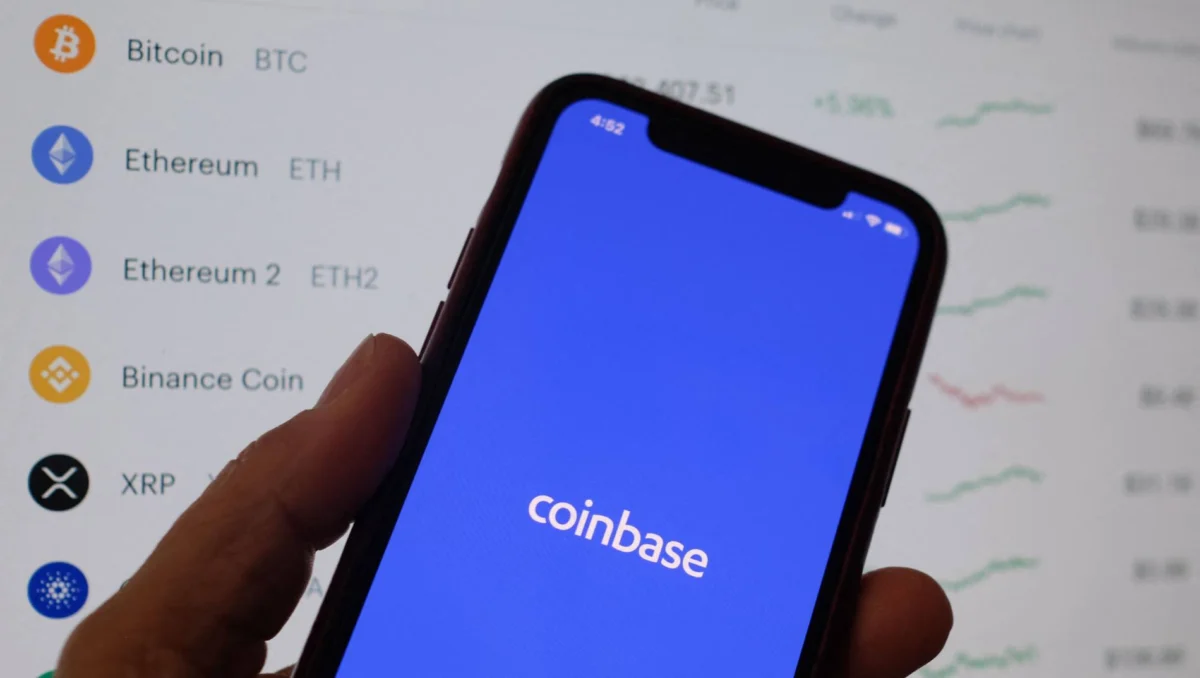
Coinbase, the leading United States-based cryptocurrency exchange, has officially reopened its application for registration to users across India, marking a significant return to the world’s most populous nation after a hiatus of more than two years. Speaking at India Blockchain Week (IBW), John O’Loghlen, Coinbase’s Director for the Asia-Pacific (APAC) region, confirmed that while the platform is currently limited to crypto-to-crypto trading, the company has established a definitive roadmap to introduce a fiat on-ramp by 2026. This move would allow Indian investors to bridge the gap between traditional banking and digital assets directly within the Coinbase ecosystem. The announcement signals a strategic pivot for the exchange, which had previously faced a turbulent relationship with Indian regulators and payment infrastructure providers.
The re-entry into the Indian market is not merely a technical update but a recalibration of Coinbase’s long-term strategy in South Asia. By securing registration with the Financial Intelligence Unit (FIU), a government agency under the Ministry of Finance that monitors financial transactions for money laundering and fraud, Coinbase has aligned itself with the evolving domestic regulatory framework. This compliance-first approach follows a period of "burning the boats," a phrase used by O’Loghlen to describe the company’s decision to completely off-board its previous Indian customer base to ensure a "clean slate" under the new regulatory environment.
A Turbulent History and the "Clean Slate" Strategy
The journey for Coinbase in India has been fraught with challenges. In April 2022, the company held a high-profile launch event in Bengaluru, announcing support for the Unified Payments Interface (UPI), India’s ubiquitous real-time payment system. However, the launch was derailed within days when the National Payments Corporation of India (NPCI), the body that operates UPI, issued a statement claiming it was unaware of any crypto exchange using the network. The resulting pressure led Coinbase to suspend UPI support almost immediately, rendering the platform nearly unusable for the average retail investor who relied on fiat-to-crypto gateways.
By September 2023, the situation had deteriorated further. Coinbase sent notices to its remaining Indian users, advising them to withdraw their funds and offload their accounts as the exchange ceased all operations for domestic residents. O’Loghlen admitted during his IBW address that this was a painful commercial decision. Historically, Coinbase had millions of customers in India, and walking away from that user base was a significant financial hit. However, the leadership believed that maintaining "legacy" accounts domiciled in overseas entities would create regulatory friction. The decision to exit entirely was designed to facilitate a return that was fully compliant with the Prevention of Money Laundering Act (PMLA) and other local mandates.
The strategy of starting over appears to have paved the way for the current registration. In October 2024, Coinbase began a phased roll-out via early access, and as of late 2024, the app is once again available to the general public. While the current lack of a fiat on-ramp means users must transfer existing crypto assets from other wallets to trade on Coinbase, the 2026 target for fiat integration suggests the company is currently engaged in deep negotiations with Indian banking partners to find a sustainable and regulator-approved payment solution.
Navigating India’s Stringent Crypto Taxation
One of the primary hurdles for any crypto enterprise in India is the government’s rigorous taxation policy. Introduced in the 2022 Union Budget, India imposes a flat 30% tax on all income derived from the transfer of virtual digital assets (VDAs). Crucially, the law does not allow for the offsetting of losses against gains, a provision that exists for traditional equities. Furthermore, a 1% Tax Deducted at Source (TDS) is levied on every transaction above a certain threshold.
This tax regime has had a chilling effect on trading volumes across domestic exchanges like WazirX, CoinDCX, and ZebPay. Data from various market analysts suggests that after the implementation of the 1% TDS, trading volumes on Indian exchanges plummeted by as much as 80% to 90% as high-frequency traders moved to offshore platforms or exited the market entirely. O’Loghlen expressed hope that the Indian government might eventually reconsider these levels. The industry’s argument is that a lower TDS—perhaps 0.1%—would still allow the government to track transactions (the stated goal of the tax) without draining the liquidity necessary for a healthy market.
Despite these taxes, India remains a top-tier market for crypto adoption. According to the 2023 and 2024 Global Crypto Adoption Index by Chainalysis, India ranked first in the world in terms of grassroots adoption. The report highlighted that India’s massive population and its tech-savvy youth demographic have found ways to engage with decentralized finance (DeFi) and digital assets despite the high cost of entry. Coinbase’s return is a bet that the sheer scale of the Indian market will eventually lead to more favorable or at least more stable regulatory conditions.
Strategic Investments and Infrastructure Growth
Coinbase’s commitment to India extends beyond its consumer-facing app. The company’s investment arm, Coinbase Ventures, has been an active participant in the Indian startup ecosystem. Most notably, it recently increased its stake in CoinDCX, one of India’s "unicorn" crypto exchanges, during a funding round that valued the local firm at $2.45 billion. By backing a local leader, Coinbase maintains a foothold in the domestic market even during periods when its own brand is not directly operational for retail users.
Furthermore, India serves as a critical talent hub for Coinbase’s global operations. The company currently employs over 500 people in the country, working out of a major tech hub in Hyderabad and other remote locations. These teams are not just focused on the Indian market; they contribute to Coinbase’s global engineering, product development, and customer support efforts. The company has announced plans to continue hiring in India, looking for specialists in blockchain engineering, compliance, and UI/UX design.
O’Loghlen emphasized that the goal is to provide an experience that rivals India’s leading "super apps" like Flipkart or the quick-commerce giant Zepto. He noted that to reach the "masses," the onboarding process must be seamless and completed in minutes. This focus on user experience is a direct response to the friction often found in crypto platforms, where KYC (Know Your Customer) processes and wallet management can be daunting for non-technical users.
The Broader Impact and Global Context
The return of Coinbase to India occurs within a broader context of international exchanges seeking legitimacy in the country. Recently, Binance, the world’s largest exchange by volume, also registered with the FIU after paying a multi-million dollar fine for previous non-compliance. This trend suggests that the "wild west" era of crypto in India is ending, replaced by a period of institutionalization where only registered, compliant entities can survive.
The implications of Coinbase’s 2026 fiat on-ramp roadmap are significant for the industry. If Coinbase succeeds in securing a stable banking partner, it could set a precedent for how foreign entities interact with the Indian financial system. Currently, many Indian banks remain hesitant to facilitate crypto-related transactions due to informal guidance from the Reserve Bank of India (RBI), which has historically been skeptical of digital currencies, citing risks to macroeconomic stability.
From a policy perspective, the Indian government’s stance has shifted from a potential blanket ban to a focus on international coordination. During its G20 presidency, India advocated for a global framework for crypto regulation, emphasizing the need for cross-border cooperation to manage risks. This suggests that while domestic regulations remain tough, the government is open to the existence of the sector as long as it is transparent and taxable.
Conclusion: A Long-Term Play on the Indian Digital Economy
Coinbase’s re-entry is a calculated long-term play. By registering with the FIU and focusing on crypto-to-crypto trading in the short term, they are building a foundation of trust with the government. The two-year lead time for the fiat on-ramp suggests a cautious approach aimed at avoiding the public relations and operational disasters of 2022.
The success of this venture will depend on three main factors: the evolution of India’s tax laws, the willingness of the banking sector to integrate with crypto exchanges, and Coinbase’s ability to offer a localized product that resonates with Indian consumers. For now, the exchange is positioning itself as the "trusted" alternative in a market that has seen its fair share of volatility and platform failures. As O’Loghlen stated, the objective is to ensure that Indian users feel their funds are safe while providing an interface that makes digital asset management as intuitive as ordering groceries online. With a 500-strong local team and the backing of its global infrastructure, Coinbase is betting that by 2026, the Indian crypto landscape will be ready for a mainstream, fiat-integrated revolution.