admin
admin
The global cryptocurrency markets demonstrated a remarkable resilience on Monday, largely shrugging off significant geopolitical developments, including the collapse of U.S.-Iran peace talks and a surge in oil prices. Bitcoin (BTC), the leading digital asset, breached the $73,000 mark, with Ethereum (ETH) and other major altcoins also posting notable gains. This unexpected upward trajectory occurred despite escalating tensions in the Strait of Hormuz and the broader implications for global energy markets, suggesting a growing decoupling of digital asset performance from traditional geopolitical risk factors.
Escalating Tensions and Market Response
The catalyst for market concern emerged over the weekend with the reported collapse of U.S.-Iran peace talks held in Islamabad, Pakistan. These negotiations, which reportedly lasted for 21 hours, concluded without an agreement, intensifying an already precarious geopolitical landscape. Compounding these concerns, U.S. President Donald Trump announced on Sunday a stringent blockade of ships transiting the Strait of Hormuz, a critical chokepoint for global oil supplies, en route to Iranian ports. The directive, reportedly, only allowed passage for vessels destined for ports of U.S. allies, effectively isolating Iranian maritime trade.
In response to this heightened geopolitical uncertainty, crude oil prices experienced a sharp, albeit brief, surge. Brent crude futures climbed approximately 9% to reach $105 per barrel. However, by Monday’s trading sessions, prices had moderated, settling around $98 per barrel, indicating a degree of stabilization or perhaps a reassessment of immediate supply impacts by market participants.
Despite this volatility in traditional energy markets, the cryptocurrency sector exhibited a contrasting performance. Bitcoin, the digital asset with the largest market capitalization, was trading at approximately $73,113 as of Monday, according to data from CoinGecko. This represents a gain of about 2.8% over the preceding 24-hour period. Ether, the second-largest cryptocurrency, followed suit, appreciating by approximately 2.5% to trade at $2,254. The total cryptocurrency market capitalization saw a healthy increase of 2%, reaching an estimated $2.55 trillion, as reported by CoinMarketCap. Notably, Bitcoin’s dominance within the overall crypto market approached 60% for the first time since early March, signaling a renewed concentration of investor interest in the flagship digital asset.
Analysis of Market Behavior
The observed resilience of crypto markets in the face of significant geopolitical headwinds is a phenomenon that has garnered increasing attention. Several factors may contribute to this trend. Firstly, the narrative of Bitcoin as a potential "digital gold" or a safe-haven asset, while often debated, appears to be gaining traction in certain market segments. Investors may be seeking uncorrelated assets that can offer protection against traditional market disruptions, including geopolitical instability.
Secondly, the cryptocurrency market has matured considerably, with increasing institutional adoption and the development of more sophisticated trading strategies. The presence of Bitcoin and Ethereum ETFs, which have seen consistent inflows, suggests a growing mainstream acceptance and a more integrated role for these assets within diversified investment portfolios. This institutional participation can buffer against some of the more speculative retail-driven reactions to news events.
Furthermore, the specific nature of the geopolitical event, while significant, may not have directly impacted the underlying infrastructure or demand for digital assets. The sanctions and trade restrictions primarily target oil and traditional financial channels, rather than the decentralized and borderless nature of cryptocurrencies.
Chronology of Events and Market Movements
- Weekend Prior to Monday: U.S.-Iran peace talks in Islamabad conclude without an agreement, raising concerns about regional stability.
- Sunday: President Trump announces a blockade of ships transiting the Strait of Hormuz, impacting oil supply routes. Oil prices surge by approximately 9% to $105 per barrel.
- Monday Morning (Global Time): Bitcoin’s price begins to climb, surpassing the $73,000 mark. Ethereum and other major altcoins also show upward momentum.
- Monday Trading Sessions: Bitcoin trading around $73,113 (up 2.8%), Ether at $2,254 (up 2.5%). Total crypto market cap rises 2% to $2.55 trillion. Bitcoin dominance approaches 60%. Oil prices stabilize around $98 per barrel.
Supporting Data and On-Chain Activity
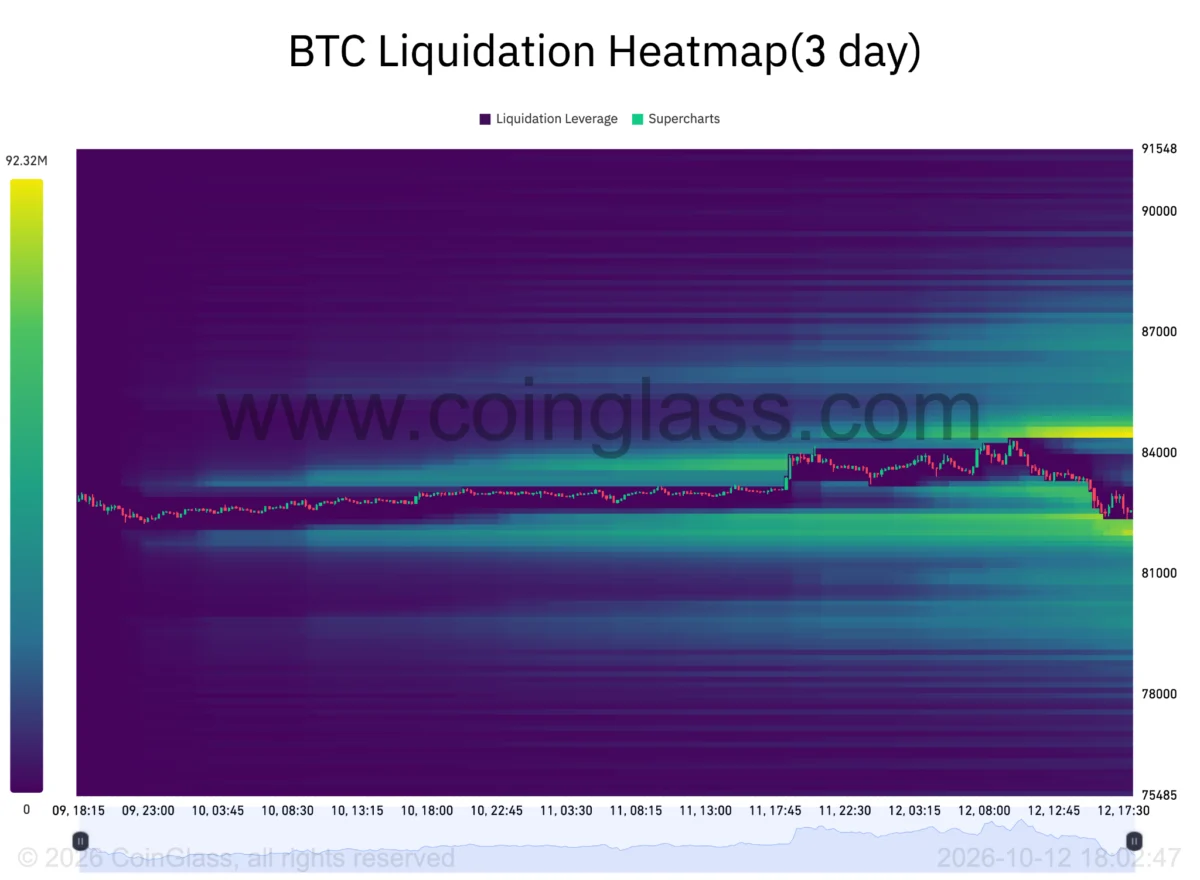
Further analysis of market data provides additional context. Bitcoin’s open interest, a measure of the total value of outstanding Bitcoin futures contracts, stood at $54.9 billion, according to CoinGlass. Over the past 24 hours, approximately $297 million in cryptocurrency positions were liquidated, with short positions bearing the brunt of these liquidations. This suggests that the upward price movement caught many traders who were betting on a decline by surprise, leading to forced buy-backs as their positions were automatically closed.
ETF Flows Indicate Sustained Demand
A significant indicator of underlying demand for cryptocurrencies comes from the performance of spot Bitcoin and Ethereum Exchange-Traded Funds (ETFs) in the United States. Last week, U.S. spot Bitcoin ETFs experienced a net inflow of $786 million, according to data from SoSoValue. This brought the total net assets under management for these ETFs to an impressive $95 billion, underscoring sustained investor interest and capital deployment into regulated crypto investment vehicles.
The positive trend extended to Ethereum ETFs. U.S. spot Ethereum ETFs also recorded net inflows totaling $187 million for the week. Notably, BlackRock’s iShares Ethereum Trust (ETHA) was a significant contributor, bringing in $168 million in net inflows. In total, four Ethereum spot ETFs reported positive flows, indicating a broad-based interest in the second-largest cryptocurrency. The total net assets for ETH ETFs reached $12.96 billion. The consistent inflows into these ETFs, particularly during periods of market uncertainty, highlight a growing institutional appetite for digital assets and a belief in their long-term potential, independent of short-term geopolitical noise.
Altcoin Performance and Notable Movers
While Bitcoin and Ethereum led the gains, several altcoins also experienced significant upward price action. RaveDAO (RAVE) emerged as a standout performer, registering an extraordinary surge of approximately 97% in the past 24 hours. This remarkable daily gain capped a spectacular weekly rally, with RAVE’s price increasing by over 1,000% during the week. Such extreme volatility in smaller-cap altcoins is characteristic of the crypto market, often driven by specific project developments, tokenomics, or speculative trading.
Other notable altcoins also saw positive movement. AAVE and Hyperliquid (HYPE) both gained around 6%. Among the larger-cap altcoins, Solana (SOL) appreciated by 2.4% to trade at $84. XRP added 1.3% to reach $1.35, and BNB, the native token of the Binance ecosystem, rose by 2.5% to $608, according to CoinGecko.
However, not all altcoins benefited from the broader market uptrend. Polkadot’s DOT experienced a decline of 5%, settling at $1.19. This downturn followed a reported bridge exploit involving the Polkadot-Ethereum Hyperbridge gateway. Such security incidents, while impacting specific projects, often serve as reminders of the ongoing security challenges within the blockchain ecosystem and can lead to temporary price corrections for affected assets. The exploit highlights the interconnectedness of different blockchain networks and the potential for vulnerabilities in cross-chain communication protocols.
Broader Implications and Future Outlook
The ability of crypto markets to absorb geopolitical shocks without significant downturns suggests a growing maturity and independence from traditional financial and geopolitical narratives. This decoupling, if sustained, could position cryptocurrencies as a more viable alternative asset class for diversification and wealth preservation.
The positive ETF flows, particularly into Bitcoin and Ethereum, indicate that institutional investors are not deterred by short-term market noise. This sustained demand from sophisticated market participants can provide a floor for prices and contribute to long-term price discovery.
However, it is crucial to acknowledge that geopolitical events can have unpredictable and far-reaching consequences. While current market performance suggests resilience, a significant escalation of conflict or a direct impact on the global financial system could still affect crypto markets. The correlation between crypto and traditional markets remains dynamic and subject to evolving economic and political conditions.
The focus on Bitcoin dominance also suggests a flight to perceived safety within the crypto asset class itself. As investors navigate uncertainty, they may favor the most established and liquid digital asset, potentially at the expense of smaller, more speculative altcoins.
In conclusion, the cryptocurrency markets have demonstrated an impressive ability to remain buoyant amidst a backdrop of escalating international tensions and commodity price fluctuations. The surge in Bitcoin and other major digital assets, coupled with sustained ETF inflows, points towards a growing confidence in the asset class. However, the volatile nature of both geopolitical events and the cryptocurrency market itself necessitates continued observation and a nuanced understanding of the factors influencing price movements. The long-term implications of this resilience will become clearer as the global geopolitical landscape continues to evolve.