admin
admin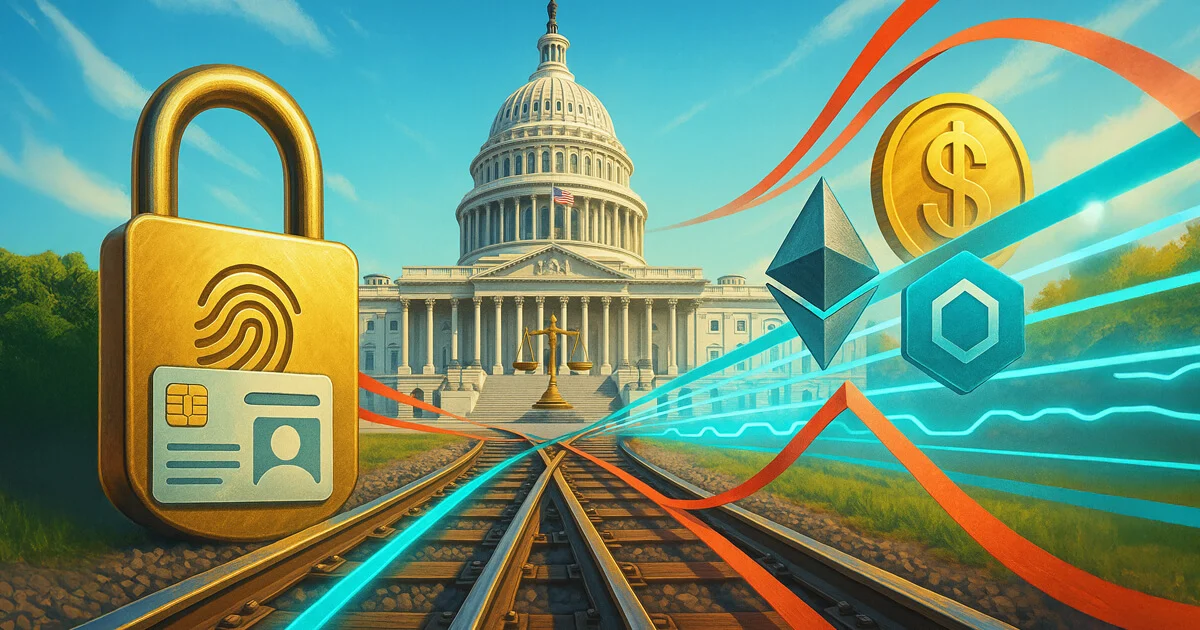
A confidential draft bill circulating among Senate Democrats proposes sweeping new oversight of Decentralized Finance (DeFi), extending Know-Your-Customer (KYC) and Anti-Money-Laundering (AML) duties to DeFi interfaces, validators, and even node operators. This aggressive regulatory approach, if enacted, could have profound implications for the future of cryptocurrency innovation and liquidity within the United States, potentially driving vital market activity offshore and stifling domestic development.
The leaked legislative framework, reportedly intended as a Democratic counterpoint to a House-backed market-structure bill, has encountered internal resistance, stalling broader discussions within the Senate Banking Committee. The core of the proposal mandates that all DeFi applications facilitating financial transactions must implement front-end KYC controls. This requirement could extend to seemingly innocuous tools like browser-based wallets and liquidity aggregation interfaces, fundamentally altering the decentralized ethos of these platforms.
Furthermore, the draft bill places new responsibilities on oracle operators, the crucial middleware that feeds real-world data to smart contracts. Under this proposed legislation, oracle operators could face enforcement actions if their price feeds are linked to protocols deemed "sanctioned" by the government. This creates a significant compliance burden and potential liability for entities that have historically operated with a degree of technical autonomy.
Adding another layer of control, the Treasury Department would be granted the authority to create a "restricted list" of protocols identified as too risky for U.S. users. This power could allow for the effective blocking of access to specific DeFi ecosystems for American individuals and entities, further fragmenting the global market and potentially isolating U.S. users from a rapidly evolving financial frontier.
Senator Ruben Gallego, a proponent of the Democratic approach, has framed the bill as an earnest attempt to build bipartisan consensus on crypto market structure. He stated that Democrats have demonstrated a willingness to engage, providing "paper and substance" in their efforts to find common ground. However, the leaked details suggest a far more interventionist stance than many in the industry had anticipated, sparking immediate concern and backlash.
A Deepening Divide: Market Impact and Liquidity Flight

The emergence of this leaked bill has ignited fresh partisan tensions in Washington, with Republican lawmakers and prominent figures within the crypto industry issuing stark warnings. The central argument against the proposal is its potential to cripple innovation and precipitate a significant outflow of U.S. Bitcoin and Ethereum liquidity to jurisdictions with more accommodating regulatory environments.
The current landscape already indicates a global concentration of crypto trading volume outside the United States. Data from Newhedge reveals that U.S.-based crypto trading venues currently capture less than 10% of the global trading volume. In stark contrast, the top eight offshore platforms collectively account for approximately 90% of global market depth. This disparity underscores a pre-existing trend where liquidity naturally gravitates towards platforms with fewer regulatory constraints.
The Senate proposal’s mandate for forced compliance at the protocol level could dramatically accelerate this existing flight of capital. If U.S. users are compelled to interact solely through KYC-verified front-ends, or if the Treasury Department gains the power to block access to specific protocols, traders prioritizing anonymity, flexibility, and reduced friction are likely to migrate to decentralized bridges or foreign exchanges where such restrictions are either absent or less rigorously enforced.
The long-term implication of such a migration is the entrenchment of offshore platforms as dominant liquidity hubs. This would deepen the influence of already large non-U.S. exchanges and lead to a further fragmentation of trading activity across multiple jurisdictions. Consequently, U.S. liquidity pools would likely shrink due to a reduction in active counterparties, leading to wider bid-ask spreads and diminished market depth. This fragmentation not only hampers innovation but also exacerbates market inefficiencies and weakens the United States’ competitive standing in the global digital asset infrastructure.
Moreover, the implementation of these stringent rules could significantly impact how American citizens engage with the burgeoning DeFi sector. A recent report from the DeFi Education Fund highlighted that a substantial portion of Americans express distrust in the traditional financial system. Many are increasingly exploring DeFi as an alternative, attracted by the promise of greater control over their assets, lower transaction fees, and the potential for innovative financial services. Imposing burdensome regulatory requirements on these nascent platforms could disenfranchise a segment of the population actively seeking alternatives to traditional finance.
Industry Backlash: A Call for Pragmatism

The significant potential market impact of the leaked bill has prompted a strong and unified backlash from key stakeholders within the cryptocurrency and blockchain industry. Many view the proposed measures as fundamentally unworkable and detrimental to the growth and maturation of the digital asset ecosystem in the U.S.
Jake Chervinsky, Chief Legal Officer at Variant Fund, articulated a widely held sentiment, stating, "Many aspects of the proposal are fundamentally broken and unworkable. This is not a ‘first offer’ in a negotiation, it’s a list of demands that appear designed to kill the bill." Chervinsky further characterized the draft as an "unprecedented and unconstitutional government takeover of an entire industry." He elaborated on the far-reaching consequences, asserting that the bill is "not just anti-crypto, it’s anti-innovation, and a dangerous precedent for the entire tech sector."
Echoing these concerns, Zack Shapiro, Head of Policy at the Bitcoin Policy Institute, pointed out that the draft "stretches illicit-finance laws to target software and software developers rather than criminal conduct." He warned that this approach sets a dangerous precedent for censoring lawful private exchange, drawing parallels to the government’s past actions against entities like Tornado Cash and the developers behind Samourai Wallet. This legal interpretation, critics argue, blurs the lines between regulating criminal activity and stifling the development of open-source technology.
Brian Armstrong, CEO of Coinbase, a leading U.S.-based cryptocurrency exchange, unequivocally stated that the bill would "set innovation back years" and prevent the U.S. from achieving leadership in crypto finance. Armstrong declared, "We absolutely won’t accept this. It’s a bad proposal, plain and simple, that would set innovation back, and prevent the US from becoming the crypto capital of the world." His firm stance reflects the broader concern among established industry players that such regulation would cede technological and economic leadership to international competitors.
Hayden Adams, founder of Uniswap, one of the largest decentralized exchanges, expressed a similar sentiment, warning that the language in the draft "would kill DeFi domestically." Adams called for "a huge shift from Democratic senators" if any meaningful progress on market-structure reform is to be achieved. His statement emphasizes the need for a more nuanced and constructive regulatory dialogue that acknowledges the unique nature of decentralized technologies.
A Chronology of Regulatory Scrutiny

The recent leak of the Senate Democrats’ DeFi bill is not an isolated event but rather an escalation in a prolonged period of increasing regulatory attention on the digital asset space.
- Early 2023: Following a series of high-profile collapses within the crypto industry, including FTX, regulators and lawmakers in the U.S. intensified their focus on establishing clearer rules for digital assets. This period saw increased calls for comprehensive legislation to address market stability, investor protection, and illicit finance concerns.
- Mid-2023: The U.S. House of Representatives began advancing its own market-structure legislation, primarily focused on clarifying the regulatory landscape for digital asset exchanges and intermediaries. This effort aimed to provide a more defined framework for the industry.
- Late 2023 – Early 2024: Discussions surrounding crypto regulation continued to be a significant topic in Washington. Various proposals and frameworks were debated, reflecting a growing recognition of the need for a coherent U.S. policy on digital assets, while also highlighting deep divisions on the best approach.
- Spring 2024: Reports emerged of a confidential draft bill being circulated among Senate Democrats. This draft, distinct from the House’s approach, proposed significantly more expansive regulatory authority over DeFi protocols, including KYC/AML requirements for a broader range of participants.
- June 2024: The details of the leaked Senate bill became public, triggering immediate industry concern and debate. The proposal’s emphasis on imposing traditional financial regulations onto decentralized systems sparked widespread criticism and warnings of potential liquidity flight. Internal pushback within the Senate Banking Committee was also reported, indicating potential roadblocks to its advancement.
This timeline illustrates a consistent trend of heightened regulatory interest, with the recent leaked bill representing a potentially more aggressive and far-reaching regulatory posture from a significant bloc of U.S. lawmakers. The industry’s response underscores the critical juncture at which the U.S. finds itself, facing a choice between fostering innovation and attempting to impose established regulatory paradigms onto a fundamentally novel technological and financial paradigm.
Analysis of Implications: The Risk of Regulatory Overreach
The proposed Senate bill, if enacted, carries substantial risks that extend beyond the immediate impact on DeFi. The core challenge lies in the attempt to apply a "traditional finance" regulatory model to a sector characterized by its decentralized, pseudonymous, and often borderless nature.
- Stifling Innovation: By mandating KYC/AML at the interface level and potentially holding node operators and oracles liable, the bill could significantly increase the compliance costs and legal risks associated with developing and operating DeFi applications. This could deter startups, slow down technological advancement, and push innovation to jurisdictions with more supportive regulatory environments.
- Liquidity Fragmentation and Concentration: The predicted flight of liquidity offshore is a direct consequence of regulatory arbitrage. As U.S. platforms face stricter rules, global liquidity will inevitably pool in less regulated or more predictable jurisdictions. This not only diminishes the U.S.’s influence but also creates a less efficient global market, potentially leading to higher trading costs and reduced market depth for all participants.
- Undermining Decentralization: The ethos of DeFi is built on the principles of decentralization, peer-to-peer interaction, and user autonomy. Imposing top-down KYC/AML requirements on interfaces and requiring active monitoring of protocol activity fundamentally clashes with these principles. It risks turning decentralized applications into regulated intermediaries, thereby negating their core value proposition.
- Geopolitical Competition: The U.S. has long sought to be a leader in technological and financial innovation. A regulatory approach perceived as overly restrictive could cede this leadership position to other nations that are actively seeking to attract and foster blockchain and DeFi development. This could have long-term economic and strategic implications.
- Technological Feasibility: Implementing KYC/AML on decentralized protocols presents significant technical hurdles. Identifying and verifying the identity of users interacting with smart contracts and ensuring compliance across a distributed network of validators and node operators is a complex task that may not be technically feasible without compromising the underlying architecture.
The industry’s unified opposition, highlighted by statements from legal experts, policy advocates, and prominent CEOs, suggests a shared understanding of the profound negative consequences that could arise from such legislation. The debate now centers on whether policymakers will heed these warnings and seek a more balanced approach that protects against illicit activity without stifling the potential of decentralized finance, or if the U.S. will risk becoming a laggard in the next wave of financial innovation. The path forward will likely involve intense lobbying, further legislative debate, and potentially legal challenges if the bill moves towards enactment.