admin
admin
The landscape of modern banking, while appearing instantaneous at the consumer interface with rapid card taps and immediate stock purchases, conceals a deeply intricate and often inefficient operational foundation. Beneath the veneer of digital convenience lies a vast web of coordination, where every payment, settlement, and trade necessitates a complex choreography between numerous institutions—banks, clearinghouses, and custodians—all striving to maintain a consistent record of ownership and transaction events. This inherent complexity stems from a system where each participant traditionally maintains its own private ledger, leading to a constant, resource-intensive process known as reconciliation, or the "comparing of notebooks." This critical, yet cumbersome, aspect of banking is responsible for the multi-day settlement times of wire transfers, the persistent operational risks embedded in multi-day processes, and the billions of dollars the industry spends annually on back-office complexities.
The Unseen Labyrinth: Deconstructing Traditional Banking Complexity
The conventional banking architecture, largely developed incrementally over decades, is characterized by siloed systems and message-based coordination. When Bank A sends funds to Bank B, it’s typically a message exchange: "I sent you money." Bank B then updates its internal database. Discrepancies between these independent records necessitate manual intervention and exhaustive reconciliation processes, which are not only costly but also introduce significant delays. Industry estimates suggest that financial institutions collectively spend tens of billions of dollars each year on reconciliation alone, a figure that underscores the profound operational friction within the current framework. This friction translates directly into higher costs for consumers and businesses, reduced liquidity for financial markets, and an elevated risk profile across the global financial system. The reliance on batch processing, particularly for cross-border transactions, further exacerbates these issues, turning what should be a near-instantaneous value transfer into a drawn-out affair.
From Experimentation to Pragmatic Integration: A Chronology of Blockchain in Finance
The journey of blockchain technology within the financial sector has evolved significantly since its inception. Initially met with skepticism and often conflated solely with speculative cryptocurrencies, blockchain’s potential for enterprise applications began to gain traction in the mid-2010s. Early initiatives focused heavily on private, permissioned blockchains, with consortia like R3 and Hyperledger exploring frameworks for interbank cooperation. The initial phase was largely characterized by proofs-of-concept and pilot programs, many of which struggled with scalability, regulatory uncertainty, and the immense challenge of integrating nascent technology with deeply entrenched legacy systems.
However, a more pragmatic understanding has emerged over the past few years. The industry has largely moved away from the idea of a wholesale replacement of existing infrastructure. Instead, the focus has shifted towards leveraging blockchain as an incremental, standards-based coordination and execution layer that works in conjunction with existing financial systems. This strategic pivot acknowledges the sheer scale and regulatory embeddedness of the current global financial infrastructure, advocating for targeted applications that deliver measurable efficiency gains without disrupting core operations. Today, banks and market infrastructures are increasingly creating production-grade blockchain systems designed for seamless co-existence, demonstrating a maturity in approach that prioritizes operational continuity and regulatory compliance.
Unlocking Efficiency: Core Benefits of Blockchain for Banking Operations
Blockchain’s unique attributes offer foundational benefits that directly address the long-standing infrastructure constraints plaguing the banking sector. By introducing a shared, tamper-resistant digital ledger, institutions can achieve synchronized records, automate execution, and significantly reduce the need for extensive reconciliation across multi-party environments.
-
Accelerated Transactions and Settlement: In traditional markets, the settlement of a trade can often take days (T+1 or T+2), trapping significant capital and increasing counterparty exposure. The global financial system, with trillions of dollars in assets, experiences substantial capital inefficiency due to these delays. Blockchain-based settlement, particularly when combined with atomic Delivery-versus-Payment (DvP) and Payment-versus-Payment (PvP) workflows, can drastically shorten this cycle, often to near-instantaneous settlement. This atomic exchange, where assets and payments occur simultaneously, materially reduces settlement risk, frees up liquidity, and significantly lowers the operational burden associated with multi-day post-trade processes. This accelerated finality allows capital to be redeployed more rapidly, enhancing market efficiency.
-
Enhanced Security and Operational Resilience: Blockchain systems inherently leverage cryptography and distributed consensus mechanisms to protect transaction integrity across networks. This decentralized validation strengthens resilience, especially in workflows where data consistency is paramount. By reducing reliance on centralized reconciliation points and manual controls, blockchain mitigates risks associated with delays, errors, and single points of failure. The immutable nature of the ledger provides a verifiable audit trail, making it extremely difficult for fraudulent transactions to go undetected or for records to be tampered with once recorded.
-
Significant Cost Reduction through Automation: One of the most compelling advantages of blockchain in banking is its potential for substantial cost savings through automation. Smart contracts—self-executing agreements with the terms directly written into code—enable rules-based automation across a myriad of financial processes. This includes reconciliation, exception handling, corporate actions, and compliance checks, all areas traditionally demanding significant manual intervention. By encoding "if-this-then-that" logic directly into execution workflows, banks can dramatically improve straight-through processing (STP) rates, minimize manual effort, and consequently lower administrative and operational costs. Industry analysts project potential savings running into billions of dollars annually as these automated processes become more widespread.
-
Improved Transparency, Trust, and Compliance: A shared, transparent ledger provides a single, verifiable view of transactions and asset states for all authorized participants. When combined with sophisticated privacy-preserving identity and compliance controls, blockchains can enhance auditability and streamline regulatory reporting without exposing sensitive proprietary or client data unnecessarily. This selective transparency fosters greater trust among institutions, provides regulators with more efficient oversight capabilities, and ultimately strengthens confidence across the entire financial ecosystem.
Transforming Key Banking Verticals: Strategic Use Cases
Blockchain’s adaptability makes it suitable for addressing inefficiencies across several critical banking functions:
-
Payments and Money Transfers: Cross-border payments are notoriously complex, characterized by fragmented messaging systems (like SWIFT’s current architecture), multiple intermediaries, and delayed finality. These factors introduce latency, high costs, and considerable reconciliation overhead. Blockchain-enabled workflows aim to revolutionize this by improving coordination and settlement efficiency, particularly through the maturation of stablecoins, tokenized deposits, and central bank digital currencies (CBDCs) alongside traditional payment rails. By connecting existing messaging standards (e.g., ISO 20022) to blockchain environments, institutions can support programmable payments, coordinating execution and settlement against a shared ledger state to reduce operational friction and improve transparency without disrupting core payment infrastructure.
-
Clearing and Settlement: This area represents one of the most operationally intricate segments of finance, demanding precise data synchronization across custodians, clearinghouses, broker-dealers, and asset servicers. The current system relies heavily on message-based confirmations and post-trade reconciliation across disparate, siloed systems. Blockchain offers a powerful solution by serving as a common coordination layer for post-trade activity. This reduces reconciliation overhead and provides more consistent access to verified records. As financial assets become increasingly tokenized, standardized reference data and coordinated workflows across both traditional and blockchain environments become crucial for achieving faster, lower-risk settlement.
-
Trade Finance: Historically, trade finance has been characterized by its document-heavy and coordination-intensive nature, involving a multitude of parties including banks, logistics providers, insurers, and customs authorities. Disconnected systems and manual documentation introduce significant delays, frequent disputes, and elevated fraud risks throughout the trade lifecycle. Blockchain-based workflows can synchronize key trade events—such as shipment status, document issuance, and ownership transfers—across all participants in near real-time. By maintaining a shared, tamper-resistant record, institutions can drastically reduce paperwork, accelerate settlement processes for instruments like Letters of Credit, and enhance trust among trading partners while preserving existing operational roles and responsibilities.
-
Identity Verification and Compliance (KYC/AML): Identity and compliance (Know Your Customer/Anti-Money Laundering) are fundamental to banking but remain costly and repetitive. Customers are often required to resubmit sensitive documentation multiple times across different institutions, each independently performing similar checks. Blockchain-based identity solutions, particularly those utilizing verifiable credentials, enable individuals and institutions to prove specific attributes (e.g., KYC status, eligibility) without repeatedly sharing underlying personal data. This approach significantly reduces duplication in compliance workflows, supports jurisdiction-specific regulatory requirements, and strengthens privacy protections for individuals.
Pioneering the Future: Real-World Implementations and Industry Initiatives
The transition from theoretical potential to practical application is well underway, with major banks and market infrastructures actively integrating blockchain platforms with their existing systems and regulatory frameworks. These initiatives demonstrate a pragmatic adoption strategy, emphasizing seamless connectivity and controlled automation. Chainlink, as a decentralized oracle network, has emerged as a critical enabler in these real-world scenarios, powering essential data, interoperability, compliance, and privacy solutions.
-
Swift Connectivity and Cross-Chain Settlement: A notable collaboration between Chainlink and Swift has focused on enabling financial institutions to connect to various public and private blockchain networks using existing Swift infrastructure and messaging standards. Leveraging Chainlink’s Cross-Chain Interoperability Protocol (CCIP), these initiatives demonstrate how tokenized asset settlement workflows can be coordinated alongside traditional payment rails. Under the Monetary Authority of Singapore’s Project Guardian, Swift, UBS Asset Management, and Chainlink successfully showcased the issuance and settlement of tokenized assets using existing fiat payment infrastructure, illustrating a viable, standards-based pathway for institutional adoption. A Swift spokesperson, reflecting on the collaboration, noted the "critical importance of interoperability for the future of financial markets, and how technologies like CCIP can bridge the gap between traditional and digital asset systems."
-
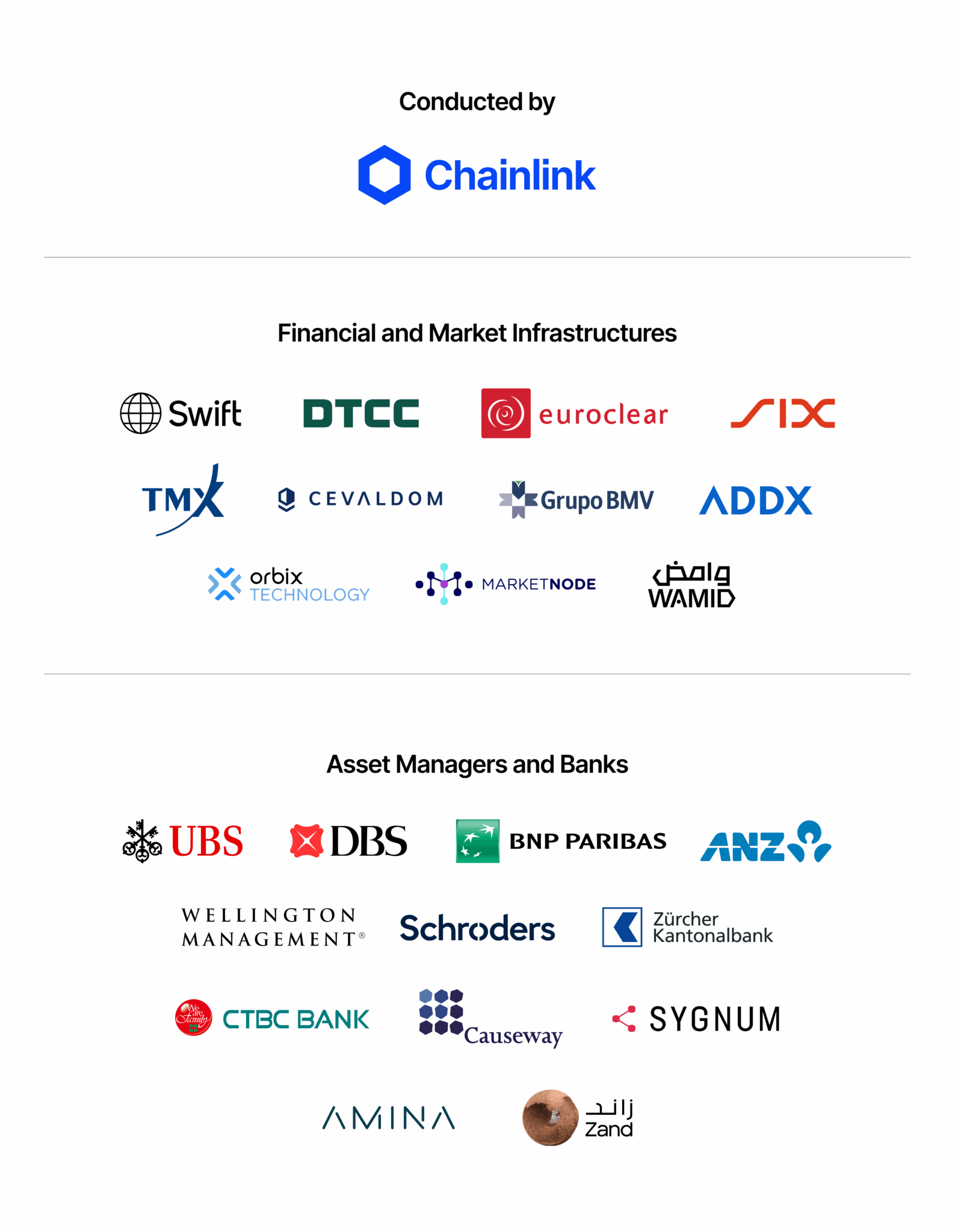
Standardizing Corporate Actions Across Global Markets: Corporate actions processing—such as dividends, mergers, or stock splits—is notoriously complex, fragmented, and prone to errors, costing the industry billions annually. Chainlink has powered a significant industry initiative involving 24 leading financial institutions and market infrastructures, including Swift, DTCC, Euroclear, UBS, DBS Bank, ANZ, BNP Paribas, Wellington Management, and Schroders. By combining oracle networks and blockchains with structured data extraction and validation, this work aims to transform manual, fragmented corporate actions workflows into standardized, near-real-time processes. Executives involved in the initiative have highlighted the potential for "dramatic reductions in operational costs, error rates, and reconciliation overhead across jurisdictions," fostering greater market efficiency.
-
Tokenized Fund and Digital Asset Settlement: Chainlink has been instrumental in multiple institutional initiatives involving tokenized assets and stablecoins. Collaborations with entities like Kinexys by J.P. Morgan and Ondo Finance have demonstrated atomic Delivery-versus-Payment (DvP) settlement workflows. These solutions coordinate asset and payment legs simultaneously, significantly reducing settlement risk and operational complexity. These demonstrations underscore how tokenized assets can achieve greater certainty and efficiency in settlement when execution and coordination occur within a shared, programmable environment.
-
Cross-Border Compliance and Identity Workflows: In Asia, Chainlink has facilitated compliant cross-chain settlement under initiatives such as the Hong Kong Monetary Authority’s e-HKD+ program. Institutions including ANZ Bank, China AMC, and Fidelity International have utilized Chainlink infrastructure to verify investor eligibility, enforce jurisdiction-specific controls, and execute tokenized asset transactions across borders. These workflows showcase blockchain’s capacity to meet stringent regulatory requirements while preserving privacy and supporting complex cross-jurisdictional operations. Regulators are keenly observing these developments, recognizing their potential to enhance market integrity and efficiency while maintaining necessary oversight.
-
Integration With Institutional Messaging and Transfer Agency Systems: The Chainlink Runtime Environment (CRE) offers financial institutions the ability to initiate onchain fund workflows directly from existing enterprise infrastructure, including ISO 20022 messages transmitted via Swift. In collaboration with UBS Tokenize, Chainlink demonstrated how subscription and redemption requests for tokenized funds could be orchestrated onchain through standardized transfer agency workflows. This innovation allows banks to leverage blockchain’s benefits without requiring a complete overhaul of core banking systems or operational processes, proving that incremental adoption can yield substantial benefits.
Navigating the Path Forward: Challenges and Future Outlook
Despite significant progress and the compelling advantages demonstrated by these real-world initiatives, blockchain adoption in banking still faces several challenges:
-
Regulatory Clarity and Harmonization: The evolving nature of blockchain technology means that regulatory frameworks are still catching up. A lack of harmonized global regulations creates complexity for international financial institutions. While regulatory sandboxes and pilot programs are helping to inform policy, clear and consistent guidelines are crucial for widespread institutional adoption.
-
Interoperability: The financial ecosystem is vast and diverse, comprising numerous legacy systems and an increasing number of distinct blockchain networks. Ensuring seamless communication and atomic transactions between these disparate systems, as well as between traditional and blockchain environments, remains a significant challenge. Initiatives like Chainlink’s CCIP are directly addressing this, but robust, standardized interoperability solutions are essential.
-
Scalability and Performance: For blockchain to handle the immense transaction volumes of global finance, underlying networks must demonstrate superior scalability and performance. While significant advancements have been made in enterprise-grade blockchain platforms, continuous innovation is required to meet the demands of high-frequency trading and mass-market payment systems.
-
Legacy System Integration: The sheer scale, complexity, and mission-critical nature of existing banking systems make deep integration with new blockchain technology a monumental task. This often involves substantial investment, careful planning, and a phased approach to avoid disruption.
-
Data Privacy and Confidentiality: While transparency is a core blockchain benefit, financial institutions operate under strict data privacy and confidentiality regulations. Developing solutions that balance the need for shared, verifiable records with the imperative to protect sensitive information (e.g., zero-knowledge proofs, confidential computing) is paramount.
-
Skills Gap: The demand for professionals skilled in both traditional finance and cutting-edge blockchain technology far outstrips supply, posing a challenge for institutions looking to build and maintain these advanced systems.
These realities explain why most institutional initiatives are focused on standards-based integration, incremental deployment, and controlled automation. The path forward is not a revolution but an evolution, characterized by strategic enhancements rather than wholesale replacement.
Chainlink’s Pivotal Role in Banking Sector Transformation
The modernization of banking operations through blockchain requires more than just the ability to issue tokens. It demands trusted external data, secure cross-network coordination, and seamless integration with existing institutional workflows. The Chainlink platform addresses these critical needs by enabling banks to operationalize blockchain-based processes in production environments through:
- Secure Data Feeds: Providing reliable, tamper-proof data from off-chain sources (e.g., market prices, FX rates) to power smart contracts and on-chain applications.
- Cross-Chain Interoperability: Facilitating secure communication and value transfer between different blockchain networks and traditional systems, crucial for fragmented financial markets.
- Confidentiality and Compliance: Integrating privacy-preserving technologies and compliance controls to meet regulatory requirements while leveraging the benefits of shared ledgers.
- Integration with Enterprise Systems: Offering solutions like the Chainlink Runtime Environment to bridge existing enterprise infrastructure (e.g., ISO 20022 messaging) with blockchain environments.
This comprehensive approach allows banks to strategically integrate blockchain workflows that add tangible value, all while maintaining the reliability, security, and stringent controls required by global capital markets. By enabling standards-based connectivity between legacy systems and blockchain environments, Chainlink empowers financial institutions to innovate across both traditional finance and the emerging world of decentralized finance, building a more resilient, efficient, and interconnected global financial ecosystem for the future.