admin
admin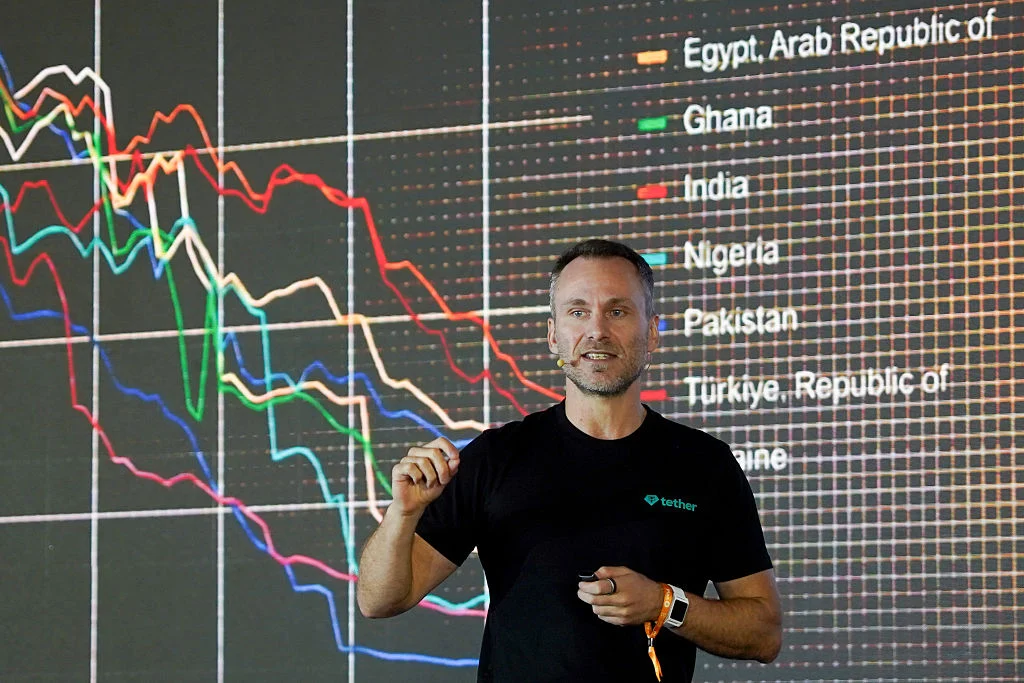
The digital asset landscape is witnessing a profound transformation as Tether, the issuer of the world’s largest stablecoin, USDT, pivots from an offshore entity often criticized for its opacity toward a regulated, multi-faceted financial powerhouse. This strategic shift was punctuated this week by a high-profile media campaign led by CEO Paolo Ardoino, who engaged with major outlets including Reuters, Bloomberg, Fortune, and TechCrunch to signal a new era for the company. The cornerstone of this rebranding is the launch of USAT, a federally regulated, dollar-backed stablecoin issued in partnership with Anchorage Digital Bank. This move marks Tether’s first direct attempt to comply with burgeoning U.S. federal regulations and challenge the domestic dominance of competitors like Circle’s USDC and new entrants from traditional finance, such as Fidelity Investments.
The Strategic Launch of USAT and the Domestic Pivot
For years, Tether maintained a deliberate distance from the United States, operating primarily from offshore jurisdictions while federal regulators and prosecutors scrutinized its operations. The company was frequently characterized by critics and legacy media as a "black box," with The Economist famously labeling it a "money launderer’s dream" in 2025. However, the introduction of USAT represents a calculated entry into the American regulatory perimeter. Issued through Anchorage Digital Bank—a platform with a federal charter from the Office of the Comptroller of the Currency (OCC)—USAT is designed to meet strict transparency and reserve requirements that USDT, which remains Tether’s global flagship with $187 billion in circulation, does not currently satisfy.
The timing of this launch is critical. The stablecoin market is becoming increasingly crowded as traditional financial institutions recognize the efficiency of blockchain-based settlement. Fidelity Investments recently debuted its own stablecoin, FIDD, joining a competitive field that includes PayPal’s PYUSD and JPMorgan Chase’s internal blockchain initiatives. By launching USAT, Tether is attempting to leverage its massive global liquidity while offering a "clean" alternative for U.S. institutional and retail users who require a regulated framework.
A Chronology of Resilience and Market Dominance
Tether’s path to its current $187 billion market capitalization has been defined by periods of intense market volatility and regulatory pressure. To understand the company’s current position, one must look at the timeline of the stablecoin sector over the last four years:
- May 2022: The TerraLuna Collapse. The algorithmic stablecoin TerraUSD (UST) collapsed, wiping out $40 billion in market value. In the ensuing panic, Tether faced a massive bank run, redeeming $7 billion in just 48 hours and a total of $20 billion within 20 days. Ardoino frequently cites this as a "stress test" that Tether passed "with flying colors," whereas traditional banks might have buckled under similar withdrawal pressures.
- March 2023: The Banking Crisis. The collapse of Silicon Valley Bank (SVB) led to a brief de-pegging of Circle’s USDC after it was revealed the issuer had $3.3 billion in exposure to the failed bank. Tether, which had shifted its reserves largely into U.S. Treasuries and away from commercial paper, remained stable, gaining significant market share as a result.
- Late 2025: Record Profits. Tether reported an unprecedented $15 billion in annual profit for 2025, primarily driven by the yield on its massive holdings of U.S. Treasury bills.
- January 2026: The USAT Era. Tether officially enters the U.S. regulated market, coinciding with the advancement of the CLARITY Act in Congress.
Financial Inclusion and Emerging Market Growth
While the U.S. market is a strategic target for the new USAT token, Ardoino emphasizes that USDT’s primary value proposition remains rooted in the developing world. Tether currently claims a user base of 536 million people globally, with an onboarding rate of approximately 30 million new users per quarter. Ardoino compares this growth trajectory to that of social media giants like Facebook rather than traditional fintech applications.
The demand for Tether in emerging markets is driven by extreme currency devaluation. In Argentina, where the peso has lost nearly 95% of its value against the dollar over the last five years, and in Turkey, where the lira has seen similar declines, USDT functions as a digital life raft. For populations in countries like Haiti, where the average daily wage is minimal and access to traditional banking is non-existent, Tether provides a means of preserving wealth and transacting across borders without the need for a legacy bank account. Ardoino frames this not merely as a business success, but as "the biggest financial inclusion success story in the history of humanity."
Addressing Illicit Finance and Regulatory Scrutiny
Despite its growth, Tether continues to face allegations regarding its use by criminal enterprises and sanctioned entities. A 2025 report by The Economist detailed how Russian operatives and international drug cartels allegedly utilized USDT to bypass global financial sanctions. Ardoino has dismissed these instances as a "drop in the ocean" compared to the total volume of legitimate transactions.
To counter the narrative of being a tool for illicit finance, Tether has significantly ramped up its cooperation with global law enforcement. The company now collaborates with nearly 300 agencies across 60 countries, including the FBI, the Department of Justice (DOJ), and the U.S. Secret Service. Ardoino argues that blockchain technology provides a level of traceability that physical cash does not. To date, Tether has proactively frozen $3.5 billion in tokens linked to hacks, scams (such as "pig-butchering" schemes), and sanctioned addresses. By following the guidelines of the Office of Foreign Assets Control (OFAC), Tether aims to position itself as a proactive partner to U.S. interests rather than an adversary.
The Cantor Fitzgerald Connection and Reserve Transparency
A key component of Tether’s newfound confidence is its relationship with Wall Street firm Cantor Fitzgerald. The firm manages the vast majority of Tether’s Treasury holdings, and its former leader, Howard Lutnick, who now serves as the U.S. Commerce Secretary, has publicly vouched for Tether’s reserves. This alliance provides Tether with a level of institutional credibility that it lacked for much of its first decade.
Tether currently maintains approximately $30 billion in excess reserves—capital held above the 1:1 backing required for its tokens. Ardoino contrasts this with the fractional reserve system utilized by traditional banks, where only a small percentage of deposits are kept on hand. "Even if Bitcoin would go to zero, Tether would have more money than all the USDT tokens issued," Ardoino stated, highlighting the company’s over-collateralization strategy.
Diversification: Gold, AI, and the Sovereign Wealth Model
Tether’s ambitions extend far beyond the realm of stablecoins. The company is increasingly operating like a sovereign wealth fund, reinvesting its $15 billion annual profits into a diverse array of sectors:
The Gold Hoard
Tether Gold (XAUt), a token backed by physical gold, has grown to $2.6 billion in circulation. More impressively, the company has become one of the world’s largest private holders of the precious metal, possessing roughly 140 tons worth an estimated $24 billion. Ardoino views gold as a "ubiquitous currency" that blockchain technology can finally make liquid for daily transactions.
Decentralized AI and Qvac
Tether has launched Qvac, a decentralized AI platform named after a concept in Isaac Asimov’s science fiction. The goal of Qvac is to provide AI access to those who cannot afford the subscription fees of centralized providers like OpenAI or Google. By running AI models locally on high-powered smartphones—which Ardoino predicts will be common in Africa and South America within five years—Tether aims to democratize artificial intelligence.
Strategic Investments
Tether’s investment portfolio now includes:
- $1 Billion in Neura, a German AI robotics firm.
- $775 Million in Rumble, a video-sharing and social media platform.
- Undisclosed Stakes in satellite technology, data centers, agriculture (land and cattle), and even the Juventus Football Club.
Ardoino asserts that these seemingly disparate investments are linked by a common goal: creating a "stable" ecosystem where telecommunications, food production, and financial services are decentralized and resilient to traditional market failures.
Broader Impact and the CLARITY Act
The future of the stablecoin industry in the United States may soon be dictated by the CLARITY Act. This pending legislation aims to establish a federal framework for stablecoin issuers while potentially prohibiting them from paying interest to holders. Such a move is supported by traditional banking lobbies to prevent a mass exodus of deposits from savings accounts to stablecoins. For Tether, which already does not share interest with USDT holders, the act would codify its existing business model. For competitors who rely on yield-sharing to attract users, the legislation could pose a significant hurdle.
As the political landscape in Washington shifts, Tether is betting that its role in "dollarizing" the global economy will be viewed as a strategic asset. By bringing hundreds of millions of people into the U.S. dollar ecosystem through digital means, Tether argues it is extending American financial soft power. Whether this argument will satisfy skeptics in both the Republican and Democratic parties remains to be seen, but with the launch of USAT and a multi-billion dollar diversification strategy, Tether has made it clear that it no longer intends to operate from the shadows.