admin
admin
Chainlink is a decentralized oracle network that serves as a critical bridge between real-world data and smart contracts, facilitating the seamless integration of traditional finance (TradFi) institutions with the burgeoning decentralized finance (DeFi) ecosystem. This foundational infrastructure enables the creation of hybrid smart contracts, which combine on-chain logic with verifiable off-chain data and computation, providing robust and secure solutions essential for institutional adoption of blockchain technology. As financial markets increasingly explore the efficiencies and transparency offered by blockchain, Chainlink’s comprehensive suite of services is becoming indispensable for building secure, reliable, and compliant next-generation financial products.
Background and Context: The Growing Nexus of TradFi and DeFi
The global financial landscape is undergoing a profound transformation, driven by the inherent advantages of blockchain technology. Traditional financial institutions, from banks and asset managers to payment processors and insurance companies, are keenly observing and gradually engaging with decentralized finance. This interest stems from the promise of increased operational efficiency, enhanced transparency, reduced counterparty risk, and the potential to unlock new revenue streams through innovative financial products. Major financial players, including JPMorgan Chase, BlackRock, and Fidelity, have publicly acknowledged the transformative potential of blockchain, with many actively researching or implementing blockchain-based solutions for various aspects of their operations. Recent reports from institutions like the Bank for International Settlements (BIS) have also highlighted the growing imperative for central banks and commercial banks to explore tokenization and wholesale central bank digital currencies (CBDCs), further accelerating the need for robust interoperability infrastructure.
However, a significant chasm separates the two worlds: TradFi operates within established regulatory frameworks, relies on vast amounts of real-world data, and demands stringent security and reliability standards. DeFi, while innovative, often lacks direct access to this crucial off-chain information and the robust infrastructure required for institutional-grade applications. The estimated value secured by Chainlink’s oracle networks, exceeding trillions of dollars across various blockchain ecosystems, underscores the critical role it plays in bridging this gap. This scale of adoption by numerous DeFi protocols and emerging institutional applications demonstrates the market’s reliance on secure and decentralized oracle services.
The challenge lies in securely and reliably connecting these disparate environments. Smart contracts, the self-executing agreements at the heart of DeFi, are inherently isolated from external data sources. Without a trusted mechanism to feed them real-world information—such as asset prices, market data, interest rates, or proof of reserves—their utility for complex financial operations remains limited. This is precisely where decentralized oracle networks like Chainlink step in, acting as secure middleware that fetches, verifies, and delivers external data to blockchains, thereby extending the capabilities of smart contracts far beyond their native environment.
Chainlink’s Foundational Role in Bridging TradFi and DeFi
Chainlink’s architecture is specifically designed to address the challenges of integrating TradFi with DeFi. It provides a decentralized, secure, and highly reliable infrastructure that enables smart contracts to interact with virtually any external data source or off-chain system. This capability is paramount for institutions that require verifiable real-world data for their operations, such as asset tokenization, automated derivatives, insurance products, and sophisticated risk management strategies. By offering a robust framework for hybrid smart contracts, Chainlink allows institutions to leverage the transparency and immutability of blockchains while adhering to their existing operational and regulatory requirements.
The network’s strength lies in its decentralized nature, where independent oracle nodes collectively fetch and validate data, mitigating single points of failure and enhancing data integrity. This distributed approach is critical for institutions that cannot compromise on the accuracy and security of the information underpinning their financial products. Furthermore, Chainlink’s commitment to enterprise-grade solutions ensures that its services meet the rigorous demands of institutional users, including high uptime, low latency, and robust security audits. Its modular design allows institutions to select and combine specific services to meet their unique needs, ensuring flexibility and scalability as their blockchain strategies evolve.
Key Chainlink Services for Institutional Adoption
Chainlink offers a comprehensive suite of services that are pivotal for enabling institutions to safely and effectively participate in the decentralized economy. These services address various facets of institutional requirements, from data access and cross-chain communication to compliance and privacy.
Data Feeds: The Backbone of Real-World Data for Smart Contracts
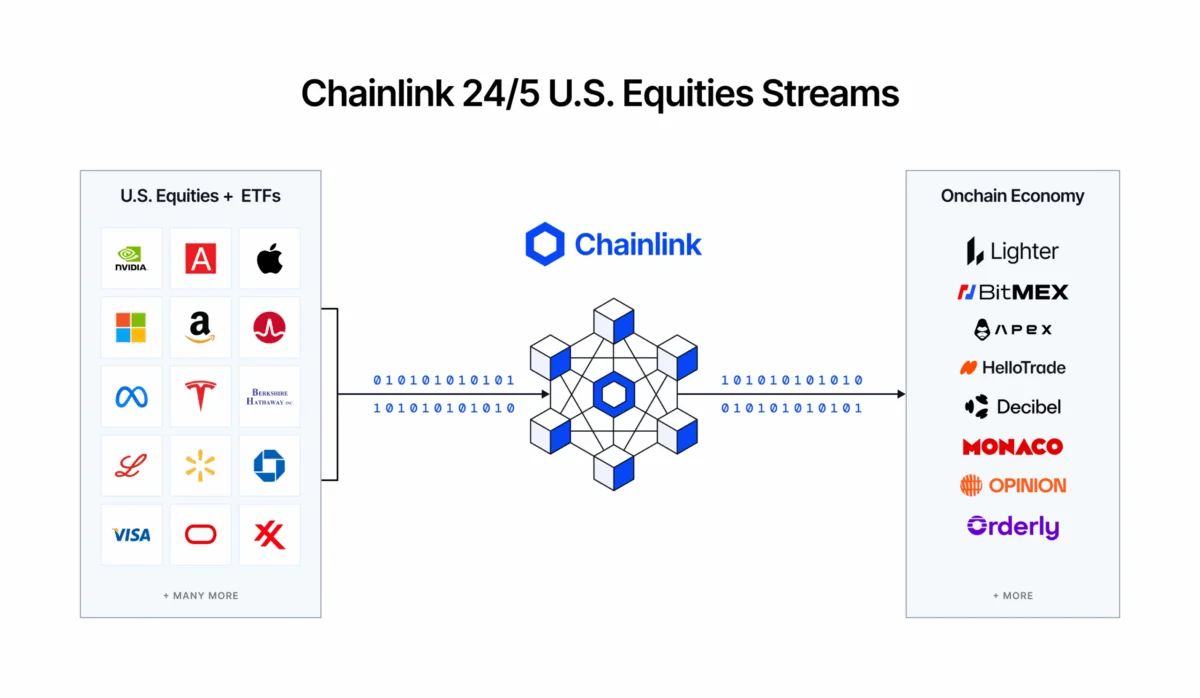
Chainlink Data Feeds are perhaps the most widely recognized and extensively used of its services. They provide smart contracts with access to high-quality, tamper-proof, and decentralized market data, including foreign exchange (FX) rates, cryptocurrency prices, commodity prices, interest rates (e.g., SOFR, LIBOR replacements), and more. For TradFi institutions, accurate and real-time market data is non-negotiable for pricing assets, settling derivatives, calculating collateral values, and managing risk across various asset classes. The ability to access reliable, aggregated data from multiple premium data providers, validated by a decentralized network of oracle nodes, offers a significant upgrade in data integrity compared to single-source APIs.
For example, a financial institution looking to issue a tokenized bond whose interest payments are tied to a real-world index, or a lending platform needing to liquidate collateral based on precise market values, relies heavily on Chainlink Data Feeds. These feeds aggregate data from numerous independent sources, removing reliance on any single provider and significantly enhancing the reliability and resistance to manipulation. The feeds are constantly updated, often every few seconds or when a significant price deviation occurs, ensuring that smart contracts always operate with the most current and accurate information, a critical feature for high-frequency trading, automated market making, and volatile markets where even minor discrepancies can lead to substantial financial losses.
Proof of Reserve: Enhancing Transparency and Trust for Tokenized Assets
The burgeoning market for Real-World Asset (RWA) tokenization, including stablecoins, tokenized commodities, and institutional bonds, requires verifiable proof that the underlying assets exist and are held as collateral. Chainlink Proof of Reserve (PoR) addresses this by providing an automated, cryptographic audit of collateralized assets, whether on-chain or off-chain. This service is vital for stablecoins backed by fiat reserves (like USDC or BUSD), tokenized precious metals, or any digital asset whose value is pegged to an external reserve.
For institutions, PoR offers an unprecedented level of transparency and trust. Instead of relying solely on periodic, opaque audits, stakeholders can view real-time, on-chain verification of reserves, significantly reducing counterparty risk and enhancing investor confidence. This is particularly attractive to regulatory bodies and institutional investors who demand rigorous oversight and auditability before engaging with tokenized assets. The 2022 market events highlighted the critical need for transparent reserve attestations, and Chainlink PoR offers a robust, decentralized solution to prevent such crises. By enabling continuous, programmatic verification of reserves, Chainlink PoR helps establish a new standard for trust and accountability in the digital asset space, fostering greater confidence in tokenized financial products.
Cross-Chain Interoperability Protocol (CCIP): Unlocking Seamless Cross-Network Value Transfer
The blockchain ecosystem is inherently fragmented, with numerous independent networks (e.g., Ethereum, Avalanche, Arbitrum, Solana) operating in silos. The ability to securely and reliably transfer assets and data across these diverse blockchains is crucial for a truly interconnected financial system. Chainlink’s Cross-Chain Interoperability Protocol (CCIP) is designed to solve this critical problem, providing a universal, secure, and robust standard for cross-chain communication. CCIP has been developed with enterprise security requirements in mind, incorporating multiple layers of decentralization and robust monitoring to prevent exploits that have plagued many previous cross-chain bridging solutions, which have historically accounted for billions in lost funds.
For TradFi, CCIP represents a monumental leap forward, enabling institutions to:
- Facilitate Cross-Border Remittances and Payments: Significantly reduce the cost and time associated with international payments by enabling seamless transfer of value across different blockchain networks and even to traditional payment rails. This can streamline global trade finance and correspondent banking.
- Manage Multi-Chain Portfolios and Liquidity: Institutions can manage assets and execute strategies across various blockchains without the complexity and security risks associated with fragmented liquidity.
- Develop Sophisticated Multi-Chain Applications: Build new financial products that leverage liquidity and functionality from multiple chains, creating more expansive and innovative services, such as cross-chain collateralization or derivatives.
CCIP ensures secure message passing and asset transfers, using a network of decentralized oracle nodes to verify transactions and prevent exploits. This security is paramount for institutional adoption, where the integrity of asset transfers cannot be compromised. The protocol’s ability to connect diverse environments, including private blockchains and traditional systems, positions it as a key component for a future multi-chain financial infrastructure.
SmartData: Transforming Raw Data into Actionable Intelligence
Chainlink SmartData goes beyond merely providing raw data by allowing smart contracts to access and process more complex, privacy-preserving, and computationally intensive datasets. This service is particularly relevant for Real-World Asset (RWA) tokenization, where nuanced information about an asset (e.g., ownership history, compliance status, environmental, social, and governance (ESG) metrics) might be needed for valuation, eligibility, or reporting purposes.
SmartData enables institutions to:
- Enrich Tokenized Assets: Embed dynamic and verifiable real-world information directly into tokenized assets, increasing their utility and trustworthiness. For example, a tokenized real estate asset could carry verifiable data on its energy efficiency, maintenance history, or rental income, updated automatically.
- Power Advanced Analytics: Provide smart contracts with the ability to perform sophisticated off-chain computations on large datasets, leading to more intelligent and responsive financial products. This could include complex credit scoring, risk assessments, or market sentiment analysis.
- Facilitate Complex Compliance Checks: Integrate off-chain compliance logic into smart contracts, enabling automated adherence to regulatory requirements based on dynamic and comprehensive data inputs.
By providing smart contracts with enhanced data capabilities, SmartData allows for the creation of more sophisticated, responsive, and valuable decentralized financial applications that can meet the complex and data-intensive needs of institutional users.
Automated Compliance Engine (ACE): Streamlining Regulatory Adherence
Regulatory compliance is a cornerstone of traditional finance. The lack of built-in, automated compliance mechanisms has historically been a significant barrier to institutional adoption of DeFi. Chainlink’s Automated Compliance Engine (ACE) is designed to bridge this gap by enabling smart contracts to automatically enforce regulatory rules and policies, ensuring that decentralized applications can operate within established legal frameworks.
ACE allows institutions to integrate off-chain compliance logic, such as Know Your Customer (KYC) and Anti-Money Laundering (AML) checks, sanctions screening, accreditation verification, and other jurisdictional requirements, directly into their blockchain applications. This means that:
- KYC/AML for On-Chain Transactions: Smart contracts can verify the compliance status of participants (e.g., ensuring they are accredited investors or not on a sanctions list) before allowing certain transactions, ensuring adherence to regulatory standards without revealing sensitive personal data on-chain.
- Automated Policy Enforcement: Rules regarding asset transfers, trading limits, or eligible participants can be programmatically enforced, reducing manual oversight, human error, and the associated operational and legal risks.
- Dynamic Compliance Updates: Compliance rules can be updated in real-time by authorized oracle networks, allowing institutions to adapt quickly to evolving regulatory landscapes, such as changes in sanctions lists or new reporting requirements.
ACE helps financial institutions leverage the benefits of blockchain while maintaining strict adherence to regulatory mandates, thereby significantly reducing operational overhead and legal risks. This is a critical step towards making DeFi palatable for highly regulated entities.
Chainlink Runtime Environment (CRE): Empowering Complex Off-Chain Computation
Many complex financial operations require significant computational power or access to proprietary business logic that cannot be executed directly on a blockchain due to gas costs, privacy concerns, or computational limits. The Chainlink Runtime Environment (CRE) offers a secure and verifiable off-chain computation layer that extends the capabilities of smart contracts beyond what is feasible on-chain. This allows for the execution of complex algorithms and business logic in a secure, decentralized manner.
CRE enables:
- Advanced Risk Management Models: Institutions can run complex risk simulations, value-at-risk (VaR) calculations, or portfolio optimization algorithms off-chain and then feed the verified results back to smart contracts.
- Privacy-Preserving Transactions: Certain computations can be performed in a confidential environment, revealing only the verified outcome to the blockchain, thus preserving sensitive information such as proprietary trading strategies or client data.
- Scalable Financial Applications: Offloading intensive computations from the blockchain allows for more scalable and efficient decentralized applications, reducing transaction costs and improving performance.
For example, a DeFi protocol offering dynamic interest rates based on complex macroeconomic models or a sophisticated derivatives platform requiring frequent re-margining could use CRE to perform these computations efficiently and securely, then update the rates or collateral requirements on-chain via Data Feeds. CRE thus expands the scope of what smart contracts can achieve, bringing them closer to the computational demands of TradFi.
Confidential Compute: Ensuring Privacy in a Transparent World
While blockchain’s transparency is a significant advantage, certain institutional operations, particularly in finance, require confidentiality for sensitive data and proprietary logic. Chainlink’s Confidential Compute solutions address this by enabling smart contracts to process and execute logic on encrypted data within trusted execution environments (TEEs), ensuring that sensitive information remains private even during computation.
This service is crucial for:
- Privacy-Preserving Financial Products: Developing financial instruments where sensitive inputs (e.g., personal credit scores, proprietary trading strategies, individual transaction details) need to remain private while still being verifiable or used in calculations.
- Secure Data Sharing: Allowing institutions to share and utilize sensitive data in a decentralized network without exposing the raw information to all participants, facilitating collaborative financial products.
- Regulatory Compliance with Data Protection: Meeting stringent data privacy regulations (like GDPR or CCPA) while still leveraging the benefits of decentralized networks, removing a major compliance hurdle.
By integrating confidential compute capabilities, Chainlink allows institutions to maintain the necessary privacy for their operations, removing a major hurdle for widespread adoption of blockchain in sensitive financial sectors such as private equity, institutional lending, and proprietary trading.
Implications for the Financial Industry: A New Era of Efficiency and Innovation
The robust integration capabilities offered by Chainlink have profound implications for the financial industry. The convergence of TradFi and DeFi, facilitated by Chainlink, promises:
- Enhanced Efficiency: Automation of processes like collateral management, payments, and compliance reduces manual effort, speeds up transactions, and lowers operational costs. Cross-border payments, in particular, stand to benefit from faster, cheaper, and more transparent settlement, potentially saving billions annually in transaction fees.
- Increased Transparency: Real-time auditing of reserves, transparent pricing data, and verifiable compliance checks foster greater trust among market participants and regulators. This can lead to more stable markets and reduce the risk of systemic failures.
- New Product Development: The ability to combine real-world data with smart contract logic opens doors for innovative financial products, such as dynamic derivatives, parametric insurance, bespoke structured products, and new forms of tokenized assets that were previously impossible or impractical due to data limitations or high operational costs.
- Broader Market Access: Decentralized platforms can offer financial services to a wider global audience, potentially lowering barriers to entry for individuals and businesses in underserved markets, fostering financial inclusion.
- Improved Risk Management: Automated, data-driven risk assessment and collateral liquidation mechanisms can lead to more resilient and stable financial systems, reducing the impact of market volatility and counterparty defaults.
Challenges and Future Outlook
While the potential is immense, the journey towards full TradFi-DeFi integration is not without challenges. Regulatory clarity remains a significant hurdle, with jurisdictions worldwide grappling with how to classify and govern digital assets and decentralized protocols. Scalability of underlying blockchain networks and user experience also need continuous improvement. However, Chainlink’s focus on enterprise-grade solutions, security, and interoperability positions it as a key enabler in overcoming these obstacles. The ongoing development of layer-2 solutions and new blockchain architectures also contributes to addressing scalability concerns.
Industry experts widely acknowledge that hybrid smart contracts, powered by decentralized oracle networks, are the future of finance. The demand for reliable off-chain data and computation will only grow as institutions increasingly migrate core financial functions to blockchain environments. Chainlink’s continuous innovation, exemplified by its evolving suite of services and strategic partnerships with major financial institutions and blockchain projects, suggests a long-term commitment to meeting these sophisticated demands and staying at the forefront of the financial technology revolution.
Conclusion: Chainlink as the Unifying Infrastructure for Global Finance
Chainlink is more than just an oracle network; it is emerging as a unifying infrastructure layer for the global financial system. By securely and reliably connecting traditional finance with the decentralized world, Chainlink is empowering institutions to harness the full potential of blockchain technology. From providing critical market data and ensuring asset transparency to enabling seamless cross-chain communication and automating compliance, Chainlink’s services are fundamental to building a more efficient, transparent, and interconnected financial future. As the lines between TradFi and DeFi continue to blur, Chainlink’s role as the trusted data and computation provider will only become more central to the evolution of global finance, paving the way for a new era of innovation and accessibility in financial services.