admin
admin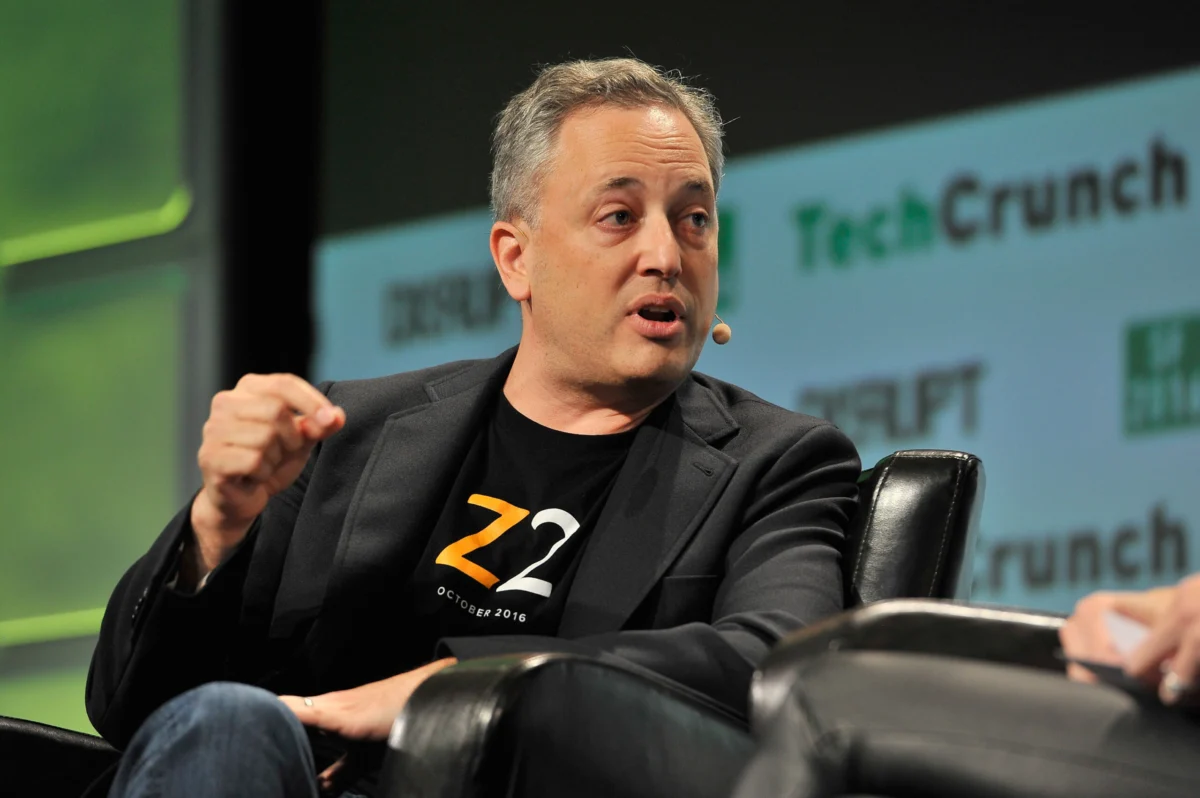
The dual role of David Sacks as a high-level advisor to President Donald Trump and a prolific venture capital investor has come under intense scrutiny following a comprehensive investigative report that suggests his public policy influence may be inextricably linked to his private financial interests. Sacks, who serves as the administration’s "AI and Crypto Czar," finds himself at the center of a growing debate over government ethics, with critics alleging that his proximity to the Oval Office provides an unprecedented platform to benefit his investment portfolio and a close-knit circle of Silicon Valley allies. The controversy highlights the broader tensions between the Trump administration’s reliance on "tech-disruptor" expertise and the traditional ethical boundaries designed to prevent the appearance of graft in federal service.
The Convergence of Private Equity and Public Policy
David Sacks, a founding member of the so-called "PayPal Mafia" and the co-founder of Craft Ventures, was appointed to lead the administration’s strategy on artificial intelligence and cryptocurrency—two sectors currently undergoing radical regulatory shifts. According to a report published by The New York Times on November 30, 2025, an analysis of Sacks’ financial disclosures reveals a complex web of 708 technology investments. Of these, 449 are reportedly involved in artificial intelligence, a sector where Sacks now wields significant policy-making authority.
The report suggests that the policies championed by Sacks—ranging from the deregulation of AI development to the loosening of export controls on advanced semiconductors—directly align with the commercial interests of the startups held within his firm’s portfolio. This overlap has raised alarms among ethics watchdogs and lawmakers who argue that the sheer scale of Sacks’ holdings makes meaningful divestiture nearly impossible without a total liquidation of his firm’s assets.
A Timeline of Growing Ethical Concerns
The scrutiny surrounding Sacks did not emerge in a vacuum. It follows a series of events that have tracked his transition from a private investor to a central figure in the Trump administration’s economic and technological roadmap.
In early 2025, shortly after the administration took office, Senator Elizabeth Warren (D-MA) led a cohort of lawmakers in questioning the Office of Government Ethics regarding Sacks’ appointment. Warren argued that Sacks’ leadership of a firm heavily invested in crypto while simultaneously guiding the nation’s crypto policy constituted an "explicit conflict of interest." She noted that such arrangements would normally be prohibited under federal law for standard government employees.
By July 2025, the tension escalated during a high-profile White House AI summit. The event was intended to unveil President Trump’s "AI Roadmap," a policy document designed to ensure American dominance in the sector. However, the lead-up to the summit was marred by internal friction. Reports surfaced that White House Chief of Staff Susie Wiles had to intervene to prevent the "All-In" podcast—co-hosted by Sacks and three other prominent investors—from acting as the sole host of the event. The New York Times claimed that the podcast’s organizers had solicited potential sponsors to pay as much as $1 million for access to private receptions associated with the summit, a move that critics labeled as "selling access" to the executive branch.
The "All-In" Defense and the "Nothing Burger" Rebuttal
Sacks has remained defiant in the face of these allegations. Taking to the social media platform X, Sacks dismissed the five-month reporting process by The New York Times as a failure, describing the final article as a "nothing burger." He contended that the accusations leveled against him had been "debunked in detail" during the fact-checking process and accused the publication of stringing together unrelated anecdotes to support a predetermined narrative.
To bolster his defense, Sacks released a letter from the law firm Clare Locke, which he retained to represent his interests. The letter argued that the reporters were operating under "clear marching orders" to find a conflict of interest where none existed. Regarding the AI summit, the legal team asserted that the event was not-for-profit and that the "All-In" podcast actually lost money by hosting it. They maintained that the two sponsors brought on for the event received nothing more than logo placement and that no "VIP receptions" or special access to the President were ever offered.
Deep Dive into Financial Disclosures and Classification Discrepancies
A central point of contention in the investigative report involves how Sacks’ investments are classified in public filings. While Sacks has received two White House ethics waivers—documents that allow a government official to participate in matters where they have a financial interest—these waivers were predicated on the promise that he would sell most of his crypto and AI assets.
However, The New York Times’ analysis pointed to a potential loophole in these disclosures. The report alleges that hundreds of Sacks’ investments are classified under the generic labels of "hardware" or "software" rather than "artificial intelligence." Yet, many of these same companies explicitly market themselves as AI-first businesses to their customers and the venture capital community. This discrepancy has led to accusations that the filings may obscure the true extent of his AI-related holdings.
Kathleen Clark, a law professor at Washington University and an expert in government ethics, has been vocal about the risks posed by such arrangements. Reviewing the waivers granted to Sacks earlier this year, Clark characterized the situation in blunt terms, telling reporters, "This is graft." She argued that the lack of transparency regarding the remaining value of Sacks’ investments, and the exact timeline of his divestitures, makes it impossible for the public to verify if he is truly operating in the national interest.
Geopolitical Implications and the Nvidia Connection
The influence of the AI and Crypto Czar extends beyond domestic regulation into the realm of global trade and national security. The NYT report highlighted Sacks’ burgeoning relationship with Nvidia CEO Jensen Huang. Nvidia, the world’s leading producer of the chips required to train large language models, has been at the center of a geopolitical tug-of-war regarding export restrictions to China.
The report suggests that Sacks has played a pivotal role in internal administration debates aimed at removing or softening restrictions on Nvidia chip sales globally. While the administration frames these moves as essential for "cementing American technology dominance," critics point out that any policy that benefits Nvidia has a massive ripple effect across the entire AI ecosystem, including the hundreds of startups in which Sacks and his partners have a financial stake.
Internal Friction: The "Tech Bro" Critique
Interestingly, the criticism of Sacks is not limited to the political left. Former Trump adviser Steve Bannon has also expressed animosity toward the influx of Silicon Valley figures into the administration. Bannon, who has frequently championed a more populist and nationalist economic agenda, recently remarked that Sacks is emblematic of an administration where "the tech bros are out of control."
This internal rift suggests a clash between the "MAGA" old guard, which is often skeptical of big tech power, and the new "Silicon Valley MAGA" contingent represented by Sacks, Elon Musk, and Peter Thiel. This latter group views the state not as a regulator to be feared, but as a vehicle to be optimized through deregulation and the integration of private-sector methodologies.
Official White House Stance
The White House has stood firmly behind Sacks. Spokesperson Liz Huston described him as an "invaluable asset" to the President, emphasizing that his deep industry knowledge is necessary to navigate the complex technological landscape of the 21st century. The administration maintains that Sacks has complied with all rules governing "special government employees" (SGEs)—a category that allows experts to work for the government for a limited time while maintaining some of their outside interests.
Sacks’ spokesperson, Jessica Hoffman, reiterated this sentiment, stating that the "conflict of interest narrative is false." Hoffman argued that the Office of Government Ethics (OGE) was the ultimate arbiter of which investments Sacks had to sell and that his service has actually resulted in a net financial loss for him due to the costs of compliance and the missed opportunities inherent in divestiture.
Analysis of Implications for Future Governance
The David Sacks controversy serves as a litmus test for the "CEO-as-Statesman" model of governance. As AI and blockchain technology become increasingly central to national security and economic productivity, the line between private innovation and public policy continues to blur.
If the allegations of the NYT report hold weight, they suggest a systemic vulnerability in the current ethics framework:
- The SGE Loophole: The "Special Government Employee" status may be ill-equipped to handle individuals whose private portfolios are as expansive and interconnected as a modern venture capitalist’s.
- Classification Arbitrage: The ability to label an AI company as "software" in legal filings highlights a need for more modern and precise reporting requirements that reflect the reality of current technology.
- The Influence of New Media: The use of platforms like the "All-In" podcast to merge political discourse with private networking creates a "shadow" diplomatic channel that bypasses traditional oversight.
As the administration prepares for major technology summits in 2026, including a significant industry event in San Francisco in October 2026, the scrutiny on David Sacks is unlikely to abate. The outcome of this ethical debate will likely determine the "rules of engagement" for the next generation of Silicon Valley leaders seeking to enter the halls of power in Washington. For now, Sacks remains at the helm of the nation’s digital future, a position that is as influential as it is controversial.