admin
admin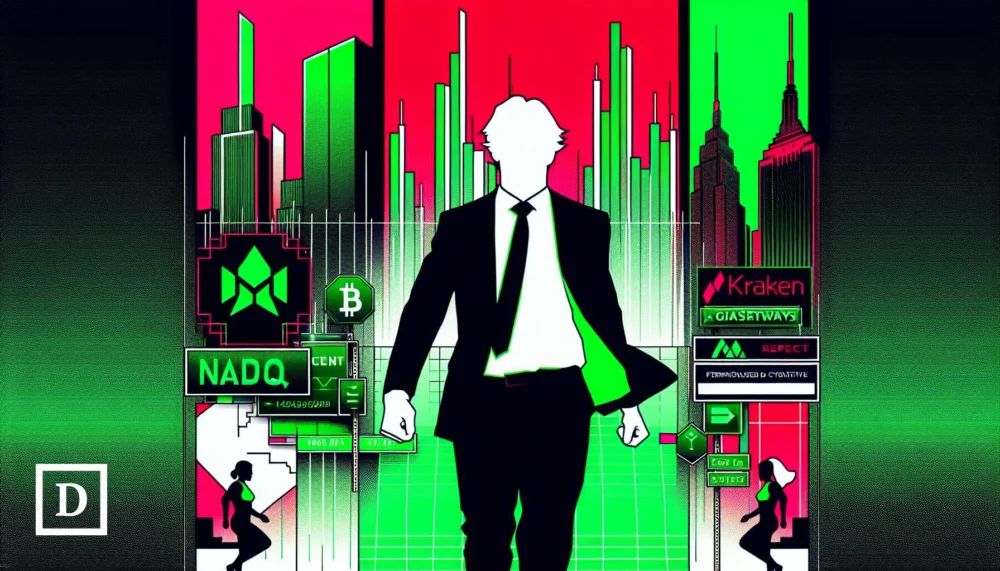
Nasdaq, a titan of traditional financial markets, has unveiled a groundbreaking new design for equity tokens, a move that signifies a significant stride towards integrating the established world of public companies with the burgeoning realm of decentralized blockchain networks. This ambitious initiative is being spearheaded through a strategic partnership with Kraken, the prominent cryptocurrency exchange and its parent company, Payward. The collaboration aims to create a seamless gateway that connects permissioned and permissionless tokenized equity markets, promising to redefine how securities are issued, traded, and managed.
The announcement, made on March 9th, details a multifaceted collaboration. Nasdaq’s established infrastructure will be linked with xStocks, a tokenization platform originally developed by Kraken and Backed. This synergy is designed to empower public companies by granting them greater control over their shares in a tokenized format, a core tenet of Nasdaq’s new equity token design.
The Nexus of Tradition and Decentralization: A Strategic Alliance
At the heart of this development lies Nasdaq’s commitment to innovation within the capital markets. The exchange’s new equity token design explicitly prioritizes issuer control. This means that public companies will have a more direct hand in how their digital representations are managed, offering a crucial layer of security and governance that has been a point of deliberation in the tokenization space. By bringing this approach to market, Nasdaq is addressing a key concern for traditional financial entities contemplating the adoption of blockchain technology.
The partnership with Kraken, through its parent company Payward, is instrumental in realizing this vision. Payward will be responsible for providing essential compliance services, including robust Know Your Customer (KYC) and Anti-Money Laundering (AML) protocols. These services are paramount for ensuring that the tokenized equity market adheres to regulatory standards, a critical factor for widespread adoption by institutional investors and public companies alike. Furthermore, Payward will act as the primary settlement layer for transactions involving Nasdaq’s tokenized equity design in eligible jurisdictions, specifically those where xStocks are available and that do not include the United States at this initial stage.
Arjun Sethi, co-CEO of Kraken and Payward, articulated the overarching objective of xStocks: "With xStocks, our goal is to make equities natively interoperable across trading venues, financial applications and blockchain networks while preserving issuer rights, regulatory protections, and price integrity." This statement underscores the dual ambition of the partnership: to foster interoperability within the decentralized finance (DeFi) ecosystem while simultaneously upholding the foundational principles of traditional finance.
The firms have clearly stated that the collaboration is geared towards enabling eligible participants to trade tokenized stocks "between a regulated, permissioned market environment and the permissionless DeFi ecosystem." This suggests a hybrid model, where the security and regulatory oversight of traditional markets are complemented by the accessibility and innovation potential of DeFi.
A Vision for an "Always-On" Financial Ecosystem
Nasdaq’s president, Tal Cohen, expressed optimism about the transformative potential of tokenization. In a statement, he remarked, "Tokenization has the potential to unlock the benefits of an always-on financial ecosystem – enhancing how investors access markets, how issuers engage with shareholders." This vision points towards a future where financial markets are more accessible, transparent, and efficient, operating continuously and catering to a broader range of participants.
The implications of this partnership extend beyond mere technological integration. It represents a significant endorsement of tokenization by a major traditional financial institution, potentially accelerating the mainstream adoption of blockchain-based financial instruments. For issuers, it could translate into more streamlined share management, enhanced shareholder engagement, and potentially new avenues for capital raising. For investors, it could mean increased liquidity, fractional ownership opportunities, and access to a wider array of investment products.
A Timeline of Strategic Moves and Precedent
This groundbreaking announcement from Nasdaq is not an isolated event but rather a culmination of recent strategic moves by both parties. Kraken, in particular, has been actively building its presence in the tokenized equity space. Just last week, the exchange announced that xStocks would be launching a cross-chain trading platform on both the Ethereum and Solana blockchains. This move highlights Kraken’s commitment to ensuring that its tokenized assets are accessible across multiple blockchain networks, further enhancing interoperability.
In parallel, Kraken’s state-regulated banking arm has made significant strides by securing a limited-purpose Federal Reserve master account. This development is crucial as it signals increasing regulatory acceptance and integration of crypto-native financial entities into the broader financial system. The ability to hold a master account with the Federal Reserve positions Kraken to operate with greater legitimacy and potentially offer a wider range of financial services in the future.
Nasdaq’s own journey towards tokenized equities has been in the works for some time. The exchange first filed with the U.S. Securities and Exchange Commission (SEC) to launch tokenized equities back in September, as previously reported. This filing indicated Nasdaq’s intention to navigate the regulatory landscape and lay the groundwork for its tokenization initiatives. The challenges and intricacies involved in settling tokenized securities and establishing the necessary infrastructure were identified as key areas of focus during this initial phase.
Data Points and Market Context
The global market for tokenized assets is projected to experience substantial growth in the coming years. While specific figures for tokenized equities are still nascent, the broader tokenization market, encompassing real estate, art, and other assets, is expected to reach trillions of dollars. According to some industry analyses, the tokenized securities market alone could reach over $4 trillion by 2030. This projection underscores the immense potential for innovation and investment in this emerging sector.
The increasing interest from traditional financial players like Nasdaq is a testament to the perceived value and future trajectory of tokenization. The ability to represent ownership of traditional assets on a blockchain offers a compelling proposition for increased efficiency, reduced costs, and enhanced accessibility. For instance, the traditional process of issuing and trading shares involves numerous intermediaries, lengthy settlement times, and significant administrative overhead. Tokenization, when implemented effectively, can streamline these processes, potentially leading to faster settlement cycles and lower transaction fees.
Broader Implications and Future Outlook
The partnership between Nasdaq and Kraken represents a significant inflection point for the financial industry. It signals a growing convergence between traditional finance (TradFi) and decentralized finance (DeFi), a trend that many experts believe will shape the future of financial markets. By bridging these two worlds, Nasdaq and Kraken are not only creating new opportunities for investors and issuers but also paving the way for a more inclusive and efficient financial ecosystem.
The emphasis on issuer control within Nasdaq’s equity token design is particularly noteworthy. This approach addresses a potential hurdle for public companies, offering them a degree of comfort and familiarity as they venture into the realm of blockchain. By ensuring that companies retain significant control over their tokenized assets, Nasdaq is making a compelling case for the adoption of this technology among a wider corporate audience.
The long-term implications of this collaboration could be far-reaching. It could lead to the development of new financial products, the creation of more liquid secondary markets for private securities, and a fundamental shift in how ownership is represented and transferred. As more regulated entities embrace tokenization, the distinction between traditional and decentralized finance may begin to blur, leading to a more integrated and dynamic global financial landscape.
However, challenges remain. The regulatory environment for tokenized assets is still evolving, and ensuring compliance across different jurisdictions will be an ongoing effort. The scalability of blockchain networks and the security of digital assets are also critical considerations. Despite these hurdles, the commitment of major players like Nasdaq and Kraken to innovation suggests that the path towards a tokenized future is gaining momentum, promising to reshape the financial world as we know it. The success of this initiative will likely hinge on its ability to balance innovation with robust regulatory compliance and to deliver tangible benefits to both issuers and investors.