admin
admin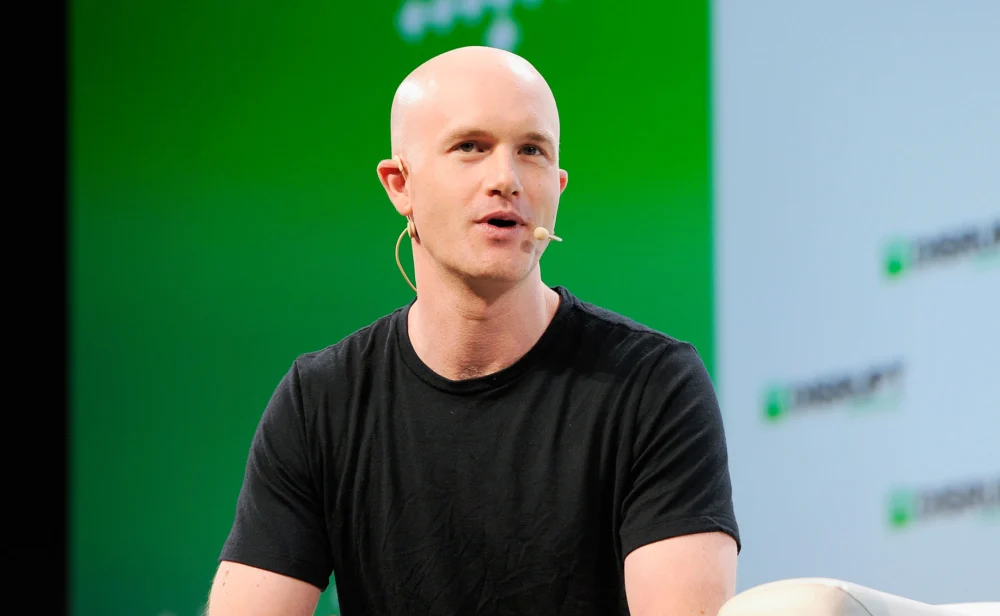
On Thursday, during the concluding moments of the Coinbase Global Inc. third-quarter earnings call, Chief Executive Officer Brian Armstrong made an unconventional admission that has since sparked a heated debate regarding market integrity and executive conduct. Armstrong informed listeners that he had been "a little bit distracted" during the proceedings because he was actively monitoring prediction markets that were wagering on the specific vocabulary he would use during the call. In an explicit attempt to influence the outcome of these wagers, Armstrong proceeded to list several industry-standard terms—Bitcoin, Ethereum, Blockchain, Staking, and Web3—explaining that he wanted to ensure those terms were recorded before the call concluded.
The incident highlights a growing intersection between corporate communications and the burgeoning field of "mention markets," where participants bet on whether public figures will utter specific words or phrases during high-profile events. While Armstrong presented the move as a spontaneous and lighthearted gesture, it has drawn sharp criticism from institutional investors and industry veterans who argue that such actions undermine the professional credibility of the cryptocurrency sector at a time when it is seeking broader mainstream and regulatory acceptance.
The Mechanics of Mention Markets and the Coinbase Stunt
The words Armstrong recited were not chosen at random. They were the subjects of specific "mention markets" hosted on platforms such as Kalshi and Polymarket. These platforms allow users to trade on the outcome of future events, ranging from political elections to the frequency of specific terminology in public speeches. According to data reported by Bloomberg, approximately $84,000 had been wagered on whether these specific cryptocurrency-related terms would be spoken during the Coinbase Q3 earnings call.
By explicitly stating these words without the context of financial reporting or strategic guidance, Armstrong effectively guaranteed a payout for those who had bet "yes" on their occurrence. On the decentralized prediction platform Polymarket, the official account described Armstrong’s actions as "diabolical work," while Armstrong himself later took to social media to characterize the event as a spontaneous moment of levity. Writing on X (formerly Twitter), Armstrong stated, "lol this was fun — happened spontaneously when someone on our team dropped a link in the chat."
However, the ease with which a CEO can manipulate these niche markets has raised significant questions about the vulnerability of prediction platforms. Because the outcome of a mention market is entirely dependent on the voluntary actions of a single individual, the potential for insider influence is absolute. In this instance, the CEO of a publicly traded company with a market capitalization in the tens of billions of dollars deliberately altered his speech to trigger financial outcomes on external betting platforms.
Chronology of the Event and Immediate Reactions
The sequence of events began on Thursday afternoon as Coinbase executives gathered to discuss the company’s third-quarter financial performance. The call, which is a regulatory requirement for publicly traded companies, is intended to provide transparency to shareholders regarding revenue, user growth, and future outlook.
- The Earnings Report: Prior to the call, Coinbase released its Q3 financial results, which showed a cooling in transaction volume compared to previous quarters, reflecting broader market trends.
- The Formal Presentation: Armstrong and CFO Alesia Haas conducted the standard portion of the call, answering analyst questions about the company’s expansion into international markets and its institutional products.
- The "Distraction": Near the end of the session, Armstrong pivoted from financial discourse to mention his interest in the prediction markets.
- The Keyword Recitation: Armstrong listed the five keywords—Bitcoin, Ethereum, Blockchain, Staking, and Web3—expressly to satisfy the conditions of the betting markets.
- Post-Call Social Media Fallout: Within hours, industry leaders began debating the ethics of the move. While some crypto enthusiasts cheered the "meta" nature of the stunt, institutional voices expressed deep concern.
Jeff Dorman, the Chief Investment Officer at digital assets investment firm Arca, was among the most vocal critics. Dorman argued that the stunt was detrimental to the years of work spent trying to convince institutional investors that cryptocurrency is a mature, investable asset class. "You need your head examined if you think it’s cute or clever or savvy that the CEO of the biggest company in this industry openly manipulated a market," Dorman wrote on X. He further lamented that such behavior mocks the industry’s efforts to gain professional comfort from the traditional financial world.
Institutional Implications and Industry Credibility
The criticism from figures like Dorman underscores a fundamental tension in the cryptocurrency industry: the divide between the "degen" (degenerate) culture of high-risk gambling and the "institutional" culture of compliance and stability. Coinbase, as the only major U.S.-based cryptocurrency exchange that is publicly traded, has long positioned itself as the "adult in the room." The company has invested millions in lobbying for clear regulatory frameworks and has built a reputation for transparency.
Critics argue that by engaging with prediction markets during a formal earnings call, Armstrong blurred the lines between a serious financial institution and a speculative playground. For institutional investors—such as pension funds or insurance companies—the stability and predictability of leadership are paramount. An executive who appears "distracted" by $84,000 in retail bets may be perceived as a liability rather than a steward of shareholder value.
Furthermore, the incident occurred as Coinbase is actively expanding its own footprint in the prediction market space. The company recently announced its "Everything Exchange" initiative, which aims to support various trading instruments, including prediction markets. Coinbase is also an investor in both Kalshi and Polymarket, creating a complex web of interests. While a Coinbase spokesperson told Bloomberg that the company prohibits its employees from participating in prediction markets related to the company, the CEO’s direct intervention in the outcome of those markets creates an ethical gray area.
The Regulatory Landscape of Prediction Markets
The timing of Armstrong’s stunt is particularly notable given the recent legal and regulatory victories for prediction markets in the United States. Kalshi, one of the platforms mentioned, recently won a landmark court battle against the Commodity Futures Trading Commission (CFTC), allowing it to offer election-based contracts to U.S. users. This victory was seen as a turning point for the legitimacy of "event contracts."
However, regulatory bodies remain wary of the potential for manipulation. The CFTC has historically opposed prediction markets on the grounds that they could be used to hedge on or influence the outcome of public events in ways that are contrary to the public interest. Armstrong’s open manipulation of "mention markets" provides critics of the industry with a clear example of how these platforms can be gamed by those in positions of power.
From a securities law perspective, the implications are less clear. While traditional market manipulation laws apply to the trading of stocks and commodities, "mention markets" on platforms like Polymarket often operate using stablecoins on decentralized ledgers, placing them in a jurisdictional tug-of-war between the SEC and the CFTC. Nevertheless, the act of a CEO using a regulated earnings call to influence a betting market could invite scrutiny regarding corporate governance standards and the fiduciary duty to act in the best interest of shareholders.
Analysis of the Broader Impact
The Coinbase incident serves as a case study for the maturation of the digital asset industry. On one hand, it demonstrates the growing popularity and cultural relevance of prediction markets, which proponents argue provide more accurate forecasting than traditional polls or expert analysis. On the other hand, it reveals the fragility of these markets when the "event" being predicted is subject to the whims of a single individual.
For the prediction market industry to thrive, it may need to move away from "mention markets" or other easily manipulated outcomes, focusing instead on events that are governed by complex, exogenous factors (such as economic data releases or election results). For Coinbase, the fallout from this event may require a recalibration of its public relations strategy. As the company seeks to lead the industry into a new era of regulated finance, the actions of its leadership will be held to the same standards as those of any other Fortune 500 company.
In the long term, this event may be remembered as a minor "easter egg" in the history of crypto culture, or it may be cited by regulators as a reason to impose stricter controls on how executives interact with emerging financial technologies. Regardless of the intent, Armstrong’s "distraction" has provided a stark reminder that in the world of high-stakes finance, the boundary between a joke and a liability is often razor-thin. As the cryptocurrency industry continues its march toward institutionalization, the pressure on its leaders to maintain a professional veneer will only increase, leaving less room for the spontaneous stunts that characterized the industry’s early, more rebellious years.