admin
admin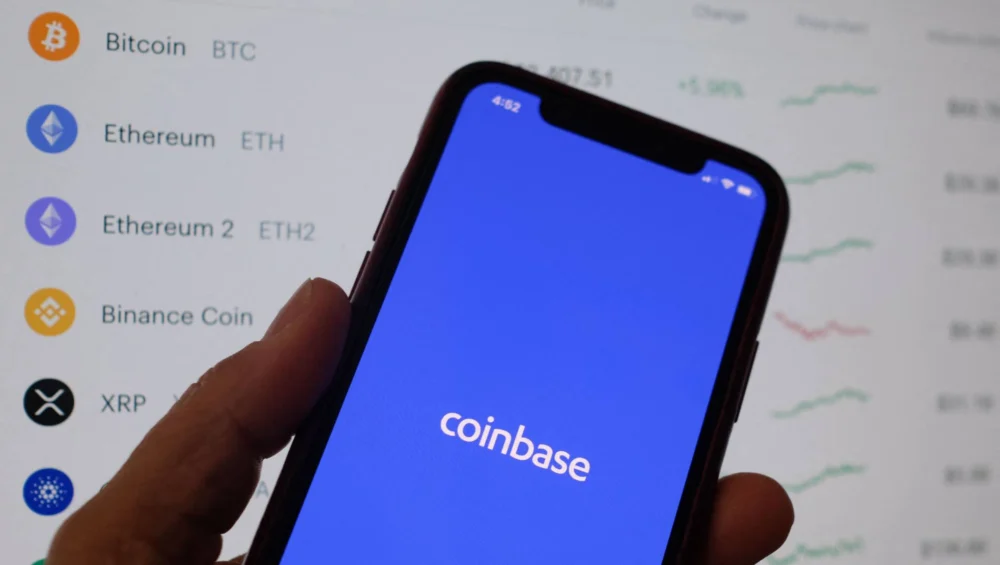
Coinbase, the leading United States-based cryptocurrency exchange, has officially reopened its mobile application for registration in India, marking a significant return to one of the world’s most populous and digitally active markets. This move comes after a self-imposed hiatus of more than two years, during which the company restructured its approach to compliance and local operations. Speaking at the India Blockchain Week (IBW) in December 2024, John O’Loghlen, Coinbase’s Managing Director for the Asia-Pacific (APAC) region, confirmed that while the platform currently supports crypto-to-crypto trading for Indian residents, the company is actively working toward a more comprehensive service model. Most notably, O’Loghlen announced a strategic roadmap that includes the launch of a fiat on-ramp by 2026, a move that would allow Indian users to purchase digital assets directly using the Indian Rupee (INR).
The return of Coinbase signifies a calculated pivot for the San Francisco-headquartered firm. After facing significant regulatory friction in 2022, the company chose to "burn the boats"—effectively off-boarding its entire existing Indian user base to start with a clean slate that aligns with the latest domestic financial regulations. This decision, though commercially painful in the short term, was described by O’Loghlen as a necessary step to build a sustainable, long-term presence in a market that remains both lucrative and notoriously difficult to navigate for digital asset service providers.
A Turbulent History: From UPI Suspension to Market Exit
The journey of Coinbase in India has been characterized by high-profile launches and sudden retreats. In April 2022, the company held a grand launch event in Bengaluru, announcing that it would support the Unified Payments Interface (UPI), India’s ubiquitous real-time payment system. However, within days of the launch, the National Payments Corporation of India (NPCI), the governing body for UPI, issued a statement claiming it was "not aware of any crypto exchange using UPI."
The lack of formal recognition from the NPCI forced Coinbase to suspend UPI support almost immediately, stripping the platform of its primary method for users to deposit funds. The ensuing regulatory uncertainty, coupled with a lack of clarity from the Reserve Bank of India (RBI) regarding the banking sector’s involvement with crypto companies, led to a period of stagnation. By September 2023, Coinbase took the drastic step of halting all services for Indian users, instructing them to withdraw their funds and close their accounts.
O’Loghlen reflected on this period during his IBW address, noting that the company had millions of historical customers in India. The decision to off-board them entirely from overseas entities was a strategic maneuver to ensure that any future entry would be fully compliant with the Financial Intelligence Unit (FIU) of India. "As a commercial business person wanting to make money and active users, that’s like the worst thing you can do," O’Loghlen admitted, highlighting the difficulty of sacrificing a massive user base to achieve regulatory harmony.
The Path to Compliance: Registration with the Financial Intelligence Unit
The catalyst for Coinbase’s 2024 return was its successful registration with the Financial Intelligence Unit (FIU-IND), a government agency under the Department of Revenue. The FIU oversees transactions to prevent money laundering and fraud, and it has become the primary gatekeeper for crypto exchanges operating within India’s borders.
Earlier in 2024, the Indian government began enforcing stricter mandates requiring both domestic and offshore virtual digital asset (VDA) service providers to register with the FIU and comply with the Prevention of Money Laundering Act (PMLA). By securing this registration, Coinbase has moved out of the "gray area" of offshore operations and into a formalized framework. Following a period of restricted "early access" onboarding in October 2024, the Coinbase app is now once again available to the general public in India, albeit with the current limitation of crypto-to-crypto trading.
The 2026 Fiat On-Ramp and the Banking Challenge
The most anticipated development in Coinbase’s Indian strategy is the 2026 target for a fiat on-ramp. In the cryptocurrency industry, an "on-ramp" is the mechanism by which a user converts traditional fiat currency (like INR) into digital assets. Without this, users must already own crypto or use peer-to-peer (P2P) markets, which often carry higher risks of fraud.
The delay until 2026 suggests that Coinbase is engaging in deep-level negotiations with Indian banking partners and payment aggregators. Historically, the RBI has maintained a cautious, if not hostile, stance toward cryptocurrencies, often issuing informal advisories to banks to avoid dealing with crypto firms. By setting a two-year horizon, Coinbase appears to be betting on a gradual softening of this stance or the emergence of a more robust legislative framework following the G20’s recent consensus on global crypto regulations, which India helped spearhead.
O’Loghlen emphasized that the goal is to provide an experience as seamless as India’s leading "super apps." He drew parallels to platforms like Zepto (quick commerce) and Flipkart (e-commerce), stating that for crypto to reach the masses, the onboarding process must be intuitive and take only a few minutes.
Analyzing the Impact of India’s Strict Taxation Policy
Despite the technical and regulatory progress, Coinbase and its peers face a significant headwind: India’s fiscal policy toward digital assets. In 2022, the Indian government introduced a rigorous tax regime for cryptocurrencies:
- 30% Flat Tax: A 30% tax is levied on all income derived from the transfer of virtual digital assets. Crucially, losses in one token cannot be used to offset gains in another.
- 1% TDS: A 1% Tax Deducted at Source (TDS) is applied to every transaction above a certain threshold.
Industry analysts note that the 1% TDS has been particularly damaging to liquidity, as it discourages high-frequency and intraday trading. Many Indian traders migrated to offshore, non-compliant exchanges to avoid these taxes, though the government has recently begun blocking the URLs of such exchanges to bring users back to FIU-registered platforms.
O’Loghlen expressed hope that the Indian government would eventually reconsider these rates. "We hope that the government will relax the taxation to make it less burdensome for people to hold digital assets," he stated. The industry argument is that a more moderate tax structure would actually increase total tax revenue by encouraging higher trading volumes and bringing activity back into the regulated domestic ecosystem.
Strategic Investment and Local Workforce Expansion
Coinbase’s commitment to India extends beyond its own trading platform. The company has utilized its venture capital arm, Coinbase Ventures, to deeply embed itself in the local ecosystem. A notable example is its significant investment in CoinDCX, one of India’s largest homegrown exchanges. In late 2024, Coinbase boosted its stake in CoinDCX, valuing the Indian firm at approximately $2.45 billion.
Furthermore, Coinbase maintains a substantial physical presence in India. The company currently employs over 500 staff members in the country, serving as a global hub for engineering, product development, and customer support. O’Loghlen confirmed plans to bolster this team further, hiring for multiple roles that will support both the local Indian expansion and the company’s broader global operations. This suggests that even if the Indian trading market takes time to mature due to taxes, the country remains a vital talent pool for Coinbase’s international ambitions.
Timeline of Coinbase’s Evolution in India
- April 2022: Official launch in India; UPI support announced and subsequently suspended within days following NPCI pushback.
- May 2022 – August 2023: Period of limited operations; Coinbase focuses on engineering and back-end support while navigating regulatory uncertainty.
- September 2023: Coinbase halts all services for Indian residents and begins mass off-boarding to clear regulatory hurdles.
- Early 2024: Intensive engagement with the Financial Intelligence Unit (FIU-IND) regarding compliance and registration.
- October 2024: Launch of "early access" onboarding for selected Indian users.
- December 2024: Full app registration opens for all Indian users (crypto-to-crypto); announcement of 2026 fiat on-ramp goal at India Blockchain Week.
- 2025 (Projected): Continued expansion of the 500+ member Indian workforce and integration of advanced security features.
- 2026 (Target): Launch of INR-to-crypto fiat on-ramp services.
Broader Implications for the Indian Crypto Ecosystem
The return of a global giant like Coinbase is a significant vote of confidence in the Indian market, which Chainalysis consistently ranks as one of the leaders in grassroots crypto adoption. Despite the tax hurdles, the sheer volume of internet users—the second-largest in the world—makes India an indispensable frontier for the digital asset industry.
The "clean slate" approach adopted by Coinbase may serve as a blueprint for other international exchanges looking to enter or re-enter the Indian market. By prioritizing FIU registration and waiting for a stable banking environment before launching fiat services, Coinbase is positioning itself as the "trusted" alternative to the unregulated platforms that have recently faced government crackdowns.
However, the success of this venture remains tethered to government policy. If the 2026 fiat on-ramp is to succeed, it will require a level of cooperation from the banking sector that has not been seen since 2018. If achieved, it could signal a new era of legitimacy for digital assets in India, transitioning from a speculative niche to a formalized component of the broader fintech landscape. For now, Coinbase’s strategy is one of patient persistence, betting that the infrastructure and compliance work done today will pay dividends as the Indian regulatory environment continues to evolve.