admin
admin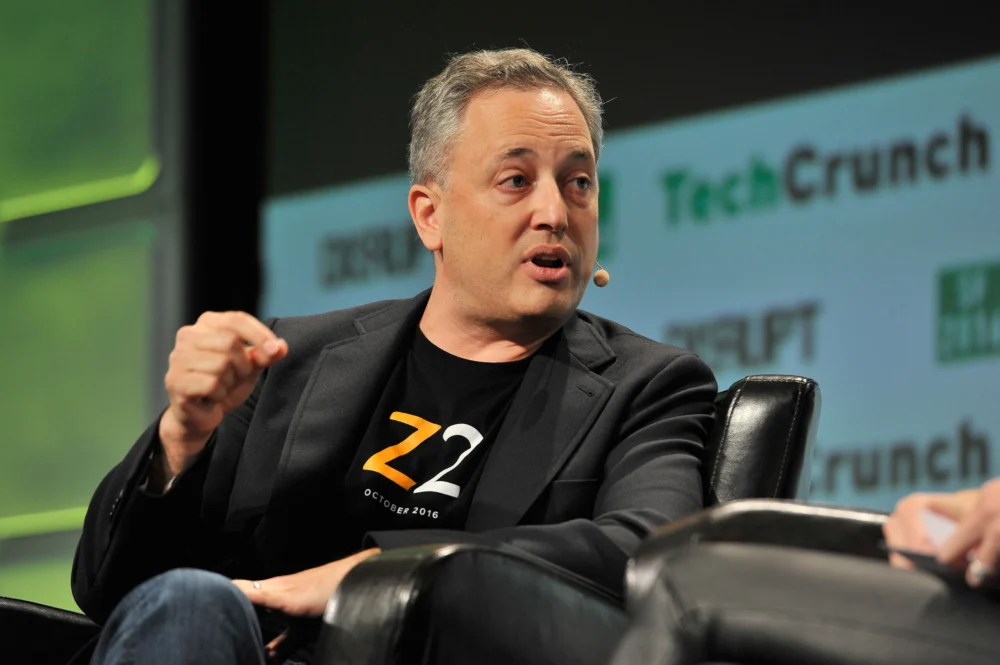
The appointment of David Sacks as the primary advisor to President Donald Trump on matters of artificial intelligence and cryptocurrency has ignited a firestorm of ethical debate, following a comprehensive investigative report detailing the intersection of his public duties and private financial interests. Sacks, a prominent venture capitalist and a founding member of the "PayPal Mafia," currently oversees a policy portfolio that directly impacts the valuation and regulatory environment of hundreds of companies in which he holds a personal stake. While the administration maintains that Sacks is a vital asset in maintaining American technological hegemony, critics and legal experts have raised alarms over what they characterize as an unprecedented level of institutionalized conflict of interest within the executive branch.
The Scope of the New York Times Investigation
A recent report by The New York Times, compiled by five investigative journalists over a five-month period, suggests that Sacks’ dual role as a policymaker and an active investor may be providing him and his associates with significant financial advantages. According to an analysis of financial disclosure forms, Sacks maintains a portfolio of approximately 708 technology investments. Of these, 449 are categorized as artificial intelligence companies—the very sector Sacks is tasked with regulating and promoting through federal policy.
The investigation highlights a potential discrepancy in how these investments are disclosed. While many of these firms are marketed to the public and to investors as AI-driven enterprises, Sacks’ filings reportedly classify hundreds of them under broader, more traditional categories such as "hardware" or "software." This nomenclature, critics argue, may obscure the true extent of his influence over the AI landscape. Furthermore, the report alleges that Sacks has utilized his proximity to the Oval Office to advocate for policies that benefit his specific holdings, including the relaxation of export controls on high-end semiconductors.
The Rebuttal: A "Nothing Burger" and Claims of Media Bias
David Sacks has not remained silent in the face of these allegations. Taking to the social media platform X, Sacks dismissed the report as a "nothing burger" and accused the newspaper of manufacturing a narrative that failed to materialize despite months of reporting. He argued that the article merely "strung together a bunch of anecdotes" that did not logically support its inflammatory headline.
To bolster his defense, Sacks released a letter from the law firm Clare Locke, which he retained to communicate with the publication during its investigation. The letter claims the reporters were given "clear marching orders" to find a conflict of interest where none existed. Sacks’ spokesperson, Jessica Hoffman, emphasized that the venture capitalist has fully complied with all rules governing "special government employees" (SGEs). Hoffman asserted that the Office of Government Ethics (OGE) determined which assets required divestiture and that Sacks has actually incurred financial losses by stepping into public service rather than reaping benefits.
Chronology of the AI Policy Rollout and the July Summit
The tension between Sacks’ private business ventures and his public role became most visible during the summer of 2024. In July, the White House hosted a high-profile AI summit where President Trump unveiled a strategic "AI Roadmap" intended to accelerate domestic development and reduce regulatory hurdles.
The lead-up to this event was marked by internal administrative friction. Reports indicate that White House Chief of Staff Susie Wiles intervened when it was proposed that the All-In podcast—which Sacks co-hosts alongside fellow investors Chamath Palihapitiya, Jason Calacanis, and David Friedberg—serve as the exclusive host for the summit. Critics viewed the potential involvement of a private media entity owned by government advisors as a blurring of ethical lines.
Furthermore, the NYT report alleged that the All-In team sought sponsorships of up to $1 million from corporations in exchange for access to a private reception and other VIP perks surrounding the event. Sacks’ legal team countered this, stating that the summit was a non-profit endeavor and that the podcast actually lost money on the event. They maintained that sponsors only received logo placement and that no access to the President was ever promised or provided.
The Nvidia Connection and Global Trade Implications
One of the most significant policy shifts linked to Sacks involves the global distribution of advanced AI chips. Sacks reportedly developed a close relationship with Nvidia CEO Jensen Huang throughout the spring of 2024. Subsequently, Sacks has been a vocal proponent of removing or easing restrictions on the sale of Nvidia’s high-performance chips in international markets, including China.
This stance represents a departure from the more hawkish trade policies seen in previous years and has significant implications for both national security and the global economy. While the administration frames this as a move to "cement American technology dominance," skeptics point out that such policy changes directly benefit the valuation of hardware and software firms within Sacks’ own investment portfolio at Craft Ventures.
Legal and Ethical Critiques: "This is Graft"
The ethical ambiguity of Sacks’ position has drawn sharp criticism from legal scholars specializing in government ethics. Kathleen Clark, a professor at Washington University, reviewed Sacks’ crypto-related ethics waiver in mid-2024 and described the arrangement in blunt terms: "This is graft." Clark and others argue that the "special government employee" status is being used as a loophole to allow high-net-worth individuals to steer national policy toward their own financial interests without the rigorous divestiture requirements applied to full-time cabinet members.
Sacks has received two White House ethics waivers, which ostensibly required him to sell most of his cryptocurrency and AI assets. However, the New York Times investigation found that public filings do not specify the remaining value of his holdings, nor do they provide a clear timeline of when the sales occurred. This lack of transparency has led to accusations that the waivers are a mere formality rather than a substantive check on corruption.
Political Blowback from Across the Aisle
The criticism of Sacks is not limited to the Democratic opposition. While Senator Elizabeth Warren has been a consistent critic—stating earlier this year that Sacks’ role represents an "explicit conflict of interest" that would normally be prohibited under federal law—voices from the right have also expressed unease.
Steve Bannon, the former Trump strategist and influential right-wing media personality, has been vocal about his disdain for the influence of Silicon Valley "tech bros" within the administration. Bannon suggested that figures like Sacks are "out of control," representing a faction of the party that prioritizes corporate interests over the populist "America First" agenda. This internal rift highlights the growing tension within the Republican party regarding the role of big tech and venture capital in governance.
Analysis of the Investment Portfolio and Market Impact
The sheer volume of Sacks’ investments—708 in total—makes the task of ethical oversight exceptionally difficult. In the venture capital world, the value of a portfolio is often tied to the regulatory environment. For instance, if the White House adopts a "light-touch" regulatory approach to AI, the 449 AI startups linked to Sacks could see their valuations soar as they avoid the compliance costs faced by European or Asian competitors.
In the crypto sector, the implications are equally profound. As the "Crypto Czar," Sacks is in a position to influence SEC leadership, stablecoin legislation, and the potential creation of a national strategic bitcoin reserve. Given his long-standing personal and professional advocacy for digital assets, every policy memo he drafts has the potential to move markets in which he has historically been a major player.
Official White House Response
Despite the mounting pressure, the White House has remained steadfast in its support of Sacks. White House spokesperson Liz Huston released a statement praising Sacks’ contributions, describing him as an "invaluable asset" to the President’s mission of ensuring the United States remains the global leader in technology. The administration argues that to get the best advice on cutting-edge sectors like AI and crypto, the government must recruit individuals who have spent their careers at the forefront of those industries, even if they bring complex financial backgrounds with them.
Broader Implications for Future Governance
The controversy surrounding David Sacks raises fundamental questions about the future of government ethics in an era where technology and finance are increasingly inseparable. If the "SGE" model becomes the standard for recruiting tech experts into government, the line between public service and private gain may continue to erode.
The outcome of this scrutiny will likely set a precedent for how future administrations handle the recruitment of venture capitalists and tech founders. As the U.S. continues its technological arms race with global rivals, the balance between leveraging industry expertise and maintaining public trust remains one of the most significant challenges facing the current executive branch. For now, David Sacks remains at the center of this storm, a symbol of the high-stakes merger between Silicon Valley’s capital and Washington’s power.