admin
admin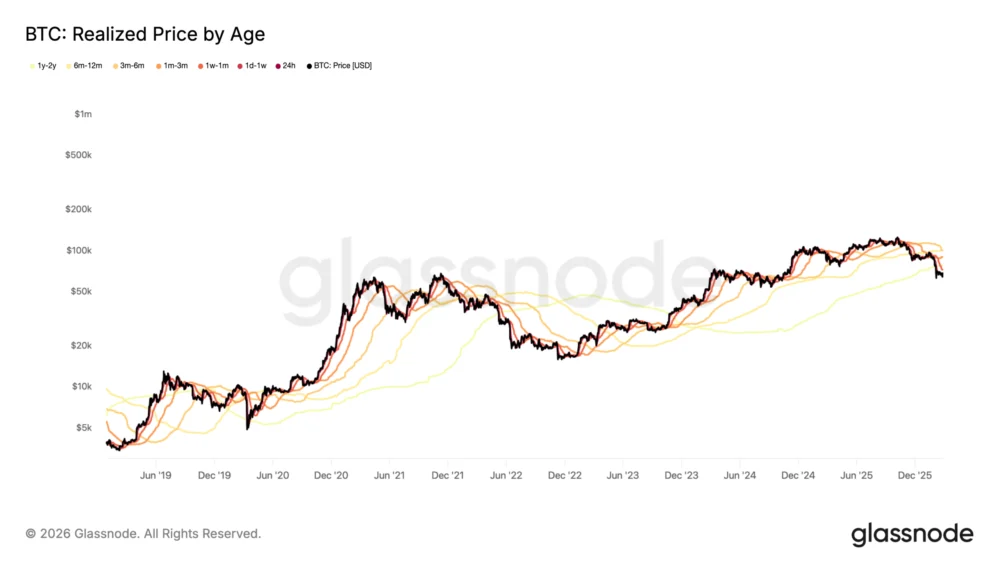
Investors who maintain a holding period of at least three years for Bitcoin (BTC) have historically reaped the most significant rewards, experiencing a drastically reduced probability of financial loss, according to comprehensive data analyzed by André Dragosch, head of research at Bitwise Europe. This compelling finding emerges from a Bitwise analysis spanning Bitcoin’s price history from July 17, 2010, to February 11, 2026, offering crucial insights into the cryptocurrency’s long-term investment profile, particularly as the market navigates a notable correction phase.
The Power of Patience: Unpacking Bitwise’s Findings
The core revelation from the Bitwise study underscores a fundamental principle often touted by cryptocurrency enthusiasts: the virtue of "HODLing," a term originating from a misspelling of "hold" in an early Bitcoin forum, which has evolved into a strategic mantra for many investors. The analysis indicates that the probability of an investor being "in the red"—meaning their investment is worth less than their initial purchase price—plummets to an astonishing 0.70% when Bitcoin is held for a minimum of three years. This statistic vividly illustrates that nearly all rolling three-year entry points into Bitcoin’s market history have ultimately concluded in profit.
The study further reinforces this long-term trend, demonstrating an even greater de-risking effect with extended holding periods. For investors who held BTC for five years, the risk of loss dwindled to a mere 0.2%, signifying an almost negligible chance of negative returns. Extending this horizon to a decade effectively eliminated the risk entirely, with a 0% probability of loss observed over any ten-year holding period within the analyzed timeframe. These figures present a stark contrast to the volatile experiences often associated with short-term cryptocurrency trading.
Conversely, the data highlights the substantial risks inherent in shorter-term Bitcoin investments. Intraday traders, those buying and selling within the same day, faced a significant 47.1% chance of their position being underwater. This high probability of loss remained elevated for slightly longer durations: 44.7% over one week, 43.2% over one month, and a still considerable 24.3% over a one-year holding period. These statistics vividly delineate the speculative nature of short-term trading versus the statistically validated benefits of a long-term investment horizon in the Bitcoin market. The implications are profound for both retail and institutional investors considering their entry and exit strategies in the dynamic digital asset space.
Historical Resilience: Bitcoin’s Volatile Journey and Enduring Value
To fully appreciate the significance of Bitwise’s findings, it is essential to contextualize them within Bitcoin’s often tumultuous yet ultimately upward-trending history. Launched in 2009 by an anonymous entity known as Satoshi Nakamoto, Bitcoin began as a niche digital currency, valued at fractions of a cent. Its journey has been characterized by extreme price volatility, marked by parabolic bull runs and steep corrections, yet consistently demonstrating resilience and growth over multi-year cycles.

Early Days and First Cycles: Bitcoin’s first major price surge occurred in 2013, when it briefly touched over $1,000, only to crash dramatically. The subsequent bull run of 2017 saw it soar to nearly $20,000, captivating global attention before enduring another prolonged bear market. These early cycles established a pattern of intense speculative interest followed by significant pullbacks, weeding out "weak hands" and consolidating ownership among "strong hands"—long-term holders who weathered the storms. Each cycle, however, saw Bitcoin establishing higher lows and ultimately higher highs, steadily solidifying its position as a new asset class.
The Halving Mechanism and Supply Scarcity: A critical factor contributing to Bitcoin’s long-term price appreciation and cyclical nature is its programmed supply scarcity, enforced by the "halving" mechanism. Approximately every four years, the reward miners receive for validating transactions is cut in half, reducing the rate at which new Bitcoin enters circulation. Historically, these halving events have preceded significant bull markets, as reduced supply meets persistent or increasing demand. The halvings in 2012, 2016, and 2020 all initiated periods of substantial price appreciation. The most recent halving occurred in April 2024, leading many analysts to anticipate a new phase of price discovery, though not without the characteristic volatility. This predictable scarcity model fundamentally differentiates Bitcoin from fiat currencies, which can be printed indefinitely, and underpins the long-term investment thesis.
Institutionalization and Mainstream Adoption: The past few years have witnessed a dramatic shift in Bitcoin’s perception, transitioning from a fringe internet phenomenon to a recognized institutional asset. This evolution gained significant momentum with the approval of spot Bitcoin Exchange-Traded Funds (ETFs) in major markets, notably in the United States in early 2024. These ETFs provide a regulated, accessible, and familiar investment vehicle for institutional investors and traditional financial players, significantly broadening Bitcoin’s investor base. This institutional embrace, while introducing new liquidity and stability, also exposes Bitcoin to broader macroeconomic forces and traditional market sentiment, adding another layer of complexity to its price movements. The Bitwise analysis, extending to 2026, implicitly factors in this evolving market structure and the increasing maturity of the asset class.
On-Chain Insights: Realized Price and Investor Behavior
Beyond traditional price charts, on-chain metrics offer a deeper understanding of investor behavior and market health. One such crucial metric is the "realized price," which represents the average price at which all bitcoins in circulation last moved on the blockchain. It effectively acts as a proxy for the aggregate cost basis of the entire market. Analyzing the realized price for different age cohorts of Bitcoin holders provides invaluable insights into who is profitable and who is currently facing losses, distinguishing between conviction and capitulation.
Defining Realized Price: The realized price differs from the spot price by reflecting the aggregate value of all BTC at the moment they last transacted, rather than the current market value. When the market price is above the realized price, the market as a whole is in profit. When it’s below, the market is in an aggregate loss. This metric helps identify psychological support and resistance levels, indicating where significant portions of the market acquired their holdings.
Strong Hands vs. Weak Hands: The current market environment, characterized by Bitcoin trading around $65,000 as of Saturday, reflects a roughly 50% decline from its October 2025 high. This correction presents a critical test for various investor cohorts. According to the data, investors who acquired and held Bitcoin through the three-to-five-year window boast a realized price of approximately $34,780. This means these long-term "strong hands" are still sitting on an impressive unrealized profit of about 90%, demonstrating the power of their conviction and the robustness of Bitcoin’s long-term value appreciation. Their significant cushion allows them to weather substantial market drawdowns without necessarily being compelled to sell.

Shorter-Term Pain: In stark contrast, newer entrants to the market, particularly those who bought within the past two years, are largely underwater. The cohort of investors holding Bitcoin for six to twelve months (the 6m–12m cohort) has an average cost basis of around $101,250. With Bitcoin at $65,000, these holders are facing approximately a 35% unrealized loss. Similarly, the 1y–2y cohort, those holding for one to two years, have a cost basis closer to $78,150, translating to about a 15% unrealized loss. This gap in profitability reinforces the pattern observed in the holding-period data: the longer an investor holds Bitcoin, the smaller their drawdown tends to be during market corrections, showcasing the diminishing risk profile over time.
The $30,000 Scenario: The article also touches upon the possibility of the Bitcoin price correction extending further, potentially toward the $30,000 mark, as some traders argue. Such a significant decline would critically test the resolve of even the resilient three-to-five-year holding band. A move to $30,000 would push their cost basis ($34,780) closer to breakeven, significantly eroding their 90% profit cushion. This scenario would be a pivotal moment, determining whether these long-term holders, who have demonstrated immense patience, might begin to add to the selling pressure or if their conviction remains unwavering, choosing to "sit tight" and potentially accumulate more. This analysis underscores the importance of monitoring on-chain metrics during volatile periods to gauge investor sentiment and potential market turning points.
Navigating the Current Correction: Macroeconomic Headwinds and Market Sentiment
The current Bitcoin price correction, down roughly 50% from its October 2025 peak, is not occurring in isolation. It is part of a broader, complex interplay of macroeconomic factors, shifting market sentiment, and the evolving landscape of digital asset adoption. Understanding these forces is crucial for interpreting Bitcoin’s short-to-medium-term trajectory.
Drivers of Volatility: Bitcoin, despite its unique characteristics, remains a risk-on asset, sensitive to global macroeconomic conditions. Factors such as persistent inflation, rising interest rates by central banks (e.g., the Federal Reserve), and broader economic uncertainty often lead investors to de-risk portfolios, moving away from speculative assets like cryptocurrencies and into safer havens. Geopolitical tensions and concerns over global economic growth also contribute to a risk-off environment, impacting investor confidence across all markets, including digital assets. Regulatory uncertainty in various jurisdictions worldwide further adds to Bitcoin’s volatility, as investors weigh potential restrictions or new frameworks.
ETF Flows and Institutional Appetite: The advent of spot Bitcoin ETFs initially generated immense excitement and significant capital inflows, signaling a new era of institutional adoption. However, the subsequent period has seen mixed flows, with some days experiencing net outflows. For instance, Standard Chartered highlighted weak ETF flows as a factor in their revised outlook. While some outflows are natural as early investors take profits or rebalance portfolios, sustained outflows could indicate a cooling of institutional enthusiasm or a reaction to broader market conditions. Bernstein, on the other hand, noted relatively modest net outflows of about 7% from spot Bitcoin ETFs, even as BTC’s price fell by 50%. This suggests that while there is some profit-taking, the core institutional holdings might be more resilient than the price action alone suggests, possibly indicating a "crisis of confidence" rather than a fundamental flight.
Analyst Divergence: Short-Term Pain vs. Long-Term Potential: The market correction has naturally led to diverse interpretations and future price forecasts from leading financial institutions and analysts.

-
Bernstein’s Optimism: Global brokerage firm Bernstein has maintained a bullish stance, reiterating its ambitious $150,000 BTC price call for 2026. Analysts, led by Gautam Chhugani, characterized the current Bitcoin price action as "a mere crisis of confidence." Their perspective suggests that the fundamental long-term drivers for Bitcoin, such as increasing institutional adoption and its scarcity model, remain intact, and the current downturn is more of a psychological wobble than a structural weakness. They point to the relatively modest ETF outflows as evidence that institutional conviction has not fundamentally wavered.
-
Standard Chartered’s Caution: In contrast, Standard Chartered has adopted a more cautious tone, warning of a potential "final capitulation" phase that could see Bitcoin’s price temporarily dip toward $50,000. This outlook is attributed to a combination of weak ETF flows and a "tougher macro backdrop." However, even with this short-term bearishness, Standard Chartered’s long-term view remains positive, projecting a recovery toward $100,000 by the end of 2026. This reflects a common sentiment among institutions: acknowledging short-term headwinds while maintaining a strong belief in Bitcoin’s ultimate upside.
-
Timothy Peterson’s Historical Framework: Looking further into 2027, Timothy Peterson’s historical "average return" framework offers another perspective, pointing to a target of $122,000 by early 2027. This framework, based on past performance and statistical probabilities, suggests a high likelihood that Bitcoin will trade above this figure. Such data-driven models provide a quantitative underpinning to long-term price predictions, helping to filter out speculative noise and focus on historical trends.
These divergent forecasts highlight the inherent uncertainty in predicting market movements, especially for a volatile asset like Bitcoin. However, they collectively suggest a broad consensus among institutional players regarding Bitcoin’s long-term potential, even if the path there is expected to be bumpy.
Strategic Implications for Investors
The Bitwise research, coupled with insights from on-chain metrics and analyst forecasts, offers critical strategic implications for both individual and institutional investors navigating the Bitcoin market.
The "HODL" Philosophy Validated: The most direct implication is a strong validation of the long-term holding strategy. For retail investors, the data unequivocally demonstrates that patience is not just a virtue but a statistically sound approach to Bitcoin investment. Attempting to time the market with short-term trades carries substantially higher risks of loss. A disciplined approach, focusing on accumulating Bitcoin and holding it through market cycles for several years, dramatically increases the probability of significant returns and insulates against the emotional pitfalls of daily price fluctuations. This aligns with traditional investment advice for growth assets, which often emphasizes a long-term horizon to ride out volatility.

Risk Management and Diversification: While the data strongly supports long-term Bitcoin holding, it does not negate the importance of prudent risk management. Bitcoin remains a volatile asset, and investors should allocate capital commensurate with their risk tolerance. Diversification across a broader portfolio, including traditional assets and other cryptocurrencies, can help mitigate risks. The current correction serves as a potent reminder that even assets with strong long-term prospects are subject to significant drawdowns. Investors should only invest what they can afford to lose and avoid over-leveraging.
Long-Term Vision: The ability of long-term holders to maintain substantial profits even amidst a 50% market correction underscores the importance of a long-term vision. Bitcoin’s journey is still relatively young, and its adoption curve is steep. Factors like increasing institutional integration, ongoing technological developments (e.g., Layer 2 solutions, scaling improvements), and its role as a potential hedge against inflation or monetary debasement continue to fuel its long-term growth narrative. Understanding these macro drivers, rather than reacting to daily news cycles, is crucial for maintaining conviction during volatile periods.
Institutional Strategy: For institutional investors and corporate treasuries, the Bitwise findings provide a robust data-backed argument for including Bitcoin in long-term asset allocation strategies. The near-zero probability of loss over ten years, combined with significant potential upside, positions Bitcoin as a compelling, albeit volatile, component of a diversified portfolio designed for capital appreciation. The insights from realized price metrics also offer sophisticated tools for institutional investors to gauge market sentiment, identify accumulation zones, and manage their positions more strategically, potentially using corrections as opportunities to increase exposure. The resilience of multi-year holders during the current drawdown indicates a growing maturity in the market, where a significant portion of capital is held by entities with strong conviction.
In conclusion, the latest research from Bitwise Europe provides compelling evidence that Bitcoin rewards patience and a long-term investment horizon with a remarkably high probability of profit, significantly de-risking the asset for those who hold for three years or more. While the cryptocurrency market is inherently volatile, as evidenced by the current correction, historical data and on-chain analytics consistently point towards the enduring value proposition of Bitcoin over extended periods. As institutional adoption grows and the asset class matures, understanding these long-term dynamics becomes paramount for all participants aiming to navigate the complexities and capitalize on the potential of the digital economy. Investors are reminded that all investment decisions carry risk, and personal research and professional advice are essential.