admin
admin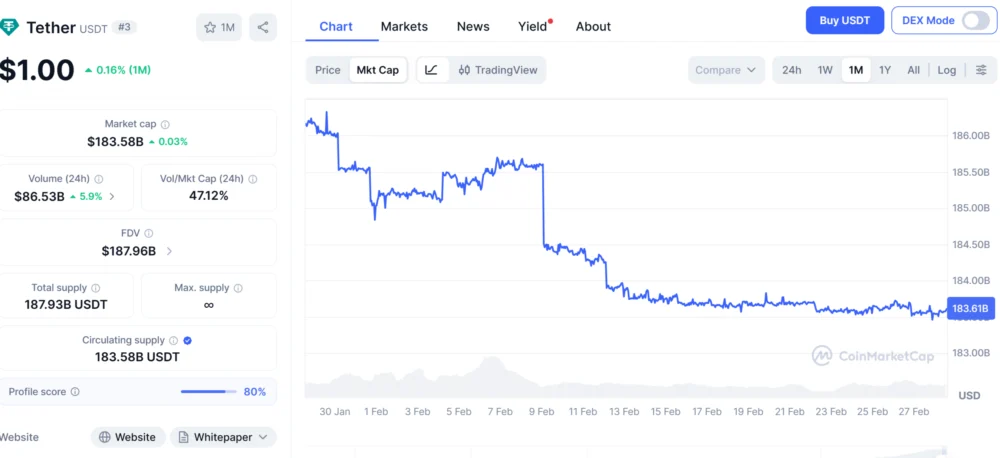
Stablecoin issuer Tether has announced the freezing of approximately $4.2 billion worth of its USDt tokens, a sum directly linked to suspected criminal activities such as scams and money laundering over the past three years. This significant action underscores a growing trend wherein global authorities are increasingly depending on stablecoin issuers to identify and halt the flow of illicit digital funds, marking a critical evolution in the fight against financial crime within the burgeoning cryptocurrency ecosystem.
The majority of these blocked funds, exceeding $4 billion, have been restricted since 2023, a period characterized by intensified scrutiny from regulators and law enforcement agencies worldwide. This heightened focus is a direct response to the escalating scale and sophistication of crypto-related fraud, sanctions evasion, and various illicit financial operations. Tether, an El Salvador-based firm and the dominant player in the stablecoin market, confirmed these figures, highlighting its proactive role in assisting governmental bodies in their investigative efforts. The company’s dollar-pegged USDt token (USDT) currently boasts an outstanding circulation of over $180 billion, a substantial increase from roughly $70 billion just three years prior, reflecting its entrenched position as a cornerstone of digital asset liquidity.
The Mechanism of Control: How Tether Freezes Funds
Unlike traditional banking systems where financial institutions process transactions and can freeze accounts based on court orders, the decentralized nature of blockchain presents unique challenges. However, Tether maintains a centralized control mechanism over its USDt tokens. When legally mandated or upon receiving verifiable requests from authorized government agencies, Tether can directly intervene on the blockchain. This is achieved by "blacklisting" specific wallet addresses identified as being associated with illicit activities. Once an address is blacklisted, any USDt held within it becomes inaccessible and cannot be transferred, effectively freezing the funds. This capability positions Tether as a critical gatekeeper, bridging the gap between the decentralized world of cryptocurrencies and the centralized demands of global financial law enforcement. The ability to directly manipulate the status of tokens on the blockchain is a powerful tool, raising discussions about the balance between security, regulatory compliance, and the underlying ethos of decentralization that underpins much of the crypto industry.
Recent Successes: High-Profile Seizures Underscore Collaboration
Tether’s collaborative efforts with law enforcement agencies have yielded several high-profile successes in recent months, illustrating the practical application of its freezing capabilities. Just recently, the company announced its assistance to the U.S. Department of Justice (DOJ) in a significant operation that resulted in the seizure of nearly $61 million in USDt. These funds were directly tied to "pig-butchering" scams, a particularly insidious form of financial fraud. In these schemes, criminals cultivate long-term relationships with victims, often online, building trust before gradually persuading them to invest large sums of money into fraudulent crypto schemes. The term "pig butchering" refers to the scammers’ tactic of "fattening up" their victims before "slaughtering" their finances. The successful recovery of these funds represents a crucial blow against these sophisticated criminal networks, often operating across international borders.
Earlier in the same month, Tether also played a pivotal role in assisting Turkish authorities, freezing approximately $544 million in cryptocurrency. This action was taken in response to an alleged illegal online betting and money-laundering operation. The scale of this seizure highlights the extensive use of stablecoins in facilitating large-scale illicit financial activities, from gambling to the laundering of proceeds from various criminal enterprises. These incidents serve as stark reminders of the global reach of crypto-enabled crime and the necessity of cross-border cooperation between private entities like Tether and national law enforcement bodies. The promptness and effectiveness of these freezes demonstrate the increasing operational efficiency in combating financial crime within the crypto space.
The Broader Landscape: Stablecoins at the Forefront of Enforcement
Tether’s actions are not isolated but reflect a broader trend within the stablecoin sector. According to data compiled by blockchain analytics firm Elliptic, by late 2025, leading stablecoin issuers Tether and Circle (issuer of USDC) had collectively blacklisted around 5,700 wallet addresses. These blacklisted wallets held an estimated $2.5 billion in value, with roughly three-quarters of the frozen addresses containing USDt at the time of the freeze. This data underscores the critical role stablecoins play in both legitimate financial transactions and, unfortunately, in facilitating illicit activities. The ability of these centralized issuers to directly intervene on the blockchain makes them indispensable partners for authorities attempting to trace and recover stolen or illegally acquired digital assets.
The sheer volume of funds frozen signifies the scale of illicit financial activity transacted through stablecoins and the increasing effectiveness of countermeasures. As stablecoins become more integrated into the global financial system, their utility for both legitimate commerce and criminal enterprises grows in tandem. This necessitates a continuous evolution of enforcement strategies and technological capabilities to stay ahead of perpetrators. Blockchain analytics firms like Elliptic and Chainalysis provide crucial intelligence, identifying suspicious transaction patterns and linking them to known illicit actors, thereby enabling issuers like Tether to take decisive action.

Market Dynamics: A Contraction in USDt Supply and Its Implications
While Tether’s enforcement actions demonstrate its commitment to combating financial crime, the company has also faced recent shifts in its market dynamics. Cointelegraph reported that USDt was on track for its largest monthly supply drop in three years, with its circulating supply declining by approximately $1.5 billion in February, following a $1.2 billion reduction in January. This contraction echoes a similar period experienced after the collapse of FTX in late 2022, a time when broader crypto market liquidity tightened significantly due to widespread uncertainty and withdrawals.
A shrinking supply of USDt could potentially signal several underlying market conditions. It might indicate a decrease in demand for stablecoin liquidity in the broader crypto markets, potentially due to reduced trading activity, a deleveraging event, or a shift in capital flows towards other assets or fiat currencies. Tighter liquidity in crypto markets can impact trading volumes, price stability, and the ease with which large transactions can be executed. However, Tether has offered an alternative interpretation, stating that these figures reflect short-term distribution changes rather than a fundamental weakening of demand for USDt. The company also pointed out that USDC, another major stablecoin, experienced a multi-billion dollar reduction during the same period, suggesting that the trend might be broader than just USDt and could reflect general market conditions rather than specific issues with Tether. This perspective emphasizes that market capitalizations for stablecoins are dynamic and can fluctuate based on a multitude of factors, including institutional redemption patterns and seasonal liquidity demands.
The Evolving Regulatory Landscape and Industry Collaboration
The increasing reliance of governments on stablecoin issuers to freeze funds highlights a critical juncture in the regulatory evolution of the cryptocurrency industry. As digital assets gain mainstream adoption, regulators worldwide are grappling with how to effectively oversee these novel financial instruments. Stablecoins, in particular, have drawn significant attention due to their potential to bridge traditional finance with the crypto world, carrying both immense promise and inherent risks related to financial stability, consumer protection, and illicit finance.
The proactive steps taken by Tether and other issuers demonstrate a growing understanding within the crypto industry of its responsibilities in combating financial crime. This collaboration is gradually shaping a new paradigm where private crypto entities are becoming integral components of the global anti-money laundering (AML) and counter-terrorist financing (CTF) framework. This shift is driven by a recognition that without such cooperation, the inherent speed and borderless nature of blockchain transactions could be exploited more easily by criminal elements. However, this collaboration also sparks debate within the crypto community regarding the extent of centralization and control that stablecoin issuers wield over assets that are ostensibly part of a decentralized ecosystem. Balancing the imperative of combating crime with the core tenets of financial privacy and censorship resistance remains a complex challenge.
Implications for the Future of Stablecoins and Crypto Legitimacy
The freezing of billions in USDt by Tether carries significant implications for the future trajectory of stablecoins and the broader cryptocurrency industry. Firstly, it reinforces the narrative that centralized stablecoin issuers, despite operating on decentralized blockchains, are increasingly subject to and compliant with traditional financial regulations and law enforcement demands. This could pave the way for more stringent regulatory frameworks specifically tailored for stablecoins, potentially requiring greater transparency, enhanced AML/CTF protocols, and clearer lines of communication with global authorities.
Secondly, these actions contribute to the ongoing effort to legitimize the cryptocurrency space. By actively working to purge illicit funds, stablecoin issuers help to counter the perception that crypto is primarily a haven for criminals. This enhanced credibility is vital for attracting institutional investment, fostering mainstream adoption, and building public trust in digital assets as a viable and secure component of the global financial system. The more effectively the industry can demonstrate its commitment to combating crime, the stronger its case for responsible innovation and integration.
Finally, the trend signifies a deepening partnership between the private sector crypto innovators and public sector law enforcement. This synergy, while essential for security, also necessitates careful consideration of privacy rights, due process, and jurisdictional complexities. As stablecoins continue to grow in volume and importance, the mechanisms for identifying, tracing, and freezing illicit funds will become even more critical, defining the future operational landscape for these digital assets. The actions of Tether and other stablecoin issuers are not merely isolated incidents but represent fundamental shifts in how financial crime is fought in the digital age, setting precedents for a more secure and regulated, albeit perhaps less anonymous, crypto future.