admin
admin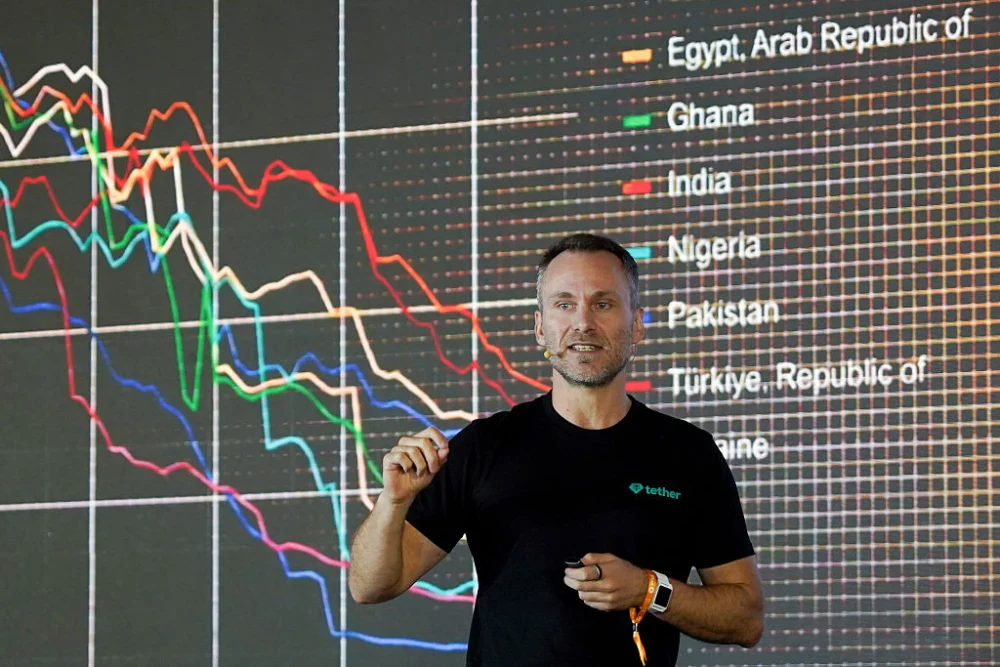
In a significant strategic realignment that marks a departure from its historical avoidance of United States oversight, Tether, the world’s largest stablecoin issuer, has officially launched USAT, a federally regulated, dollar-backed stablecoin. Developed in partnership with Anchorage Digital Bank—the first crypto-native bank to receive a charter from the Office of the Comptroller of the Currency (OCC)—USAT is designed to meet stringent U.S. regulatory requirements. This move comes as Tether CEO Paolo Ardoino embarks on an extensive media tour, engaging with major financial news outlets including Reuters, Bloomberg, and Fortune to signal a new era of transparency and cooperation for the firm.
The launch of USAT represents more than a product expansion; it is a calculated attempt to challenge the domestic dominance of Circle’s USDC and navigate a rapidly evolving legislative landscape in Washington. As the stablecoin sector becomes increasingly crowded—with recent entries from financial giants such as Fidelity Investments, JPMorgan Chase, and PayPal—Tether is positioning itself not merely as a cryptocurrency utility, but as a diversified financial powerhouse with interests spanning precious metals, robotics, and decentralized artificial intelligence.
A Strategic Pivot: From Offshore Outlier to Regulated Participant
For much of its decade-long history, Tether operated primarily from offshore jurisdictions, a position that drew intense scrutiny from U.S. regulators and lawmakers. The company’s flagship product, USDT, which currently boasts a market capitalization of approximately $187 billion, has frequently been the subject of investigations regarding its reserve backing and its use in illicit finance. A 2025 report by The Economist famously characterized the stablecoin as a "money launderer’s dream," citing its role in moving funds for sanctioned entities and criminal organizations.
However, the recent media blitz led by Ardoino suggests a fundamental shift in the company’s operational philosophy. Speaking from Tether’s offices in Lugano, Switzerland, Ardoino detailed a newfound level of engagement with U.S. authorities. According to company leadership, Tether is now actively collaborating with the Federal Bureau of Investigation (FBI) and the Secret Service. The company has integrated with the Office of Foreign Assets Control (OFAC) to ensure compliance with international sanctions, marking a transition from a reactive posture to a proactive regulatory strategy.
USAT serves as the cornerstone of this transition. Unlike USDT, which remains the primary liquidity tool for global crypto markets but does not meet certain specific U.S. federal banking standards, USAT is built from the ground up to operate within the American banking system. By utilizing Anchorage Digital Bank as the issuer, Tether gains a "Made in America" seal of approval that it hopes will unlock institutional partnerships previously closed to the firm.
Market Dominance and the "Facebook of Fintech"
Despite the controversies that have shadowed its rise, Tether’s growth remains unprecedented in the financial technology sector. With over 536 million users globally and a growth rate of roughly 30 million new users per quarter, Ardoino compares the company’s expansion to the early trajectory of social media giants like Facebook. Tether’s USDT market cap is currently larger than all of its competitors combined, providing the company with a massive "first-mover" advantage that Ardoino argues is rooted in real-world utility rather than mere speculation.
The primary driver of this growth is found in emerging markets where local currencies are prone to hyperinflation. In Argentina, where the peso has lost more than 94% of its value against the dollar over the last five years, USDT has become a de facto savings account for millions. Similar trends are observed in Turkey and Haiti, where traditional banking infrastructure is either inaccessible or untrustworthy. Ardoino frames Tether’s mission as one of "financial inclusion," arguing that the stablecoin has brought hundreds of millions of people into the global dollar-based economy for the first time.
Addressing Illicit Finance and Transparency Concerns
The transition toward a more public-facing, regulated entity requires Tether to confront long-standing allegations regarding its role in global crime. Ardoino has been vocal in defending the company’s record, asserting that blockchain technology provides law enforcement with tools that are superior to those available in the cash-based economy.
Tether reports that it has frozen approximately $3.5 billion in tokens linked to illicit activities, including $225 million identified in 2023 as part of a "pig-butchering" scam—a sophisticated investment fraud often operated by international syndicates. Ardoino argues that while traditional financial systems often fail to catch these transactions, Tether’s ability to monitor the ledger in real-time allows for the rapid freezing of funds.
"If there are cash pallets of hundreds of billions of dollars roaming around the world, U.S. law enforcement can hardly do anything about it," Ardoino stated during a recent briefing. "But with USDT, we demonstrated that working with the DOJ, FBI, and Secret Service, we could quickly freeze the funds."
Despite these assertions, skepticism remains. In late 2025, S&P Global Ratings assessed USDT’s stability as "weak," a rating Ardoino dismissed by citing the agency’s failure to predict the 2008 subprime mortgage crisis. He instead points to the "stress test" of 2022, when the collapse of the TerraLuna ecosystem triggered a massive bank run. During that period, Tether redeemed $7 billion in 48 hours and $20 billion over 20 days—representing 25% of its reserves—without suspending withdrawals or losing its dollar peg.
Financial Fortitude and the Cantor Fitzgerald Connection
Central to Tether’s argument for its own stability is its massive reserve of U.S. Treasury bills. The company reported a profit of more than $15 billion in 2025, largely derived from the yield on its reserves. Unlike traditional banks, which operate on fractional reserves—often lending out up to 90% of customer deposits—Tether claims to maintain over 100% backing. Ardoino notes that Tether currently holds $30 billion in excess reserves beyond what is required to redeem every token in circulation.
These reserves are managed by Cantor Fitzgerald, a prominent Wall Street brokerage led by Howard Lutnick. Lutnick, who recently transitioned into the role of U.S. Commerce Secretary, has been a vocal defender of Tether’s legitimacy. This relationship provides Tether with a rare bridge to the highest levels of U.S. economic policy, though it has also raised questions about potential conflicts of interest given Lutnick’s dual role as a government official and a service provider to the world’s largest stablecoin.
Legislative Impact: The CLARITY Act
The launch of USAT also arrives as Congress considers the CLARITY Act, a piece of legislation that could redefine the stablecoin market. If passed, the act would likely prohibit stablecoin issuers from paying interest to holders, a move supported by traditional banking lobbies to prevent a mass exodus of deposits from commercial banks to digital assets.
For Tether, the CLARITY Act represents a potential competitive advantage. Tether’s business model is already built on retaining interest income rather than sharing it with users—a policy Ardoino defends by noting that for users in hyperinflationary environments, the stability of the dollar is far more valuable than a 4% annual yield. Conversely, competitors like Circle, which have experimented with reward programs, may find their competitive tools curtailed by the new regulations.
Diversification: Gold and the "Sovereign Wealth Fund" Model
Tether’s ambitions have expanded significantly beyond the realm of digital dollars. The company has quietly become one of the world’s largest private holders of gold. Through its Tether Gold (XAUt) product, which has $2.6 billion in circulation, and its corporate treasury holdings, the company reportedly controls 140 tons of gold worth approximately $24 billion. Ardoino envisions Tether Gold as a way to return gold to its historical status as a medium of exchange, facilitated by the speed and transparency of blockchain technology.
This diversification strategy has led some analysts to compare Tether to a sovereign wealth fund. In the past year, the company has committed billions of dollars to a wide array of sectors:
- Artificial Intelligence: A $1 billion investment in German AI robotics firm Neura.
- Infrastructure: Hundreds of millions allocated to satellite technology, data centers, and agricultural land.
- Social Media: A $775 million stake in the video-sharing platform Rumble.
- Decentralized AI: The launch of Qvac, a platform designed to run powerful AI models locally on smartphones.
The Qvac initiative, named after a concept in Isaac Asimov’s science fiction, aims to provide AI access to populations in Africa and South America who cannot afford expensive subscriptions to centralized platforms like OpenAI or Google. Ardoino believes that by the end of the decade, high-performance smartphones will be ubiquitous in these regions, allowing USDT users to access decentralized AI services directly.
Conclusion: The Path Forward
As Tether moves into 2026, it faces a dual challenge: maintaining its global dominance in the "offshore" market with USDT while simultaneously proving its worth as a regulated "onshore" player with USAT. The company’s transformation from a controversial crypto startup into a multi-billion-dollar investment powerhouse suggests that it is no longer content to sit on the sidelines of the global financial system.
By aligning with U.S. law enforcement, securing a partnership with a federally chartered bank, and diversifying into essential commodities and future technologies, Tether is attempting to make itself indispensable. Whether the U.S. political establishment views this expansion as a benefit to dollar hegemony or a threat to financial stability remains the central question for the company’s next decade. For Ardoino, the answer lies in education and the undeniable reality of 536 million users who have already integrated Tether into their daily lives.