admin
admin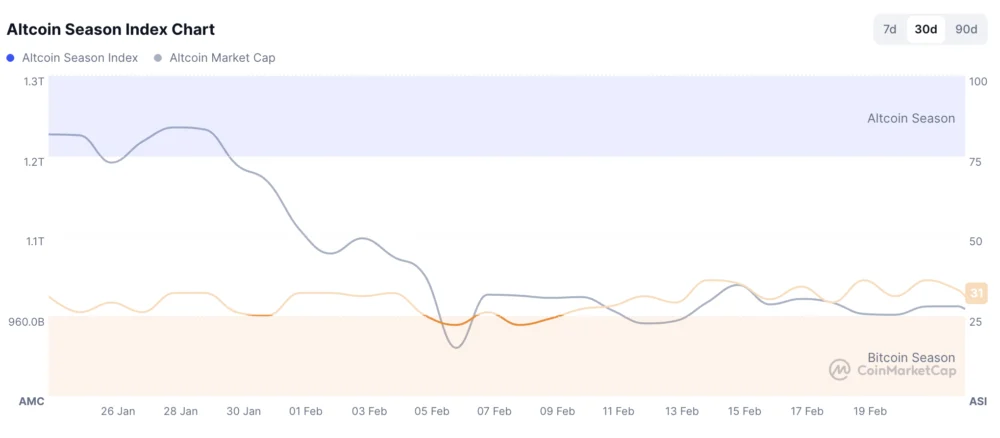
Crypto investors are increasingly venturing beyond the established giants, Bitcoin (BTC) and Ethereum (ETH), exploring a broader spectrum of digital assets amidst the prevailing market downturn. This emerging trend signals a potential maturation in investor behavior, where market volatility is perceived not as a deterrent but as a strategic entry point, a phenomenon dubbed "buying the dip," according to Johann Kerbrat, Robinhood’s head of crypto. This shift suggests a growing comfort level with the inherent fluctuations of the crypto asset class and a nuanced understanding of its diverse ecosystem.
Broadening Horizons: Retail Investors Embrace Diversification
Kerbrat, in an exclusive interview with Cointelegraph, highlighted that Robinhood’s customer base is actively engaged in this diversification strategy. "I think what we see from our customers is that they actually see it as an opportunity," Kerbrat stated, underscoring a proactive stance among retail investors. This involves not merely sustaining trading activity but deliberately fanning out investments across a wider array of cryptocurrencies beyond the dominant two by market capitalization. This observation contrasts with historical patterns where retail interest often remained heavily concentrated in Bitcoin and, to a lesser extent, Ethereum, particularly during periods of market uncertainty. The current environment, marked by sustained price corrections across the board, appears to be fostering a more adventurous investment approach, suggesting a growing sophistication among retail participants who are increasingly looking for potential growth opportunities outside the well-trodden paths of BTC and ETH.
This evolving investor behavior is particularly noteworthy given the broader economic backdrop. Global inflation concerns, fluctuating interest rates, and geopolitical tensions have collectively contributed to a cautious sentiment across traditional financial markets, which often spills over into the cryptocurrency space. However, for a segment of crypto investors, these conditions appear to be interpreted as opportune moments for accumulation. The "buy the dip" strategy, a common adage in financial markets, suggests that investors are accumulating assets at lower prices with the expectation of future recovery and appreciation. In the context of cryptocurrencies, where historical bull and bear cycles have been pronounced, this strategy often resonates strongly with those who believe in the long-term potential of the asset class.
The Quest for the "Third Asset": A Shifting Consensus
The current diversification trend among retail investors also offers an interesting counterpoint to previous market sentiments regarding the hierarchy of digital assets. Just months prior, in November, Anthony Bassili, president of Coinbase Asset Management, expressed to Cointelegraph that the average investor had yet to reach a definitive consensus on which cryptocurrency truly warranted serious attention after Bitcoin and Ethereum. Bassili observed, "The market is very unsure as to what’s the next asset they want to own after that," tentatively pointing to Solana (SOL) as a possible contender for the "third asset" slot. He noted a "very, very clear view" within the crypto community that Bitcoin held primary priority, followed by Ethereum.
This prior sentiment from a major exchange executive like Bassili highlights the significance of the shift Kerbrat is now observing. While the institutional focus, as described by MidChains CEO Basil Al Askari, remains somewhat conservative – with "full-scale asset managers entering with very large block trades going into predominantly the top 20 assets" – retail investors on platforms like Robinhood seem to be exhibiting a greater willingness to explore further down the market capitalization ladder. Al Askari characterized institutional engagement as "baby steps," primarily concentrated on more established, higher-cap altcoins, rather than venturing into smaller-cap assets or complex DeFi yield products. This divergence underscores a nuanced market, where different investor profiles exhibit varying risk appetites and strategic approaches, yet both are progressively engaging with the broader crypto landscape.
The search for the "next big thing" beyond Bitcoin and Ethereum is a perennial theme in the crypto space. Over the years, various altcoins have vied for this position, each promising unique technological advancements, scalability solutions, or novel use cases. Solana, with its high transaction throughput and burgeoning ecosystem, has indeed been a strong contender. However, other Layer 1 blockchains like Avalanche (AVAX), Cardano (ADA), and Polkadot (DOT), along with Layer 2 scaling solutions and specific DeFi protocols, have also attracted significant attention. The current market environment, characterized by reduced prices, may be empowering retail investors to conduct deeper research and allocate capital to projects they believe possess strong fundamentals and long-term potential, rather than simply following established narratives.
Beyond Speculation: The Embrace of Crypto Utility
Adding another layer to this evolving investment landscape, Kerbrat noted a significant shift in how crypto holders are engaging with their digital assets. Beyond mere HODLing (holding onto assets), there’s a growing inclination towards actively utilizing tokens within the crypto ecosystem. This pivot towards utility is a critical indicator of market maturity, moving beyond the purely speculative phase that often characterizes nascent asset classes.

A prime example of this is the robust adoption of staking, a feature Robinhood introduced in December. Staking allows users to lock up their cryptocurrencies to support the operations of a proof-of-stake blockchain network, in return for rewards. Kerbrat emphasized that staking has gained "very strong traction" since its rollout on the platform. This trend aligns with the broader growth of proof-of-stake networks, which offer participants a way to earn passive income on their holdings while contributing to network security and decentralization. The appeal of staking is multifaceted: it provides a yield in an environment where traditional interest rates have been volatile, and it allows investors to participate more directly in the blockchain ecosystem. For many, it represents a more active and engaged form of crypto ownership compared to simply holding assets in a wallet.
Furthermore, despite ongoing market uncertainty, Kerbrat also highlighted an increasing exploration of decentralized finance (DeFi) by crypto holders. DeFi encompasses a range of financial applications built on blockchain technology, offering services like lending, borrowing, and trading without traditional intermediaries. While DeFi protocols can carry higher risks due to their experimental nature and smart contract vulnerabilities, the growing interest suggests that a segment of investors is willing to navigate these complexities in pursuit of greater financial autonomy and potentially higher returns. This active engagement with staking and DeFi platforms underscores a broader understanding of blockchain technology’s potential beyond simple price appreciation. It indicates that investors are increasingly seeking ways to generate value from their digital assets through participation in the underlying network mechanisms and decentralized applications.
Navigating a Landscape of "Extreme Fear" and ETF Outflows
These observations of retail diversification and active utility come at a time when overall crypto market sentiment remains notably subdued. The Crypto Fear & Greed Index, a widely recognized metric that gauges market sentiment, has consistently registered in the "Extreme Fear" zone since the beginning of February. This index, which analyzes various market factors including volatility, market momentum, social media sentiment, and dominance, often serves as a contrarian indicator: extreme fear can signal a potential bottom for savvy investors, while extreme greed might suggest an impending correction. The prolonged period of "Extreme Fear" suggests widespread apprehension among a significant portion of the market, potentially driven by factors such as persistent regulatory uncertainty, macroeconomic headwinds, and recent price corrections.
Compounding this cautious sentiment, US spot Bitcoin Exchange-Traded Funds (ETFs) have recorded five consecutive weeks of net outflows, with investors pulling approximately $3.8 billion from these products over the period. The introduction of these ETFs in January was initially met with immense enthusiasm, attracting billions in inflows and pushing Bitcoin’s price to multi-year highs. However, the subsequent outflows have primarily been attributed to two main factors: profit-taking by early investors and significant redemptions from the Grayscale Bitcoin Trust (GBTC), which converted into an ETF. Many GBTC holders, who were previously locked into a trust structure that often traded at a discount, seized the opportunity to exit their positions once the conversion to an ETF provided greater liquidity and the ability to redeem shares at Net Asset Value (NAV). While these outflows present a challenge for short-term price action, they also represent a rebalancing of the market, with capital potentially shifting to other investment vehicles or directly into altcoins.
The juxtaposition of these macro indicators – "Extreme Fear" and significant Bitcoin ETF outflows – with the retail diversification and utility-seeking behavior observed by Robinhood’s Kerbrat, paints a complex but compelling picture of the current crypto market. It suggests a bifurcation of sentiment and strategy: while institutional flows and broader market sentiment indicators point to caution, a segment of retail investors is adopting a long-term, value-driven approach, actively seeking opportunities within the downturn and exploring the functional aspects of blockchain technology.
Implications for Market Maturity and Future Growth
The trends identified by Robinhood and other industry leaders carry significant implications for the future trajectory of the cryptocurrency market. Firstly, the increased diversification beyond Bitcoin and Ethereum suggests a growing recognition of the broader potential within the digital asset space. As investors become more comfortable with the asset class, they are willing to delve into projects with specific use cases, innovative technologies, or strong community backing, rather than solely relying on the market dominance of the top two. This bodes well for the development and adoption of a wider range of blockchain protocols and decentralized applications.
Secondly, the emphasis on utility, particularly staking and DeFi, signifies a crucial step towards market maturity. For years, cryptocurrencies have grappled with the perception of being purely speculative instruments. The active engagement with staking, which provides network security and passive income, and the exploration of DeFi, which offers decentralized financial services, demonstrate that investors are increasingly valuing the functional aspects of blockchain technology. This shift from "holding for price appreciation" to "using for value generation" strengthens the fundamental underpinnings of the crypto ecosystem and broadens its appeal beyond speculators.
Finally, the differing approaches between retail and institutional investors, while distinct, are not necessarily contradictory. Institutional "baby steps" into the top 20 assets provide a foundational layer of legitimacy and capital, gradually paving the way for broader adoption. Concurrently, retail investors’ willingness to explore further and engage with utility-driven applications acts as a vital experimental ground, fostering innovation and discovering new value propositions. As the market continues to evolve, it is plausible to foresee a convergence of these strategies, with institutional players eventually exploring more diverse assets and sophisticated utility-driven strategies as the regulatory landscape becomes clearer and the underlying technologies mature. The current downturn, therefore, may not just be a period of price correction, but a crucible for fostering a more resilient, diversified, and utility-focused crypto investment landscape.