admin
admin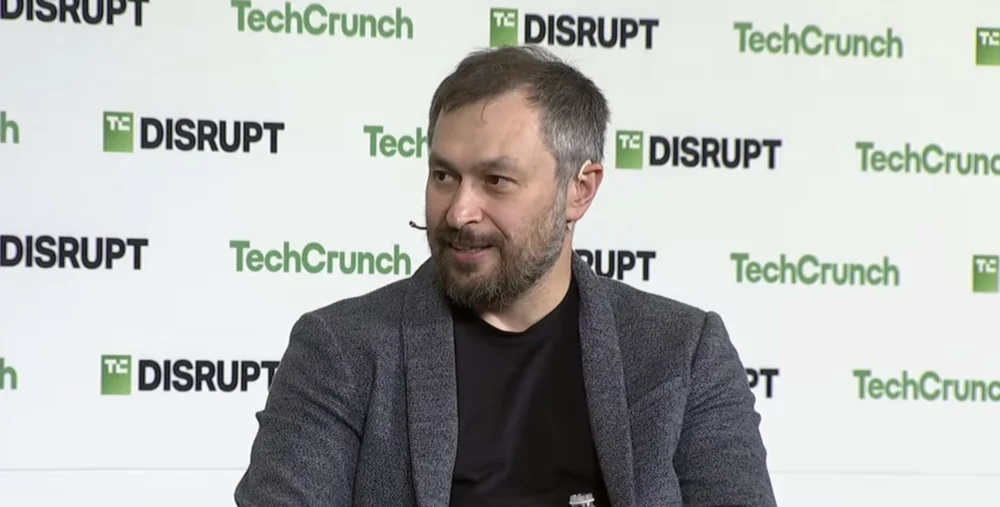
The landscape of software engineering is undergoing a fundamental transformation driven by the maturation of agentic artificial intelligence, a shift that was vividly illustrated by Anatoly Yakovenko, CEO of Solana Labs, during his recent appearance at TechCrunch Disrupt in Boston. Speaking to an audience of tech innovators and investors on June 9, 2026, Yakovenko detailed a personal and professional pivot that reflects broader industry trends: the transition of high-level engineers from active "builders" to "supervisors" of autonomous AI agents. For Yakovenko, a veteran with over 15 years of deep-system software development experience, the arrival of advanced coding models like Claude has not merely increased productivity but has fundamentally altered his daily workflow.
Yakovenko described AI as a "force multiplier" specifically tailored for experts who possess the foundational knowledge to oversee complex systems. He admitted to the audience that his focus has shifted so significantly that he often finds himself monitoring AI outputs during professional engagements. "If people are in a meeting with me and I’m not paying attention," Yakovenko remarked, "it’s because I’m watching Claude." This admission underscores a "sea change" in the role of the Chief Executive and lead architect, where the ability to discern when a model is "going off the rails" is becoming as valuable as the ability to write the code itself.
The Evolution of Agentic Coding in the C-Suite
The term "agentic coding" refers to AI systems that do not just suggest snippets of code but autonomously navigate entire development tasks, from debugging to architectural design. Yakovenko’s reliance on these tools marks a significant endorsement from one of the blockchain industry’s most respected technical minds. Before founding Solana, Yakovenko spent years at Qualcomm and Dropbox, specializing in distributed systems and compression. His willingness to let AI "take the wheel" suggests that the barrier to entry for complex software projects is dropping, while the premium on high-level oversight is rising.
Industry analysts suggest that this shift could lead to a leaner development cycle for blockchain protocols. Traditionally, updating a Layer 1 blockchain like Solana required months of rigorous manual testing and peer review. With agentic tools, the "churn" of development is accelerated. Yakovenko’s experience indicates that for an expert, the intuition developed over decades—what he described as "smelling" when the AI is making a mistake—is the final safeguard in an increasingly automated pipeline.
Solana’s Record-Breaking Fiscal Performance
The discussion of AI served as a backdrop to Solana’s staggering financial success over the past twelve months. Despite a volatile period for the broader cryptocurrency market, the Solana ecosystem has emerged as a dominant force in decentralized finance (DeFi) and retail trading. Earlier this month, the protocol reported a record $2.85 billion in annual revenue. This figure is primarily driven by transaction fees and the high velocity of capital moving through Solana-based decentralized exchanges (DEXs) and memecoin launchpads.
A significant portion of this revenue is attributed to the "retail frenzy" on platforms like Pump.fun and Raydium, which have utilized Solana’s low-latency and low-cost environment to facilitate millions of daily transactions. However, Yakovenko emphasized that the revenue growth is also a byproduct of increased institutional utility. The network’s ability to handle high throughput without the exorbitant gas fees seen on Ethereum has made it the preferred destination for high-frequency on-chain activities.
The Bitwise ETF and Institutional Legitimacy
One day prior to Yakovenko’s stage appearance, the Solana ecosystem reached a major milestone with the launch of the first Solana exchange-traded fund (ETF) in the United States, managed by Bitwise. The fund’s debut was met with significant market appetite, recording nearly $70 million in inflows within its first 24 hours. This successful launch follows the precedent set by Bitcoin and Ethereum ETFs, signaling that Wall Street now views Solana as the "third pillar" of the digital asset class.
Yakovenko attributed this institutional embrace to a growing realization within the traditional finance (TradFi) sector regarding the inherent efficiencies of blockchain. He noted that "back-office finance" professionals are often the quickest to grasp the value proposition of a high-speed ledger. "Finance people deal with settlement risk all the time," Yakovenko explained. "They deal with banking risk all the time."
In traditional banking, the settlement of assets can take days (T+2 or T+1), involving multiple intermediaries and potential points of failure. Solana’s ability to offer sub-second finality transforms these "back-office" headaches into automated, instantaneous processes. For institutional players, the Bitwise ETF represents more than just a speculative vehicle; it is a gateway into an ecosystem that promises to modernize the plumbing of global finance.
The Shadow of Controversy: Trumpcoin and Public Bribery Allegations
While the financial and technical achievements of Solana are notable, the protocol has not escaped intense public and regulatory scrutiny. A central point of contention discussed at the event was the rise of "Trumpcoin," a Solana-hosted token that has reportedly directed an estimated $350 million to the former president. Critics and legal experts have raised alarms, characterizing the token’s financial structure as a sophisticated form of public bribery.
The controversy is compounded by the political climate surrounding the cryptocurrency industry. Recent high-profile presidential pardons for Justin Sun, founder of the Tron protocol, and Changpeng Zhao (CZ), founder of Binance, have fueled perceptions of a "quid pro quo" relationship between the crypto elite and the executive branch. Analysts suggest that the massive capital flows into Trump-affiliated tokens on the Solana network serve as a litmus test for the limits of decentralized finance and its intersection with political influence.
When questioned about these ethical dilemmas, Yakovenko maintained a strictly neutral stance based on the philosophy of open-source protocols. He argued that as the creator of the underlying technology, he has no more control over individual tokens than the creators of the SMTP protocol have over the content of emails. "I could send you an email with a link to Trumpcoin or Fartcoin," Yakovenko said, "and both of those are protocols—both the email and the underlying protocol that creates that market."
A Timeline of Solana’s Strategic Milestones
To understand the current state of Solana, it is necessary to look at the chronology of its development and the events leading up to the 2026 TechCrunch Disrupt appearance:
- 2017–2019: Anatoly Yakovenko publishes the Solana whitepaper, introducing "Proof of History." Solana Labs is founded.
- 2020: The Solana Mainnet Beta goes live, positioning itself as a high-performance alternative to Ethereum.
- 2022–2023: The network survives the collapse of FTX, a major backer, and focuses on "state compression" technology to lower costs for NFTs and dApps.
- Late 2025: Solana overtakes Ethereum in several key metrics, including daily active addresses and DEX volume, fueled by the "agentic AI" boom in dApp development.
- June 8, 2026: Bitwise launches the first Solana ETF, signaling the start of a new era of institutional integration.
- June 9, 2026: Yakovenko speaks at TechCrunch Disrupt, highlighting the synergy between AI and blockchain.
Analysis: The Implications of Permissionless Infrastructure
The tension between Solana’s technical prowess and the controversial use cases it hosts highlights a fundamental debate in the tech industry: the responsibility of the infrastructure provider. Yakovenko’s "email analogy" is a classic defense of net neutrality and decentralization. By comparing a multi-billion-dollar financial protocol to a communication standard, he asserts that the value of the network lies in its permissionless nature. If the protocol were to censor "Trumpcoin," it would, by definition, cease to be a decentralized public ledger.
However, legal experts suggest that this "neutrality" will be increasingly tested by global regulators. The $350 million directed toward a political figure via a blockchain protocol represents a new frontier for campaign finance and anti-corruption laws. As Solana moves further into the mainstream via ETFs and institutional adoption, the pressure to implement "compliance layers" at the protocol level may grow, potentially creating a schism between the "open" network Yakovenko envisions and the "regulated" network Wall Street requires.
The Future of Work and Distributed Systems
Looking forward, Yakovenko’s reliance on agentic coding serves as a blueprint for the future of the tech workforce. As AI handles the "grunt work" of coding, the role of the human engineer evolves into that of a curator and strategist. This transition is particularly relevant for the blockchain sector, where the stakes of a single coding error can result in the loss of millions of dollars.
The integration of AI into the development of Solana suggests that the next generation of blockchain features—such as enhanced privacy layers or more complex smart contract logic—will be developed at a pace previously thought impossible. For Yakovenko and Solana Labs, the goal remains the same: to build a "global, synchronous state machine" that can operate at the speed of light. With AI now handling the majority of the technical heavy lifting, the path toward that goal appears clearer, albeit fraught with the complexities of the political and financial worlds they are disrupting.
In conclusion, the TechCrunch Disrupt event showcased a CEO who is both a pioneer of technical automation and a pragmatist regarding the messy realities of the global markets. As Solana continues to bridge the gap between "memecoin" culture and institutional finance, Yakovenko’s focus on agentic AI will likely be the catalyst that determines whether the protocol can maintain its lead in an increasingly competitive and scrutinized digital economy.