admin
admin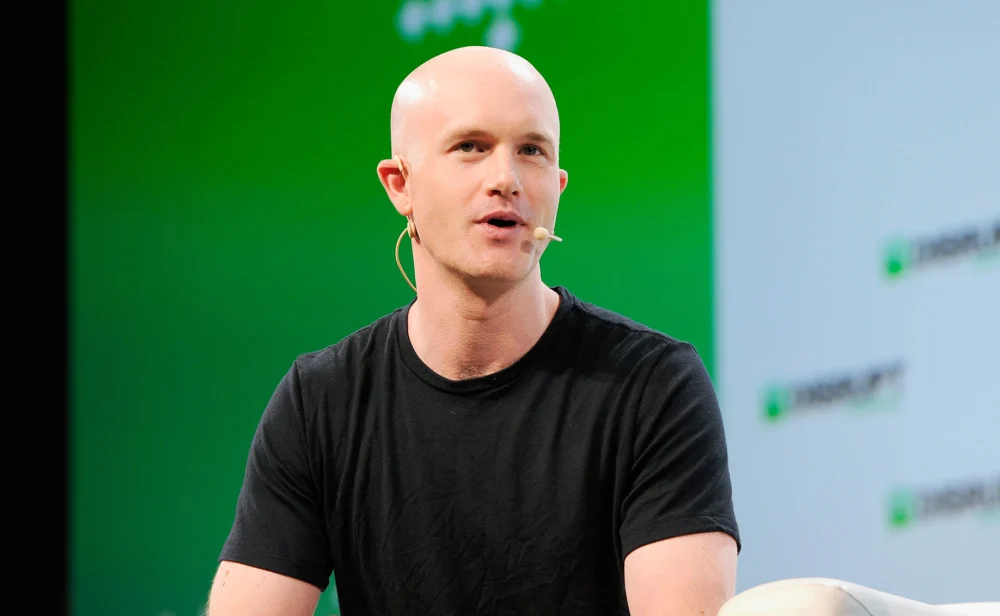
On Thursday, during the concluding moments of Coinbase Global Inc.’s third-quarter earnings call, Chief Executive Officer Brian Armstrong made an unconventional admission that has since ignited a debate regarding market integrity and corporate conduct. Armstrong informed listeners and shareholders that he had become "a little bit distracted" during the proceedings because he had been actively monitoring a prediction market focused on the call itself. Specifically, he was tracking wagers placed on whether he would utter certain industry buzzwords before the session adjourned.
In an apparent attempt to influence the outcome of these wagers, Armstrong explicitly listed several terms, stating, "And I just want to add here the words Bitcoin, Ethereum, Blockchain, Staking, and Web3 to make sure we get those in before the end of the call." The move, while framed by Armstrong as a lighthearted interaction with the crypto community, has drawn sharp criticism from institutional investors and raised questions about the vulnerability of nascent prediction markets to manipulation by the very individuals whose actions the markets are designed to forecast.
The Mechanics of Mention Markets and the $84,000 Incentive
The phenomenon Armstrong referenced involves "mention markets," a subset of prediction markets where participants bet on the occurrence of specific events, phrases, or outcomes during public broadcasts or high-profile events. In this instance, users on platforms such as Kalshi and Polymarket had established markets specifically tied to the Coinbase Q3 earnings call. According to data reported by Bloomberg, approximately $84,000 had been wagered across various platforms on whether the CEO would mention certain cryptocurrency-related terms.
Prediction markets operate on the principle of the "wisdom of the crowds," where the fluctuating price of a "yes" or "no" share reflects the aggregate probability of an event occurring. However, unlike macroeconomic indicators or election results, which are generally outside the direct control of any single participant, "mention markets" are uniquely susceptible to the whims of the speaker. By intentionally speaking the words required to trigger a "yes" outcome, Armstrong effectively decided the winners and losers of these financial contracts in real-time.
While the total amount wagered—$84,000—is relatively small compared to the billions of dollars in daily volume seen in broader crypto markets, the stunt highlighted a significant structural vulnerability. It demonstrated that when an executive becomes aware of a prediction market centered on their own behavior, they possess the unilateral power to "settle" that market, potentially benefiting specific bettors at the expense of others.
Chronology of the Event and Subsequent Reactions
The sequence of events began on Thursday afternoon as Coinbase executives reported their financial results for the third quarter. The call initially followed a standard corporate format, focusing on revenue streams, user growth, and the company’s regulatory outlook. However, as the session neared its conclusion, Armstrong shifted the tone.
After delivering his prepared remarks and answering analyst questions, Armstrong admitted to his distraction. Following his deliberate recitation of the buzzwords, he later took to the social media platform X (formerly Twitter) to provide further context. "Lol this was fun — happened spontaneously when someone on our team dropped a link in the chat," Armstrong wrote, suggesting the move was an impromptu response to internal communications rather than a pre-planned corporate strategy.
The reaction from the industry was swift and divided. Polymarket, one of the leading decentralized prediction platforms, described Armstrong’s actions as "diabolical work" in a post on X. While some retail traders in the crypto space viewed the move as a humorous nod to the community, institutional figures expressed significant disapproval.
Jeff Dorman, the Chief Investment Officer at digital assets investment firm Arca, issued a scathing critique of the CEO’s behavior. Dorman argued that such actions undermine years of effort spent attempting to legitimize the cryptocurrency industry in the eyes of traditional financial institutions. "You need your head examined if you think it’s cute or clever or savvy that the CEO of the biggest company in this industry openly manipulated a market," Dorman wrote. He further emphasized that it is difficult to build institutional comfort in an asset class when its primary leaders appear to "openly mock" the industry by engaging in what he characterized as market manipulation.
Coinbase’s Dual Role: Investor and Future Competitor
The controversy is further complicated by Coinbase’s strategic interest in the prediction market sector. The company is currently moving toward supporting prediction markets through its own "Everything Exchange" initiative, a project Armstrong himself touted during the same earnings call. Furthermore, Coinbase has established financial ties to the very platforms impacted by his comments, having previously invested in both Kalshi and Polymarket.
Kalshi recently achieved a $5 billion valuation following a significant legal victory against the Commodity Futures Trading Commission (CFTC), which allowed the platform to offer election-based betting to U.S. users. Polymarket, despite facing regulatory restrictions in the United States, has seen record-breaking volume in 2024, particularly surrounding the U.S. presidential election, with its valuation recently estimated at $8 billion following backing from major firms and the New York Stock Exchange (NYSE).
In response to inquiries regarding the ethics of the stunt, a Coinbase spokesperson told Bloomberg that the company maintains strict internal policies. These policies prohibit Coinbase employees from participating in prediction markets or engaging in any related activity that involves the company’s own outcomes. However, these internal rules do not necessarily account for the external impact of an executive’s public statements on third-party betting pools.
Analysis of Market Integrity and Regulatory Implications
Armstrong’s actions sit at the intersection of corporate communication and financial regulation. Traditionally, earnings calls are highly regulated environments where CEOs are expected to provide accurate, non-misleading information to the public and shareholders. While mentioning words like "Bitcoin" or "Staking" is not a violation of securities law in a vacuum, doing so specifically to trigger a payout in a prediction market introduces a novel ethical and potentially legal dilemma.
Market manipulation, as defined by various regulatory bodies like the Securities and Exchange Commission (SEC) and the CFTC, generally involves actions intended to deceive or defraud investors by artificially affecting the price of a security or the outcome of a market. While prediction markets for "mentions" are often viewed as a form of entertainment or "niche" betting, they are nonetheless financial contracts. If an executive’s speech is influenced by the existence of these markets, the "predictive" value of the market is erased, turning it into a game controlled by the subject of the bet.
Legal experts suggest that this incident could provide ammunition for regulators who have long argued that prediction markets are prone to manipulation and lack the oversight necessary to protect participants. The CFTC, in particular, has fought to limit the scope of these markets, citing concerns over public interest and the potential for bad actors to influence outcomes. Armstrong’s admission that he spoke the words specifically because he saw the market could be used as a case study in future regulatory hearings regarding the "integrity" of event-based wagering.
The Broader Impact on Institutional Adoption
For the cryptocurrency industry, the timing of this event is sensitive. Over the past year, the sector has made significant strides toward mainstream acceptance, marked by the approval of Spot Bitcoin and Ethereum ETFs and increased participation from Wall Street giants like BlackRock and Fidelity. The core of this transition has been a shift away from the "wild west" reputation of the early 2010s toward a more professionalized, compliant corporate culture.
Critics like Jeff Dorman argue that Armstrong’s "stunt" reinforces negative stereotypes that crypto remains a playground for "meme-culture" rather than a serious financial ecosystem. For institutional investors who prioritize stability, predictability, and fiduciary responsibility, the sight of a Fortune 500 CEO intentionally influencing a betting pool during a formal financial disclosure may be seen as a red flag regarding corporate governance.
Conversely, supporters of Armstrong argue that his actions reflect the unique, transparent, and community-driven nature of the crypto industry. They contend that prediction markets are a tool for engagement and that Armstrong was simply participating in a new form of digital culture that Coinbase itself is trying to build.
Conclusion and Future Outlook
As Coinbase continues to expand its "Everything Exchange" and deepens its involvement in the prediction market space, the boundary between corporate leadership and market participation will likely remain a point of contention. The Q3 earnings call incident serves as a definitive example of the "observer effect" in financial forecasting: the act of monitoring a market can, in some cases, cause the subject to alter their behavior to meet the market’s expectations.
While the financial stakes of the "mention markets" on Thursday were relatively low, the precedent set by Armstrong raises a vital question for the future of the industry: As prediction markets grow in scale and influence, how will the industry ensure that the figures at the center of these markets do not use their positions to dictate the results? For now, the fallout from the Q3 call remains a stark reminder of the cultural and ethical tensions that continue to define the evolution of the digital asset economy.