admin
admin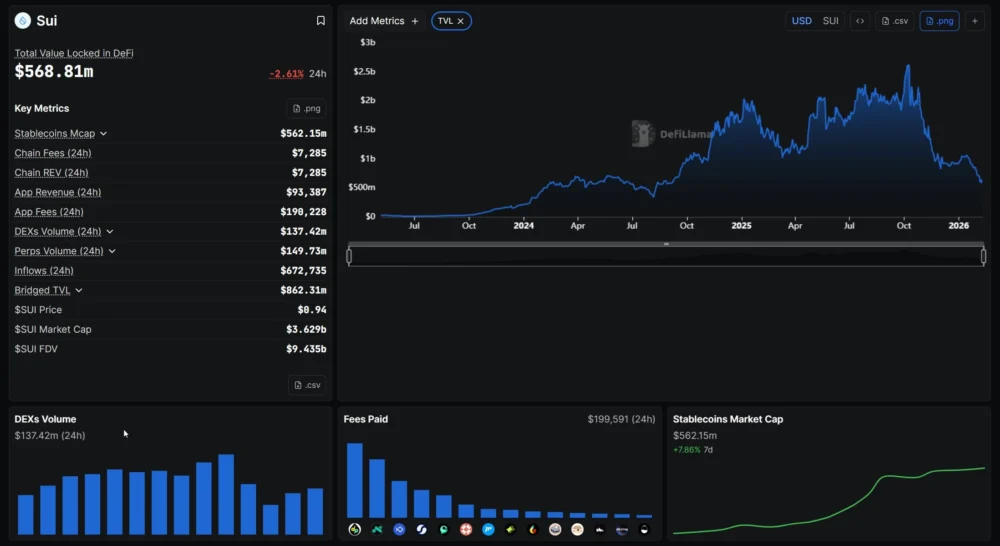
Sui, a burgeoning Layer 1 blockchain, is rapidly garnering significant attention within the decentralized ecosystem for its distinct object-centric data model and pioneering parallel transaction execution capabilities. This innovative architectural foundation is strategically positioning Sui as a high-performance platform, supporting a diverse array of applications across decentralized finance (DeFi), non-fungible token (NFT) marketplaces, and advanced Web3 gaming. Designed from the ground up for high-speed, low-cost transactions, efficient smart contract deployment, and inherently scalable applications, Sui addresses critical bottlenecks prevalent in many legacy blockchain networks. This comprehensive exploration delves into the intricacies of Sui, the functional mechanics of its native SUI token, the expanding structure of its ecosystem, the leading projects and applications, and crucial considerations for both investors and developers evaluating the network’s trajectory into 2026.
Understanding Sui: A Paradigm Shift in Blockchain Architecture
At its core, Sui is a Layer 1 blockchain engineered to deliver unprecedented transaction speeds, cost-efficiency, and scalability without succumbing to the traditional trade-offs often associated with highly performant networks. Unlike conventional account-based blockchains, Sui introduces a fundamentally different approach to asset ownership, smart contract execution, and transaction processing, distinguishing it within the competitive blockchain landscape.
The genesis of Sui traces back to Mysten Labs, a formidable team of former Meta (Facebook) engineers, many of whom were instrumental in the development of the Diem blockchain and Novi wallet projects. Prominent figures like Evan Cheng, with their extensive backgrounds in designing and implementing large-scale distributed systems, lend significant credibility and expertise to the Sui project. This pedigree from high-stakes, globally distributed infrastructure projects provides a strong foundation for Sui’s ambitions in the decentralized space.
The network’s defining characteristic is its object-centric model. In this architecture, assets on Sui are treated as "objects" with explicit ownership rules. This allows the network to intelligently identify transactions that do not involve shared or conflicting objects, enabling them to be executed in parallel. This parallel transaction execution is a cornerstone of Sui’s design, drastically reducing transaction latency and achieving high throughput without compromising overall network performance or security. For transactions involving shared objects, a robust consensus protocol ensures atomic operations, maintaining data integrity.
The Scalability Conundrum: How Sui Provides a Solution
The impetus behind Sui’s creation stems from the persistent challenges plaguing many existing blockchains: network congestion, escalating transaction fees, and prolonged transaction finality, particularly during periods of peak demand. As user adoption and application complexity grow, these networks frequently encounter scaling limitations that degrade user experience and restrict developer innovation.
The Sui protocol directly confronts these issues by fundamentally re-evaluating transaction processing. Instead of enforcing a rigid, sequential global ordering for every transaction, Sui intelligently segregates transactions into those involving independent objects and those reliant on shared objects. This distinction is paramount: independent transactions, by their very nature, do not conflict and can therefore be processed simultaneously via parallel execution. This architectural innovation significantly boosts transaction speeds, often achieving sub-second transaction finality for a vast majority of operations.
On traditional blockchains, a surge in transaction volume typically translates to higher gas fees and extended confirmation times due to limited block space and sequential processing. Sui’s architecture, conversely, is designed to efficiently handle a high volume of concurrent transactions, thereby maintaining low and predictable transaction costs even as network activity intensifies.
Another critical area Sui addresses is resource management. The network incorporates a sophisticated storage fund mechanism designed to manage on-chain data storage costs over time. Rather than solely burdening individual users with ever-increasing storage expenses, this approach distributes costs more equitably and predictably, fostering a more sustainable economic model for both developers building on Sui and holders of the SUI token. This mechanism ensures that the cost of storing data remains manageable, which is crucial for applications with extensive on-chain data requirements.
The Operational Mechanics of Sui

Sui’s operational framework is intrinsically linked to its object-centric paradigm. Assets are not merely balances tied to an account but distinct, programmable objects. This allows the Sui blockchain to precisely determine which transactions are independent and can be executed without coordination, and which require a consensus protocol due to shared object involvement. Transactions involving independent objects benefit from near-instant, parallel execution, while those manipulating shared objects are carefully coordinated through a robust Byzantine Fault Tolerant (BFT) consensus protocol.
Smart contracts on Sui are meticulously crafted using the Move programming language. Originating from the Diem project, Move is a resource-oriented language specifically designed for enhanced safety and security in smart contract execution. Its type system inherently prevents common vulnerabilities such as re-entrancy attacks and integer overflows, making it a powerful tool for building secure and reliable decentralized applications. This combination of an object-centric model, parallel execution, and the Move language culminates in an efficient, high-throughput, and secure network capable of sub-second transaction finality.
The SUI Token: Utility, Governance, and Economic Framework
The SUI token serves as the native utility token and economic backbone of the Sui network. Its multifaceted role is critical for the network’s operation and security. SUI is primarily utilized for:
- Gas Fees: Paying the computational costs associated with processing transactions and executing smart contracts on the Sui blockchain.
- Staking: Participating in network consensus and securing the network through delegation to validators. SUI holders can stake their tokens to earn staking rewards, contributing directly to the network’s decentralized security model.
- Network Operations: Incentivizing validators and supporting essential network functions.
- Governance-Adjacent Role: While decision-making remains largely protocol-driven, the SUI token’s distribution and staking mechanisms implicitly align token holders with the network’s long-term health and direction.
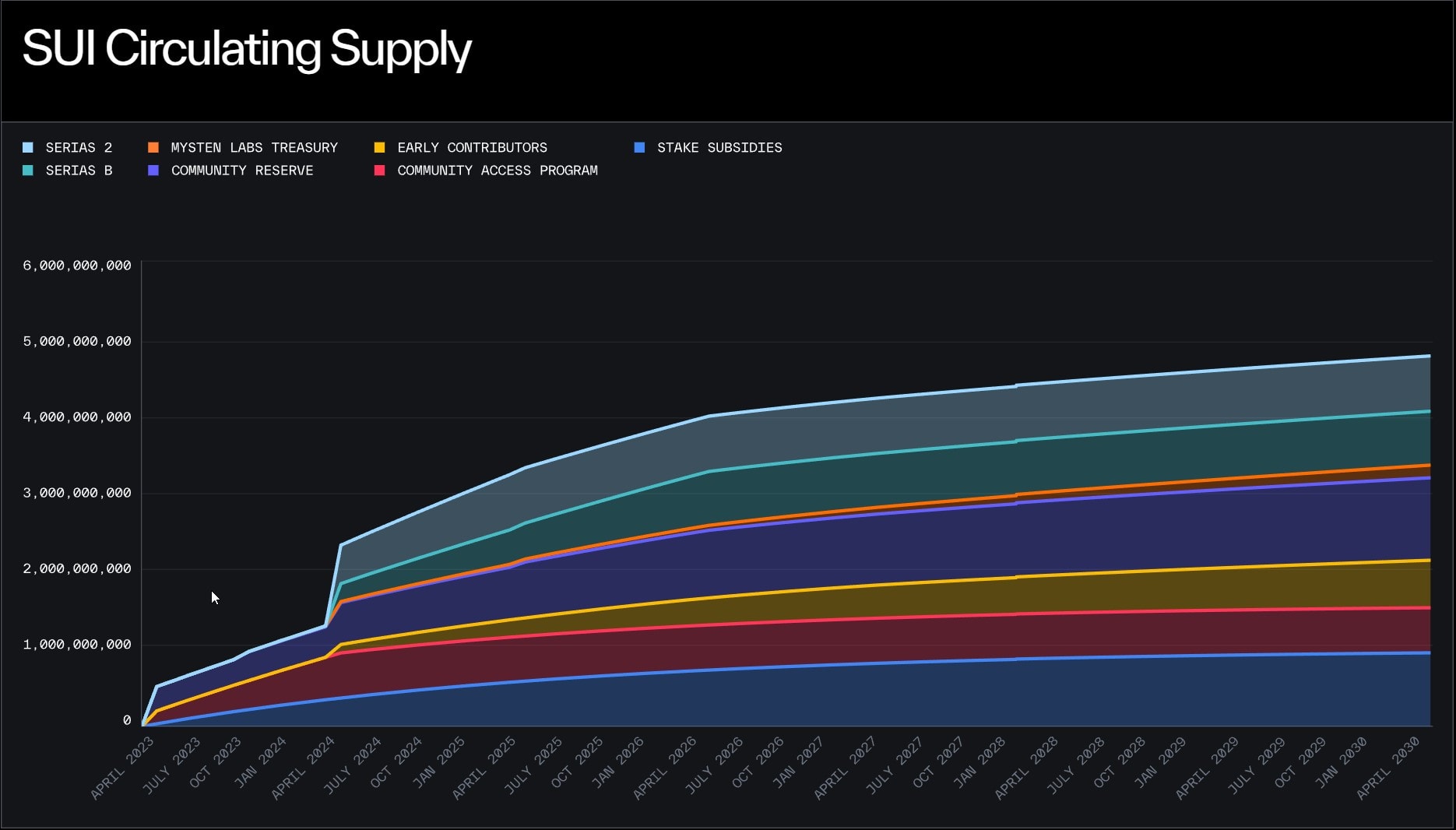
SUI has a fixed maximum supply of 10 billion tokens. This hard cap is a fundamental aspect of its tokenomics, designed to introduce scarcity and long-term stability. At its mainnet launch in May 2023, approximately 5% of the total supply was in circulation, with the remaining tokens subject to carefully structured vesting schedules. These schedules are designed to facilitate gradual unlocks, support network growth, and mitigate excessive market volatility.
Key Token Unlock Events and Supply Dynamics:
Significant unlock events are a consistent feature of SUI’s supply schedule. For instance, the smooth handling of a $60 million unlock in recent periods demonstrates the network’s capacity to absorb such releases. Looking ahead to 2026, a notable 43.35 million SUI release is scheduled for March 1, 2026. Furthermore, a substantial cliff unlock of 5.22 billion SUI is projected for May 2030, a highly anticipated event that will be managed with strategic foresight. As of early 2026, the circulating supply of SUI hovers around 35-36% of the total, a metric actively tracked by major crypto data aggregators.
SUI Allocation Breakdown:
The 10 billion SUI tokens are strategically allocated across various categories to ensure balanced incentives and long-term ecosystem development:
- Community Reserve (50%): Dedicated to ecosystem growth initiatives, developer grants, validator subsidies, staking rewards, and future community programs. This substantial allocation underscores Sui’s commitment to fostering a vibrant and self-sustaining ecosystem.
- Early Contributors (20%): Allocated to the developers and builders who laid the foundational work for the Sui protocol and its core infrastructure. A 1-year cliff for these allocations concluded in 2024.
- Investors (14%): Distributed to early institutional backers, including prominent venture capital firms like Coinbase Ventures. These allocations are typically subject to rigorous vesting schedules to ensure long-term alignment.
- Mysten Labs Treasury (10%): Supports ongoing research, development, and the long-term operational needs of Mysten Labs, ensuring continuous innovation and maintenance of the Sui protocol.
- Community Access Programs & Airdrops (Small Remainder): Tokens allocated to early users, testnet participants, and ecosystem contributors.
Sui’s Airdrop Stance:
Notably, Sui intentionally refrained from distributing any mainnet airdrops at its launch. This decision was a deliberate strategy to circumvent potential issues such as scams, regulatory complexities, and the generation of short-term speculative hype, prioritizing sustainable, long-term growth. While early testnet phases (2022-2023) did offer limited rewards to dedicated testers, validators, and contributors through programs like the Community Access Program (CAP), the focus remained on fostering genuine engagement rather than speculative farming. Select ecosystem projects, such as Cetus and Sui Name Service (SNS), have independently conducted smaller SUI airdrops (e.g., 200,000 SUI for IDO participants), leveraging the network’s capabilities to reward their respective communities.
Sui in the Layer-1 Competitive Landscape
Sui operates within a highly competitive Layer 1 blockchain arena, vying for developer talent, user adoption, and institutional interest alongside established giants and fellow challengers. A comparative analysis highlights Sui’s unique positioning:
| Feature | Sui | Ethereum | Solana | Aptos |
|---|---|---|---|---|
| Transaction Speed | High throughput via parallel execution; low latency | Lower throughput; relies on Layer 2 rollups for scaling | High theoretical throughput; can experience congestion | High theoretical throughput with Move; real usage varies |
| Gas Fees | Low and predictable | Often high during congestion | Very low under most conditions | Low |
| Execution Model | Object-centric model, selective consensus | Account-based, universal ordering | Proof of History + PoS | Move with parallel execution |
| Smart Contract Language | Move programming language | Solidity / EVM | Rust / C | Move |
| Ecosystem Maturity | Growing (DeFi, gaming, NFTs) | Most mature, largest TVL | Very large and liquid | Newer, smaller |
| Consensus Protocol | Delegated PoS with parallel execution | Proof of Stake (PoS) | PoH + PoS | BFT variant (e.g., AptosBFT) |
Sui’s distinct object-centric model and parallel execution give it a significant edge, particularly for applications requiring high interactivity and complex state changes, such as Web3 gaming and sophisticated DeFi protocols. While Solana boasts high throughput, its architecture can still face congestion issues under extreme load. Ethereum, though the most mature, fundamentally struggles with native scalability, relying heavily on Layer 2 solutions. Aptos, a fellow Move-based blockchain, shares some architectural similarities but Sui’s specific approach to object management and transaction ordering offers a differentiated pathway to scalability.
The Vibrant Sui Ecosystem: Innovation in Action
The Sui ecosystem is experiencing rapid expansion, attracting a growing cohort of developers and users across various decentralized sectors. Builders are increasingly leveraging Sui’s inherent advantages—low-cost transactions, the secure Move programming language, and efficient parallel execution—to forge faster, more scalable, and user-friendly decentralized applications (dApps).
Decentralized Exchanges (DEXs) and DeFi: Sui’s high throughput and low latency are ideal for decentralized exchanges, enabling faster trade execution and lower slippage. Projects building on Sui aim to offer seamless swapping, liquidity provision, and advanced trading features, positioning the network as a viable hub for sophisticated DeFi operations. The predictable gas fees also make micro-transactions and frequent trades more economical.
Bridges and Interoperability: To ensure seamless interaction with the broader blockchain landscape, robust cross-chain bridges are crucial for Sui. These bridges facilitate the transfer of assets and data between Sui and other major Layer 1 networks, enhancing liquidity and expanding the network’s reach. As interoperability becomes increasingly vital, the development of secure and efficient bridging solutions remains a high priority for the ecosystem.
General Decentralized Applications (dApps): Beyond DeFi, a diverse range of dApps are emerging on Sui, from social platforms to productivity tools. The Move language’s safety features and Sui’s performance characteristics provide a strong foundation for building secure and responsive user-facing applications that can scale to meet mass adoption.
NFT Marketplaces and Digital Collectibles: Sui’s object-centric model is particularly well-suited for NFTs. Each NFT can be treated as a unique, individually owned object, simplifying the management and transfer of digital assets. This design enables innovative features for NFT marketplaces, such as dynamic NFTs, fractional ownership, and more complex on-chain interactions without the typical performance bottlenecks. The low transaction fees also make minting, trading, and interacting with NFTs more accessible for users.
Web3 Gaming Projects: Perhaps one of the most promising sectors for Sui is Web3 gaming. The network’s capacity for parallel transaction execution and sub-second finality is critical for creating immersive, high-frequency gaming experiences where in-game actions need to be processed instantly and affordably. Developers are exploring innovative game designs that fully leverage Sui’s architecture for on-chain game logic, dynamic NFTs, and complex player interactions, positioning Sui as a potential leader in the future of decentralized gaming.
Navigating Sui: Key Considerations for Investors and Developers
Attractiveness for Investors:
Sui garners significant investor interest primarily due to its compelling technical differentiators: exceptional scalability, consistently low transaction fees, and a rapidly expanding ecosystem. The network’s ability to process a high volume of transactions in parallel effectively mitigates congestion, ensuring reliable performance even as user adoption accelerates. For SUI token holders, active participation in network operations through staking offers attractive rewards, providing an incentive beyond mere price appreciation. Backing from prominent venture capital firms, such as Coinbase Ventures, further bolsters investor confidence. However, investors are advised that price performance is not inherently indicative of long-term value, and thorough due diligence, including an assessment of market volatility and competitive pressures, is essential before making investment decisions.
Risks and Challenges for SUI Investors and Developers:
While promising, Sui faces several challenges:
- Competition: The Layer 1 space is intensely competitive, with established players and new entrants constantly innovating. Sui must continually differentiate itself to maintain its growth trajectory.
- Token Unlocks: The structured vesting schedules, while designed for stability, introduce periods of increased circulating supply, which can exert downward pressure on price if not absorbed by market demand. The upcoming March 2026 unlock and the major 2030 cliff are points of focus.
- Ecosystem Maturity: While growing, Sui’s ecosystem is still nascent compared to more established chains like Ethereum or Solana. Attracting and retaining top-tier developers and projects will be crucial.
- Regulatory Scrutiny: The broader cryptocurrency market remains subject to evolving regulatory frameworks, which could impact Sui’s operations and tokenomics.
- Adoption Hurdles: Educating developers on the Move language and migrating users from familiar account-based models present adoption challenges that require sustained community building and developer support.
Interacting with Sui:
For individuals interested in acquiring SUI tokens, the process typically involves purchasing them on major centralized exchanges (CEXs) that list SUI, or through decentralized exchanges within the Sui ecosystem. Once acquired, SUI can be managed using compatible Sui wallets, which allow users to store tokens, interact with dApps, and participate in staking to contribute to network security and earn rewards.
The Future Trajectory of Sui Blockchain Towards 2026 and Beyond
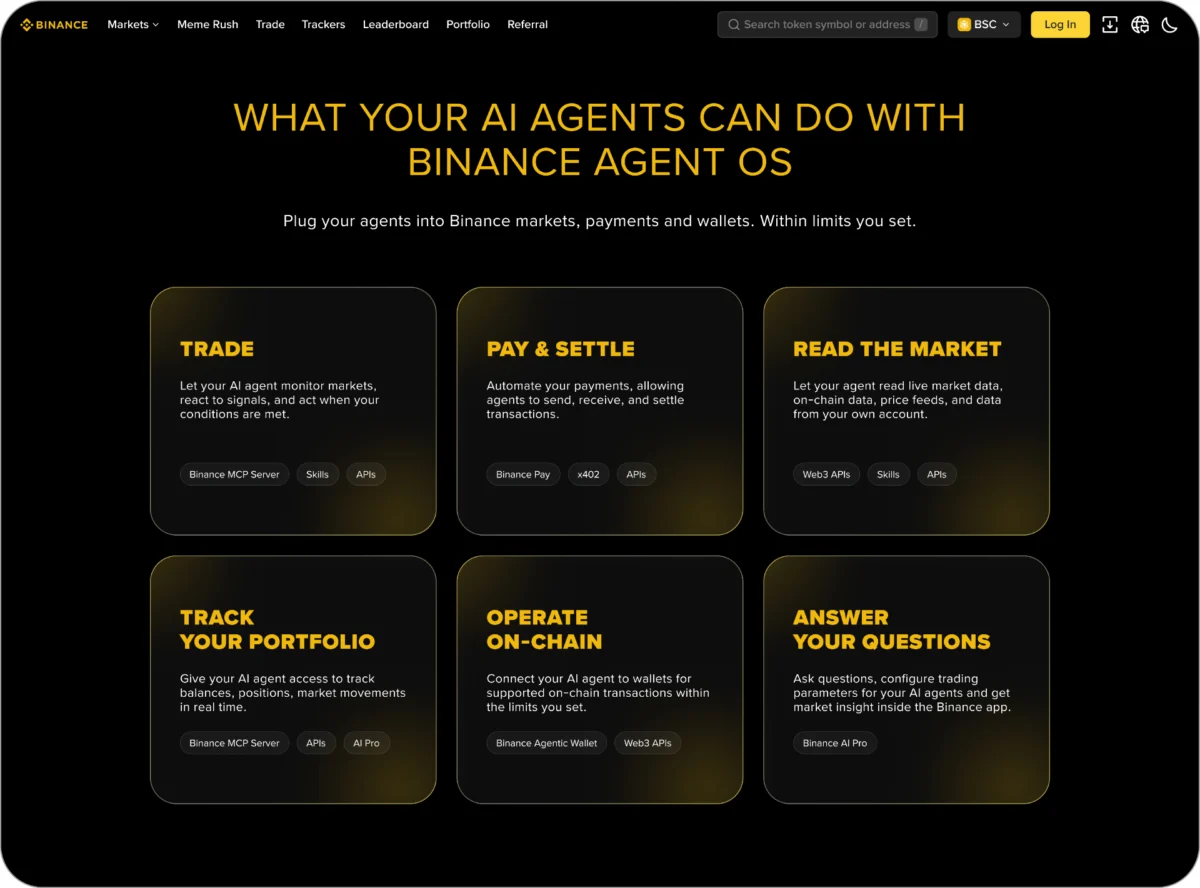
Sui is strategically evolving beyond its initial positioning as a high-performance Layer 1 blockchain. By 2026, the ambitious roadmap aims to transform Sui into a comprehensive "Sui Stack" (S2) – a full-stack developer platform emphasizing advanced features such as enhanced privacy solutions, robust stablecoin infrastructure (e.g., USDsui), deeper DeFi integrations (e.g., DeepBook), and the pioneering support for AI agents on-chain. This vision is designed to enable seamless application building, capitalizing on emerging trends like on-chain automation and sophisticated Web3 gaming experiences.
Key SUI Upgrades and Developments to Watch:
- Sui Stack (S2) Enhancements: Continuous improvements to the developer tooling, SDKs, and infrastructure layers to streamline application development and deployment.
- Privacy Integrations: Implementation of zero-knowledge proofs (ZKPs) or other privacy-preserving technologies to offer enhanced confidentiality for specific transactions or dApps, addressing a growing demand in the Web3 space.
- Stablecoin Expansion (e.g., USDsui): Development and integration of native stablecoins or robust bridges for leading stablecoins, crucial for DeFi growth and real-world utility.
- DeepBook Expansion: Further development and adoption of DeepBook, Sui’s native central limit order book (CLOB), to power more sophisticated and efficient trading experiences within the DeFi ecosystem.
- AI Agent Integration: Exploration and implementation of frameworks to support on-chain AI agents, enabling decentralized AI applications and autonomous smart contracts, a frontier that could redefine Web3 functionality.
- Interoperability Improvements: Ongoing development of more efficient and secure cross-chain bridges to foster greater liquidity and seamless asset transfers across different blockchain networks.
- Performance Optimizations: Continuous fine-tuning of the parallel execution engine and consensus mechanism to further enhance transaction throughput and reduce latency, ensuring Sui remains at the forefront of scalability.
Analyst projections for SUI price by the end of 2026 typically forecast a base-case range of $1.50 – $1.61, with bullish scenarios suggesting potential upside towards $10 by 2030, contingent on sustained ecosystem expansion and broader market trends. Key metrics for monitoring Sui’s growth will include its Total Value Locked (TVL) in DeFi protocols, the number of active developers and deployed dApps, transaction volume, and the success of its interoperability initiatives. The integration of AI agents and the development of the "Sui Stack" are anticipated to significantly enhance Sui’s competitive edge and long-term value proposition.
Conclusion
Sui has rapidly established itself as a formidable Layer 1 blockchain, distinguished by its profound technical innovations. Its object-centric model, coupled with parallel transaction execution and the secure Move programming language, provides a robust foundation for building high-performance decentralized applications. The burgeoning Sui ecosystem, spanning dynamic DEXs, critical bridges, diverse dApps, innovative gaming projects, and vibrant NFT marketplaces, underscores its commitment to delivering fast, low-cost transactions and tangible utility for both users and developers.
While Sui navigates inherent challenges, including persistent token unlock pressures and intense competition from other Layer 1 blockchains, its forward-looking roadmap towards a comprehensive "Sui Stack" (S2) and strategic integrations like USDsui and DeepBook signal strong potential for ecosystem growth and institutional adoption. For traders, investors, and developers alike, a diligent focus on adoption trends, sustained transaction speeds, and the continued expansion of its ecosystem will be paramount in accurately evaluating Sui’s long-term prospects and its evolving role in the decentralized future.
FAQs
Is SUI crypto a good investment?
SUI possesses strong technical foundations, including its parallel transaction execution and object-centric model, alongside a rapidly expanding ecosystem of dApps, NFTs, and DeFi protocols. While it demonstrates promising adoption and potential upside, investors should carefully consider market volatility, intense competition, and the impact of upcoming token unlock schedules before making any investment decisions.
What is the utility of the SUI token?
The SUI token is integral to the Sui network. It is used to pay gas fees for transactions, participate in staking to secure the network and earn rewards, and interact with Sui-based dApps and DeFi platforms. Additionally, SUI plays a crucial role in validator incentives and contributes to the network’s overall security and operational stability, making it more than a mere speculative asset.
Is Sui better than Solana?
Both Sui and Solana are designed for high-speed, low-cost transactions. However, Sui’s unique object-centric design and parallel transaction execution offer a potentially more efficient processing model for complex DeFi, NFT, and gaming applications that involve frequent, independent state changes. While Solana currently boasts a larger and more mature ecosystem, Sui presents distinct technical advantages for building highly scalable and interactive decentralized applications, catering to specific use cases where its architecture shines.
Can I stake SUI tokens?
Yes, SUI holders can stake their tokens to contribute to securing the network and participating in its delegated Proof-of-Stake (PoS) consensus mechanism. Staking SUI not only provides rewards to participants but also supports network operations and helps maintain Sui’s high throughput and low transaction fees, serving as a practical method for holders to contribute to the ecosystem’s growth and decentralization.