admin
admin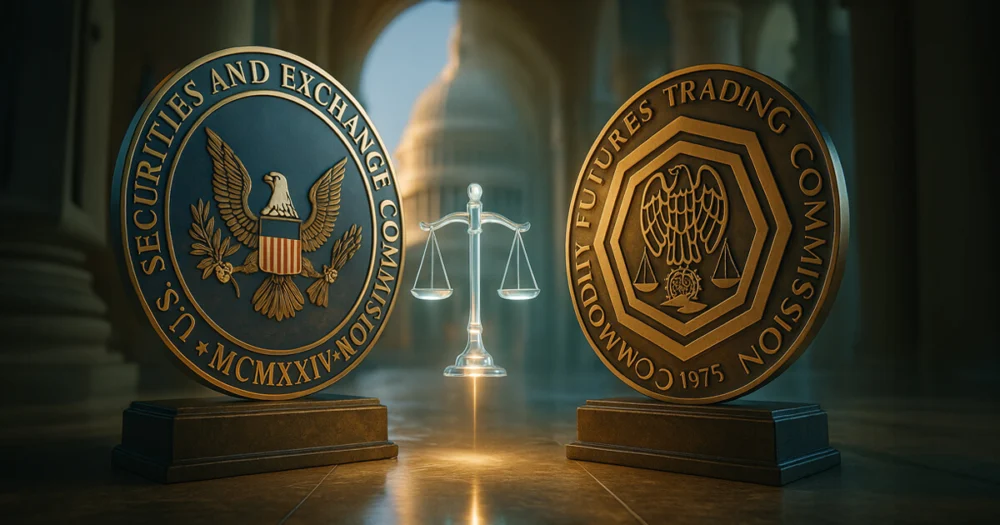
The U.S. legislative landscape for digital assets is undergoing a significant potential upheaval, as competing drafts from two powerful Senate committees seek to redefine the regulatory authority over cryptocurrencies. This ongoing debate, a critical juncture for the burgeoning digital asset industry, pits the Securities and Exchange Commission (SEC) against the Commodity Futures Trading Commission (CFTC) in a battle for jurisdictional dominance. While the House of Representatives has already advanced its own version of clarity with the Digital Asset Market Clarity Act of 2025, the Senate’s bifurcated approach now presents two distinct pathways, each promising to reshape the foundational rules governing everything from Bitcoin spot markets to the classification of sophisticated digital instruments.
The current ambiguity surrounding the regulatory status of digital assets has been a persistent challenge, creating a complex and often unpredictable environment for investors, innovators, and established financial institutions alike. This regulatory tug-of-war has led to a flurry of enforcement actions by the SEC, often drawing criticism for its perceived lack of clear guidance and its reliance on existing securities laws to police an entirely new asset class. The Senate’s recent moves, embodied in two distinct discussion drafts, signal a concerted effort to inject much-needed order into this space, though the specific direction of that order remains a subject of intense negotiation and scrutiny.
One of these pivotal drafts emerges from the Senate Agriculture Committee, championed by Senators John Boozman and Cory Booker. This proposal, widely seen as a significant expansion of the CFTC’s purview, aims to classify "digital commodities" and place their spot markets squarely under the regulatory umbrella of the CFTC. The implications of this approach are profound, potentially aligning the oversight of digital asset spot trading with the established frameworks governing traditional commodities like oil and gold. This would necessitate the registration of exchanges, brokers, and dealers operating within this sphere, imposing requirements that mirror those already in place for traditional commodity markets.
Background: A History of Regulatory Uncertainty
The struggle to assign clear regulatory authority over digital assets in the United States is not a new phenomenon. For years, policymakers and regulators have grappled with the fundamental question of whether cryptocurrencies are primarily commodities, securities, or a distinct asset class altogether. The SEC, under its current leadership, has largely maintained that many digital assets, particularly those initially offered through initial coin offerings (ICOs), function as investment contracts and therefore fall under its jurisdiction as securities. This stance has led to numerous high-profile enforcement actions, including lawsuits against major cryptocurrency exchanges and token issuers.
Conversely, the CFTC has historically asserted its authority over derivatives markets, including futures and options contracts based on commodities, and has viewed certain digital assets, such as Bitcoin, as commodities. This differing interpretation has created a persistent jurisdictional overlap and a lack of regulatory certainty, hindering the growth and adoption of digital assets within the U.S. financial system. The House’s passage of the Digital Asset Market Clarity Act of 2025, which sought to provide a more defined framework, represented a step towards resolution, but its progress stalled in the Senate, necessitating new legislative efforts.
The Senate Agriculture Committee’s draft represents a direct attempt to provide that clarity, advocating for a model that empowers the CFTC. Under this proposal, intermediaries would be mandated to utilize qualified custodians and ensure the segregation of customer assets, a crucial measure designed to prevent conflicts of interest that could arise from affiliations with other entities. The draft also thoughtfully considers the complexities of dual oversight by allowing for joint rulemaking between the CFTC and the SEC when entities or activities fall under the purview of both agencies. However, it acknowledges that certain nascent areas, such as decentralized finance (DeFi), may require further debate and refinement.
This approach is a clear endorsement of the principles embodied in the House Clarity Act, aiming to bring the burgeoning spot markets for digital assets under the direct supervision of the CFTC. For U.S.-based Bitcoin platforms, this would translate into a requirement to register as digital-commodity exchanges. This registration would come with a host of new obligations, including meeting stringent capital requirements, adhering to robust custody rules, and offering enhanced protections for retail investors. The standardization of data sharing across trading venues is another key feature, which could significantly improve the quality of market surveillance – a critical component for entities like Exchange Traded Fund (ETF) issuers seeking to list their products. While ETFs themselves would likely remain under SEC jurisdiction, the underlying spot market transparency fostered by this bill could pave the way for broader institutional adoption.
The impact of such a shift extends beyond mere administrative burdens. Placing Bitcoin spot market oversight under the CFTC would fundamentally alter the operational logic for exchanges, compelling them to adopt the reporting and surveillance practices typical of commodity exchanges. This emphasis on transparent reporting and robust market surveillance could provide traders and analysts with a more granular understanding of market quality and liquidity, fostering greater confidence and efficiency. While this bill significantly expands the CFTC’s role, it’s important to note that the SEC would retain oversight of crypto-related securities instruments and, crucially, crypto futures. Thus, a dual oversight framework would likely persist, albeit with a clearer delineation of primary responsibilities.
The Senate Banking Committee, on the other hand, has put forth its own distinct vision through a draft known as the Responsible Financial Innovation Act. This proposal takes a different tack, focusing on the nuanced category of digital assets that often exist in a regulatory gray area, blurring the lines between commodities and securities. At the heart of this draft is the definition of an "ancillary asset." This term is designed to encompass a "fungible digital commodity" that is distributed through an arrangement that also constitutes an investment contract.
Under this framework, the SEC would be granted explicit authority to oversee these "ancillary assets." This would necessitate issuers providing comprehensive disclosures regarding token distributions, the governance structures of the associated projects, and the inherent risks involved. Furthermore, the Banking Committee’s draft provides the SEC with a defined timeline, approximately two years, to finalize a formal rule that clarifies what constitutes an "investment contract" in the context of digital assets. This is a significant development, as it addresses a long-standing criticism of the SEC’s approach, which has often been perceived as applying existing securities law in an overly broad and often retroactive manner.
A particularly innovative aspect of the Banking Committee’s draft is the introduction of a decentralization certification process. This mechanism would allow a digital asset project to potentially "graduate" from securities treatment once its network control falls below certain predefined thresholds, indicating a significant level of decentralization. This provision offers a conditional escape hatch for tokens associated with "active projects," such as Ethereum, where the initial development and distribution might have been more centralized. A token could begin its life under the SEC’s watchful eye, benefiting from the investor protections and disclosure requirements associated with securities, but subsequently transition to a different regulatory status as its governance becomes sufficiently distributed and its network more decentralized.
This approach introduces a much-needed structure to a gray area that has troubled the industry since early events like the DAO hack. It compels the SEC to articulate, in writing and with clear criteria, what constitutes sufficient decentralization, moving away from its current practice of relying on ad hoc enforcement actions to determine the regulatory status of digital assets. This could lead to a more predictable and transparent path for innovative projects seeking to navigate the U.S. regulatory landscape.
Under the Banking Committee’s model, the practical distinctions between different types of digital assets would become sharper. Bitcoin, with its established decentralized nature, would likely continue to be treated as a digital commodity under the CFTC’s purview. Tokens that retain strong ties to enterprises or specific development teams would likely remain within the SEC’s ancillary-asset regime until they can demonstrably prove sufficient decentralization. Centralized exchanges would find themselves operating within both frameworks. They would need to register as CFTC digital-commodity exchanges to facilitate spot crypto trading, while simultaneously remaining subject to SEC oversight for any listed securities tokens.
The cumulative effect of this model could be a significant increase in compliance burdens for U.S. platforms, potentially necessitating dual registration, higher capital requirements, and the implementation of more transparent trading systems to satisfy the demands of both regulatory bodies.
Timeline and Next Steps
The journey from discussion draft to enacted legislation is often a lengthy and intricate one. While the House has already passed its version of the Digital Asset Market Clarity Act, the Senate’s proposals are still in the early stages of deliberation. Both the Agriculture and Banking Committee drafts contain specific deadlines for rulemaking, indicating a desire for timely resolution. However, the Agriculture draft, in particular, leaves several key questions unresolved, necessitating further refinement and consultation. A critical factor for the success of either bill will be the extent to which future coordination rules and public consultations are effectively implemented.
Opposition to specific provisions within both drafts has already surfaced, reflecting the deeply entrenched interests and differing philosophies surrounding digital asset regulation in Washington. The ultimate outcome will likely depend on the ability of lawmakers to find common ground and address the concerns of all stakeholders, including industry participants, consumer advocates, and regulatory bodies themselves.
Analysis of Implications
The implications of either of these Senate drafts being enacted are far-reaching. If the Agriculture Committee’s proposal prevails, the CFTC would gain substantial new powers, potentially leading to a more unified and predictable regulatory environment for spot commodity-like digital assets. This could spur greater institutional adoption by providing the clarity and investor protections that have been sorely lacking. However, it might also mean that certain innovative aspects of the digital asset space, which are not easily categorized as traditional commodities, could face slower development or be pushed to more crypto-friendly jurisdictions.
Conversely, the Banking Committee’s draft offers a more nuanced approach, attempting to create a framework that acknowledges the evolving nature of digital assets and their potential to transition from securities-like offerings to decentralized commodities. The explicit definition of "ancillary assets" and the decentralization certification process are particularly significant advancements. This could provide a clearer pathway for projects to achieve regulatory clarity and encourage innovation, while still ensuring robust investor protection during their formative stages.
The two drafts, even in their current form, serve as a valuable "working field guide" for those in the digital asset industry. They illuminate potential future scenarios: how U.S. spot venues might operate under a CFTC-led regime, how token projects could potentially graduate from securities treatment, and how exchanges might need to fundamentally re-architect their internal firewalls to comply with dual regulatory mandates. While neither draft definitively settles the SEC vs. CFTC turf war, they undeniably map out the next critical phase of this ongoing regulatory evolution.
In a market where regulatory classification directly influences liquidity, custody arrangements, and compliance strategies, understanding which agency will ultimately draw the decisive lines is paramount. The ongoing legislative efforts in the Senate represent a pivotal moment, with the potential to either solidify existing regulatory structures or usher in a new era of clarity and growth for the digital asset ecosystem in the United States. The speed and substance of these legislative developments will be closely watched by domestic and international market participants alike.